
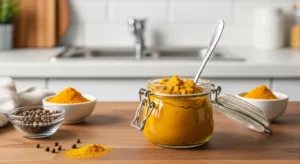
Turmeric golden paste for dogs is a homemade mixture of turmeric, water, healthy fat, and black pepper designed to support joint comfort and overall wellness. When used correctly and in small amounts, it can be added to your dog’s food as a natural supplement.
If your dog struggles with stiffness, mild inflammation, or seasonal allergies, this guide explains how to safely prepare and use turmeric golden paste at home.
Is Turmeric Safe for Dogs?
Yes. Turmeric is generally safe for most dogs when used in small amounts.
Turmeric contains curcumin, a compound studied for:
-
Supporting joint comfort
-
Helping manage mild inflammation
-
Antioxidant properties
-
Supporting digestive and liver health
Turmeric may interact with certain medications, including blood thinners. Always check with your veterinarian before long-term use.
Benefits of Turmeric Golden Paste for Dogs
When prepared correctly, golden paste may:
-
Support joint mobility in aging dogs
-
Help manage mild inflammation
-
Support immune health
-
Aid digestion
-
Provide antioxidant support
Golden paste is not a replacement for veterinary care. It works best as a supplemental support tool.
Turmeric Golden Paste for Dogs Recipe
This recipe makes a concentrated paste you can store in the refrigerator.
Ingredients
| Ingredient | Purpose |
|---|---|
| 1 cup water | Base for cooking turmeric |
| ½ cup turmeric powder | Active anti-inflammatory ingredient |
| 4 tbsp coconut oil | Healthy fat for absorption |
| 1½ tsp ground black pepper | Improves curcumin absorption |
| ½–1 tsp cinnamon (optional) | Flavor and antioxidant support |
Use organic turmeric if possible.
How to Make Turmeric Golden Paste
Step 1: Cook Turmeric and Water
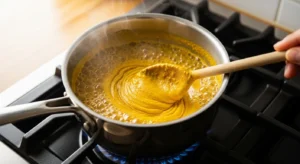
In a small saucepan, combine water and turmeric powder.
Cook over medium heat for 7–10 minutes, stirring constantly until a thick paste forms.
If it becomes too thick, add a small splash of water.
Step 2: Add Coconut Oil
Reduce heat to low. Stir in coconut oil until fully melted and blended.
Fat is necessary for proper absorption of turmeric’s active compounds.
Step 3: Add Black Pepper
Stir in ground black pepper and mix well.
Black pepper contains piperine, which significantly increases curcumin absorption.
Step 4: Optional Cinnamon
Add a small pinch of cinnamon if desired. Use lightly.
Step 5: Cool and Store
Remove from heat and allow paste to cool completely.
Transfer to a clean glass jar with a tight lid.
Turmeric can stain, so handle carefully.
How Much Turmeric Golden Paste Should You Give?
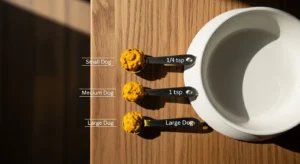
Start small and increase gradually.
Starting Amounts
-
Small dogs (under 20 lbs): ⅛–¼ tsp
-
Medium dogs (20–50 lbs): ¼–½ tsp
-
Large dogs (50+ lbs): ½–1 tsp
Maximum Amounts
-
Small dogs: up to ½ tsp
-
Medium dogs: up to 1 tsp
-
Large dogs: up to 1–2 tsp
Divide into two servings if giving larger amounts.
How Often Should You Use It?
-
3–5 times per week for general support
-
Daily use only with vet approval
Monitor for loose stool or stomach upset.
Storage and Shelf Life
-
Refrigerator: up to 2 weeks
-
Freezer (ice cube trays): up to 3 months
Always use a clean spoon to prevent contamination.
Who Should Avoid Turmeric?
Consult your veterinarian if your dog:
-
Is on blood thinners
-
Has gallbladder issues
-
Has upcoming surgery
-
Is pregnant
-
Has bleeding disorders
Turmeric may affect blood clotting.
Ingredient Benefits
-
Turmeric: Supports joint comfort and antioxidant activity
-
Coconut Oil: Improves absorption and provides healthy fats
-
Black Pepper: Increases curcumin bioavailability
-
Cinnamon (optional): Adds mild antioxidant support
Common Questions
Can I give raw turmeric powder instead?
Golden paste improves absorption and is gentler on digestion than dry powder.
How long until I see results?
Some owners notice changes within 1–3 weeks, but results vary.
Can puppies take turmeric golden paste?
Use caution. Always consult a veterinarian before giving supplements to puppies.
Final Thoughts
Turmeric golden paste is a simple and affordable way to support your dog’s joint and immune health when used properly. The key is moderation, gradual introduction, and veterinary guidance when needed.
Start small. Watch your dog’s response. Adjust carefully.