
Homemade raw dog food recipes are meals made from uncooked muscle meat, raw edible bones, organs, and small amounts of vegetables, designed to mimic a dog’s ancestral diet. When balanced correctly and handled safely, raw feeding can provide high protein, natural fats, and essential minerals.
This guide shares three beginner-friendly raw dog food recipes, along with safe feeding ratios, storage tips, and portion guidance for dog owners in the USA.
Important: Raw feeding should always be discussed with your veterinarian, especially for puppies, senior dogs, or dogs with medical conditions.
Is Raw Dog Food Safe?
Raw diets can be safe when:
-
Meat is fresh and handled properly
-
Raw bones are edible and never cooked
-
Meals follow correct nutritional ratios
-
Bowls, surfaces, and hands are cleaned thoroughly
Raw meat can carry bacteria such as Salmonella. Always wash hands, sanitize surfaces, and freeze meat if parasite risk is a concern.
What Is the Proper Raw Feeding Ratio?
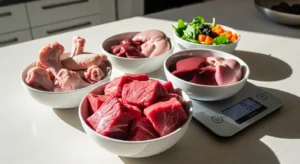
Most raw diets follow this basic balance:
-
70–80% muscle meat
-
10–15% raw edible bone
-
5–10% organ meat (half should be liver)
-
Optional: small amounts of vegetables or supplements
Balance matters more than variety in the beginning. Start simple.
1. Turkey Raw Dog Food Blend (Beginner Friendly)
A mild protein that’s easy to digest.
Ingredients
-
1 lb ground turkey
-
½ lb raw turkey necks
-
¼ cup chicken liver
-
1 tbsp ground eggshell (if bone content is low)
-
1 tbsp pumpkin puree (optional)
Instructions
-
Place ground turkey in a mixing bowl.
-
Add turkey necks whole for chewers or grind for small dogs.
-
Chop liver finely and mix thoroughly.
-
Add eggshell powder if needed.
-
Mix pumpkin last.
-
Portion and serve fresh or freeze immediately.
2. Chicken Raw Dog Food Mix
Affordable and widely available.
Ingredients
-
1 lb raw chicken thighs (with bone)
-
¼ lb chicken hearts
-
½ cup finely grated carrot
-
1 tbsp fish oil
-
1 raw egg (optional)
Instructions
-
Chop chicken thighs into manageable pieces.
-
Add chopped chicken hearts.
-
Mix in grated carrot (small amount only).
-
Drizzle fish oil evenly.
-
Add egg if desired and mix gently.
Never cook bones. Serve raw only.
3. Beef Raw Diet Recipe
Higher-calorie option for active dogs.
Ingredients
-
1 lb ground beef (80/20)
-
½ lb raw beef ribs (small, edible)
-
¼ cup beef kidney
-
1 tbsp ground flaxseed
-
1 tsp kelp powder (optional)
Instructions
-
Place ground beef in a bowl.
-
Add raw ribs whole or lightly ground.
-
Chop kidney finely and mix thoroughly.
-
Stir in flaxseed and optional kelp.
-
Portion and store immediately.
How Much Raw Food Should You Feed?

A common starting point is 2–3% of your dog’s body weight per day.
Examples
-
25 lb dog: 0.5–0.75 lb daily
-
50 lb dog: 1–1.5 lbs daily
Adjust based on:
-
Activity level
-
Body condition
-
Age
Monitor weight weekly during transition.
How to Transition to Raw Food
Switch gradually over 7–10 days:
-
Days 1–3: 25% raw + 75% current food
-
Days 4–6: 50% raw
-
Days 7–9: 75% raw
-
Day 10+: Fully raw
Watch for loose stool and slow down if needed.
Storage and Safety Guidelines
-
Refrigerate raw food up to 48 hours
-
Freeze portions up to 3 months
-
Thaw in the refrigerator, not on the counter
-
Wash bowls after every meal
-
Never feed cooked bones
Food safety protects both dogs and humans.
Common Raw Feeding Mistakes
-
Feeding too much liver
-
Ignoring calcium balance
-
Using cooked bones
-
Not rotating proteins over time
-
Skipping veterinary guidance
Balanced meals prevent deficiencies.
Ingredient Benefits
-
Muscle Meat: High protein for energy and muscle maintenance
-
Raw Bones: Natural calcium and phosphorus
-
Organs: Rich in vitamins A, B, and iron
-
Fish Oil: Omega-3 support for joints and coat
-
Vegetables (small amounts): Fiber support
Who Should Avoid Raw Feeding?
Consult your veterinarian before starting if your dog:
-
Has a weakened immune system
-
Is elderly or very young
-
Has kidney or liver disease
-
Lives with immunocompromised humans
Raw feeding requires strict hygiene and responsibility.
Final Thoughts
Homemade raw dog food can be a protein-rich, minimally processed option when balanced correctly. The key is proper ratios, safe handling, and gradual introduction.
Start with one protein. Keep portions controlled. Monitor your dog’s condition.