

Thinking about adding plant-based meals to your dog’s bowl? This guide explains how to make balanced homemade vegan dog food recipes that support protein needs, healthy fats, and essential vitamins.
Important: A vegan diet can work for dogs, but it must be planned carefully. Always talk to your veterinarian before switching your dog’s main diet.
Are Vegan Diets Safe for Dogs?
Dogs are omnivores. They can digest grains, legumes, and many vegetables. But being able to digest something does not mean the diet is automatically balanced.
A safe vegan dog diet must:
-
Provide complete protein (all essential amino acids)
-
Include omega-3 and omega-6 fats
-
Maintain a proper calcium-to-phosphorus ratio
-
Include vitamin B12 and vitamin D
-
Be monitored with regular vet checks
If these nutrients are missing, deficiencies may develop over time.
Key Nutrients in Vegan Dog Diets
Protein (Complete Amino Acid Profile)
Plant proteins work best when combined.
Good pairings include:
-
Lentils + rice
-
Chickpeas + quinoa
-
Tofu + brown rice
These combinations create a more complete amino acid balance.
Healthy Fats
Dogs need fats for skin, coat health, joints, and energy.
Good vegan sources include:
-
Flaxseed oil (omega-6)
-
Algae oil (omega-3 EPA/DHA)
-
Sunflower oil
Calcium and Minerals
Plant diets can be low in calcium, so it must be added carefully.
Options include:
-
Calcium-set tofu
-
Ground pumpkin seeds
-
Kelp powder (iodine support)
-
Vet-approved canine supplements
3 Easy Homemade Vegan Dog Food Recipes
These meals work best as rotation meals or partial replacements. They should not replace a full diet unless balanced by a veterinary nutritionist.
1. Lentil & Sweet Potato Bowl
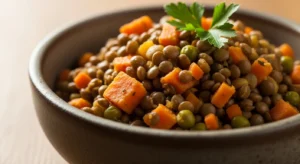
A fiber-rich and filling plant-based dog meal.
Ingredients
-
1 cup cooked red lentils
-
1 cup diced sweet potato (steamed)
-
½ cup cooked brown rice
-
½ cup peas
-
1 tablespoon flaxseed oil
-
1 teaspoon nutritional yeast
Instructions
-
Cook lentils until soft.
-
Steam sweet potatoes until fork-tender.
-
Combine lentils, rice, peas, and sweet potato.
-
Stir in flaxseed oil and nutritional yeast after the mixture cools slightly.
-
Let the meal cool fully before serving.
Why It Works
-
Lentils provide protein and iron.
-
Sweet potatoes add vitamin A and digestible carbohydrates.
-
Flaxseed oil supports skin and coat health.
2. Chickpea & Quinoa Power Mix
A high-protein plant meal that is easy to digest.
Ingredients
-
1 cup cooked quinoa
-
1 cup canned chickpeas (rinsed)
-
½ cup shredded carrot
-
½ cup steamed spinach
-
1 tablespoon sunflower oil
Instructions
-
Cook quinoa and allow it to cool.
-
Rinse chickpeas thoroughly.
-
Combine all ingredients in a bowl.
-
Add oil last and mix evenly.
-
Serve at room temperature.
Why It Works
-
Quinoa is a complete protein grain.
-
Chickpeas add fiber and iron.
-
Carrots and spinach provide antioxidants.
3. Tofu & Oat Comfort Mash

A soft meal suitable for dogs with sensitive stomachs.
Ingredients
-
1 cup firm tofu (calcium-set, cubed)
-
½ cup cooked oats
-
½ cup mashed pumpkin
-
½ cup green beans
-
1 tablespoon algae oil
Instructions
-
Lightly steam tofu cubes.
-
Cook oats until soft.
-
Combine tofu, oats, pumpkin, and green beans.
-
Stir in algae oil after the mixture cools.
-
Mash lightly for easier digestion.
Why It Works
-
Tofu provides protein and calcium.
-
Oats support gut health.
-
Pumpkin helps regulate digestion.
Portion and Feeding Guidelines
A general starting point:
-
Feed 2–3% of your dog’s body weight per day
-
Divide the food into two meals
Example:
-
A 20 lb dog needs about 6–9 oz of food daily
Adjust portions based on:
-
Activity level
-
Body condition
-
Veterinary advice
Transition slowly over 7–10 days when changing diets.
Storage Tips
Refrigerator
Store food in airtight containers for up to 4 days.
Freezer
Freeze in portion sizes for up to 3 months.
-
Thaw overnight in the refrigerator
-
Serve at room temperature
Common Mistakes to Avoid
-
Skipping vitamin B12 supplementation
-
Ignoring calcium balance
-
Feeding only legumes without grain pairing
-
Switching diets too quickly
-
Not monitoring your dog’s weight and energy
Frequently Asked Questions
Do dogs need meat?
Dogs need protein and nutrients. Meat is one source, but plant foods can provide them if the diet is balanced.
Are vegan diets low in protein?
They can be if poorly planned. Combining legumes and grains helps provide a complete protein profile.
Can vegan diets help with allergies?
Some dogs with meat sensitivities improve on plant-based diets. Others may not. Every dog responds differently.
Should supplements be added?
Usually yes. Long-term vegan diets often require B12, vitamin D, and calcium supplementation.
Final Thoughts
Homemade vegan dog food can work, but it requires planning.
Use balanced ingredients, combine protein sources, and include essential fats. Work with your veterinarian if the diet will be long term.
Plant-based meals can add variety to your dog’s routine when done correctly.
Balance comes first. Trends come second.