
What Does Litter Training a Kitten Mean?
Litter training a kitten means teaching your furry friend where to go potty — in their litter box instead of on the floor or furniture. The good news? Most kittens are naturally inclined to bury their waste, so kitty litter training is usually easier than you think.
Many new owners ask, “Do kittens already know how to use a litter box?” The answer is almost — their instincts are there, but you still need to guide them.
When to Start Litter Training Kittens
You can begin litter box training kittens as soon as they’re 3–4 weeks old. If you’ve adopted an 8-week-old kitten, start the first day you bring them home. The sooner they understand the routine, the faster the results.
Preparing for Successful Kitten Litter Training
Before teaching a kitten how to use a litter box, set up the right environment. The right setup means less stress, fewer accidents, and faster progress.
1. Choose the Right Litter Box for Kittens
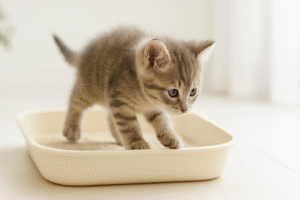
Kittens are small, so pick a low-sided, easy-to-enter box. A full-size box can feel intimidating at first. A kitten-friendly litter box with one lowered side helps them step in and out comfortably.
➡️ Best Pet Products in 2025: Beds, Toys, and Essentials
2. Pick the Best Cat Litter for Kittens
Use unscented, non-clumping litter in the early weeks. Kittens may nibble or inhale litter while exploring, so avoid strong perfumes or clumping formulas. Kitten attract litter can also help them recognize where to go.
3. Decide the Ideal Litter Box Placement
Quiet, private spaces are best — bathrooms, laundry rooms, or a corner of the living area. Keep the litter box away from food and water. If you have multiple kittens or floors, provide a box for each level.
4. Gather Cleaning Supplies and Training Tools
Stock up on a small scoop, biodegradable waste bags, paper towels, and pet-safe cleaners. Avoid ammonia-based products (they smell like urine to cats). Some owners also use litter box attractant sprays to speed up results.
How to Litter Train a Kitten Step-by-Step
This is the heart of the process — the actual kitty litter training steps that help your kitten learn quickly.
Step 1: Introduce Your Kitten to the Litter Box
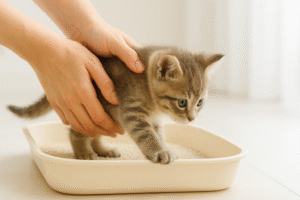
Right after bringing your kitten home, show them the litter box. Gently place them inside so they can sniff and explore. Repeat this several times during the first day.
If you adopted your kitten from a shelter, ask what type of litter they used — consistency helps.
Step 2: Encourage Exploration and Sniffing
Don’t rush the process. Let your kitten paw around and dig a bit. That digging motion triggers their natural potty instincts.
Step 3: Place Your Kitten in the Litter Box After Meals and Naps
Timing is everything. After your kitten eats, drinks, wakes up, or finishes playing, carry them to the litter box. This routine builds habits.
Step 4: Reward Success Immediately
Each time your kitten uses the litter box correctly, offer gentle praise or a tiny treat. Positive reinforcement works far better than punishment.
Avoid scolding for accidents — it can cause fear and setbacks.
Step 5: Keep the Litter Box Clean
Scoop solids twice a day and change the litter completely every few days. Cats are clean creatures — a dirty litter box is a common reason for refusal.
Step 6: Be Patient and Consistent
Most kittens master litter training in 7–10 days. Stay consistent with box placement, litter type, and schedule. If accidents happen, quietly clean up and try again.
Troubleshooting: When Your Kitten Won’t Use the Litter Box
Even with perfect setup, some kittens need extra help. Here’s how to fix common issues.
Why Isn’t My Kitten Using the Litter Box?
Possible reasons include:
-
The box is too big or hard to access.
-
The litter smells too strong.
-
The box is near noisy appliances.
-
It’s not being cleaned often enough.
How to Get a Kitten to Pee or Poop in the Litter Box
-
Place your kitten in the box after meals and naps.
-
Use a small amount of soiled litter to remind them of the scent.
-
Keep them confined to one room until they’re consistent.
-
Avoid carpeted rooms at first — kittens may confuse them with litter.
Litter Box Aversion or Anxiety
If your kitten avoids the box completely, move it to a quieter spot. Make sure no other pets are intimidating them.
Persistent issues? Visit your vet — urinary infections can also cause litter box avoidance.
➡️ Pet Health Basics: Common Signs, Symptoms, and Care
Retraining Older or Rescued Kittens
Older kittens can be retrained using the same step-by-step method, but consistency is key. Keep them in a smaller area for a week with easy access to the litter tray.
Common Litter Training Mistakes to Avoid
-
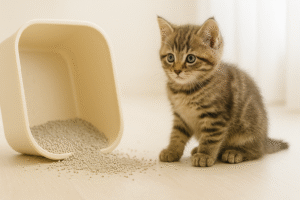
❌ Using scented or clumping litter too early.
-
❌ Moving the litter box too soon after success.
-
❌ Punishing accidents instead of rewarding success.
-
❌ Ignoring cleanliness — cats may reject dirty boxes.
-
❌ Providing only one box for multiple kittens.
Tip: A good rule is one litter box per cat, plus one extra if you own multiple cats.
Best Products to Help with Kitten Litter Box Training
-
Kitten-safe, low-sided litter boxes — easy entry for small kittens.
-
Unscented non-clumping litter — gentle on paws and safe if ingested.
-
Litter mats and scoops — reduce tracking and make cleanup easy.
-
Litter attractant spray — helps kittens find their box faster.
➡️ Best Cat Scratching Posts for Indoor Cats
➡️ Best Automatic Pet Feeders Reviewed