
If you’re tired of cats scratching the couch, clawing the carpet, or destroying chairs and sofas, you are not alone. Nearly every cat owner eventually searches “how do I stop a cat from scratching furniture?” Luckily, scratching is a normal behavior—and you can train your cat to stop damaging the furniture without yelling, punishment, or declawing.
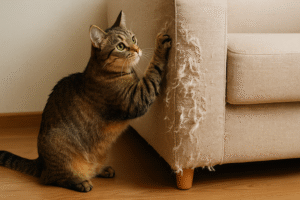
This guide explains why cats scratch, how to stop cats from clawing furniture step-by-step, the best deterrents, how to train a cat not to scratch sofas or carpets, and what to do if your cat won’t stop.
Let’s fix your furniture—and keep your cat happy.
✅ Why Do Cats Scratch Furniture and Carpets?
Before we talk solutions, it helps to understand why cats scratch stuff. Scratching is not “bad behavior.” It’s instinctive.
✔ Natural Reasons Cats Scratch:
-
Sharpening their claws
-
Marking territory (cats have scent glands in their paws)
-
Stretching muscles
-
Relieving stress or frustration
-
Boredom or lack of stimulation
✔ Why do cats scratch furniture and carpets instead of scratch posts?
-
The couch is close to where you sit → your cat wants to mark scent near you
-
Fabric feels good under their claws
-
The post is the wrong size, texture, or location
-
No training or redirection
Some cats prefer vertical scratching posts, others love horizontal scratchers or carpet scratch pads. If the scratcher doesn’t match their preference, they’ll ignore it.
✅ How to Stop Cats from Scratching Furniture (Step-by-Step)
This is the best way to stop cats from scratching furniture, couches, and carpets:
Offer a better scratching option → Reward your cat for using it → Block access to furniture
Follow this easy plan:
Step 1: Place a Scratching Post Next to the Furniture They Claw
If you want to stop cats from clawing furniture, you must give them something more appealing.
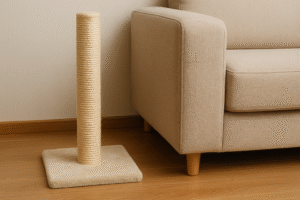
✔ Add a tall scratching post for cats next to the sofa
✔ Add a horizontal scratcher if your cat scratches carpets or rugs
✔ Put one by each favorite spot: couch arm, bed, chair, door, rug
Cats pick the closest, easiest option.
Make the scratching post the obvious choice.
Best Materials:
-
Sisal rope (most cats love it)
-
Sisal fabric
-
Cardboard scratchers
-
Carpet scratchers for cats who love rugs
Step 2: Make the Furniture Less Appealing
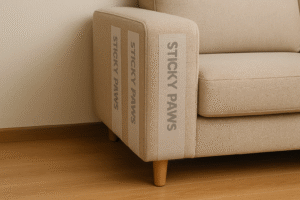
While you train your cat to use their post, block or protect your furniture.
Try:
-
Sticky Paws (double-sided tape cats hate walking on)
-
Aluminum foil or plastic mats
-
Couch protector shields
-
Slipcovers
This prevents cat scratch damage while encouraging better habits.
Step 3: Use a Cat Scratch Deterrent
A safe cat anti-scratch spray or citrus-based deterrent helps discourage cats from scratching furniture.
Citrus, rosemary, and eucalyptus scents often work.
Good options:
-
Store-bought cat scratch deterrent spray
-
DIY water + citrus essential oil (very light)
Avoid anything with strong chemicals or vinegar that might damage fabric.
Step 4: Show Your Cat the Right Place to Scratch
Training a cat is easier than most owners believe.
How to train a cat not to scratch furniture:
-
Gently pick them up when they scratch the couch
-
Place their paws on the scratch post
-
When they scratch the post → PRAISE + treats
This positive reinforcement teaches:
✔ Couch = no reward
✔ Scratching post = attention + food
Step 5: Reward Good Behavior (Works Fast)
Every time your cat uses the post:
-
Give treats
-
Pet them
-
Use praise (“Good job!”)
You’re teaching the cat that scratching posts = happy time.
Step 6: Trim Claws Regularly
Shorter claws cause less damage.
-
Trim every 2–3 weeks
-
Use cat-safe nail clippers
-
Go slow and reward afterward
For aggressive scratchers, you can temporarily use nail caps (like Soft Paws). They slide over the claws and protect your couch while training continues.
Step 7: Never Punish Your Cat
Yelling, spraying water, or scolding:
-
Damages trust
-
Causes anxiety
-
Makes scratching worse
Cats don’t understand punishment—they respond to reward and redirection.
✅ Best Ways to Deter Cats from Scratching Furniture
Want quick, practical tools? These methods instantly prevent cats from scratching furniture.
✔ Sticky Tape (Sticky Paws)
Cats hate the sticky surface. Works on:
-
Couch arms
-
Carpet corners
-
Chairs
-
Bed frames
✔ Furniture Protectors
Clear plastic guards protect fabric and leather.
Search terms: couch protector cat, sofa scratch shield
✔ Cat Scratch Deterrent Spray
Spray daily on areas being scratched.
✔ Move Scratchers Where Scratching Happens
If the cat scratches the couch arm, the scratching post should sit directly in front of the couch arm.
✔ Use Catnip to Attract Them
Rub catnip on the scratch post.
Works like magic for many cats.
✅ How to Train Cats Not to Scratch Sofas or Couches
If your goal is to stop a cat from scratching the couch, follow this pattern:
✔ Block the couch
✔ Add a scratching post next to the couch
✔ Reward scratching on the post
✔ Use a deterrent on the sofa
✔ Be consistent for 2–3 weeks
If your cat scratches the carpet, add a horizontal carpet scratcher for cats. Many cats prefer scratching flat surfaces.
✅ Why Cats Scratch Carpets
-
Texture feels good
-
Marking territory near a walkway
-
Carpet doesn’t move like a loose scratcher
How to stop cats from scratching the carpet:
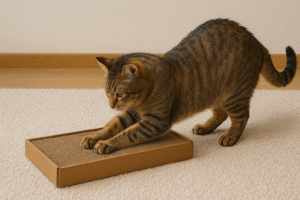
-
Lay scratching mats over the rug corner
-
Add a horizontal board or cardboard scratcher
-
Spray carpet with deterrent
-
Reward scratching mats only
✅ Choosing the Best Scratching Posts and Cat Furniture
Not all scratching posts are created equal.
If you want to stop cats from destroying furniture, the post must be:
✔ Tall (at least 30 inches for full stretch)
✔ Heavy, not wobbly
✔ Sisal texture for grip
✔ Close to furniture, not hidden in a corner
Cats scratch where you relax. Place scratchers by:
-
Sofas
-
The bed
-
Your favorite chair
-
Windows
-
Doors
If the post is far away, cats won’t go find it.
Tip: Try 2–3 types and see what your cat prefers.
✅ Home Remedies and Calming Solutions
Sometimes cats scratch because of stress.
Try:
-
More playtime
-
Window perches
-
Puzzle toys
-
Catnip toys
-
Feliway pheromone diffusers (calming scent)
If your cat is anxious or newly adopted, scratching often improves with enrichment.
✅ Common Mistakes Owners Make
❌ Declawing — painful and can cause lifelong problems
❌ Yelling or punishment — increases stress scratching
❌ Tiny scratchers — too small to use
❌ Placing scratch posts in hidden rooms
❌ Not rewarding good behavior
Fix the environment → the behavior changes.
✅ Best Products for Stopping Furniture Scratching
(Great place for affiliate links and future internal linking to product review posts)
-
Best cat scratching posts for heavy scratchers
-
Couch protector shields
-
Sticky Paws tape
-
Anti-scratch spray
-
Sisal or cardboard scratchers
-
Nail caps
✅ When to Call a Vet or Behaviorist
If your cat suddenly begins scratching the carpet, sofa, or walls:
-
New pets
-
Moving homes
-
Loud noises
-
Medical pain
Talk to a vet if scratching starts suddenly with no clear reason.
✅ FAQs About Stopping Cats from Scratching Furniture
1. How do you train a cat not to scratch furniture?
Give your cat a scratcher near the furniture, reward every time they use it, block the furniture with sticky tape or plastic, and never punish. Redirect + reward works best.
2. What smell stops cats from scratching?
Citrus, rosemary, mint, and some anti-scratch sprays can deter cats. Always test on small fabric areas first.
3. How do you stop a cat from scratching the couch when you’re gone?
Use a couch protector, sticky tape, and keep scratch posts nearby. Offer toys and enrichment to prevent boredom scratching.
4. Do nail caps stop cats from scratching furniture?
Yes, nail caps can help prevent damage while training continues. They are safe, painless, and temporary.
5. How long does it take to train a cat to stop scratching furniture?
Most cats learn within 2–3 weeks if you consistently reward scratching posts and block the sofa.
6. Why does my cat keep scratching the carpet?
Many cats prefer horizontal surfaces. Use a horizontal scratch pad, rug scratcher, or cardboard board.
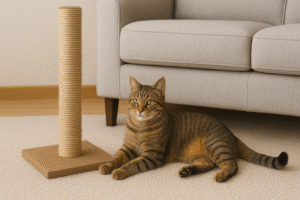
✅ Conclusion
Stopping your cat from scratching furniture is possible—and easier than most owners expect. Cats don’t scratch to be naughty. They scratch to stretch, mark territory, and stay healthy.
When you:
✔ Offer a scratching post
✔ Protect your furniture
✔ Reward good behavior
✔ Stay consistent
—you’ll protect your home and keep your cat happy.
If you found this guide helpful, explore more cat-care tips on PetWiseTips.com and learn how to make life with pets easier, cleaner, and more fun.