
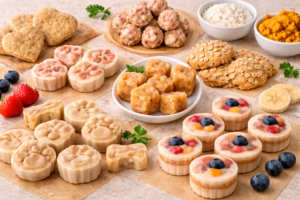
Dogs with sensitive stomachs need extra care—especially when it comes to treats. While store-bought snacks may seem convenient, many contain ingredients that can upset your dog’s digestive system. The good news? With the right ingredients and simple preparation, you can make dog treats for sensitive stomachs that are safe, nutritious, and delicious.
In this guide, we’ll cover everything you need to know—from signs of digestive sensitivity to 7 gentle dog treat recipes, ingredients to avoid, expert tips, and FAQs backed by veterinary advice.
What Are Dog Treats for Sensitive Stomachs?
Dog treats for sensitive stomachs are specially made snacks designed to be easy to digest, low in fat, and free from common irritants.
What does “sensitive stomach” mean in dogs?
A sensitive stomach means your dog’s digestive system reacts poorly to certain foods. This can lead to discomfort or recurring digestive issues.
Common digestive issues in dogs
-
Loose stools or diarrhea
-
Vomiting after eating
-
Excessive gas or bloating
-
Loss of appetite
According to PetMD, food intolerance is one of the most common causes of chronic digestive upset in dogs.
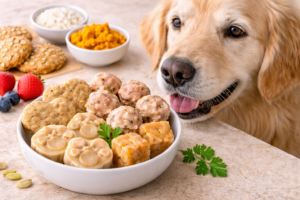
How treats can trigger stomach sensitivity
Many commercial treats contain:
-
Artificial preservatives
-
Fillers like corn or soy
-
High-fat ingredients
These can overwhelm a dog’s digestive system, especially in sensitive breeds.
Regular treats vs gentle dog treats
Gentle dog treats focus on:
-
Limited ingredients
-
Simple cooking methods
-
Natural, whole foods
Signs Your Dog Needs Treats for a Sensitive Stomach
Frequent diarrhea or loose stools
If your dog consistently has soft stools after treats, it’s a red flag.
Vomiting after eating treats
Occasional vomiting can happen, but repeated episodes often point to food intolerance.
Excessive gas or bloating
Gas is often linked to poorly digestible ingredients.
Food allergies vs food intolerances
-
Allergy: Immune reaction (itching, ear infections)
-
Intolerance: Digestive reaction (vomiting, diarrhea)
When to consult a veterinarian
If symptoms persist longer than a few days, consult your vet or refer to trusted guidance from the American Kennel Club (AKC).

Ingredients to Look for in Dog Treats for Sensitive Stomachs
Choosing the right ingredients is the foundation of healthy digestion.
Easily digestible proteins
-
Boiled chicken
-
Turkey
-
White fish
These are commonly recommended by vets for dogs with stomach issues.
Gentle carbohydrates
-
White rice
-
Oats
-
Sweet potato
They provide energy without irritating the gut.
Fiber-rich digestion helpers
-
Pumpkin puree
-
Unsweetened applesauce
Pumpkin is especially effective for regulating stool consistency.
Probiotics and gut-friendly foods
-
Plain yogurt (small amounts)
-
Kefir (dog-safe, unsweetened)
Limited-ingredient dog treats
Fewer ingredients = fewer chances of a bad reaction.
Ingredients to Avoid for Dogs with Sensitive Stomachs
Artificial preservatives and fillers
Avoid BHA, BHT, artificial colors, and flavor enhancers.
Common allergens
-
Wheat
-
Corn
-
Soy
-
Dairy (for many dogs)
High-fat ingredients
Fatty meats and oils can trigger diarrhea and pancreatitis.
Sugar, salt, and seasonings
Dogs don’t need seasoning—plain is best.
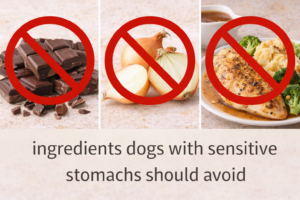
Unsafe human foods
Never use:
-
Chocolate
-
Onions
-
Garlic
-
Grapes
Refer to ASPCA’s toxic food list for full details.
7 Best Dog Treats for Sensitive Stomachs (Homemade Recipes)
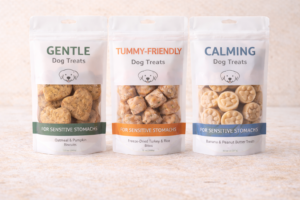
These homemade dog treats use simple, vet-approved ingredients and are ideal for dogs with digestive sensitivities.
1. Pumpkin & Oat Digestive Dog Treats
Pumpkin helps regulate digestion, while oats are gentle on the stomach.
Best for: Dogs with diarrhea or constipation
2. Boiled Chicken & Rice Training Treats
This classic vet-recommended combo is easy to digest and perfect for training.
Best for: Dogs recovering from stomach upset
3. Sweet Potato Chews
Naturally chewy and rich in fiber, sweet potatoes support gut health.
Best for: Long-lasting, low-fat snacks
Sweet Potato Dog Treats
4. Banana & Oat Soft Dog Treats
Bananas are gentle and rich in potassium, making them great for sensitive stomachs.
Best for: Senior dogs or dogs with dental issues
5. Applesauce-Based Low-Fat Dog Treats
Unsweetened applesauce provides fiber and moisture without irritation.
Best for: Dogs prone to constipation
6. Plain Yogurt Frozen Dog Treats
Frozen yogurt treats add probiotics that support digestive balance.
Best for: Hot weather and gut health
7. Turkey & Rice Bite-Sized Treats
Lean turkey is easier to digest than red meat.
Best for: Dogs with protein sensitivities
How to Make Dog Treats for Sensitive Stomachs (Step-by-Step)
Step 1: Choose the right ingredients
Stick to 1–3 ingredients per recipe.
Step 2: Use gentle cooking methods
-
Boiling
-
Baking at low temperatures
-
Freezing
Avoid frying or heavy oils.
Step 3: Practice portion control
Treats should make up less than 10% of daily calories.
Step 4: Store treats safely
-
Refrigerate fresh treats
-
Freeze for longer shelf life
Step 5: Introduce treats gradually
Start with small portions and observe reactions for 24–48 hours.
Grain-Free vs Limited Ingredient Treats – Which Is Better?
When grain-free helps
Helpful if your dog has a diagnosed grain allergy.
When grain-free is unnecessary
Many dogs digest oats and rice just fine.
Benefits of limited-ingredient treats
They reduce digestive stress and make it easier to identify triggers.
Vet opinion
The FDA and AKC emphasize that grain-free is not always better—digestibility matters more.
Best Store-Bought Dog Treats for Sensitive Stomachs
What to check on labels
-
Short ingredient list
-
Single protein source
-
No artificial additives
Single-protein treats
Freeze-dried turkey or fish treats are often well tolerated.
Vet-recommended options
Look for brands labeled “limited ingredient” or “sensitive digestion.”
Homemade vs store-bought
Homemade gives you full control, while store-bought offers convenience.
Common Mistakes When Feeding Treats to Sensitive Dogs
Introducing new treats too fast
Always transition slowly.
Overfeeding treats
Too many treats can overwhelm digestion.
Mixing too many ingredients
Simple is always safer.
Ignoring warning signs
Stop treats immediately if symptoms return.
Expert Tips to Improve Your Dog’s Digestive Health
Keep treat recipes consistent
Avoid frequent ingredient changes.
Use treats during elimination diets
This helps identify problem foods.
Pair treats with sensitive stomach dog food
Consistency improves digestion.
Keep a food reaction journal
Track what works—and what doesn’t.
FAQs About Dog Treats for Sensitive Stomachs
What is the best treat for dogs with sensitive stomachs?
Pumpkin, boiled chicken, and rice-based treats are among the safest options.
Can dogs with sensitive stomachs eat peanut butter?
Yes, but only unsweetened, xylitol-free peanut butter and in small amounts.
Are frozen treats safe for sensitive dogs?
Yes, if made with gentle ingredients like yogurt or pumpkin.
How many treats can a sensitive dog have per day?
Treats should not exceed 10% of daily caloric intake.
Should I stop treats if my dog has diarrhea?
Yes. Pause treats and consult a vet if diarrhea continues.
Conclusion: Gentle Treats, Happy Tummies
Choosing the right dog treats for sensitive stomachs can make a huge difference in your dog’s comfort, digestion, and overall health. By focusing on simple, wholesome ingredients and gentle preparation methods, you can reward your dog without the worry of stomach upset.
👉 Next steps:
Explore more healthy treat ideas on PetWiseTips.com, try one recipe at a time, and always listen to your dog’s digestive signals.