

Why Summer Is Tough on Dogs
Summer heat is not just uncomfortable for dogs—it can be dangerous.
Unlike humans, dogs don’t sweat efficiently. They rely on panting and limited heat release through their paws. During hot weather, this puts them at risk of:
-
Dehydration
-
Overheating
-
Lethargy
-
Heat exhaustion
Many dogs also lose appetite in summer, making hydration even harder.
That’s why homemade frozen dog treats for summer are such a smart solution. They help cool dogs down, increase water intake, and provide safe enrichment—when made correctly.
Later in this guide, you’ll also see trusted tools and ingredients that make frozen treats safer and easier to prepare at home.
What Are Homemade Frozen Dog Treats?
Homemade frozen dog treats are cold, dog-safe snacks made by freezing simple ingredients like:
-
Plain yogurt
-
Fruits (banana, watermelon, berries)
-
Dog-safe peanut butter
-
Low-sodium broth
Frozen vs Baked Dog Treats
-
Frozen treats: Cooling, hydrating, soft
-
Baked treats: Shelf-stable, crunchy
Frozen treats are especially useful in hot climates or for dogs that struggle with summer heat.
Why Homemade Frozen Dog Treats Matter in Summer
According to the AKC, dogs can overheat quickly in warm weather—especially brachycephalic breeds like Bulldogs and Pugs.
Benefits of Frozen Dog Treats
-
Help regulate body temperature
-
Encourage hydration
-
Provide mental enrichment
-
Reduce boredom during hot days
Frozen treats should support cooling, not replace proper shade, water, and rest.
Signs Your Dog Needs Cooling Treats
Watch for these early heat-stress signs:
-
Heavy panting
-
Drooling
-
Reduced energy
-
Avoiding food
If symptoms worsen, the ASPCA recommends immediate cooling and veterinary care.
Frozen treats help—but they’re part of a bigger heat-safety plan.
How to Make Homemade Frozen Dog Treats Safely
Safety Basics
-
Use dog-safe ingredients only
-
Avoid sugar, salt, and sweeteners
-
Keep portions small
-
Freeze in appropriate molds
Storage Tips
-
Store frozen treats in airtight containers
-
Use within 1–2 months
-
Serve outside or on easy-clean surfaces
7 Homemade Frozen Dog Treats for Summer
-
Frozen peanut butter banana dog treats
-
Frozen yogurt berry dog bites
-
Watermelon frozen dog cubes
-
Pumpkin & yogurt frozen treats
-
Chicken broth frozen dog pops
-
Apple & coconut water frozen treats
-
Carrot & banana frozen chews
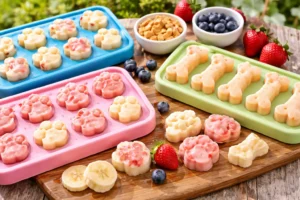
Best Tools & Ingredients for Homemade Frozen Dog Treats
🐾 1. Best Silicone Dog Treat Molds for Frozen Treats
Silicone molds make frozen treats safer and more consistent.
They help with:
-
Portion control
-
Easy release
-
Freezer safety
Pros
-
BPA-free and food-grade
-
Freezer-safe
-
Easy to clean
Cons
-
Requires freezer space
Who Should Buy
-
Small- and medium-dog owners
-
Anyone making frozen treats weekly
Who Should Avoid
-
Owners with limited freezer room
🐾 2. Best Xylitol-Free Peanut Butter for Dogs
Peanut butter is popular—but xylitol is toxic to dogs, as confirmed by the ASPCA.
A dog-safe peanut butter should:
-
Contain only peanuts (and maybe salt)
-
Have no artificial sweeteners
-
Be low sodium
Pros
-
Highly palatable
-
Adds healthy fats
-
Improves frozen treat texture
Cons
-
Calorie-dense
Who Should Buy
-
Dogs without nut allergies
Who Should Avoid
-
Dogs with pancreatitis or obesity
🐾 3. Best Plain Yogurt for Dogs (Probiotic-Friendly)
Plain yogurt adds probiotics and creaminess.
Pros
-
Supports digestion
-
Adds calcium
-
Great base for frozen treats
Cons
-
Not for lactose-intolerant dogs
Who Should Buy
-
Dogs with mild stomach sensitivity
Who Should Avoid
-
Dairy-sensitive dogs
🐾 4. Best Dog-Safe Bone Broth or Chicken Broth
Broth increases hydration and flavor.
Pros
-
Encourages fluid intake
-
Savory option for picky eaters
-
Supports joints and digestion
Cons
-
Must be low sodium
Who Should Buy
-
Dogs who avoid water
-
Senior dogs
Who Should Avoid
-
Dogs on low-protein vet diets
🐾 5. Best Airtight Freezer Containers for Dog Treats
Proper storage prevents freezer burn and contamination.
Pros
-
Keeps treats fresh
-
Controls odors
-
Freezer-safe
Cons
-
Extra cost
Who Should Buy
-
Batch treat makers
Who Should Avoid
-
Same-day treat users
Buying Guide: What to Look for Before Choosing Ingredients & Tools
-
Always read labels for sugar and salt
-
Choose BPA-free, food-grade materials
-
Use low-fat ingredients in hot weather
-
Match mold size to dog size
The AKC recommends treats stay under 10% of daily calories.
Expert Tips & Vet-Backed Recommendations
-
Offer frozen treats 1–2 times daily max
-
Supervise dogs while eating frozen treats
-
Avoid very hard frozen treats for sensitive teeth
-
Frozen treats support cooling—but don’t prevent heatstroke
PetMD emphasizes that frozen treats are a supplement, not a heat-safety solution alone.
FAQs About Homemade Frozen Dog Treats for Summer
Q1: Are frozen dog treats safe for all dogs?
Yes, when ingredients and portions are appropriate.
Q2: Can puppies eat frozen dog treats?
Yes, in very small amounts.
Q3: Do frozen treats prevent heatstroke?
No, they only help with cooling.
Q4: How long do frozen dog treats last?
Up to 2 months when stored airtight.
Q5: What fruits should dogs avoid frozen?
Grapes, cherries, and citrus.
Keeping Dogs Cool the Smart Way
Homemade frozen dog treats for summer are one of the easiest ways to help dogs stay cool, hydrated, and happy.
The key is:
-
Dog-safe ingredients
-
Small portions
-
Proper storage
-
Trusted tools
👉 Final Recommendation:
If you make frozen treats often, investing in quality silicone molds, dog-safe peanut butter, and airtight freezer containers makes the process safer and more consistent—for both you and your dog.