
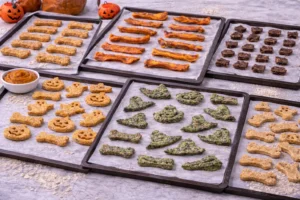
Why Halloween Is Risky for Dogs
Halloween is fun for people—but it can be stressful and dangerous for dogs.
Every year, vets see a spike in emergency visits around Halloween due to:
-
Chocolate and candy ingestion
-
Xylitol poisoning from sugar-free sweets
-
Wrapper and plastic choking hazards
-
Overfeeding from well-meaning guests
According to the ASPCA, Halloween candy is one of the most common seasonal poisoning risks for dogs.
The good news?
You don’t have to exclude your pup from the celebration.
With homemade Halloween dog treats, you can give your dog something festive, fun, and completely safe—without the risks of human candy.
Later in this guide, we’ll also cover trusted ingredients and tools that make Halloween treat prep easier and safer.
What Are Homemade Halloween Dog Treats?
Homemade Halloween dog treats are dog-safe snacks inspired by Halloween themes—colors, shapes, and fall flavors—made specifically for canine digestion.
They avoid:
-
Chocolate
-
Artificial dyes
-
Sugar and sweeteners
-
Raisins and nuts
Instead, they use ingredients like:
-
Pumpkin
-
Peanut butter (xylitol-free)
-
Banana
-
Sweet potato
-
Turkey
Dog Treats vs Halloween Candy
Human candy is unsafe for dogs.
Dog treats are simple, lightly prepared, and portion-controlled.
Why Homemade Halloween Dog Treats Matter for Pups
Halloween increases the chances of:
-
Dogs getting into candy bowls
-
Guests feeding unsafe snacks
-
Sudden diet changes causing diarrhea
The AKC recommends offering dogs their own safe treats during holidays to reduce begging and accidental poisoning.
Benefits of Halloween-Themed Dog Treats
-
Keeps dogs included safely
-
Reduces stress and scavenging
-
Supports mental enrichment
-
Helps manage holiday feeding
Common Halloween Problems Dog Owners Face
Many pet parents experience:
-
Dogs stealing candy
-
Xylitol exposure from gum
-
Digestive upset from rich foods
-
Overfeeding during trick-or-treating
-
Guests unknowingly feeding dogs
Planning dog-safe treats ahead of time prevents most of these issues.
How to Make Homemade Halloween Dog Treats Safely
Safety Rules
-
Use dog-safe ingredients only
-
Avoid chocolate, raisins, nutmeg, and candy
-
Keep treats small
-
Supervise dogs while eating
Storage Tips
-
Refrigerate baked treats 5–7 days
-
Freeze no-bake treats for longer storage
-
Use airtight containers
8 Homemade Halloween Dog Treats for Pups
-
Pumpkin peanut butter Halloween biscuits
-
Ghost-shaped yogurt dog treats
-
Apple & oat Halloween cookies
-
Frozen pumpkin yogurt bites
-
Sweet potato Halloween chews
-
Banana peanut butter monster bites
-
Carrot & pumpkin low-calorie treats
-
Turkey & pumpkin savory dog treats
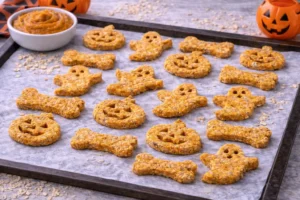
Best Ingredients & Tools for Homemade Halloween Dog Treats
🐾 1. Best Xylitol-Free Peanut Butter for Dog Treats
Peanut butter is a favorite ingredient—but xylitol is extremely toxic to dogs, as confirmed by the ASPCA.
A dog-safe peanut butter should:
-
Contain only peanuts (and maybe salt)
-
Have zero artificial sweeteners
-
Be low in sodium
Pros
-
Dogs love the taste
-
Improves treat texture
-
Safe fat source in moderation
Cons
-
Calorie-dense
Who Should Buy
-
Dogs without nut allergies
-
Owners baking Halloween treats
Who Should Avoid
-
Dogs with pancreatitis
🐾 2. Best Pure Pumpkin Puree for Dogs (No Spices)
Pumpkin is one of the safest and most useful Halloween ingredients for dogs.
Pros
-
Supports digestion
-
High fiber
-
Low fat
Cons
-
Must be 100% pure (not pie filling)
Who Should Buy
-
Dogs with sensitive stomachs
Who Should Avoid
-
Dogs on vet-restricted fiber diets
🐾 3. Best Silicone Halloween Dog Treat Molds
Halloween molds make treats fun and controlled.
Pros
-
BPA-free
-
Freezer and oven safe
-
Great portion control
Cons
-
Seasonal storage required
Who Should Buy
-
Holiday bakers
-
Small-dog owners
Who Should Avoid
-
Minimalist kitchens
🐾 4. Best Non-Stick Baking Mats for Dog Treats
Reusable baking mats simplify cleanup.
Pros
-
Even baking
-
No added oils
-
Eco-friendly
Cons
-
Only useful for baked treats
Who Should Buy
-
Frequent treat bakers
Who Should Avoid
-
No-bake only users
🐾 5. Best Airtight Containers for Storing Dog Treats
Proper storage prevents spoilage during busy holidays.
Pros
-
Keeps treats fresh
-
Freezer-safe
-
Odor control
Cons
-
Extra cost
Who Should Buy
-
Make-ahead planners
Who Should Avoid
-
Same-day treat makers
Buying Guide: What to Look for Before Choosing Ingredients & Tools
-
Always read labels for hidden sweeteners
-
Avoid artificial dyes
-
Choose BPA-free, food-grade tools
-
Match molds to dog size
-
Keep treats low-fat
The AKC recommends treats stay under 10% of daily calories.
Expert Tips & Vet-Backed Recommendations
-
Keep candy bowls out of reach
-
Inform guests not to feed dogs
-
Introduce new treats slowly
-
Skip treats if your dog has GI issues
PetMD warns that Halloween candy is a top cause of holiday poisoning in dogs.
FAQs About Homemade Halloween Dog Treats
Q1: Can dogs eat Halloween candy?
No. Chocolate and sugar-free candy are dangerous.
Q2: Is pumpkin safe for dogs every day?
Yes, in moderation.
Q3: Are Halloween dog treats safe for puppies?
Yes, in very small portions.
Q4: How do I keep my dog safe on Halloween night?
Keep candy secured and offer dog-safe treats.
Q5: What Halloween foods are toxic to dogs?
Chocolate, raisins, xylitol, and candy wrappers.
Celebrate Halloween the Dog-Safe Way
Halloween doesn’t have to be dangerous for dogs.
With homemade Halloween dog treats, you can:
-
Keep your pup safe
-
Avoid candy accidents
-
Still include them in the fun
👉 Final Recommendation:
Plan ahead. Use dog-safe ingredients. And if you make Halloween treats every year, investing in safe peanut butter, pure pumpkin, festive molds, and airtight storage makes the process easier and safer.