

Why Bacon Treats Are Tricky for Dogs
Dogs love bacon.
The smell alone is enough to grab instant attention.
But bacon is also one of the most misunderstood foods when it comes to dogs.
Many store-bought bacon dog treats contain:
-
Artificial bacon flavor
-
Excess salt
-
Preservatives
-
Added fats
Overfeeding bacon—especially low-quality bacon—can lead to:
-
Digestive upset
-
Weight gain
-
Pancreatitis in severe cases
That doesn’t mean bacon is completely off-limits.
When used sparingly and prepared the right way, homemade bacon dog treats can be safe, delicious, and extremely effective as high-value rewards.
Later in this guide, you’ll also find trusted tools and ingredients that help you control fat, salt, and portion size when making bacon treats at home.
What Are Homemade Bacon Dog Treats?
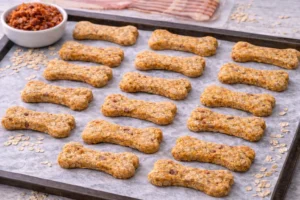
Homemade bacon dog treats are snacks made using real bacon, usually mixed with safer base ingredients like oats, pumpkin, or sweet potato to reduce fat and sodium.
Homemade vs Store-Bought Bacon Treats
-
Homemade: real ingredients, portion control, fewer additives
-
Store-bought: convenient, but often heavily processed
Dog-safe bacon treats typically use:
-
Low-sodium bacon
-
Nitrate-free bacon
-
Turkey bacon (in some cases)
According to PetMD, bacon should only be given to dogs occasionally and in very small amounts.
Why Homemade Bacon Dog Treats Matter for Dogs
Bacon works best as a high-value treat, not an everyday snack.
Why Dogs Love Bacon
-
Strong aroma
-
Savory flavor
-
Fat content dogs instinctively crave
The AKC explains that high-value treats are useful for:
-
Training
-
Recall practice
-
Distraction-heavy environments
-
Behavioral reinforcement
Homemade bacon dog treats allow you to:
-
Reduce grease
-
Control sodium
-
Combine bacon with healthier ingredients
Common Problems & Risks Related to Bacon Dog Treats
Bacon treats can cause issues if handled incorrectly.
Common Risks
-
High fat leading to pancreatitis
-
Excess salt causing dehydration
-
Weight gain from overfeeding
-
Artificial flavors in commercial treats
Dogs that should avoid bacon treats include:
-
Dogs with pancreatitis
-
Dogs with kidney disease
-
Dogs on low-fat vet diets
This is why moderation and preparation matter so much.
How to Make Homemade Bacon Dog Treats Safely
(How-To Schema Eligible Section)
Safety Rules
-
Choose low-sodium, nitrate-free bacon
-
Cook bacon thoroughly and drain grease
-
Mix bacon with fiber-rich ingredients
-
Keep treats small
Storage Tips
-
Refrigerate baked treats 5–7 days
-
Freeze extras for longer storage
-
Store in airtight containers
The ASPCA warns that high-fat foods should only be offered in small amounts.
7 Homemade Bacon Dog Treats Dogs Love
-
Bacon & oat crunchy dog biscuits
-
Bacon & peanut butter dog cookies
-
Bacon & pumpkin soft dog treats
-
Bacon & sweet potato dog treats
-
Bacon training treat cubes
-
Bacon & cheese dog treats (occasional)
-
Dehydrated bacon dog treat strips
Best Tools & Ingredients for Homemade Bacon Dog Treats
🐾 1. Best Low-Sodium, Nitrate-Free Bacon for Dogs
Not all bacon is created equal.
Dog-safer bacon should:
-
Be low in sodium
-
Contain no nitrates or nitrites
-
Have minimal added sugar
Pros
-
Strong flavor dogs love
-
More control over fat intake
-
Better ingredient transparency
Cons
-
Still high in fat
-
Must be fed sparingly
Who Should Buy
-
Owners making occasional high-value treats
Who Should Avoid
-
Dogs with pancreatitis or kidney issues
🐾 2. Best Dog Treat Dehydrator for Bacon Treats
A dehydrator helps reduce grease and extend shelf life.
Pros
-
Removes excess fat
-
Preserves flavor
-
Longer-lasting treats
Cons
-
Counter space required
-
Higher upfront cost
Who Should Buy
-
Owners making bacon treats regularly
Who Should Avoid
-
Occasional treat makers
🐾 3. Best Non-Stick Baking Mats for Greasy Treats
Bacon dough sticks easily without protection.
Pros
-
Even baking
-
Less grease pooling
-
Easy cleanup
Cons
-
Only useful for baked treats
Who Should Buy
-
Owners baking bacon treats often
Who Should Avoid
-
Dehydrator-only users
🐾 4. Best Dog-Safe Peanut Butter (Xylitol-Free)
Peanut butter enhances bacon flavor—but safety is critical.
Pros
-
Improves taste
-
Helps bind dough
-
Dogs love it
Cons
-
Adds calories
Who Should Buy
-
Training treat makers
Who Should Avoid
-
Dogs with fat restrictions
🐾 5. Best Food Processor for Bacon Treat Prep
Evenly blending bacon helps control portion size.
Pros
-
Smooth texture
-
Faster prep
-
Better distribution
Cons
-
Requires cleaning
Who Should Buy
-
Owners making mixed-ingredient treats
Who Should Avoid
-
Chunk-style treat users
🐾 6. Best Airtight Containers for Bacon Dog Treat Storage
Bacon treats smell strong and spoil quickly without storage.
Pros
-
Odor control
-
Keeps treats fresh
-
Freezer-safe
Cons
-
Extra cost
Who Should Buy
-
Batch treat makers
Who Should Avoid
-
Same-day treat users
Buying Guide: What to Look for Before Choosing Bacon & Tools
-
Always choose low-sodium bacon
-
Avoid nitrates and artificial flavoring
-
Reduce grease before baking
-
Use BPA-free tools
-
Match batch size to how often you treat
Homemade bacon treats are safer than many commercial options—when done correctly.
Expert Tips & Vet-Backed Recommendations
-
Bacon treats should be occasional only
-
Use bacon treats mainly for training
-
Keep portions very small
-
Avoid bacon treats for dogs with GI issues
PetMD warns that high-fat foods are a leading cause of pancreatitis in dogs.
FAQs About Homemade Bacon Dog Treats
Q1: Is bacon safe for dogs?
Yes, in very small amounts and prepared properly.
Q2: Can dogs eat bacon every day?
No. Bacon should be an occasional treat.
Q3: Is turkey bacon better for dogs than pork bacon?
Sometimes, but it can still be high in salt.
Q4: Are bacon dog treats safe for puppies?
Only in very small amounts.
Q5: How much bacon is too much for dogs?
More than a few small bites can be excessive.
Conclusion: Bacon Treats Done the Right Way
Bacon dog treats can be safe, effective, and incredibly rewarding—when used responsibly.
The key is:
-
Low-sodium bacon
-
Small portions
-
Infrequent use
-
Proper preparation
👉 Final Recommendation:
If you plan to make bacon treats at home, invest in quality bacon, proper baking or dehydrating tools, and airtight storage. Use bacon treats as high-value rewards—not everyday snacks.