

Dogs can eat rice — but should dogs eat rice every day? That’s where things get a bit more complicated. Rice is one of the safest foods for dogs, commonly used for upset stomachs, diarrhea, and homemade meals. But daily feeding comes with benefits and risks depending on your dog’s age, size, health, and how much rice you serve.
In this guide, we’ll explore exactly what type of rice is best for dogs, how to prepare it safely, how much rice dogs can eat, and when rice should or should not be fed every day.
You’ll get everything you need to know — simple, clear, and vet-friendly.
What Does “Can Dogs Eat Rice” Actually Mean?
When dog owners ask “can dogs have rice?” they usually mean:
-
Is rice safe for dogs?
-
Can dogs eat white rice cooked?
-
Is brown rice better for dogs?
-
Can dogs eat rice every day without harm?
-
Is rice good for diarrhea in dogs?
Here’s the short answer:
Yes, dogs can eat rice — cooked, plain, and in moderation.
White rice and brown rice are both safe for dogs. Many commercial dog foods already include rice as a carbohydrate source.
But whether a dog should eat rice every day depends on:
-
Your dog’s weight
-
Diet balance
-
Activity level
-
Whether rice replaces essential nutrients
You’ll find the full explanation below.
Is Rice Good for Dogs? Nutrition & Health Benefits
Rice is a gentle, easy-to-digest carbohydrate. It’s not nutritionally complete on its own, but it offers several benefits when paired with balanced dog food.
Nutritional Benefits of Rice for Dogs
-
High-energy carbohydrates
-
Small amount of protein
-
Small amount of fiber (higher in brown rice)
-
Contains magnesium, iron, and B vitamins
-
Gentle on the stomach
Why Vets Use Rice for Digestive Issues
Rice is commonly used in:
-
Chicken and rice diets
-
Dog diarrhea recovery
-
Upset stomach meals
-
Transition diets after vomiting
Rice helps firm up stools and gives the gut a break.
When Rice Helps the Most
-
Dog diarrhea
-
Mild vomiting
-
Soft stool
-
Gastrointestinal upset
-
Post-surgery diet
-
Puppies with temporary stomach issues
If your dog is experiencing diarrhea, rice is often helpful — but you should also read our upcoming article on Puppy Potty Training Tips for related digestive concerns.
Types of Rice: Which Rice Can Dogs Eat?
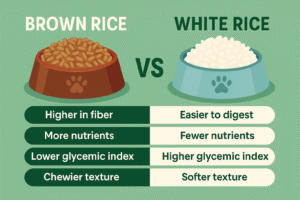
Not all rice is equal. Here are the safest choices.
White Rice for Dogs (Most Common)
Used most often for dog diarrhea, upset stomach, and bland diets.
-
Easy to digest
-
Quick energy
-
Low fiber
-
Best for stomach issues
-
Safe for puppies and seniors
Common question:
✔ Is white rice good for dogs with diarrhea?
Yes — plain white rice is the #1 choice.
✔ Is white rice bad for dogs?
Only if overfed long-term due to high carbs.
Brown Rice for Dogs (Nutritious but Harder to Digest)
-
Higher fiber
-
Better for weight control
-
More nutrients
-
Harder to digest
-
Not ideal for diarrhea
✔ Is brown rice good for dogs? Yes, in moderation.
✔ Can dogs eat brown basmati rice? Yes, cooked and unseasoned.
Jasmine Rice for Dogs
-
Soft, aromatic white rice
-
Easy to digest
-
Good for dogs with sensitive stomachs
✔ Is jasmine rice ok for dogs? Yes.
✔ Is jasmine rice safe for dogs? Yes if plain.
Basmati Rice for Dogs
-
Long grain
-
Less sticky
-
Mild flavor
✔ Is basmati rice good for dogs? Yes.
✔ Is basmati rice safe for dogs? Yes if fully cooked.
Wild Rice for Dogs
-
Technically a grass
-
High in antioxidants
-
More fiber
-
Safe and healthy
✔ Can dogs eat wild rice? Yes — but in small amounts.
Rice Dogs Should Avoid
❌ Fried rice (oil, spices, onions, soy sauce)
❌ Seasoned rice (garlic, onion powder)
❌ Undercooked or raw rice (hard to digest)
❌ Instant flavored rice packets (salt, additives)
Can Dogs Eat Rice Every Day? (The Real Answer)
Yes — but only in moderation.
Dogs can eat rice every day, but it shouldn’t replace a balanced diet.
Here’s why:
Daily Rice Feeding Pros
-
Provides energy
-
Easy to digest
-
Helps maintain stool quality
-
Mixes well with kibble
-
Budget friendly
Daily Rice Feeding Cons
-
Too many carbs → weight gain
-
Nutrient imbalance (lacks amino acids, fats, minerals)
-
May cause constipation if fed alone
-
Can cause blood sugar spikes
Important:
✔ Dogs thrive on protein-based diets, not carb-based diets.
✔ Rice is a supplement — not a main meal.
How Much Rice Can a Dog Eat per Day?
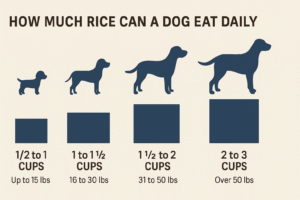
General rule:
Rice should be no more than 10–20% of daily calories.
Approximate safe amounts:
For diarrhea diets, the amount may temporarily increase (covered below).
Rice for Dogs With Diarrhea or Upset Stomach
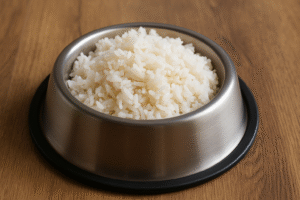
Why Rice Helps With Diarrhea
-
Binds stool
-
Easy to digest
-
Low fiber
-
Reduces gut irritation
White rice works best. Brown rice can worsen diarrhea due to fiber.
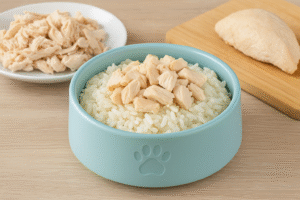
Chicken & Rice Ratio for Diarrhea
Veterinarians recommend:
🔹 2 parts cooked white rice
🔹 1 part plain boiled chicken
Example:
1 cup rice + 1/2 cup chicken.
Serve small meals every 3–4 hours for 24–48 hours.
How Much Rice to Give a Dog With Diarrhea
A good starting point:
-
Small dogs: 1–2 tablespoons
-
Medium dogs: 1/4 cup
-
Large dogs: 1/2 cup
Increase if needed based on stool improvement.
When Rice Won’t Help
Seek a vet if:
-
Diarrhea lasts more than 48 hours
-
Dog is lethargic
-
Dog refuses food
-
There is blood in the stool
-
Puppy diarrhea persists
-
Dog shows signs of dehydration
For more serious symptoms, see our upcoming article on Pet Health Basics.
How to Prepare Rice Safely for Dogs (How-To Guide)
Safe Preparation Checklist
-
Use plain white or brown rice
-
Rinse thoroughly
-
Boil in water (no salt)
-
Do not add oil, garlic, onions, or seasoning
Step-by-Step Recipe (How-To Schema Ready)
Ingredients:
-
1 cup white or jasmine rice
-
4 cups water
Instructions:
-
Rinse rice under cool water.
-
Add rice and water to a pot.
-
Bring to a boil.
-
Reduce heat and simmer 15–20 minutes.
-
Cool before serving.
-
Store extra rice in refrigerator for up to 3 days.
Safe Mix-Ins for Dogs
-
Boiled chicken
-
Scrambled eggs (plain)
-
Cooked turkey
-
Steamed carrots
-
Pumpkin (for stool regulation)
Foods NOT to Mix With Rice
❌ Soy sauce
❌ Salt
❌ Oil/butter
❌ Garlic
❌ Onion (toxic to dogs)
Risks & Common Mistakes When Feeding Dogs Rice
1. Feeding Too Much Rice
Leads to:
-
Weight gain
-
High blood sugar
-
Nutrient deficiency
2. Using Rice as a Meal Replacement
Dogs need protein, fats, vitamins — not just carbs.
3. Feeding Fried or Seasoned Rice
Garlic and onion are toxic to dogs.
4. Feeding Undercooked Rice
May cause digestive problems.
5. Rice Overuse Leading to Constipation
Too much rice can constipate dogs, especially large breeds.
Best Rice for Dogs (Expert Recommendations)
Best for Diarrhea
-
Plain long-grain white rice
-
Boiled white rice
-
Jasmine rice (easy to digest)
Best for Daily Meals
-
Brown rice (more fiber & nutrients)
-
Wild rice (antioxidants)
Best Rice Brands
(You can add affiliate links later.)
-
Long-grain white rice
-
Natural brown basmati
-
Organic jasmine rice
Special Cases: Puppies, Seniors & Dogs With Conditions
Can Puppies Have Rice?
Yes — cooked white rice is safe in small amounts.
NOT as a meal replacement.
Puppies need high protein for growth.
Diabetic Dogs & Rice
Rice raises blood sugar quickly.
✔ Feed rarely
✔ Choose brown rice
✔ Keep portions small
Senior Dogs
Rice may help older dogs with digestion, but monitor for:
-
Weight gain
-
Blood sugar spikes
-
Constipation
Expert Tips & Practical Advice
-
Introduce rice slowly
-
Start with 1–2 tablespoons
-
Mix into regular food
-
Watch stool consistency
-
Stop if constipation occurs
-
Avoid instant flavored rice
-
Always cool rice before serving
FAQs
1. Can dogs eat rice every day?
Yes, but only in moderation. Rice should not replace complete dog food.
2. Is rice good for dogs?
Yes — rice is safe, gentle, and useful for digestive issues.
3. How much rice can a dog eat?
Generally 10–20% of daily calories.
Small dogs: 1–2 tablespoons
Large dogs: 1/2–1 cup
4. Is brown rice better than white rice?
Brown rice is more nutritious, but white rice is better for diarrhea and upset stomach.
5. Does rice help with dog diarrhea?
Yes — plain white rice helps firm stool.
6. Can I give my dog chicken and rice every day?
Only temporarily. Long-term, it leads to nutrient imbalance.