
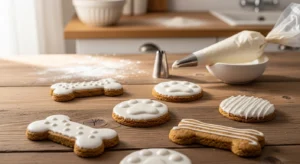
Want to decorate your dog’s homemade treats without using artificial or unsafe ingredients?
This easy dog icing recipe is smooth, simple, and made with dog-friendly ingredients. It dries to a firm finish, works well for piping, and is perfect for dog birthday cookies, biscuits, or special treats.
No complicated steps. No unusual ingredients. Just a simple icing that works.
Why This Dog Icing Recipe Works
This icing is:
-
Made with simple, dog-safe ingredients
-
Easy to spread or pipe
-
Dries with a smooth finish
-
Customizable with natural coloring
-
Great for dog cookies, biscuits, and cakes
It works best on firm, baked dog treats, not soft or moist snacks.
Homemade Dog Icing Recipe
Ingredients
-
2 tablespoons cornstarch
-
4–5 teaspoons water (adjust as needed)
-
1 teaspoon honey
-
1 teaspoon natural peanut butter (xylitol-free, unsalted)
-
Natural coloring (optional)
Important Note
Always check peanut butter labels to make sure it does not contain xylitol, which is toxic to dogs.
How to Make Dog Icing
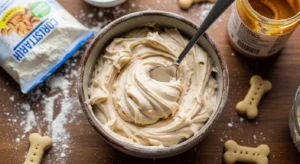
Step 1: Mix the Base
In a small bowl, combine:
-
Cornstarch
-
Honey
Add peanut butter if using. Stir until a thick paste forms.
Step 2: Adjust the Consistency
Add water slowly, one teaspoon at a time, mixing well after each addition.
You want icing that is:
-
Thick enough to hold its shape
-
Smooth enough to pipe or drizzle
If the icing becomes too thick, add a few drops of water.
If it becomes too thin, mix in a small pinch of cornstarch.
Step 3: Add Natural Color (Optional)
Divide the icing into small bowls and add natural powders for color.
Examples:
-
Pink: Beet powder
-
Yellow: Turmeric (use a very small amount)
-
Green: Spinach powder
-
Purple: Blueberry powder
Mix until the color is evenly blended.
Step 4: Decorate Immediately
Use any of these methods:
-
Piping bag
-
Zip-top bag with the corner cut
-
Spoon for drizzling
Let the icing set at room temperature for 1–2 hours until firm.
Best Treats to Use This Icing On
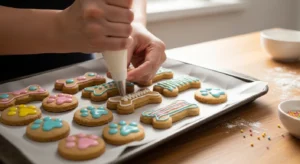
This icing works best on:
-
Crunchy dog biscuits
-
Homemade dog cookies
-
Dog birthday cakes
-
Sweet potato rounds
-
Hard baked treats
Avoid using it on soft or moist treats, since the icing will not set properly.
Storage Tips
Unmixed Icing
Best used immediately after mixing.
Decorated Treats
-
Room temperature: Up to 5–7 days
-
Refrigerator: Up to 2 weeks
Make sure the icing is fully dry before storing to prevent sticking.
Feeding Guidelines
Icing should be used lightly. It is meant for decoration, not as a main ingredient.
General rule:
Treats (including icing) should make up no more than 10% of your dog’s daily calories.
For small dogs, keep the icing thin and minimal.
Troubleshooting Common Issues
Icing Too Runny
Add a small pinch of cornstarch and mix again.
Icing Too Thick
Add a few drops of water and stir slowly.
Icing Not Setting
Check the following:
-
Treats are fully cooled
-
Icing is not too wet
-
The room is not too humid
Frequently Asked Questions
Can I Make This Without Peanut Butter?
Yes. Simply skip the peanut butter and adjust the water to reach the right consistency.
Can I Use Store-Bought Treats?
Yes. Just make sure the surface of the treat is dry and at room temperature before decorating.
Is Food Coloring Safe for Dogs?
Artificial dyes should be avoided. Use natural powders in small amounts instead.
Final Thoughts
This easy dog icing recipe keeps things simple and safe. It works well for decorating homemade treats for birthdays, holidays, or everyday snacks.
The icing dries clean, looks neat, and adds a little fun without unnecessary ingredients.
Decorate lightly, let it set, and enjoy the tail wag that follows.