
If your dog is underweight, recovering from illness, or naturally lean, increasing calories safely is important. Homemade weight gain dog food can help by adding healthy fats, quality protein, and digestible carbohydrates — without artificial fillers.
Below are 3 high-calorie homemade dog food recipes designed to support healthy weight gain for dogs in the USA. These meals focus on calorie density while still maintaining balanced nutrition.
Always consult your veterinarian before making major diet changes, especially for underweight or recovering dogs.
Why These Weight Gain Recipes Work
-
Higher fat content for calorie density
-
Quality protein to support muscle gain
-
Digestible carbs for sustained energy
-
Soft, moist texture to encourage eating
-
Made with fresh, dog-safe ingredients
Weight Gain Dog Food Recipes
Each recipe below includes calorie-dense ingredients and step-by-step instructions.
1 High-Calorie Beef & Rice Bowl
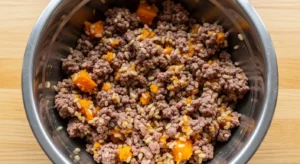
A rich, energy-packed meal ideal for dogs that need fast weight support.
Ingredients
| Ingredient | Benefit |
|---|---|
| 2 lbs ground beef (80/20) | High-fat protein for calorie boost |
| 2 cups cooked brown rice | Digestible carbs for energy |
| 1 cup mashed sweet potato | Vitamins + added calories |
| ½ cup full-fat cottage cheese | Extra protein and fat |
| 2 tbsp olive oil | Healthy fat source |
| 1 tbsp ground flaxseed | Omega-3s for coat health |
| 1 cooked egg | Protein + healthy fats |
Step-by-Step Instructions
Step 1: Cook the Beef
Brown ground beef over medium heat until fully cooked. Drain only excess fat if needed — keep some for calories.
Step 2: Cook the Rice
Simmer brown rice until tender. Cool completely.
Step 3: Prepare Sweet Potato
Boil and mash sweet potato until smooth.
Step 4: Cook the Egg
Hard boil one egg. Chop finely.
Step 5: Combine
Mix all ingredients thoroughly until evenly blended. Cool before serving.
2 Protein-Packed Chicken & Oatmeal
Soft texture and healthy fats make this appealing for dogs with low appetite.
Ingredients
| Ingredient | Benefit |
|---|---|
| 2 lbs dark meat chicken (skin-on) | Higher fat protein source |
| 1 ½ cups cooked oatmeal | Comforting carbs |
| ½ cup plain Greek yogurt | Creamy protein + probiotics |
| 1 tbsp peanut butter (xylitol-free) | Calorie boost |
| 2 tbsp fish oil | High-calorie healthy fats |
| ½ cup mashed carrots | Gentle fiber |
| 1 cooked egg | Extra protein |
Step-by-Step Instructions
Step 1: Cook the Chicken
Boil or bake chicken until fully cooked. Shred and retain some skin for extra calories.
Step 2: Prepare Oatmeal
Cook oats until soft and thick. Let cool.
Step 3: Cook the Egg
Boil and chop into small pieces.
Step 4: Combine
Mix all ingredients until smooth and moist.
3 Fat-Rich Salmon & Quinoa Mix

A calorie-dense, omega-3-rich option for weight support.
Ingredients
| Ingredient | Benefit |
|---|---|
| 1 ½ lbs cooked salmon | Healthy fats + protein |
| 1 ½ cups cooked quinoa | Nutrient-dense carb |
| ½ cup plain pumpkin puree | Digestive support |
| ½ cup full-fat kefir | Extra calories + probiotics |
| 2 tbsp chia seeds | Calorie-dense omega fats |
| 1 tbsp coconut oil | Added healthy fat |
| 1 cooked egg | Protein boost |
Step-by-Step Instructions
Step 1: Cook the Salmon
Bake at 350°F (175°C) for 15–20 minutes. Remove skin and bones.
Step 2: Cook Quinoa
Simmer until fluffy. Cool completely.
Step 3: Cook the Egg
Hard boil and chop.
Step 4: Combine
Mix all ingredients thoroughly until evenly blended.
Feeding Guidelines for Weight Gain
These meals are calorie-rich and may provide 40–60% of daily calories depending on portion size.
General serving guide per meal:
-
Small dogs (under 20 lbs): ½–1 cup
-
Medium dogs (20–50 lbs): 1–2 cups
-
Large dogs (50+ lbs): 2–3 cups
Introduce gradually over 7–10 days.
Weigh your dog weekly and adjust portions based on progress.
Important Notes for Healthy Weight Gain
-
Use fattier cuts of meat for calorie density.
-
Do not use onions, garlic, salt, or seasoning.
-
Monitor stool consistency when increasing fat.
-
Homemade diets may require calcium supplements.
-
Always consult your veterinarian for target weight goals.
Storage & Serving
-
Refrigerate up to 4 days in airtight containers.
-
Freeze up to 2 months in portioned bags.
-
Serve slightly warm (not hot) to enhance aroma.
Substitutes & Variations
-
Swap beef with ground pork (80/20).
-
Replace quinoa with brown rice.
-
Add 1 tbsp unsalted butter for additional calories if approved by your vet.
-
Substitute goat milk with full-fat plain yogurt.
Benefits of Key Ingredients
Beef, Chicken, Salmon – Build muscle while adding calorie density.
Rice, Oatmeal, Quinoa – Provide energy for safe weight gain.
Healthy Oils & Seeds – Increase calorie intake efficiently.
Pumpkin & Carrots – Support digestion during higher-calorie feeding.
FAQs
How do I know if my dog needs to gain weight?
Visible ribs, low muscle mass, or lethargy may indicate underweight status. A veterinarian can assess body condition score.
Can these recipes replace commercial food?
They are best used as calorie boosters unless balanced with proper supplements.
How fast should my dog gain weight?
Gradual weight gain is safest. Rapid weight gain can cause digestive upset.
Final Thoughts
These homemade weight gain dog food recipes focus on calorie density, quality protein, and digestible ingredients. When introduced gradually and monitored properly, they can help underweight dogs reach a healthier body condition safely.
Always work with your veterinarian for long-term feeding plans and supplement guidance.