
If you want a simple homemade dog treat that uses pantry staples and takes under 30 minutes to bake, these peanut butter honey dog treats are a great choice. They’re crunchy, easy to shape, and made with ingredients most U.S. dog owners already have at home.
Peanut butter gives these treats a rich flavor dogs love, while a small touch of honey adds mild sweetness. No artificial preservatives. No mystery fillers. Just a straightforward baked treat you control from start to finish.
Let’s get into the recipe.
Why You’ll Love These Peanut Butter Honey Dog Treats
-
Made with simple, dog-safe ingredients
-
Easy to roll, cut, and bake
-
Crunchy texture that works well for training
-
No additives or artificial flavors
-
Freezer-friendly for batch prep
Peanut Butter Honey Dog Treats Recipe
Ingredients
| Ingredient | Description |
|---|---|
| 2 ½ cups oat flour or whole wheat flour | Provides structure and fiber |
| ¾ cup natural peanut butter | Use unsalted and xylitol-free |
| 1 large egg | Helps bind the dough |
| ¾ cup water | Creates workable dough |
| 1 tablespoon honey (optional) | Adds mild natural sweetness |
Step-by-Step Instructions
Step 1: Preheat the Oven
Preheat your oven to 350°F (175°C). Line a baking sheet with parchment paper.
Step 2: Mix the Wet Ingredients
In a large bowl, combine:
-
Peanut butter
-
Egg
-
Water
-
Honey (if using)
Stir until smooth and fully blended.
Step 3: Add the Flour
Gradually mix in the flour. Stir until a thick dough forms.
If the dough feels too dry, add 1–2 tablespoons of water.
If it’s too sticky, sprinkle in a bit more flour.
Step 4: Roll the Dough
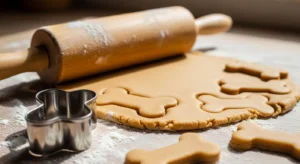
Lightly flour a clean surface. Roll the dough to:
-
¼ inch thick for crunchy treats
-
½ inch thick for slightly softer treats
Step 5: Cut the Treats
Use cookie cutters (bone shapes are popular) or cut into squares with a knife. Place treats about 1 inch apart on the baking sheet.
Step 6: Bake
Bake for 18–22 minutes, until the edges turn golden brown.
For extra crunch, leave them in for an additional 3–5 minutes.
Step 7: Cool Completely
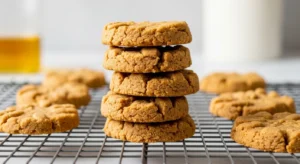
Transfer treats to a wire rack and allow them to cool fully. This helps them firm up and become crunchy.
Storage and Shelf Life
-
Room temperature (airtight container): up to 5 days
-
Refrigerator: up to 2 weeks
-
Freezer: up to 3 months
Always let frozen treats thaw before serving.
How Many Treats Can Dogs Have?
Treats should make up no more than 10% of your dog’s daily calories.
General guideline:
-
Small dogs: ½–1 small treat per day
-
Medium dogs: 1–2 treats per day
-
Large dogs: 2–3 treats per day
If your dog is overweight or on a restricted diet, reduce portions.
Substitutions and Variations
-
Use brown rice flour for a gluten-free option
-
Replace honey with mashed banana for lower sugar
-
Add 1 tablespoon ground flaxseed for extra fiber
-
Swap water for low-sodium bone broth for added flavor
Why These Ingredients Work
-
Peanut Butter: Provides healthy fats and protein (always check for xylitol)
-
Oat or Whole Wheat Flour: Adds fiber and structure
-
Egg: Adds protein and helps hold everything together
-
Honey (small amount): Natural sweetener with trace antioxidants
FAQs
Is honey safe for dogs?
Yes, in small amounts. Avoid large quantities due to sugar content.
Can I skip the honey?
Yes. These treats bake well without it.
What peanut butter should I use?
Only natural peanut butter with no xylitol, no added sugar, and no artificial sweeteners.
Why are my treats too soft?
Bake a few minutes longer or roll the dough thinner next time.
Final Thoughts
These peanut butter honey dog treats are simple, affordable, and easy to customize. You control the ingredients. You control the freshness. And most dogs go crazy for the flavor.