
Understanding an 8-Week-Old Puppy’s Nutritional Needs
Bringing home an 8-week-old puppy is an exciting milestone — and proper nutrition during this stage lays the foundation for lifelong health.
At eight weeks old, most puppies are just finishing the transition from mother’s milk to solid food. They’re growing fast, burning calories quickly, and need balanced puppy food designed for development, not adult maintenance.
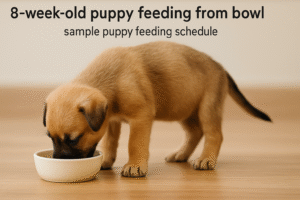
Why 8 Weeks Matters:
-
Rapid muscle, bone, and brain development
-
Adjusting from nursing to eating independently
-
Learning feeding routines and mealtime behavior
🐾 Pro Tip: Never feed an 8-week-old adult dog food. Puppies require higher protein, fat, and calcium levels for healthy growth.
Can 8-Week-Old Puppies Eat Dry Food?
Yes — most can handle dry puppy kibble as long as it’s moistened slightly with warm water to soften the texture. Look for brands labeled “for growth” or “puppy formula,” such as:
-
Hill’s Science Diet Puppy Food
-
Purina Pro Plan Puppy Large Breed Formula
Avoid switching foods abruptly; gradual changes prevent tummy upsets.
How Much Food Should an 8-Week-Old Puppy Eat Daily?
Every puppy is unique — breed size, metabolism, and activity all play a role. The best way to start is with a puppy feeding chart by weight.
🐕 Puppy Feeding Chart by Weight (General Guidelines)
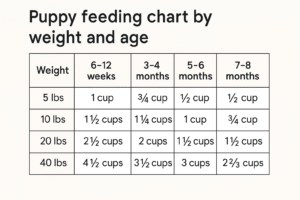
These are averages based on dry puppy kibble. Always check your brand’s label (e.g., Purina ONE, Blue Buffalo, Hill’s Science Diet Puppy Food Feeding Chart).
How to Calculate Food Amount by Weight:
Use your puppy’s current weight and projected adult size. Multiply their weight (kg) × 55–60 kcal for small breeds or 70–90 kcal for large breeds to estimate daily calorie needs.
If that feels like math overload — try a puppy feeding calculator available on sites like PetMD’s Puppy Feeding Guide.
Signs You’re Overfeeding or Underfeeding
-
Overfeeding: Bloated belly, soft stool, rapid weight gain
-
Underfeeding: Visible ribs, lethargy, slow growth
💡 Tip: Puppies have small stomachs — it’s better to feed small, frequent meals than fewer large ones.
How Often Should an 8-Week-Old Puppy Eat?
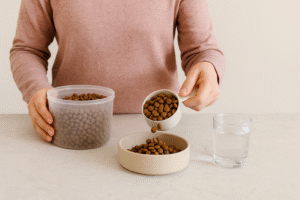
At this age, your puppy needs four meals per day, spaced evenly from morning to evening.
Ideal Feeding Frequency
-
Morning: 7–8 AM
-
Late Morning: 11 AM–12 PM
-
Afternoon: 3–4 PM
-
Evening: 7–8 PM
Avoid feeding within two hours of bedtime to reduce nighttime potty accidents.
Sample 8-Week Puppy Daily Schedule
| Time | Activity |
|---|---|
| 7:00 AM | First meal, short potty break |
| 9:30 AM | Play + nap |
| 11:30 AM | Second meal + walk |
| 2:30 PM | Playtime |
| 4:00 PM | Third meal |
| 7:30 PM | Final meal + potty break |
| 10:00 PM | Short outdoor trip before bedtime |
You can customize this around your daily routine — the key is consistency. Puppies thrive on predictable feeding and potty times.
For a full daily guide, check our Puppy Care Guide for New Owners.
What to Feed an 8-Week-Old Puppy (Wet vs. Dry Food)
Choosing the Right Puppy Food
Your puppy’s food should meet AAFCO nutritional standards for growth. Look for puppy-specific labels such as “formulated for growth and reproduction.”
Wet vs. Dry Puppy Food
| Type | Pros | Cons |
|---|---|---|
| Dry (Kibble) | Convenient, promotes dental health | Less moisture |
| Wet (Canned) | High palatability, good for picky eaters | Costly, spoils faster |
| Mixed | Balance of texture and hydration | Transitioning can confuse digestion |
Recommended Puppy Foods
-
Purina ONE Healthy Puppy Formula – Balanced and affordable
-
Blue Buffalo Puppy Food – Natural ingredients, DHA for brain health
-
Hill’s Science Diet Puppy – Vet-approved, excellent for sensitive stomachs
-
Purina Pro Plan Large Breed Puppy Food – Supports bone and joint growth
Avoid feeding adult dog food or table scraps. Puppies require precise nutrition ratios — too much calcium or protein can cause growth issues in large breeds.
Large vs. Small Breed Puppy Feeding Differences
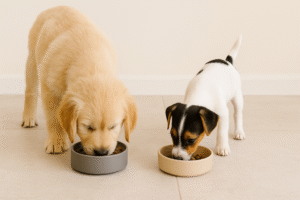
Large Breed Puppies
Growth management is key. Overfeeding can lead to rapid weight gain and joint problems.
-
Stick to large breed puppy formulas (like Purina Pro Plan or Hill’s Science Diet Large Breed).
-
Follow a large breed puppy feeding chart by weight on the bag label.
Small Breed Puppies
Smaller puppies, like Chihuahuas, need calorie-dense foods.
-
Choose small-breed puppy food with smaller kibble.
-
Feed every 4 hours to maintain blood sugar.
Breed-Specific Examples
-
Golden Retriever Puppy: 2.5–3 cups of large breed formula daily
-
Blue Heeler Puppy: Around 2 cups daily split into four meals
-
Chihuahua Puppy: ½–1 cup split into 4 small meals
-
Great Pyrenees (6-month-old): 4–6 cups daily depending on activity
Best Puppy Foods for 8-Week-Old Puppies in 2025
Top Recommended Brands
-
Purina ONE Puppy Food – Excellent balance of affordability and nutrition.
-
Hill’s Science Diet Puppy Food Feeding Chart – Scientifically backed and vet-endorsed.
-
Blue Buffalo Life Protection Puppy Formula – DHA & omega-3 for brain and eye development.
-
Purina Pro Plan Puppy Large Breed Feeding Chart – Supports controlled bone growth.
Wet, Dry, or Fresh?
-
Dry food: Best for daily feeding
-
Wet food: Use for picky eaters or mixing
-
Fresh options (like FreshPet): Great for digestion, though more expensive
🐶 See our full list: Best Teething Toys for Puppies in 2025 to complement healthy feeding habits.
Common Feeding Mistakes to Avoid
-
Switching foods too quickly – Always transition over 5–7 days.
-
Feeding adult dog food too early – Puppies need higher nutrient levels.
-
Skipping meals – Can lead to low blood sugar (especially in small breeds).
-
Overfeeding – Leads to obesity and orthopedic problems.
-
Ignoring feeding charts – Each brand has different caloric density.
📘 Learn more about training alongside feeding with our Dog Training for Beginners Guide.
Transitioning to Fewer Meals as Puppies Grow
As your puppy matures, their stomach can hold more food at once, allowing you to reduce meal frequency.
| Puppy Age | Meals per Day | Notes |
|---|---|---|
| 8–12 weeks | 4 meals | Small, frequent meals |
| 3–6 months | 3 meals | Introduce structured feeding |
| 6–12 months | 2 meals | Transition to adult schedule |
When to Switch to 2 Meals a Day:
Usually around 6 months, unless your vet advises otherwise.
When to Stop Puppy Food:
Small breeds: 10–12 months
Large breeds: up to 18–24 months
Hydration & Puppy Water Schedule
Water is just as vital as food.
How Much Water Should Puppies Drink Daily?
Puppies need roughly ½–1 ounce of water per pound of body weight per day.
Example: A 10-lb puppy → 5–10 ounces of water daily.
Tips for Managing Puppy Hydration
-
Offer clean water after every meal and playtime.
-
Avoid placing water near bedding overnight to reduce accidents.
-
Use a spill-proof puppy bowl during crate training.
Learn how to crate train effectively in How to Crate Train a Puppy in 7 Days.
Expert Feeding Tips from Veterinarians
-
Feed by schedule, not emotion. Puppy eyes can trick you into overfeeding.
-
Check body condition score (BCS). You should feel ribs but not see them.
-
Watch for allergies or intolerance. Common triggers include chicken, beef, and soy.
-
Slow down fast eaters. Use a slow-feed bowl or food puzzle.
For skin or allergy concerns, see Signs Your Dog May Have Allergies.
FAQs About Feeding 8-Week-Old Puppies
1. How many times should a puppy eat at 8 weeks old?
Four times daily — morning, midday, late afternoon, and evening.
2. How long after eating should I take my puppy outside?
Take your puppy out within 10–15 minutes of eating to encourage potty training success.
3. Can an 8-week-old puppy eat dry kibble?
Yes, most can. Moisten it slightly with warm water to ease the transition from milk.
4. What time should I feed my dog?
Feed at consistent times each day (7 AM, 12 PM, 4 PM, 7 PM) for routine and digestion.
5. How much food does an 8-week-old puppy need per day?
Typically 1–3 cups, depending on breed size. Use the feeding chart above or your food label.
6. Can I give my puppy cooked chicken or eggs?
Occasionally, yes — plain boiled chicken or scrambled eggs can be healthy treats. Avoid seasoning or bones.
Conclusion: Build a Healthy Feeding Routine for Your Puppy
Feeding your 8-week-old puppy properly means more than just filling a bowl — it’s about structure, timing, and nutrition.
Keep mealtimes consistent, choose high-quality puppy food, and adjust portions as your furry friend grows. Within weeks, you’ll notice steady growth, a shiny coat, and lots of energy.
🐾 Next Read: