
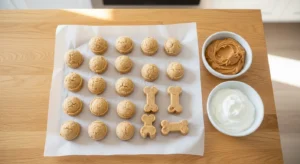
Peanut butter yogurt dog treats are simple frozen snacks made with just two dog-safe ingredients. They’re quick to prepare, require no baking, and can be stored in the freezer for a refreshing reward—especially during warmer months in the U.S.
If you’re looking for a fast homemade treat without preservatives or artificial additives, this easy recipe is a practical choice for most healthy adult dogs.
Why These Peanut Butter Yogurt Dog Treats Are a Smart Choice
-
Only two ingredients – No fillers, no artificial flavors.
-
High in protein – Greek yogurt and peanut butter both provide protein.
-
Supports digestion – Yogurt contains probiotics that may benefit gut health.
-
No baking required – Just mix and freeze.
-
Great for summer – A cool treat on warm days.
Peanut Butter Yogurt Dog Treats Recipe
Ingredients
-
½ cup natural peanut butter – Use unsalted peanut butter with no xylitol, added sugars, or artificial sweeteners.
-
½ cup plain Greek yogurt – Unsweetened and unflavored for safety.
Always check peanut butter labels carefully. Xylitol is toxic to dogs.
Use plain yogurt only. Avoid flavored or sweetened varieties.
Step-by-Step Instructions
Step 1: Mix the Ingredients
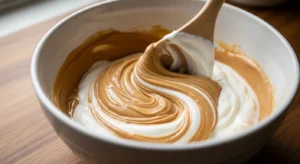
In a medium bowl, combine peanut butter and Greek yogurt. Stir until smooth and fully blended.
If peanut butter is too thick, microwave it for 5–10 seconds to soften slightly before mixing.
Step 2: Portion the Mixture
Spoon small dollops onto a parchment-lined baking sheet.
Alternatively, use silicone molds for cleaner shapes.
Keep portions small, especially for small breeds.
Step 3: Freeze
Place tray in freezer for at least 3 hours, or until treats are fully solid.
Step 4: Serve
Remove from freezer and serve immediately.
Store remaining treats in freezer until ready to use.

Optional Add-Ins (If You Want Extra Nutrition)
You can customize the base recipe by mixing in:
-
Carrot puree – Adds fiber and vitamin A.
-
Apple puree (unsweetened) – Adds mild natural sweetness.
-
Ground flaxseed – Provides omega-3 fatty acids.
-
A small amount of coconut oil – Supports skin and coat health.
Keep additions small to avoid excess calories.
Feeding Guidelines
Even healthy treats should make up no more than 10% of your dog’s daily calories.
-
Small dogs (under 20 lbs): 1–2 small frozen treats per day
-
Medium dogs (20–50 lbs): 2–3 treats per day
-
Large dogs (50+ lbs): 3–4 treats per day
If your dog has dairy sensitivity, start with a small amount and monitor for digestive upset.
Storage & Shelf Life
-
Freezer: Store in airtight container up to 1 month.
-
Keep frozen until serving.
-
Discard if freezer burn or odor develops.
Ingredient Benefits
Peanut Butter – Provides healthy fats and protein, but should be fed in moderation due to calorie content.
Greek Yogurt – Contains protein and probiotics that may support digestive health.
Dogs with pancreatitis, obesity, or dairy intolerance may need alternative treats. Consult your veterinarian if unsure.
FAQs
Can I use regular peanut butter?
Only if it contains no xylitol, added sugar, or artificial sweeteners. Always check labels.
Can I use flavored yogurt?
No. Use plain, unsweetened Greek yogurt only.
Are frozen treats safe for puppies?
Generally yes, but avoid honey or added ingredients for puppies under one year old. Offer small portions.
Final Thoughts
These Two-Ingredient Peanut Butter Yogurt Dog Treats are quick, affordable, and easy to prepare. With no baking required, they’re a convenient homemade snack option for busy dog owners.
Keep portions moderate, store properly, and use as an occasional reward rather than a meal replacement.