
Healthy homemade dog food recipes should include balanced protein, healthy fats, digestible carbohydrates, and essential vitamins and minerals. When properly planned, home-cooked meals can support muscle health, digestion, skin condition, and overall energy levels.
This guide shares five balanced homemade dog food recipes made with whole ingredients commonly available in the USA. While these meals follow vet-recommended nutrition principles, always consult your veterinarian before replacing commercial dog food long-term.
What Makes a Homemade Dog Food Recipe Healthy?
A balanced homemade dog meal typically includes:
-
30–40% protein: chicken, turkey, beef, salmon
-
Healthy fats: fish oil, coconut oil
-
Digestible carbohydrates: brown rice, sweet potatoes
-
Fiber & antioxidants: vegetables and fruits
-
Calcium source: eggshell powder or vet-approved supplement
Recipe Comparison Overview
| Recipe | Main Protein | Key Benefit |
|---|---|---|
| Salmon Dog Food | Salmon | Omega-3 support |
| Chicken & Rice | Chicken | Lean muscle support |
| Turkey & Veggie | Turkey | Lower-fat option |
| Pumpkin Blend | Turkey + Pumpkin | Digestive support |
| Beef & Rice | Lean Beef | Iron & zinc support |
1. Homemade Salmon Dog Food (Omega-3 Support)
Salmon is rich in omega-3 fatty acids, which support heart health, skin, and coat shine.
Ingredients
-
½ lb cooked salmon (boneless)
-
1 cup cooked sweet potatoes
-
1 carrot, steamed
-
⅔ cup chopped spinach
-
⅓ cup plain pumpkin puree
-
1 tbsp coconut oil
Instructions
-
Steam or bake salmon and remove all bones.
-
Boil sweet potatoes until soft and mash lightly.
-
Steam carrot and spinach.
-
Combine all ingredients and mix well.
-
Cool completely before serving.
Store in the refrigerator for up to 3 days.
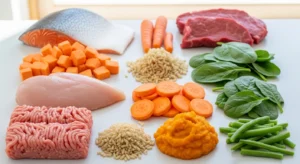
2. Chicken & Brown Rice Dog Food (Balanced Classic)
Chicken and rice is one of the most commonly recommended combinations for dogs.
Ingredients
-
2 boneless chicken breasts
-
1 cup brown rice
-
2 cups water
-
½ lb green beans
-
1 medium sweet potato
-
2 carrots
Instructions
-
Cook brown rice separately.
-
Bake or boil chicken until fully cooked, then shred.
-
Steam vegetables until tender.
-
Mix everything thoroughly and cool before serving.
Great for dogs with sensitive stomachs.
3. Turkey & Vegetable Dog Food (Lower-Fat Option)
Turkey is lean and easy to digest.
Ingredients
-
1 lb lean ground turkey
-
½ cup cooked lentils
-
½ cup chopped broccoli
-
½ cup blueberries
-
1 small apple (no seeds)
-
1 tbsp coconut oil
Instructions
-
Cook turkey fully and drain excess fat.
-
Steam vegetables until soft.
-
Chop fruit into small pieces.
-
Combine all ingredients and mix evenly.
-
Let cool before serving.
4. Pumpkin & Turkey Digestive Blend
Pumpkin helps support stool consistency and gut health.
Ingredients
-
1 lb ground turkey
-
1 cup pumpkin puree
-
1 cup brown rice
-
1 carrot (chopped)
-
½ cup zucchini
Instructions
-
Cook rice separately.
-
Brown turkey and drain fat.
-
Steam vegetables until tender.
-
Mix turkey, pumpkin, vegetables, and rice.
-
Serve cooled.
5. Beef & Rice Power Meal
Beef provides iron and zinc for active dogs.
Ingredients
-
2 lbs lean ground beef (90/10)
-
2 cups cooked brown rice
-
2 cups diced carrots
-
2 cups green beans
-
1 cup cubed sweet potatoes
-
1 tbsp fish oil
-
1 tbsp calcium powder
Instructions
-
Cook rice separately.
-
Brown beef and drain excess fat.
-
Steam vegetables until tender.
-
Combine all ingredients.
-
Stir in fish oil and calcium powder.
-
Cool before serving.
How Much Homemade Dog Food Should You Feed?
General Daily Guideline
-
Small dogs (10–20 lbs): ½–1 cup
-
Medium dogs (25–50 lbs): 1–2 cups
-
Large dogs (55+ lbs): 2–3 cups
Adjust based on activity level and weight goals.
Always transition gradually over 7–10 days.
Are These Recipes Truly “Vet-Approved”?
These recipes follow common veterinary nutrition principles:
-
High-quality protein
-
Balanced carbohydrates
-
Healthy fats
-
Fiber for digestion
However, long-term feeding may require:
-
Calcium supplementation
-
Multivitamin support
-
Omega-3 supplementation
Always consult your veterinarian to personalize portions and supplements.
Storage & Safety Tips
-
Refrigerate leftovers up to 3–4 days
-
Freeze portions up to 2 months
-
Avoid onions, garlic, grapes, raisins, chocolate, and artificial sweeteners
-
Cool food completely before serving
Final Thoughts
Homemade dog food lets you control ingredients and tailor meals to your dog’s needs. These five healthy recipes provide balanced nutrition when prepared carefully and supplemented appropriately.
Start slowly. Monitor your dog’s weight, coat condition, and energy levels. Work with your veterinarian for a safe long-term feeding plan.