Cherries tend to get a bad reputation online, and honestly, some of it’s deserved — just maybe not for the reason people assume. It’s not the cherry itself causing the panic. It’s everything around the cherry: the pit, the stem, the leaves. Strip those away, and you’re left with a fruit that’s actually fine in small amounts.
Can Dogs Eat Cherries?
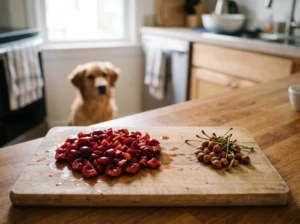
The flesh of a cherry, on its own, isn’t toxic to dogs. But the pit, stem, and leaves all contain a compound called cyanide, and that’s a real and serious concern, not an exaggerated internet rumor. This is why cherries end up in a slightly more complicated category than something like strawberries or blueberries — the fruit part is fine, but the rest of the plant genuinely isn’t.
Given how tricky it is to reliably remove every pit and stem fragment from a handful of cherries, a lot of vets recommend just skipping cherries altogether rather than risking it. If you do want to offer cherries occasionally, it needs to be done carefully.
Why the Pit and Stem Are a Real Problem
Cherry pits, along with the stems and leaves of the cherry plant, contain cyanogenic compounds that release cyanide when broken down or chewed. Cyanide interferes with the body’s ability to use oxygen at a cellular level, and in significant amounts, it can be life-threatening.
For a dog to get a dangerous dose, they’d typically need to chew through and ingest a meaningful quantity of pits, stems, or leaves — a single swallowed pit is more of a choking and blockage risk than an immediate poisoning concern. But repeated exposure, or a dog who gets into a pile of cherries with pits and stems intact (say, from a tree in the yard), raises the real risk significantly.
Beyond the cyanide concern, pits also present:
- A choking hazard, given their size and shape
- A blockage risk, if swallowed and lodged somewhere in the digestive tract
So even setting the cyanide issue aside, pits are genuinely something to keep away from your dog.
Signs of Cyanide Poisoning in Dogs
This is more serious than typical food-related digestive upset, so it’s worth knowing the specific signs:
- Difficulty breathing or rapid breathing
- Bright red gums (a distinctive sign, different from the pale gums seen with some other toxicities)
- Dilated pupils
- Vomiting
- Weakness or collapse
- Seizures, in severe cases
This is an emergency situation. If you suspect your dog has eaten a significant quantity of cherry pits, stems, or leaves — particularly from a backyard cherry tree — call your vet or an emergency animal poison line immediately rather than waiting to see if symptoms develop.
What If My Dog Just Ate the Cherry Flesh?
If your dog managed to eat plain cherry flesh without the pit — say, you dropped a pitted cherry and they snatched it up — this is a much lower-concern situation. Keep an eye out for mild digestive upset like:
- Vomiting
- Diarrhea (our dog diarrhea remedies guide covers general at-home care for mild cases like this)
- Stomach discomfort
These symptoms, if they show up at all, are usually related to the fruit’s sugar and fiber content rather than any toxicity, and they typically resolve on their own.
What If My Dog Has Access to a Cherry Tree?

This is actually one of the more common ways dogs end up with real cherry-related problems — not from a bowl of cherries on the kitchen counter, but from a backyard tree dropping fruit, pits, and leaves on the ground where a dog can graze on them repeatedly over time.
If you have a cherry tree in your yard, it’s worth either fencing off the area during fruiting season or supervising your dog closely when they’re out there, since the cumulative exposure from repeated grazing is a genuinely different risk level than an occasional pitted cherry from the kitchen.
How to Safely Offer Cherries (If You Choose To)
If you’d still like to give your dog a taste of cherry, here’s how to do it as safely as possible:
- Buy fresh, whole cherries and pit them completely yourself — don’t rely on pre-pitted store versions without double-checking, since pit fragments can sometimes remain.
- Remove the stem entirely.
- Cut the flesh into small pieces, checking carefully for any remaining pit fragments.
- Offer only a small amount, especially the first time, to see how your dog reacts.
- Never offer canned or maraschino cherries — these are loaded with added sugar and sometimes artificial coloring or syrup that offer no benefit and add unnecessary sugar intake.
Given how much careful prep this takes for a fairly small nutritional payoff, plenty of dog owners decide it’s just easier to skip cherries and offer a different fruit instead.
How Much Cherry Is Too Much?
Even with the pit and stem safely removed, cherry flesh contains natural sugar, so portions should stay small and occasional:
- Small dogs: One or two pitted cherries, occasionally, if at all
- Medium dogs: A couple of pitted cherries
- Large dogs: A few pitted cherries, still kept occasional
This isn’t a fruit to build into a regular rotation, partly due to the sugar content and partly due to the ongoing risk of a stray pit fragment.
Which Dogs Should Avoid Cherries Entirely?
Dogs who tend to gulp food quickly: If your dog isn’t a careful chewer, the pit-removal process becomes riskier, since a small missed fragment is more likely to be swallowed whole.
Diabetic dogs: Given the sugar content, cherries should be avoided or given only with a vet’s guidance.
Dogs with sensitive stomachs: New foods, including fruit, can cause temporary upset. If this applies to your dog, our dog treats for sensitive stomachs guide covers gentler options that skip this whole category of risk.
Households with a backyard cherry tree and an unsupervised dog: As mentioned above, this scenario carries meaningfully more risk than an occasional prepared cherry from the kitchen.
Safer Fruits That Skip the Whole Pit Problem
Given how much extra care cherries require, plenty of other fruits offer a similar sweet treat experience without the pit-related risks:
- Blueberries, no pit, no prep required
- Strawberries, easy to wash and serve
- Bananas, simple and mess-free
- Watermelon, hydrating with minimal prep
If you’re looking for a low-effort, low-risk fruit option, any of these are a simpler choice than working around a cherry pit every time.
FAQ: Can Dogs Eat Cherries?
Are all cherry varieties equally risky? Yes, the pit, stem, and leaves of all cherry varieties contain the same cyanogenic compounds, so the same precautions apply regardless of type.
My dog swallowed a cherry pit whole — what should I do? Watch closely for choking symptoms immediately, and monitor for signs of a blockage (vomiting, straining, reduced appetite) over the next day or two. Call your vet, especially if you’re unsure how many pits were involved.
Are maraschino cherries safe for dogs? No, these are heavily processed with added sugar and sometimes artificial coloring, offering no benefit and unnecessary sugar intake. Skip these entirely.
Can dogs eat cherry pie or cherry-flavored desserts? These typically contain added sugar and other ingredients not meant for dogs, and cherry pie filling sometimes uses cherries that haven’t had pits fully removed. Best avoided.
Is it easier to just avoid cherries altogether? For many dog owners, yes. Given the prep required and the relatively low nutritional upside compared to other fruits, skipping cherries entirely is a completely reasonable choice.
What should I do if I have a cherry tree and a dog? Consider fencing off the area during fruiting season, or supervise your dog closely outdoors, especially checking the ground for fallen fruit, pits, and leaves.
The Bottom Line
Cherry flesh on its own isn’t dangerous, but the pit, stem, and leaves genuinely are, thanks to cyanide-producing compounds — and separating the “safe” part from the “not safe” part takes more careful prep than most fruits require. If you want to share cherries occasionally, pit them thoroughly and offer just a small amount. If that sounds like more effort than it’s worth, there are plenty of easier, just-as-tasty fruits your dog will enjoy just as much.