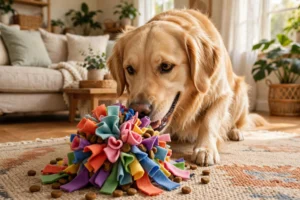
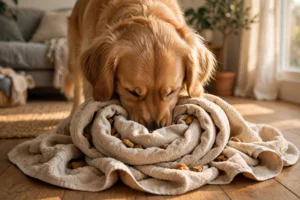
My dog once spent eleven minutes snuffling through a snuffle ball for roughly forty kibble pieces. That’s about three seconds of eating per minute of hunting. And she was delighted — tail wagging, nose working, brain fully switched on. It was the cheapest entertainment I’d ever bought her, and I’d made it myself from an old T-shirt in about twenty minutes.
A snuffle ball dogs actually use is basically a fabric puzzle: strips of fleece knotted into a ball with pockets where you hide treats. It taps into the same foraging instinct that makes your dog vacuum the floor after dinner. Here’s how to make one, the easy way.
What You’ll Need
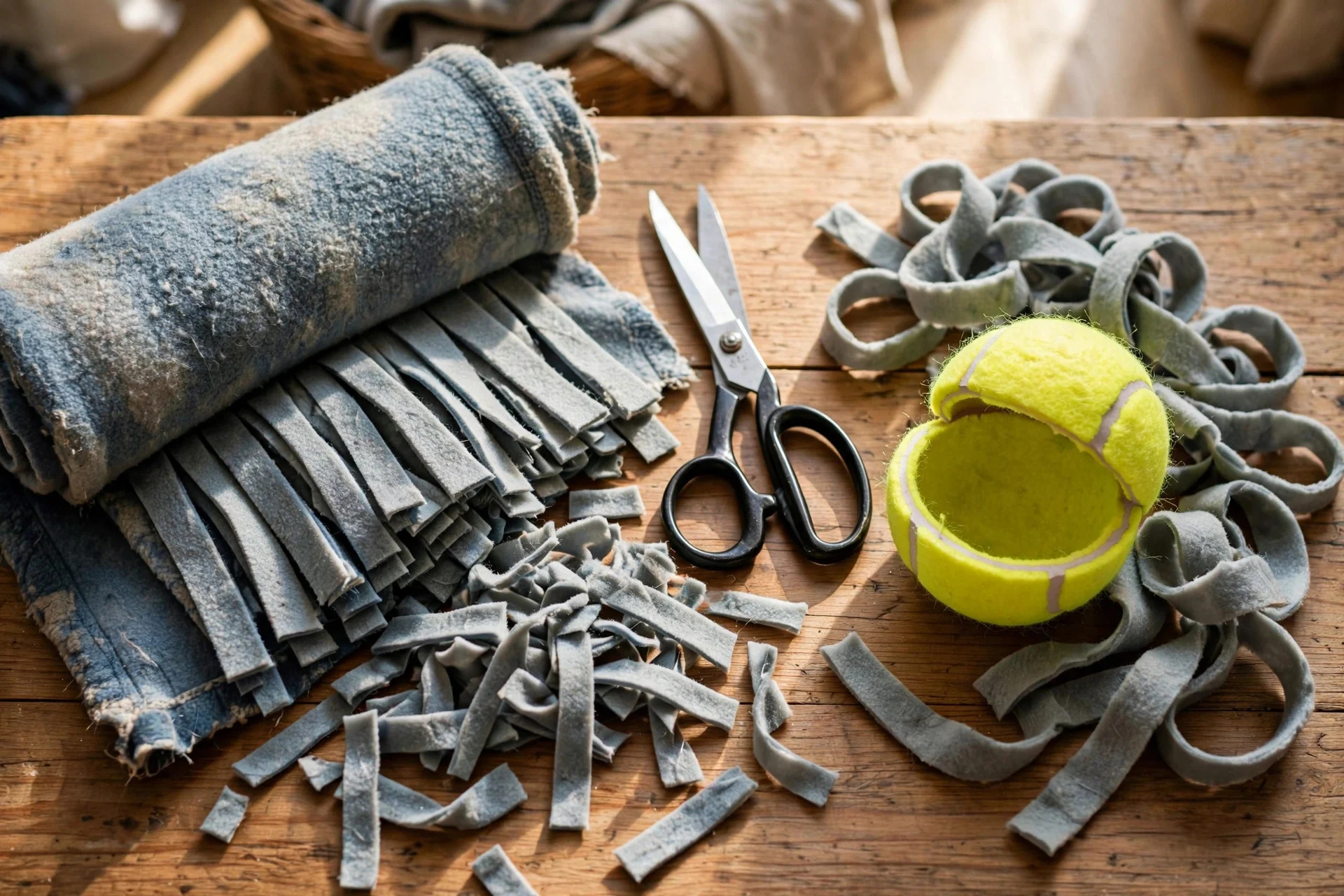
Gather your supplies before you start. You’ll need a base ball (a tennis ball or a cheap rubber ball about the size of a tennis ball works), one old fleece blanket or T-shirt you don’t mind cutting up, and a pair of scissors. Fleece is the gold standard here — it doesn’t fray, it has stretch, and dogs can sniff through it easily. Avoid thin cotton that shreds, because you don’t want your dog swallowing strings. That’s it. No sewing, no glue, no special tools.
How to Make a Snuffle Ball in 6 Steps
Step 1: Cut Your Fabric Into Strips
Cut the fleece into strips about 1 inch wide and 6 inches long. You’ll need roughly 60 to 80 strips depending on how fluffy you want the ball. Don’t stress about perfect measurements. This is the most time-consuming part, so put on a show and settle in.
Step 2: Tie Your First Row of Strips
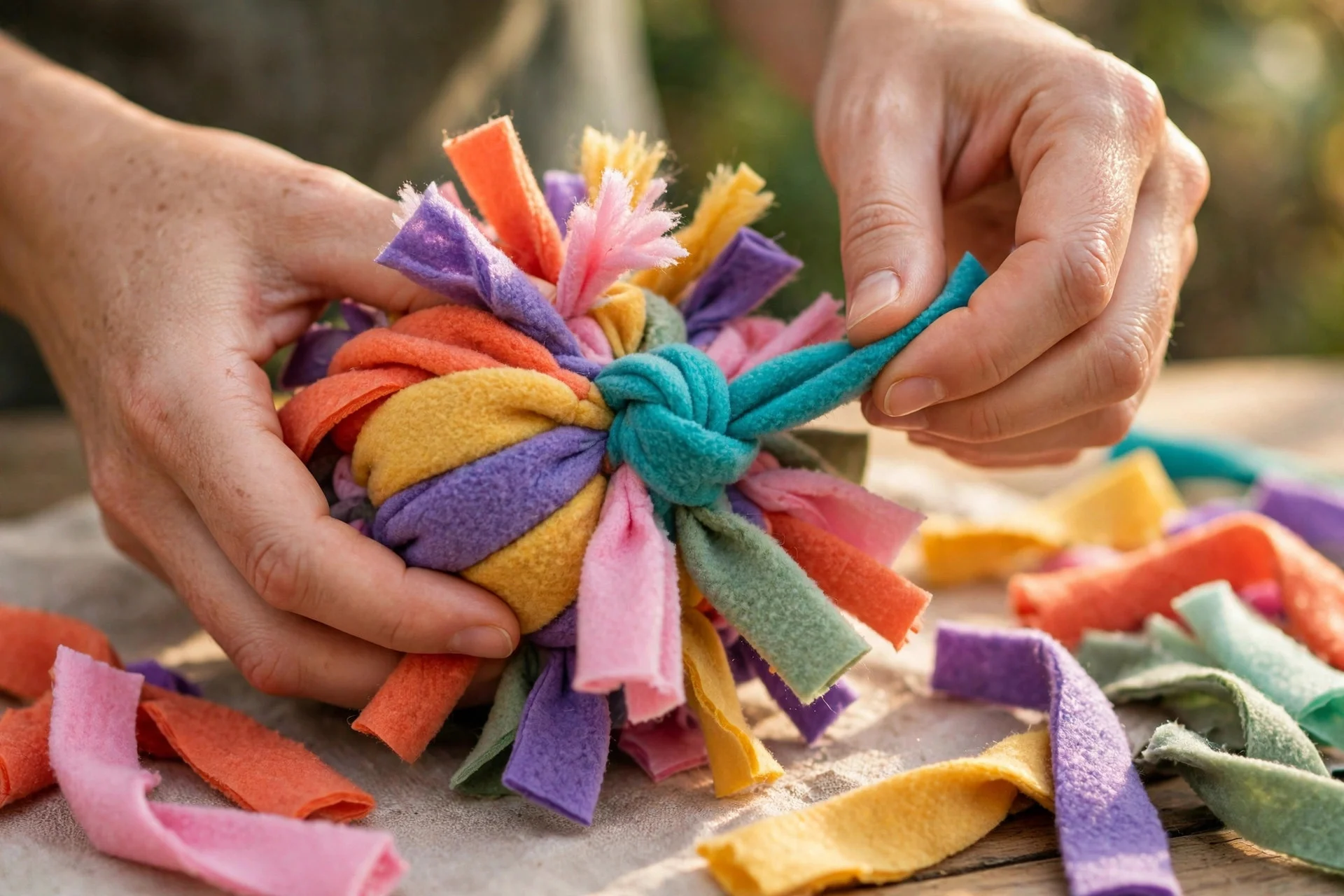
Take one strip and tie it in a double knot around the base ball. Then tie another right next to it, and another. Work your way around the ball until you have a complete row of knots circling the middle, like a belt. The knots should be snug against the ball but not so tight they’re impossible to loosen later. You’ll need to wiggle strips between them to place treats, so a little breathing room helps.
Step 3: Build Up Rows on Both Sides
Now add rows above and below your middle row, staggering the knots so they cover the gaps. After three or four rows on each side, you should barely be able to see the ball underneath. The fuller it gets, the harder the puzzle — which is the whole point.
Step 4: Create the Deep Pockets
Here’s the trick that separates a decent snuffle ball from a great one. Once the ball is fully covered, take a few extra strips and tie them over existing rows in spots, creating little fabric flaps and folded-over areas. These flaps form natural pockets where kibble hides out of sight. You want at least six to eight of these deep hiding spots scattered around the ball. They force your dog to nose under and through fabric rather than just skimming the surface.
Step 5: Trim and Inspect
Give the ball a once-over. Trim any strips that are dangling more than about 3 inches — long loose strips are a chewing temptation, and you want sniffing, not shredding. Check every knot to make sure nothing is coming loose. Run your fingers through it the way a nose would and confirm there are genuinely hidden spots, not just decorative fluff. If you can see the kibble sitting on top, the puzzle is too easy. Push strips closer together until the treats disappear.
Step 6: Load It and Introduce It
Push kibble or small treats deep into the pockets — 20 to 30 pieces is plenty for a first session. Show your dog the ball and let them sniff. Most dogs figure it out within a minute or two; the scent does all the teaching. If your dog tries to carry it off or chew it, redirect them back to sniffing by holding the ball steady and pointing at the pockets. The first few sessions, go easy on difficulty. Once they’ve got the hang of it, you can bury treats deeper.
Practical Tips for Getting the Most Out of It
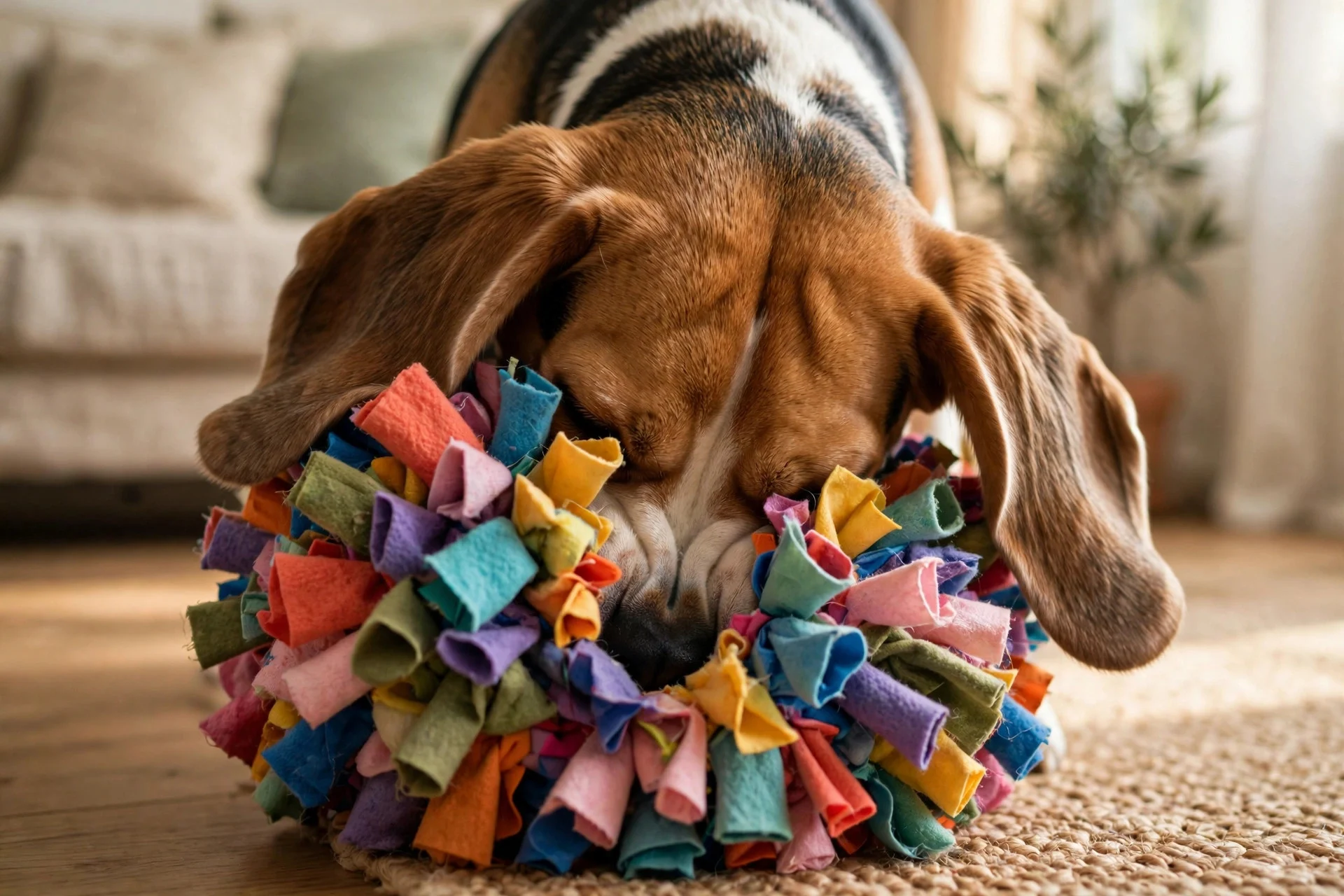
Use the snuffle ball as a meal delivery system, not just a treat toy. If your dog eats twice a day from a bowl in ninety seconds flat, put half their breakfast in the ball instead. That ninety-second gulp becomes a ten-minute foraging session, and you’ll notice a calmer, more settled dog afterward. Mental fatigue is real fatigue, and it’s worth more than a long walk for some dogs.
Keep sessions supervised, always. This is a nose-work toy, not a chew toy. When your dog has found everything (you’ll know — they’ll start looking at you like “where’s the rest?”), take the ball away and store it out of reach. Left unsupervised, a determined chewer can tear fleece strips loose and swallow them, and fabric in the gut is a vet emergency waiting to happen.
Mistakes to Avoid
The biggest mistake is making the ball too easy and leaving it at that difficulty forever. If your dog empties it in two minutes, they need denser knots and deeper pockets, not a new toy. The other common mistake is using fabric that frays — old bedsheets, thin cotton T-shirts, or anything that sheds threads when pulled. Fleece or felt only. And don’t wash the ball with scented detergent unless you want your dog hunting for lavender instead of chicken.
When to Replace Your Snuffle Ball
Even a well-made snuffle ball has a lifespan. If the strips start thinning out, knots loosen permanently, or your dog has chewed any part of it into a ragged mess, retire it. A snuffle ball that’s falling apart stops being a puzzle and starts being a swallowing hazard. Most of mine last two to three months of daily use before I remake them — and remaking takes twenty minutes, so it’s hardly a burden. Some dogs actually get more excited about a “new” ball than the old one.
FAQs
Can puppies use a snuffle ball? Absolutely — it’s one of the best puppy enrichment tools there is. Just use bigger kibble they can’t inhale whole, supervise closely, and keep sessions short (five minutes is plenty for a young puppy brain). Puppies tire out mentally fast, and an overtired puppy gets bitey.
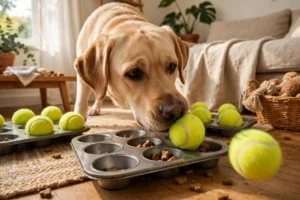
What treats work best in a snuffle ball? Dry kibble is ideal because it doesn’t go rancid in fabric and it’s small enough to hide well. Soft or smelly treats work for extra motivation but wash the ball afterward — you don’t want week-old cheese fermenting in fleece. Avoid anything crumbly that turns to dust, because your dog can’t “find” dust and the game feels rigged.
My dog just shakes the ball instead of sniffing. What now? Hold the ball still in your hands and let them work it that way for a few sessions. Once they learn that sniffing (not shaking) pays off, they’ll transfer the skill. You can also start with treats barely hidden — visible but tucked — and bury them deeper over several days.
Can I buy one instead of making it? You can, and commercial snuffle balls work fine. But honestly, the DIY version takes twenty minutes and costs nothing, and you can customize the difficulty. The store-bought ones aren’t better — they’re just more convenient.
A snuffle ball is one of those rare dog projects that’s cheap, quick, genuinely effective, and oddly satisfying to make. Twenty minutes of your evening, an old fleece blanket, and your dog gets a brand-new favorite game. If you’ve never tried nose work with your dog before, this is the perfect place to start — and your dog’s about to have a very good week.