Beef jerky is the treat that makes dogs forget their own name. It’s chewy, it’s meaty, it smells like the best thing in the universe — and the store-bought stuff is loaded with sodium and preservatives. This is beef jerky dog treats homemade the right way: just beef, dried properly, with nothing else. Your dog will never look at a store bag the same way again.
Two non-negotiables. First: every piece must reach 165°F internally. Beef is safer than chicken, but “safer” isn’t “safe” — ground or thin-sliced beef still needs proper temp verification. Second: no onion, no garlic, no salty soy-sauce marinades. Dogs don’t need marinades, and onion and garlic are toxic to them. Plain beef, properly dried. That’s the whole recipe philosophy.
5 Dehydrated Beef Jerky Treat Variations
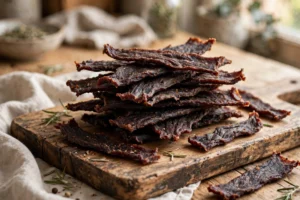
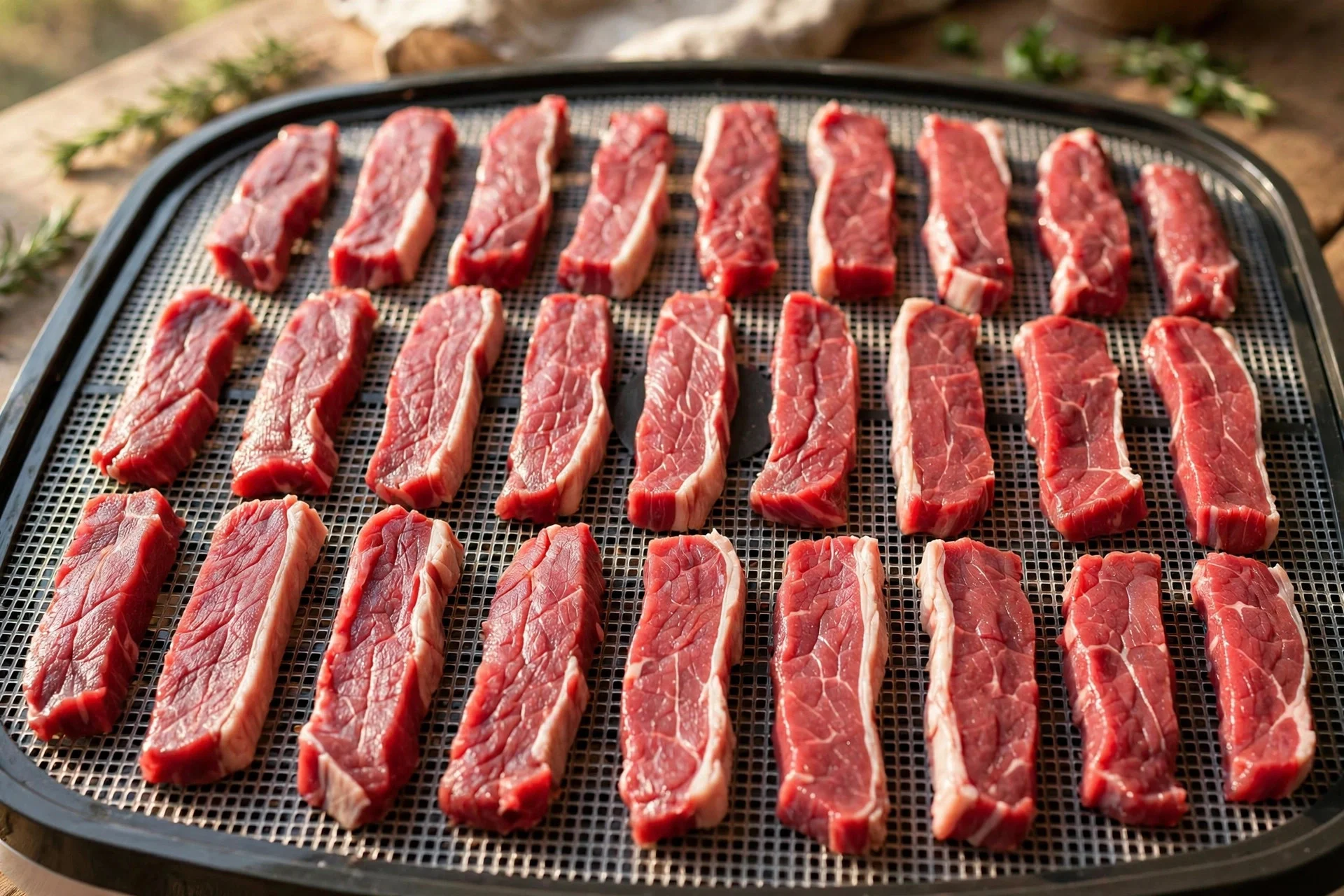
1. Plain Beef Jerky Strips
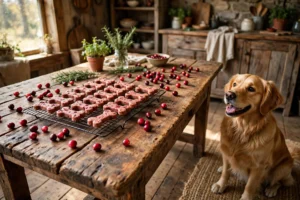
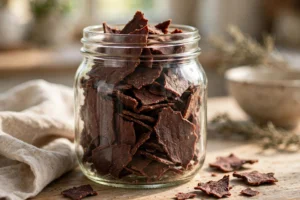
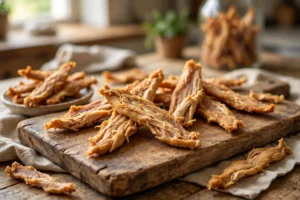
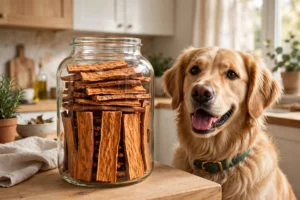
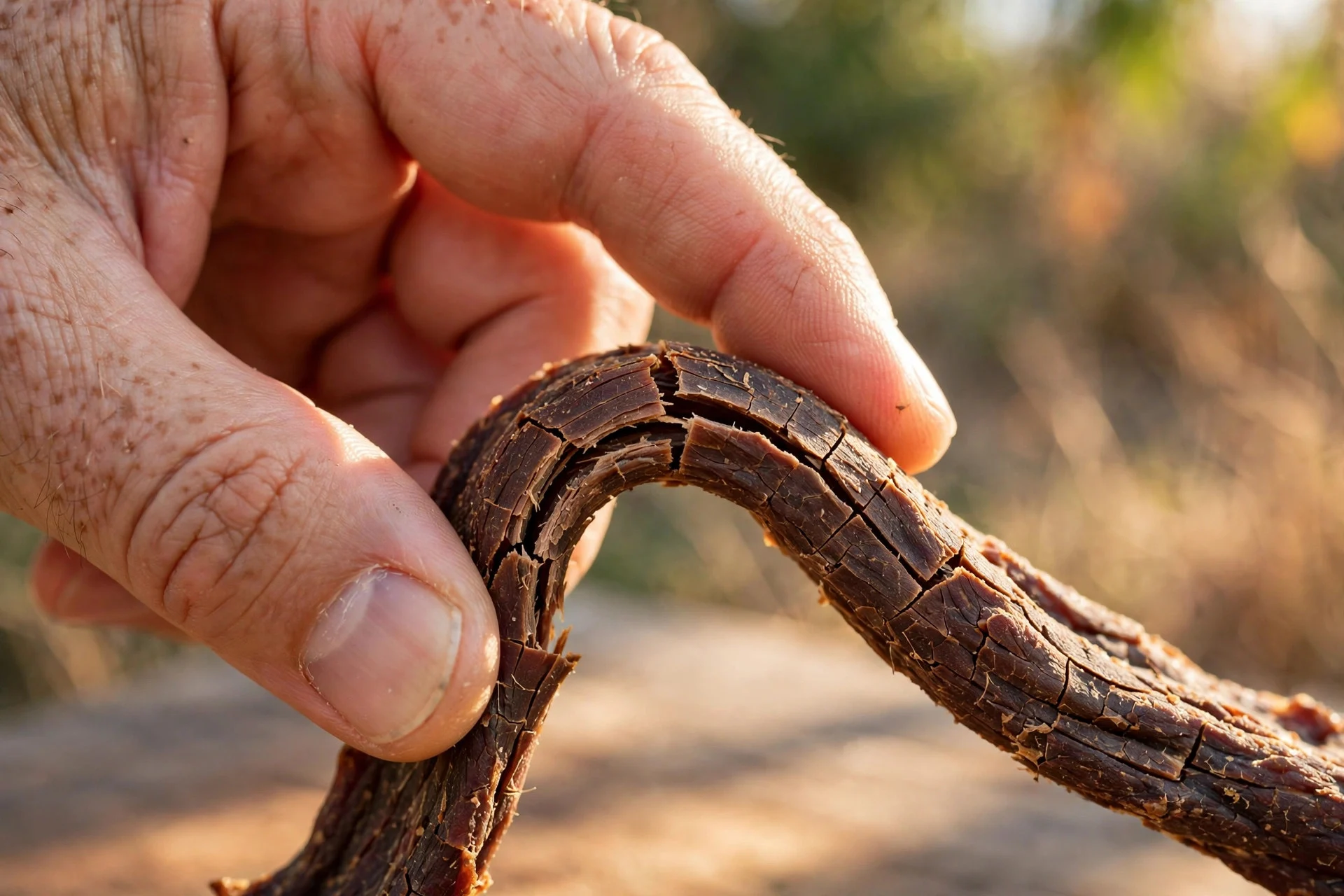
Slice lean beef (top round or sirloin) into ¼-inch strips against the grain. Partially freeze the meat for 30–45 minutes first — it slices dramatically thinner when firm. Lay on dehydrator trays without touching and dry at 160°F for 5–7 hours until the strips crack but don’t snap when bent. Check the thickest piece with a thermometer: 165°F internal. Store in an airtight container for up to three weeks. This is the baseline every other variation builds on.
2. Beef Jerky Training Bits
Cut the beef into ½-inch cubes before dehydrating. They dry in 4–5 hours at 160°F and shrink to perfect training-sized morsels. These are extremely high-value — the concentrated beef smell drives dogs wild. Use 5–10 per session, then switch to lower-value rewards, or your dog will start expecting jerky for sitting. Ask me how I know. Verify 165°F on the largest cube.
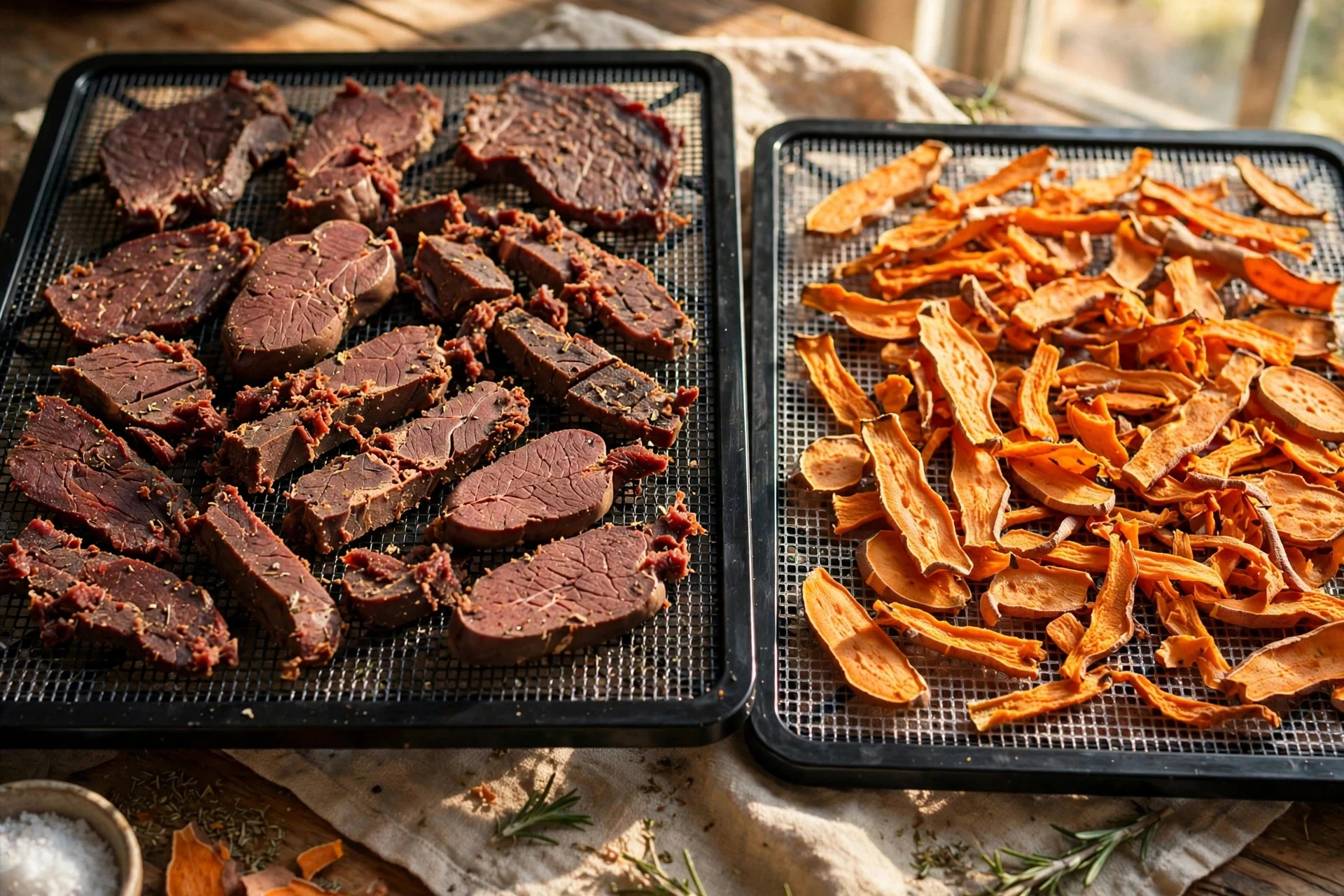
3. Beef and Sweet Potato Jerky
Alternate thin beef strips with ¼-inch sweet potato rounds on the trays. They dry together in 6–7 hours at 160°F. The sweet potato adds fiber and stretches the batch — beef isn’t cheap — while the beef provides the flavor dogs care about. Check 165°F on the beef pieces specifically; the potato insulates slightly. These are great everyday chews rather than special-occasion treats.
4. Beef Heart Jerky
Beef heart is lean, cheap, nutrient-dense muscle meat that most butchers practically give away. Slice ¼-inch thick, trim any fat caps, and dehydrate at 160°F for 6–7 hours until firm and dry. The texture is slightly denser than regular jerky — dogs love the chew. Same 165°F verification. If your butcher looks at you funny when you ask for heart, just smile. You’re about to make the best treats of your dog’s life.
5. Beef Liver Jerky Strips
Slice beef liver ¼-inch thick (partially freeze first — liver is slippery) and dehydrate at 160°F for 6–8 hours until completely brittle. Liver jerky is richer than muscle-meat jerky, so keep portions small: a few strips per day, not handfuls. Vitamin A accumulates, and liver is loaded with it. The smell during drying is intense. Your dog will camp outside the kitchen. Worth it.
Practical Dehydrating Tips
Lean meat makes better jerky. Fat doesn’t dehydrate — it goes rancid. Trim every visible bit of fat before slicing, and choose lean cuts to start with. Top round, eye of round, and sirloin are all excellent. If you see fat rendering on the trays during drying, blot it off with a paper towel.
Slice against the grain for tender jerky, with the grain for chewier jerky. Against the grain is better for most dogs — easier to chew, less of a choking risk. And keep your slices uniform. Mixed thicknesses mean mixed doneness, and mixed doneness means some pieces are perfect while others are still moist inside.
Mistakes to Avoid
The classic mistake is marinating like you’re making human jerky. Soy sauce, Worcestershire, garlic powder, onion powder, brown sugar, black pepper — none of it belongs in dog treats. Soy sauce alone would blow a dog’s sodium budget for the week. Plain beef needs nothing. The second mistake is under-drying. Beef jerky for dogs should crack when bent. If it bends without cracking, it still has moisture, and moisture means mold.
Don’t use ground beef for jerky unless you’re forming it very thin and checking temps obsessively. Ground meat has more surface area for bacteria and is harder to verify. Whole-muscle slices are safer and simpler. And never use pre-seasoned or “flavor-enhanced” beef — read the package, plain meat only.
FAQs
Can I make beef jerky in the oven?
Yes. Set your oven to its lowest temperature (usually 170°F), lay strips on a wire rack over a baking sheet, and prop the door open an inch for airflow. It takes 6–8 hours. Check 165°F internal on the thickest piece. Same result, higher energy bill.
How long does homemade beef jerky last?
About three weeks in an airtight container at room temperature, longer in the fridge. If you see any moisture in the container or smell anything off, toss the batch. Vacuum sealing extends shelf life significantly.
Is beef jerky safe for puppies?
In small, soft pieces — yes. Break jerky into tiny bits for puppies; a whole strip is too chewy and a choking risk. And keep jerky as an occasional treat, not a daily staple, since it’s rich.
Why is my jerky crumbly instead of chewy?
Over-dried, or sliced too thin. Jerky should crack when bent, not shatter. If it’s crumbling, reduce your drying time by an hour next batch. Dogs will still eat the crumbs — sprinkle them over kibble as a topper.
Homemade beef jerky is one of those treats that ruins store-bought forever. Plain beef, proper temp, patience. Your dog will thank you with the kind of focus usually reserved for squirrels.