A tired dog is a good dog, but here’s the thing nobody tells you: a physically tired dog with a bored brain is still a menace. Enrichment for high energy dogs has to hit both — body and mind — or you’ll have a marathon runner who comes home and eats your drywall.
These 20 ideas are sorted by type: sniff, think, chew, and move. Mix and match daily. The magic formula for a high-energy dog is 30 minutes of physical exercise plus 15 minutes of mental work. That combination outperforms two hours of fetch alone, every single time.
Sniff It Out (Nose Work)
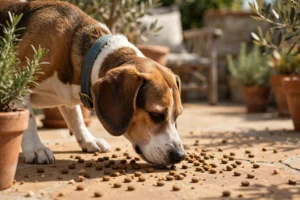
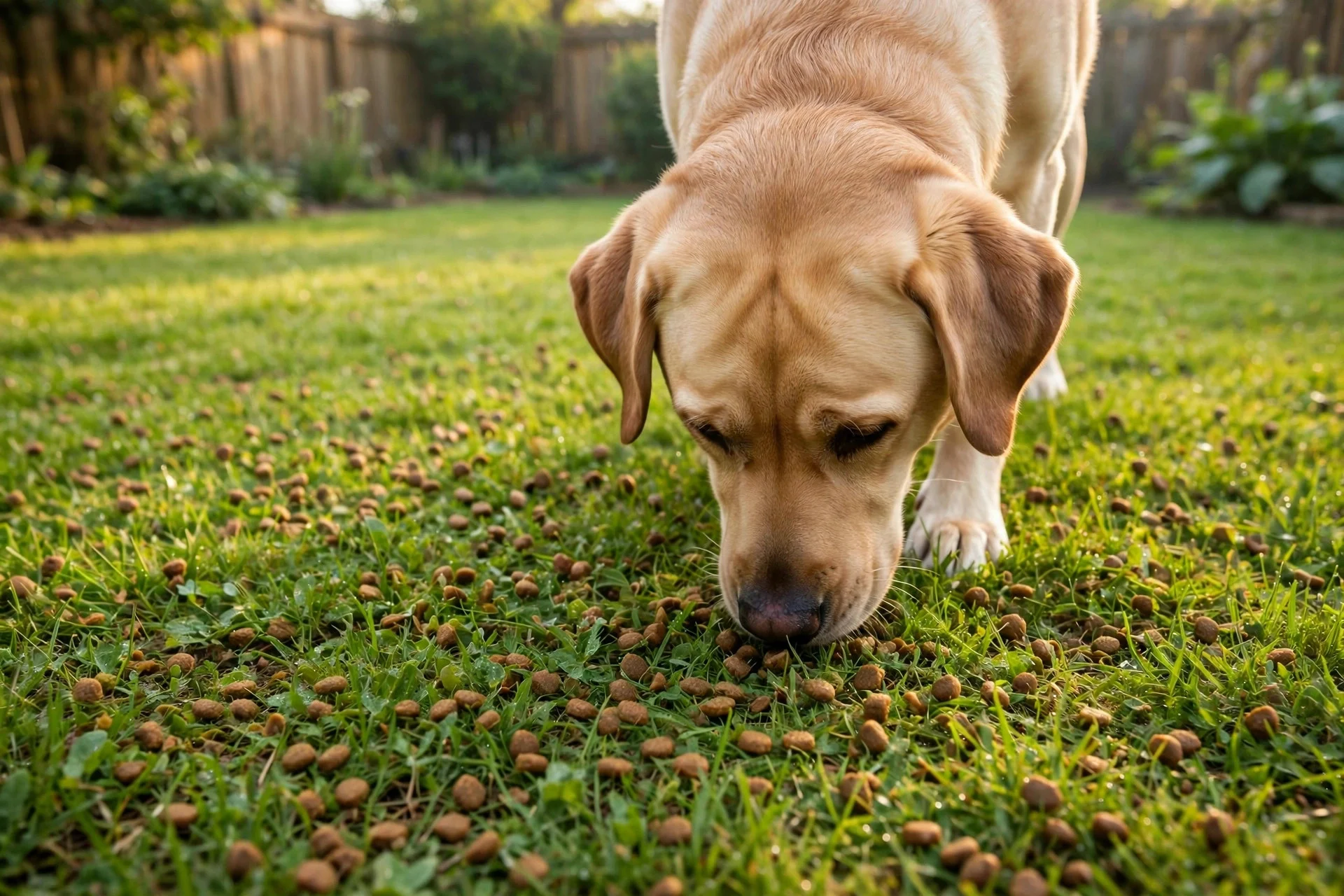
1. Scatter Feeding in the Grass
Skip the bowl. Toss your dog’s kibble across the lawn and let them hunt breakfast. Ten minutes of sniffing burns as much mental energy as a training session. Start with short grass and visible kibble, then graduate to longer grass.
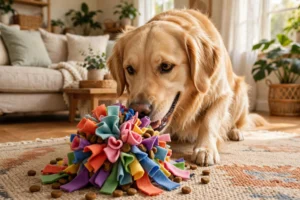
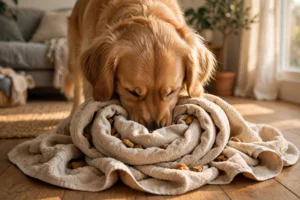
2. Snuffle Mat Meals
Feed half of every meal in a snuffle mat. It slows down gulpers and turns eating into a job. A Lab who inhales dinner in 40 seconds will spend 12 minutes working a loaded mat. That’s 12 minutes of calm focus.
3. Scent Trails
Drag a smelly treat along the ground to lay a trail, hide the jackpot at the end. Start with a 10-foot straight line; work up to trails that turn corners and go around obstacles. This is beginner nose work without any equipment.
4. “Find It” Game
Have your dog wait, hide 5-6 treats around one room in plain sight, release with “find it!” Gradually make hides harder — under rugs, behind legs of furniture. Most dogs learn the game in a single session.
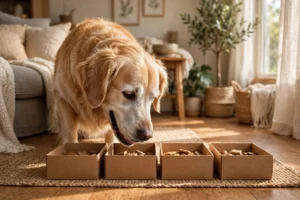
5. Cardboard Box Search
Set out 5-6 open cardboard boxes, treats hidden in two of them. Your dog has to check each box. Rearrange the boxes every round so it stays a search, not a memory test. Free, fast, endlessly repeatable.
Think Hard (Brain Games)
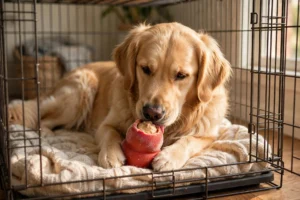
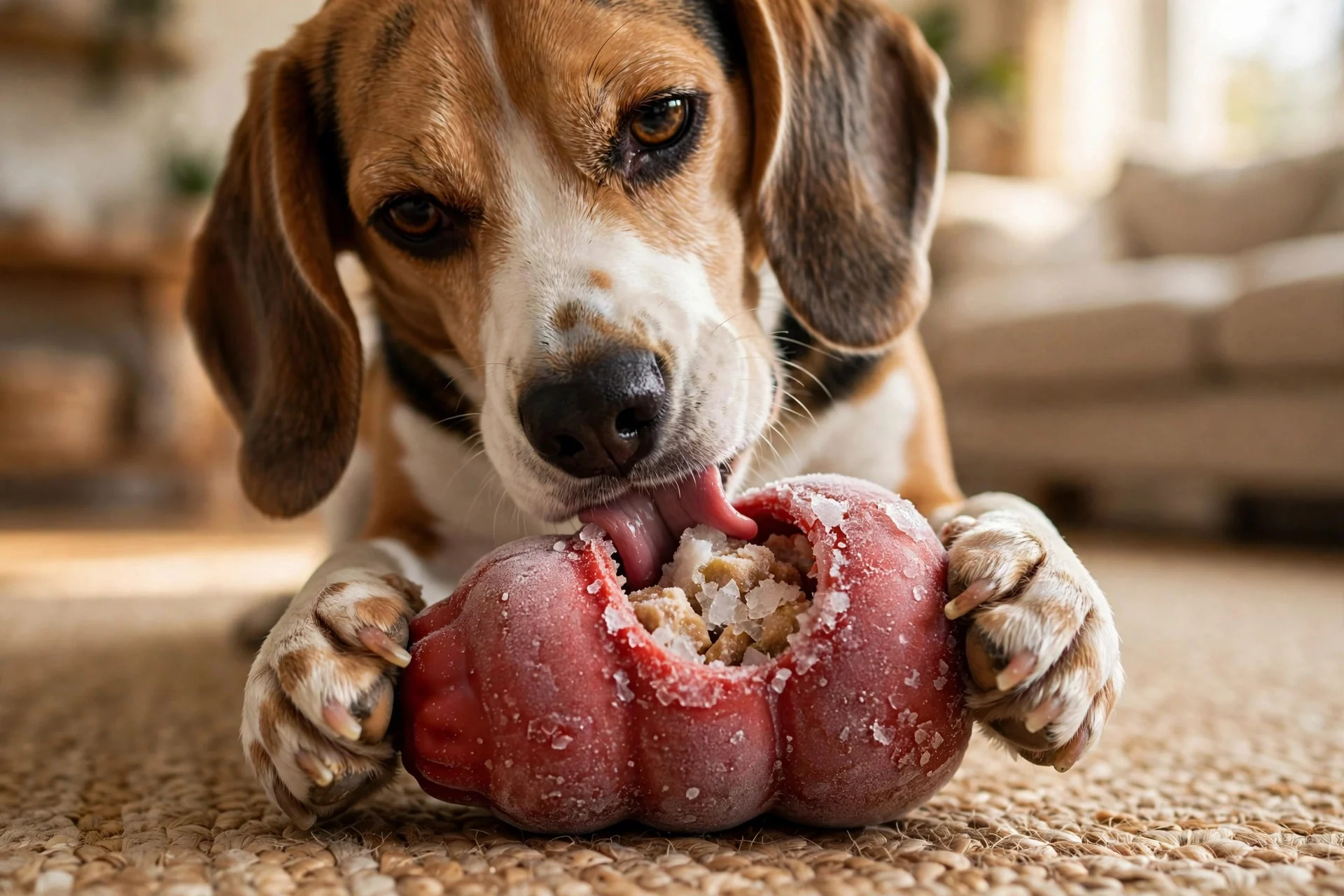
6. Frozen Kong Stuffing
Stuff a Kong with peanut butter, kibble, and banana, freeze overnight. A frozen Kong buys 30-45 minutes of focused work. For high-energy dogs, this is the single highest-value enrichment item you can own. Get the right size — too small and it’s frustrating.
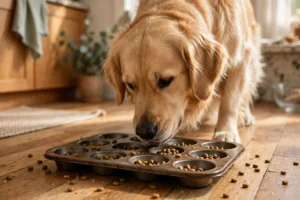
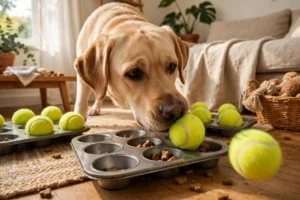
7. Muffin Tin Puzzle
Treats in each cup, tennis balls on top. Two minutes to set up, endlessly entertaining. When your dog masters it, add a towel draped over the whole tin for round two.
8. Trick Training Bursts
Five-minute trick sessions, three times a day. “Spin,” “weave,” “backup” — anything new. Learning is exhausting. A dog who just learned to spin on cue is mentally toast in a way that a game of fetch never achieves.
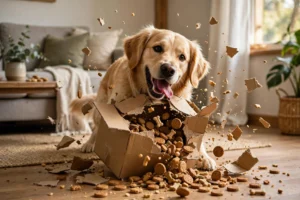
9. DIY Snuffle Box
Fill a box with crumpled paper and buried treats. It’s a snuffle mat’s scrappier cousin. Replace the paper when it gets gross — about weekly with daily use.
10. Treat-Dispensing Ball
A ball that drops kibble as it rolls turns solo time into active time. Fill it with breakfast and let your dog work for it while you’re getting ready. Measure the kibble — it’s easy to overfeed with dispensers.
Chew It Out
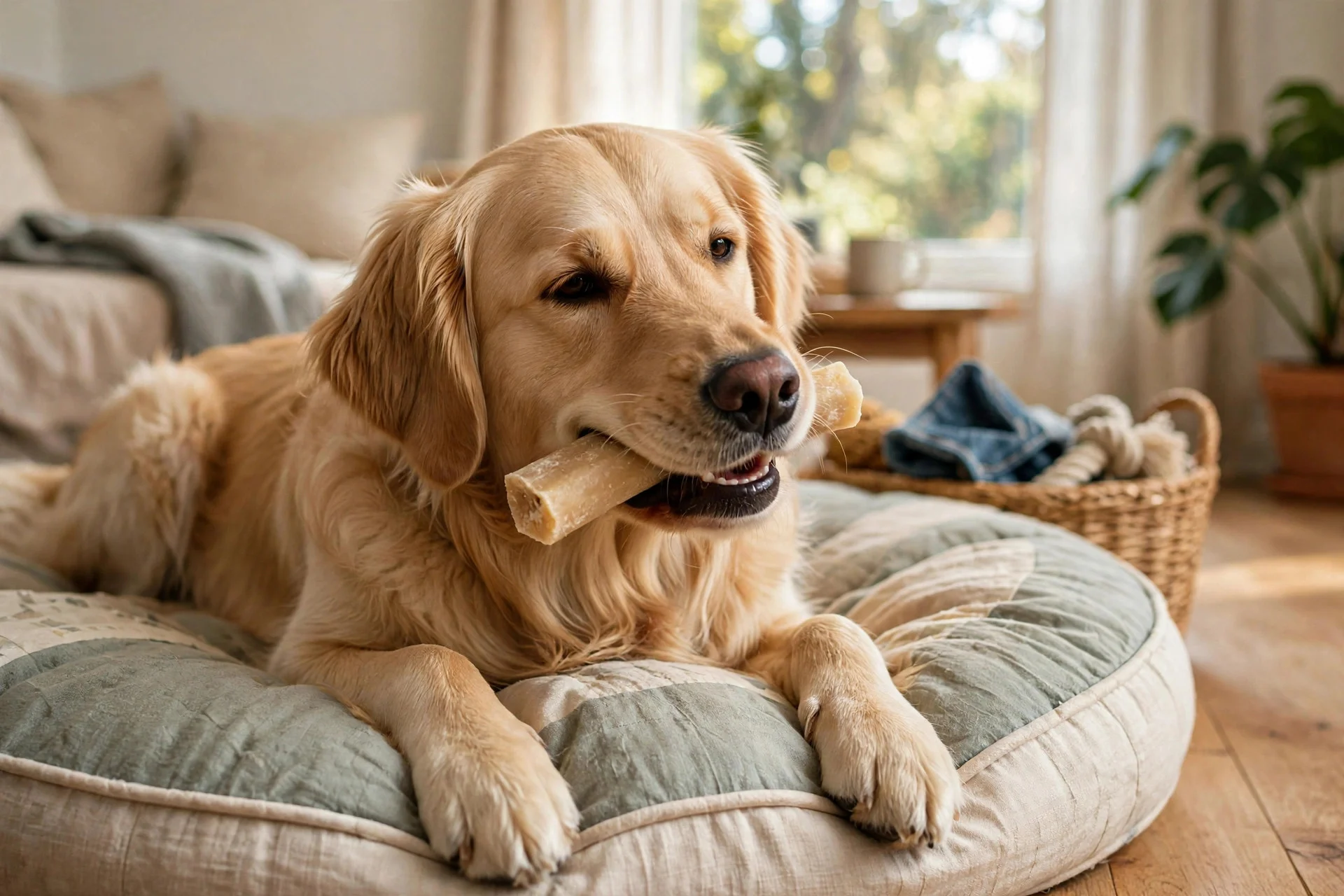
11. Long-Lasting Chews
Bully sticks, yak cheese chews, beef tendons — chewing is a natural stress reliever and jaw workout. Always supervise, and take the chew away when it gets small enough to swallow. Size up, not down.
12. Frozen Broth Bones
Freeze low-sodium broth (no onion/garlic) in a bowl with treats suspended in it. Your dog works at the “broth-sicle” for ages. Serve outside — it’s gloriously messy.
13. Carrot “Bones”
Whole large carrots, peeled. Crunchy, cheap, and most dogs love them. For power chewers, freeze the carrots first. A 50-cent enrichment session.
Move That Body
14. Flirt Pole Sessions
A flirt pole (giant cat toy for dogs) delivers an intense workout in 10 minutes. Let your dog chase, then “catch” the toy regularly — endless chasing without catching builds frustration. Great for apartments with no yard.
15. Fetch With Rules
Regular fetch builds fitness but not brains. Add rules: sit before the throw, down while you walk out, release to fetch. Now it’s obedience disguised as a game, and it tires them out twice as fast.
16. Tug With Training Built In
Tug is fantastic exercise if you add structure: “take it,” “drop it,” brief pauses. The start-stop pattern teaches impulse control mid-arousal, which is exactly what high-energy dogs need to practice.
17. Backyard Agility (DIY)
Broom across two chairs (jump), hula hoop held upright (jump through), blanket over chairs (tunnel). Ten minutes of backyard agility empties the tank. Keep jumps low — under elbow height — to protect joints.
18. Swimming
If you have access to safe water, swimming is the ultimate low-impact workout. Ten minutes of swimming equals roughly 40 minutes of running for energy burn. Rinse off afterward — lake water and chlorinated pools both irritate skin.
19. Playdates With Matched Energy
One well-matched playmate tires a dog out faster than any toy. The key word is matched — a senior Beagle won’t cut it for your Border Collie. Look for similar size, age, and play style.
20. Decompression Walks
A long-line walk (15-30 feet) where the dog chooses the route and sniffs everything. No heel, no agenda. Sniffing is calming and mentally draining. Thirty minutes of sniff-walk beats an hour of forced marching.
Practical Tips
Build a weekly rotation so nothing gets stale: sniff games Monday, puzzle Tuesday, chew Wednesday, and so on. And front-load enrichment before the times your dog is worst — a frozen Kong at 6 p.m. prevents the 7 p.m. zoomie demolition. Track what actually tires YOUR dog out. Some dogs are sniffers, some are thinkers. Lean into their type.
Mistakes to Avoid
The classic mistake is adding more exercise to fix a behavior problem that’s really about understimulation. A dog who gets two hours of fetch but zero brain work will still eat your couch — they’ll just do it faster. Mental enrichment isn’t optional for high-energy breeds; it’s the main event.
Don’t stack all enrichment into one mega-session either. A dog who’s over-tired gets cranky and hyperactive, just like an overtired toddler. Spread it through the day. And always supervise chews, frozen treats (tooth-fracture risk for power chompers on rock-hard items), and any toy small enough to swallow.
FAQs
How much enrichment does a high-energy dog need daily?
Aim for 30-60 minutes of physical exercise plus 15-30 minutes of mental enrichment, split across the day. Working breeds (Border Collies, Malinois, Huskies) land at the high end. Adjust based on your dog — a calm evening is your report card.
My dog destroys every puzzle in minutes. Now what?
Layer difficulty: freeze stuffed toys, put puzzles inside boxes, combine two puzzles into one. Also shift toward training-based enrichment — a dog can’t “destroy” learning a new trick. Nose work games scale infinitely in difficulty.
Can enrichment replace walks?
No. Dogs need the sensory experience of the outside world — smells, sights, sounds. But on days when a full walk isn’t possible, a heavy enrichment day (frozen Kong + snuffle mat + trick session + flirt pole) is a solid substitute, not a failure.
Is my dog getting too much exercise?
Signs of over-exercise: reluctance to start, excessive panting long after stopping, stiffness the next day, or cranky overtired behavior in the evening. Puppies under 18 months need extra caution — no forced running, keep jumps low.
Pick three ideas from this list and try them this week. Your drywall will thank you.