
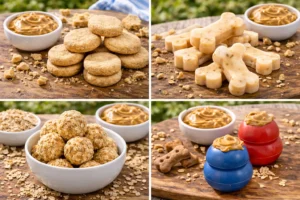
Why Dog Owners Are Rethinking Store-Bought Treats
Most dog owners give treats every day.
But many don’t realize what’s actually inside commercial dog treats.
Common problems include:
-
Artificial preservatives
-
Added sugars and fillers
-
Unsafe sweeteners like xylitol
-
Ingredients that trigger allergies or weight gain
Peanut butter dog treats are especially popular—but not all peanut butter is safe for dogs.
That’s why more pet parents are switching to homemade peanut butter dog treats. When made correctly, they’re:
-
Safer
-
More affordable
-
Easier to customize
-
More enjoyable for dogs
Later in this guide, we’ll also cover trusted ingredients and tools that help you make peanut butter dog treats safely and consistently at home.
What Are Homemade Peanut Butter Dog Treats?
Homemade peanut butter dog treats are snacks you prepare yourself using dog-safe peanut butter and simple ingredients like oats, banana, pumpkin, or yogurt.
Unlike store-bought treats, homemade versions give you full control over:
-
Ingredients
-
Portion sizes
-
Texture (soft, crunchy, frozen)
Homemade vs Store-Bought Peanut Butter Dog Treats
-
Homemade: fresher, customizable, fewer additives
-
Store-bought: convenient, but often processed
According to PetMD, peanut butter can be safe for dogs when it contains no xylitol and no artificial sweeteners.
Why Homemade Peanut Butter Dog Treats Matter for Dogs
Peanut butter offers:
-
Healthy fats
-
Plant-based protein
-
Strong flavor dogs love
These treats are especially helpful for:
-
Training rewards
-
Picky eaters
-
Dogs needing soft treats
The AKC notes that treats should support training and bonding—not replace balanced meals.
Common Problems Dog Owners Face With Peanut Butter Treats
Before making peanut butter treats, it’s important to avoid common mistakes.
Major Issues to Watch For
-
Xylitol toxicity (confirmed by the ASPCA)
-
Overfeeding calorie-dense treats
-
Digestive upset in sensitive dogs
-
Using sweetened or salted peanut butter
-
Improper storage leading to mold
Understanding these risks helps keep your dog safe.
How to Make Homemade Peanut Butter Dog Treats Safely
(How-To Schema Eligible Section)
Basic Safety Rules
-
Always choose xylitol-free peanut butter
-
Use unsweetened, low-sodium ingredients
-
Keep portions small
-
Store treats properly
Storage Guidelines
-
Refrigerate: up to 5–7 days
-
Freeze: up to 2 months
-
Use airtight containers
4 Homemade Peanut Butter Dog Treat Ideas
1. No-Bake Peanut Butter Banana Dog Treats
Soft, quick treats ideal for sensitive stomachs.
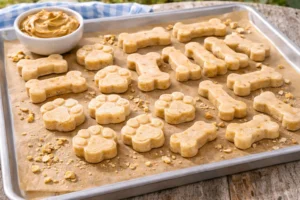
2. Baked Peanut Butter Oat Dog Biscuits
Crunchy treats for daily rewards.
3. Frozen Peanut Butter Yogurt Dog Bites
Cooling treats for summer or teething dogs.
4. Peanut Butter & Pumpkin Dog Treats
Fiber-rich option that supports digestion.
Best Ingredients & Tools for Homemade Peanut Butter Dog Treats
🐾 1. Best Xylitol-Free Peanut Butter for Dogs
Not all peanut butter is dog-safe.
Some brands contain xylitol, which is highly toxic to dogs.
A good dog-safe peanut butter should:
-
Contain only peanuts (and maybe salt)
-
Be free from xylitol and artificial sweeteners
-
Be low in sodium
Pros
-
Safe fat source
-
Improves treat texture
-
Highly palatable
Cons
-
Calorie-dense
Who Should Buy
-
Dogs without nut allergies
-
Owners making treats regularly
Who Should Avoid
-
Dogs with pancreatitis
🐾 2. Best Gluten-Free Oat Flour for Dog Treats
Oat flour works as a gentle binder in baked treats.
Pros
-
Easy to digest
-
Naturally gluten-free
-
Adds fiber
Cons
-
Not suitable for grain-free diets
Who Should Buy
-
Dogs with wheat sensitivity
Who Should Avoid
-
Dogs on strict grain-free diets
🐾 3. Best Silicone Dog Treat Molds
Molds help control portion sizes and make treats uniform.
Pros
-
BPA-free
-
Freezer-safe
-
Easy to clean
Cons
-
Requires freezer space
Who Should Buy
-
Small dog owners
-
No-bake treat makers
Who Should Avoid
-
Owners preferring hand-rolled treats
🐾 4. Best Plain Yogurt for Dogs (Probiotic-Friendly)
Plain yogurt adds probiotics and soft texture.
Pros
-
Supports gut health
-
Adds calcium
-
Improves consistency
Cons
-
Not for lactose-intolerant dogs
Who Should Buy
-
Dogs with mild digestion issues
Who Should Avoid
-
Dairy-sensitive dogs
🐾 5. Best Non-Stick Baking Mats for Dog Treats
Reusable mats prevent sticking and burning.
Pros
-
Even baking
-
Oil-free cooking
-
Eco-friendly
Cons
-
Not needed for no-bake treats
Who Should Buy
-
Owners baking treats often
Who Should Avoid
-
No-bake only users
🐾 6. Best Airtight Containers for Storing Dog Treats
Proper storage keeps treats fresh and safe.
Pros
-
Prevents mold
-
Controls odor
-
Freezer-safe
Cons
-
Additional cost
Who Should Buy
-
Batch treat makers
Who Should Avoid
-
Same-day treat users
Buying Guide: What to Look for Before Choosing Ingredients & Tools
-
Always read peanut butter labels
-
Choose low-fat options for overweight dogs
-
Use BPA-free tools
-
Match tools to treat type (baked vs frozen)
The AKC recommends treats make up no more than 10% of daily calories.
Expert Tips & Vet-Backed Recommendations
-
Introduce peanut butter treats slowly
-
Limit peanut butter to small servings
-
Stop if itching or loose stool appears
-
Treats supplement meals, not replace them
ASPCA strongly warns against any peanut butter containing xylitol.
FAQs About Homemade Peanut Butter Dog Treats
Q1: Is peanut butter safe for all dogs?
Yes, if it’s xylitol-free and fed in moderation.
Q2: Can puppies eat peanut butter treats?
Yes, in very small portions.
Q3: How much peanut butter can dogs eat?
Usually 1–2 small servings per week.
Q4: Are no-bake peanut butter treats safe?
Yes, when stored properly.
Q5: How long do homemade peanut butter dog treats last?
5–7 days refrigerated, longer if frozen.
Conclusion: Safe Peanut Butter Treats Done Right
Homemade peanut butter dog treats are:
-
Simple to make
-
Safer than many store options
-
Loved by most dogs
The key is ingredient quality and moderation.
👉 Final Recommendation:
If you make peanut butter treats regularly, investing in dog-safe peanut butter, proper molds, and airtight storage makes the process safer and easier—for you and your dog.