Tomatoes sit in this weird gray zone online — some sites list them as toxic, others say they’re totally fine, and both are sort of right depending on which part of the plant and which stage of ripeness you’re talking about. It’s not actually that complicated once you break it down, so let’s clear up the confusion.
Can Dogs Eat Tomatoes?
Ripe tomato flesh, in small amounts, is generally considered safe for dogs. The confusion comes from the fact that tomato plants belong to the nightshade family, and the green parts of the plant — stems, leaves, and unripe (green) tomatoes — contain a compound called solanine, which is genuinely toxic in large enough quantities.
So the real answer is: it depends on which tomato and which part. Ripe, red tomato flesh is the safe part. Everything green is where the caution comes in.
Ripe vs. Unripe: Why It Matters
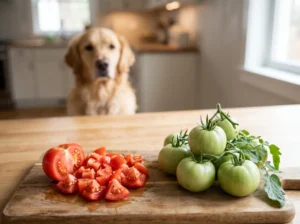
Ripe (red) tomatoes have very low solanine levels — low enough that the fruit itself is generally not considered a significant risk in small amounts. This is the part that’s fine to share occasionally.
Unripe (green) tomatoes contain meaningfully more solanine, along with the stems and leaves of the plant. This is the part to actually be cautious about.
If you’re a gardener with a tomato plant in the yard, this distinction becomes a lot more practical than it might seem from a grocery-store perspective, since a dog with access to a garden could potentially get into green tomatoes still on the vine, along with the leafy plant material surrounding them.
What Does Solanine Poisoning Look Like?
Solanine toxicity from tomato plants isn’t usually life-threatening in the amounts a dog would realistically eat from typical exposure, but it can cause real symptoms, especially with a larger quantity of green tomatoes or plant material:
- Vomiting
- Diarrhea
- Drowsiness or lethargy
- Weakness
- Confusion or disorientation, in more significant cases
- Changes in heart rate
Mild symptoms from a small amount of unripe tomato or plant material are more common than severe poisoning, but it’s still worth calling your vet if your dog has gotten into a garden tomato plant, particularly if they seem unusually lethargic or off afterward.
If You Have a Tomato Garden
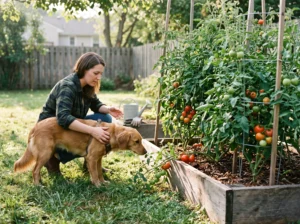
This is genuinely one of the more common ways dogs end up with a tomato-related issue — not from the kitchen, but from the backyard. A few practical steps if you grow tomatoes and have a dog who likes to explore the garden:
- Fence off garden beds if your dog tends to wander through them
- Pick ripe tomatoes promptly, since a fully ripened tomato dropped on the ground is a much lower risk than a green one still on the vine
- Keep an eye on your dog around the plants, especially if they’re the type to sample anything within reach
- Clean up fallen plant debris, including stems and leaves, rather than leaving them to break down in the garden bed
How to Safely Offer Tomato to Your Dog
If you’d like to share a bit of ripe tomato:
- Choose a fully ripe, red tomato — no green tinge.
- Remove the stem completely.
- Cut into small pieces, appropriate to your dog’s size.
- Skip the seasoning. Tomato sauce, salsa, or seasoned tomato dishes often contain onion, garlic, salt, or other ingredients that aren’t dog-safe, so plain, fresh tomato is the only version worth offering.
- Offer a small amount first, especially if it’s your dog’s first time trying it, to see how they handle it.
How Much Tomato Can a Dog Have?
Ripe tomato isn’t something dogs need in their diet, so portions should stay modest and occasional rather than routine:
- Small dogs: One or two small pieces, occasionally
- Medium dogs: A few small pieces
- Large dogs: A small handful, still kept occasional
Tomatoes are also somewhat acidic, so overdoing it can lead to stomach upset even with ripe fruit, separate from the solanine concern that applies mainly to unripe tomato and plant material.
What About Tomato-Based Products?
This is actually where more caution is needed than with plain, fresh tomato:
Tomato sauce and salsa: Frequently contain onion, garlic, and sometimes excessive salt, all of which are separate concerns beyond the tomato itself. Avoid sharing these with your dog.
Ketchup: Usually contains added sugar, salt, and sometimes onion or garlic powder in the ingredient list. Not a good choice to share.
Sun-dried tomatoes: Concentrated in flavor and sometimes packed in oil with garlic or seasoning, both worth checking before considering sharing any.
Canned tomatoes: Often contain added salt or seasoning blends. If plain canned tomato with no additives is available, it’s a reasonable substitute for fresh, but always check the label.
The pattern here is pretty consistent: plain, fresh, ripe tomato is fine in moderation. Anything processed or seasoned around tomato usually introduces other ingredients that are the actual concern, not the tomato itself.
Signs Your Dog Ate Too Much Tomato (or the Wrong Part)
- Vomiting
- Diarrhea (our dog diarrhea remedies guide has general at-home care tips for mild digestive upset)
- Lethargy or unusual drowsiness
- Loss of appetite
- Signs of confusion or disorientation, if a significant amount of unripe tomato or plant material was involved
Mild digestive symptoms from a bit of ripe tomato flesh usually pass on their own. Anything involving green tomato, stems, leaves, or symptoms like disorientation or noticeable lethargy warrants a vet call rather than waiting to see how things go.
Which Dogs Should Be Extra Cautious?
Dogs with sensitive stomachs: The acidity in tomatoes can be a bit much for a sensitive digestive system, similar to citrus fruits. Our dog treats for sensitive stomachs guide covers gentler alternatives if this describes your dog.
Dogs with unsupervised garden access: As mentioned, this is the scenario where actual solanine exposure is most likely, so extra vigilance is worth it if you grow tomatoes at home.
Dogs with known nightshade sensitivities: Uncommon, but if your dog has reacted poorly to other nightshade vegetables like potatoes in the past, it’s worth being cautious with tomatoes too and checking with your vet.
Other Garden Vegetables Worth a Second Look
If you’re a home gardener, tomatoes aren’t the only common plant worth knowing about. A few related considerations:
- Potato plants are also part of the nightshade family, with similar solanine concerns in the green parts and unripe potatoes — check our can dogs eat potatoes guide for more detail.
- Ripe bell peppers, another nightshade relative, are generally considered safe for dogs in moderation, unlike the green, unripe parts of related plants.
FAQ: Can Dogs Eat Tomatoes?
Are cherry tomatoes safe for dogs? Yes, as long as they’re fully ripe and red. The same ripe-versus-unripe distinction applies regardless of tomato size or variety.
Can dogs eat tomato leaves or stems? No. These parts of the plant contain higher solanine levels and should be kept away from dogs, particularly in garden settings.
Is tomato sauce safe for dogs? Generally no, since most sauces contain onion, garlic, or excessive salt and seasoning, which are separate concerns from the tomato itself.
What if my dog ate a green tomato from the garden? Watch closely for vomiting, lethargy, or unusual behavior over the next several hours, and call your vet, especially if a significant amount was eaten or if plant material (stems, leaves) was involved too.
Can puppies eat tomatoes? In small amounts of ripe, plain tomato, generally yes, though it’s best to introduce any new food gradually given a puppy’s more sensitive digestive system.
Are tomatoes actually good for dogs, nutritionally? Ripe tomatoes offer some vitamins and antioxidants, but they’re not a necessary part of a dog’s diet — more of an occasional extra than something with a specific nutritional purpose.
The Bottom Line
Ripe, red tomato flesh is a reasonably safe occasional treat for dogs, but the green parts of the plant — stems, leaves, and unripe tomatoes — genuinely aren’t, thanks to solanine. If you grow tomatoes at home, keep an eye on your dog around the garden, stick to plain ripe tomato if you want to share any, and skip sauces, ketchup, and seasoned tomato products entirely.