Nobody loves watching their dog sit in a crate doing absolutely nothing. I know crate time is necessary — for safety, for recovery, for those hours you’re at work — but a bored dog in a box is a dog who’s one bad afternoon away from chewing the crate pan. The fix isn’t less crate time. It’s better crate time.
Good crate enrichment dogs get makes the crate a place they want to be, not a place they tolerate. Every idea below is crate-safe and quiet enough for apartment life. Some take thirty seconds to set up.
12 Crate Enrichment Ideas That Actually Work
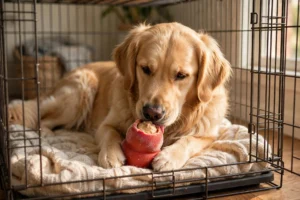
1. Frozen Stuffed Kong (The Classic for a Reason)
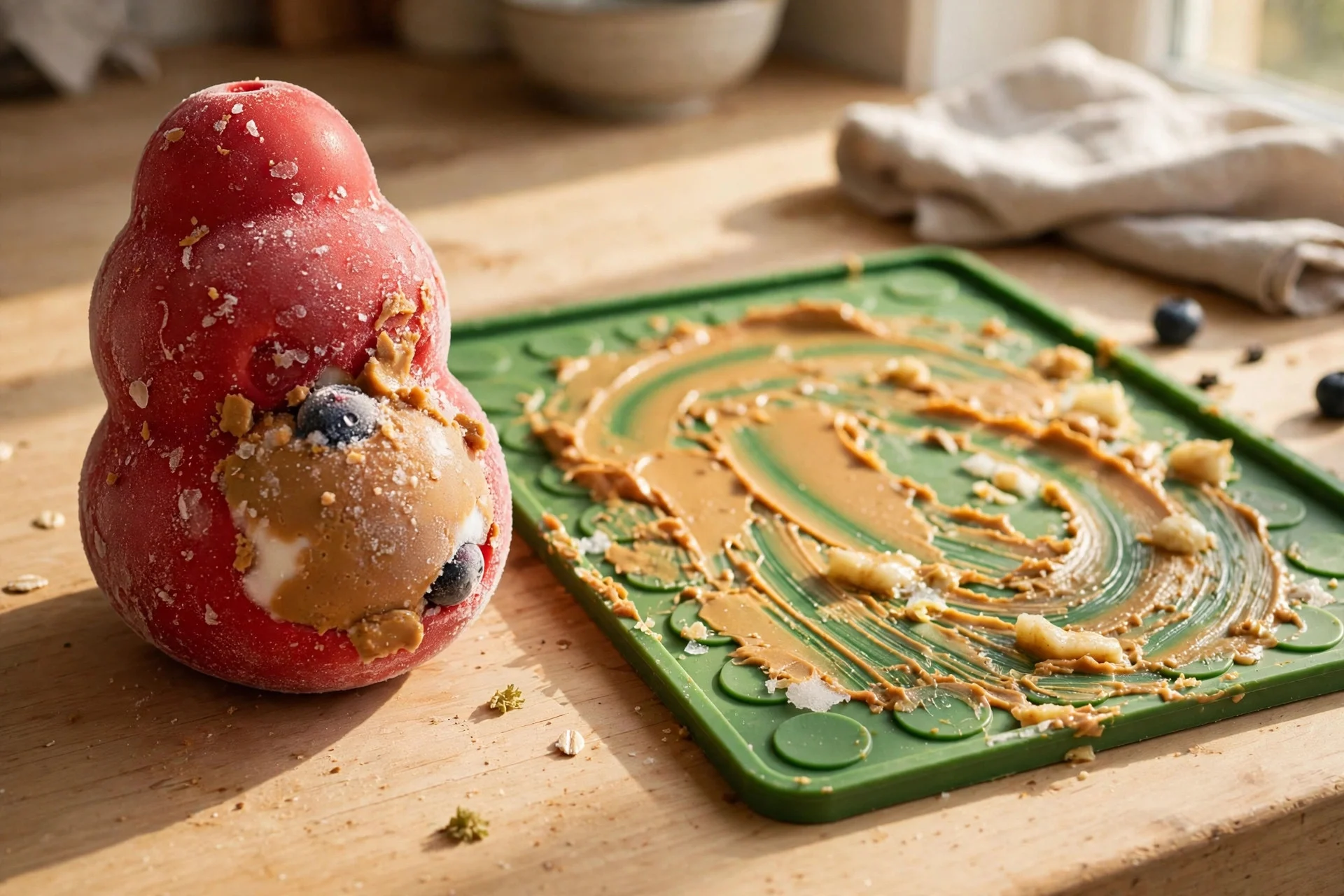
Stuff a Kong with peanut butter (xylitol-free, always check the label), a few kibble pieces, and a banana slice, then freeze it solid overnight. A frozen Kong takes a determined dog twenty to forty minutes to empty. Licking releases endorphins — this isn’t just busywork, it’s a self-soothing activity.
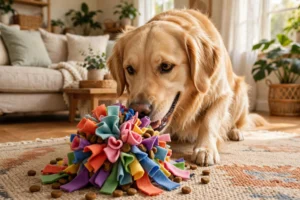
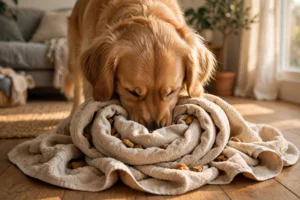
2. Snuffle Mat, Crate-Sized
A small snuffle mat fits perfectly in most crates and turns breakfast into a foraging game. Scatter your dog’s kibble through the fabric strips before you leave. Ten minutes of nose work burns more mental energy than most people expect.
3. Lick Mat With Soft Toppings
Smear a silicone lick mat with plain pumpkin purée, unsweetened applesauce, or mashed banana. Suction-cup it to the crate floor or just lay it flat. Fifteen minutes of licking produces the same calming effect as the Kong, but it’s easier to prep — no freezing required. Keep a couple of lick mats in rotation so one’s always clean.
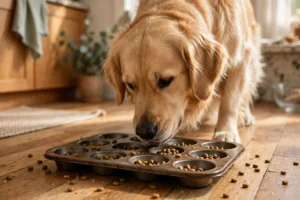
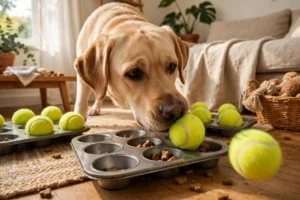
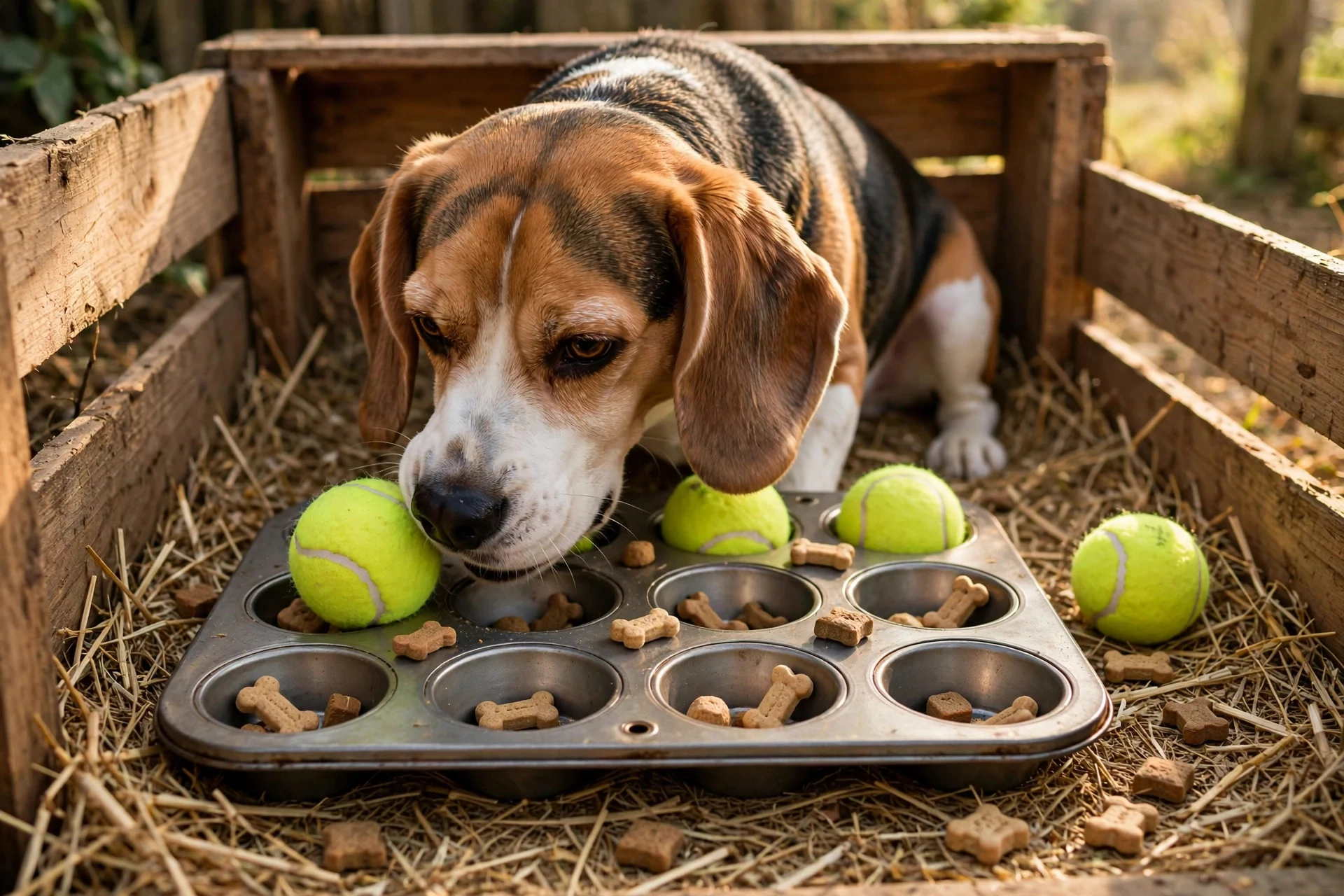
4. The Muffin Tin Puzzle
Place treats in a muffin tin, then cover each cup with a tennis ball. Your dog has to nose each ball out of the way to get the treat underneath. It’s simple, it’s cheap, and the sliding-ball mechanic is surprisingly engaging. Use a six-cup tin for smaller crates. Supervise the first few times — some dogs try to pick up the whole tin and carry it.
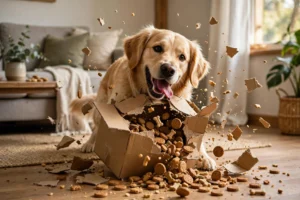
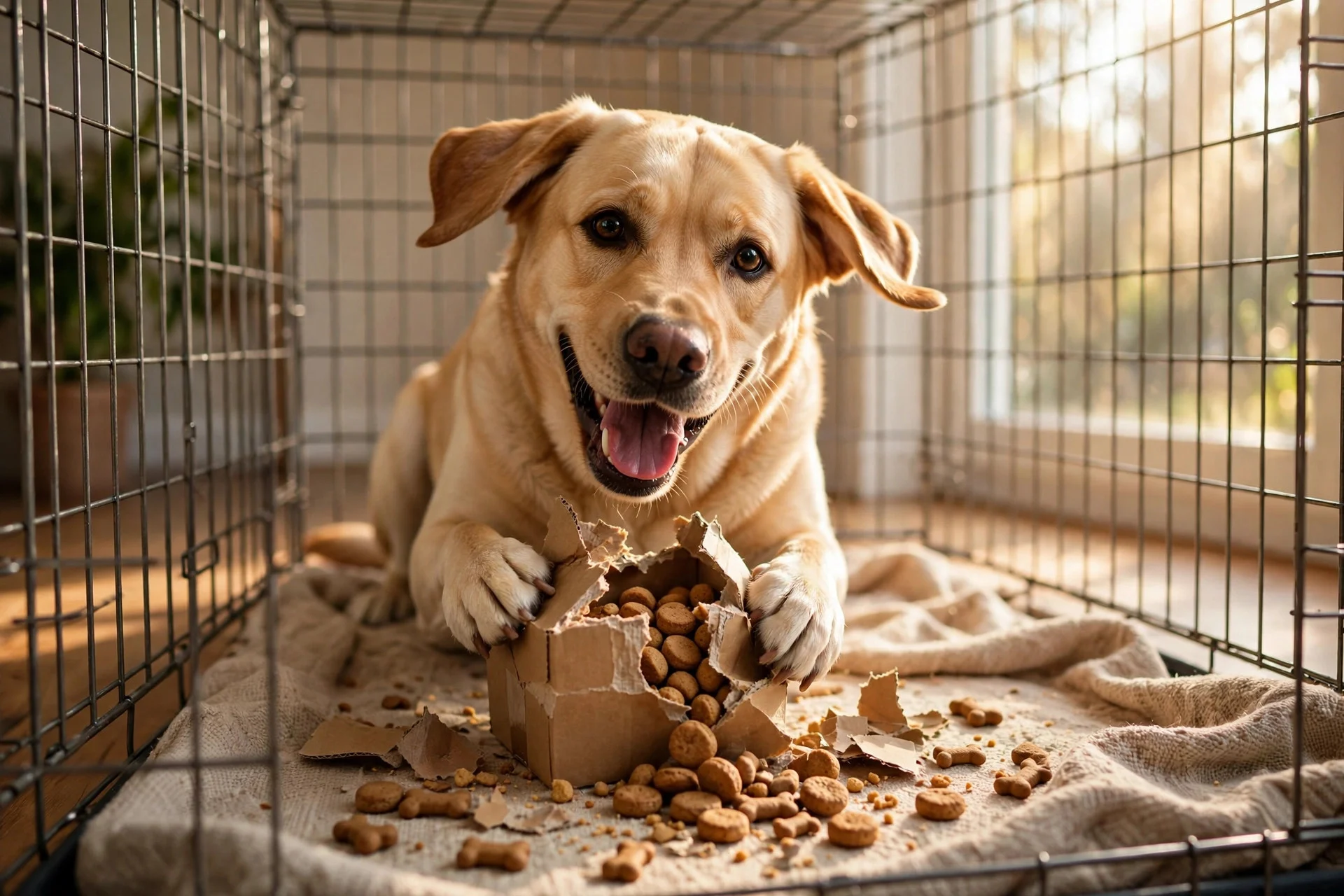
5. Cardboard Box Destruction Station
Put a small cardboard box in the crate with treats hidden inside, and let your dog shred it. Destruction is enrichment — tearing satisfies a deep instinct. Remove tape and staples first. When the box is confetti, toss it and grab another from the recycling bin.
6. Treat-Dispensing Ball
A hard rubber treat ball that rolls and drops kibble is perfect crate enrichment because it’s quiet (no squeaking) and self-directed. Your dog nudges it, kibble falls out, repeat. Size it right — it needs to fit through the crate door easily but be too big to swallow. The rolling motion also adds a little physical movement to crate time.
7. Buried Treasure Towel Roll
Lay a towel flat, sprinkle treats across it, roll it up tight, and tie it in a loose knot. Your dog has to unroll and unknot the towel to find everything. It’s essentially a free snuffle mat made from laundry. Use an old towel you don’t care about — it will get slobbery. This one works best for dogs who like using their paws, not just their noses.
8. Frozen Broth Ice Block
Freeze low-sodium chicken broth (no onion, no garlic) in a bowl and pop the ice block into a crate-safe dish. Your dog licks and works at it for ages. On hot days, this doubles as temperature management. Use a heavy dish — a spilled ice block turns the crate into a swamp.
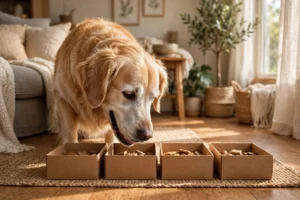
9. Scent Work in a Box
Put three small boxes in the crate, hide a high-value treat in just one, and let your dog figure out which. This is baby nose work, and it teaches your dog to trust their nose over their eyes. Start easy — let them watch you hide it the first few times. Within a week, most dogs are doing genuine scent discrimination. It’s remarkable to watch.
10. Chew Rotation System
Keep five or six safe chews (bully sticks, yak cheese, rubber chew toys) and rotate two into the crate each day. Novelty is the whole game here — the same chew every day becomes furniture, but a “new” chew from the rotation feels exciting. Remove anything that gets small enough to swallow whole. Size-appropriate chews only, every single time.
11. The Cupcake Liner Game
Place treats under overturned paper cupcake liners on the crate floor. Your dog flips each one to find the goods. It takes about two minutes to set up and gives five minutes of happy flipping. Silicone liners last longer than paper ones and don’t turn to mush when they get wet. Ridiculously simple, weirdly effective.
12. Calming Music or Audiobooks
Studies on shelter dogs show that soft classical music and audiobooks reduce stress behaviors. Put on a calm playlist near the crate — not loud, just background. It masks outside noises that trigger barking. Skip anything with doorbells in the plot. Learned that one the hard way.
Practical Tips for Crate Enrichment
Rotate, rotate, rotate. The fastest way to kill enrichment is repetition — the same Kong every day stops being enriching and starts being routine. Keep a little stash of options and cycle through them across the week. Your dog doesn’t need something new every day, just something different enough every couple of days to stay curious.
Match the enrichment to the duration. A frozen Kong is perfect for a two-hour absence but pointless for a thirty-minute one. For short crate sessions, use quicker puzzles like the cupcake liners or a lick mat. For long ones, go frozen and layered.
Mistakes to Avoid
The biggest mistake is leaving enrichment unsupervised before you know it’s safe for your dog. Every dog destroys things differently. Test every new enrichment while you’re home first, watch how your dog interacts with it, and only leave it in the crate unattended once you’re confident they won’t eat the non-edible parts. A dog who shreds lick mats is a dog who doesn’t get unsupervised lick mats. No judgment — just adjust.
The other mistake is overstuffing the crate. Enrichment should fit comfortably with room for your dog to lie down, stand, and turn around. If the crate looks like a puzzle-toy warehouse, there’s no room to rest, and rest is half the point of crate time. One or two enrichment items per session is the sweet spot.
FAQs
Is it safe to leave enrichment in the crate when I’m gone? Only enrichment you’ve tested while supervised. If your dog has ever destroyed and swallowed parts of a similar item, don’t leave that type unattended. When in doubt, stick to frozen Kongs and lick mats — they’re the hardest to destroy and the safest to leave.
How much of my dog’s food should go into crate enrichment? Up to half their daily food can come through enrichment without any problem. Just reduce the bowl amount accordingly — enrichment calories count the same as bowl calories, and nobody wants a crate-shaped dog.
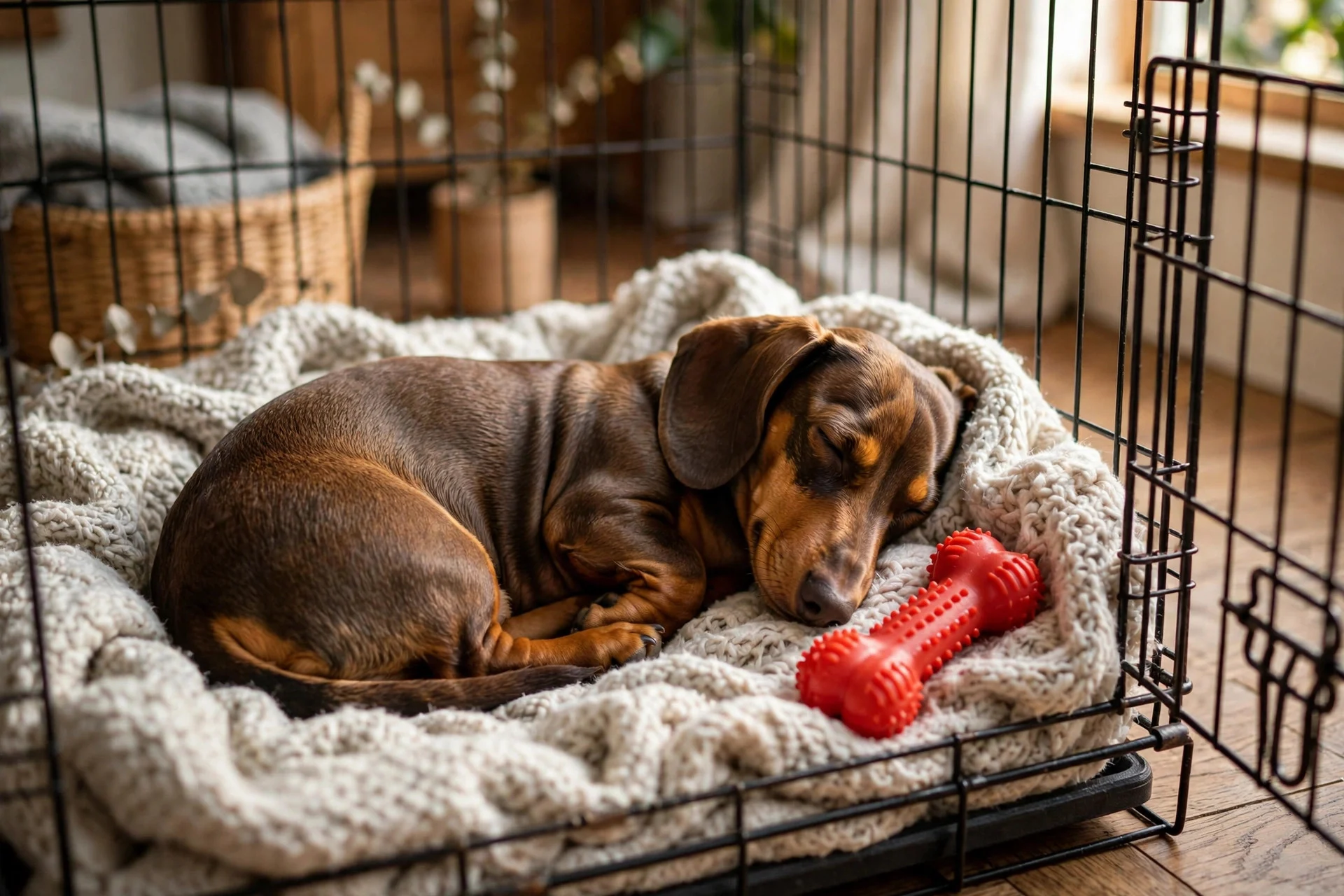
My dog ignores enrichment and just sleeps. Is that okay? That’s actually the dream outcome. A dog who settles and naps in the crate is a dog who’s comfortable and content. Enrichment is there for dogs who need it. If yours sleeps through crate time, you’re already winning.
Can puppies get crate enrichment? Yes, and they benefit enormously — it teaches them the crate is a fun place from day one. Start with easy wins (lick mats, loosely stuffed Kongs) and supervise everything. Puppies are the most creative destroyers on earth, so nothing goes in the crate untested.
Crate enrichment isn’t about spoiling your dog. It’s about respecting the fact that a thinking, feeling animal is spending hours in a small space, and giving their brain something to do while they’re there. Pick two or three ideas from this list, start tomorrow, and watch your dog start choosing the crate. That’s when you know it’s working.