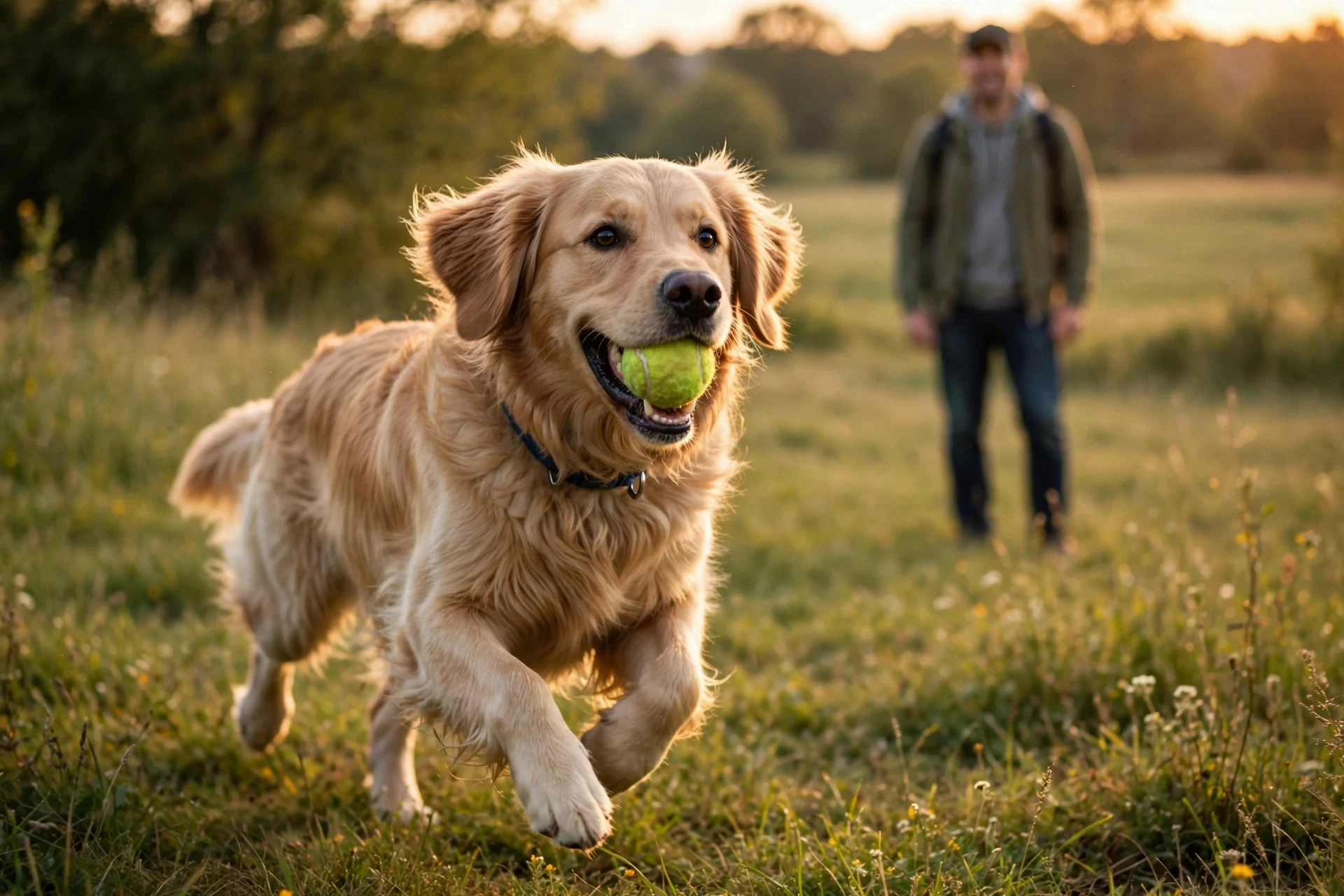
New Year’s Eve is my favorite night of the year — and my Golden Retriever’s least favorite. Every midnight he goes from happily snoozing on the couch to shaking behind the toilet in about forty-five seconds flat. If you live with a firework-fearing dog, you know the scene. Dogs fireworks anxiety new years is incredibly common: the booms, the flashes, the vibrations through the floor — and your dog cannot be reasoned with about any of it.
The good news: you are not powerless. I have spent years figuring out what actually works for my dog, including a few things I learned the hard way. These 10 tips are the full playbook — what to set up, what to do during the fireworks, and what to avoid.
10 Calming Tips for New Year’s Eve
1. Build a Safe Room Before the Night Starts
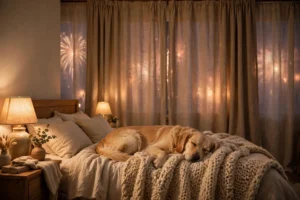
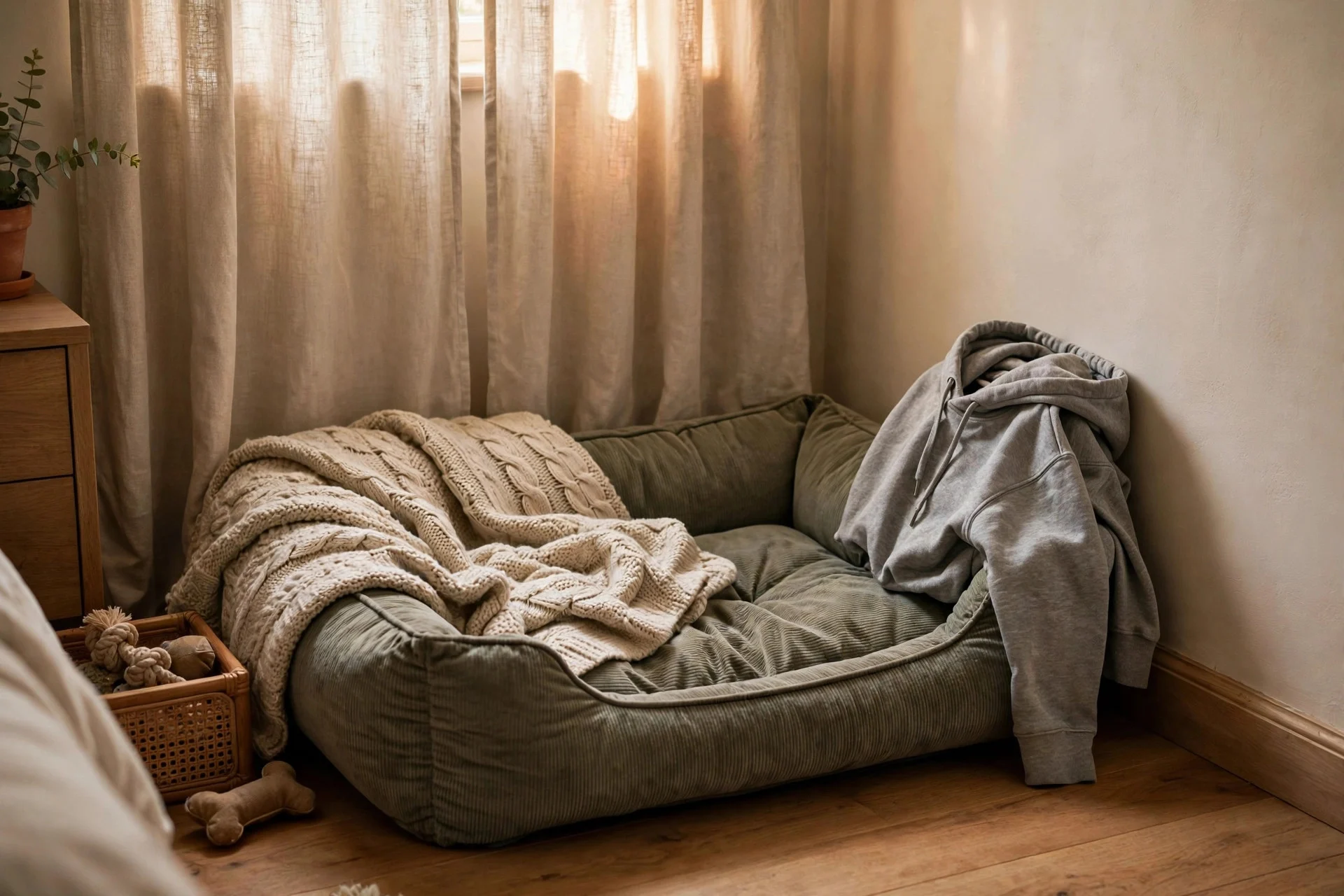
Pick one room — a bedroom, bathroom, or basement — and turn it into your dog’s bunker. Close the curtains to block the flashes, add their bed and a favorite blanket, and leave a piece of your worn clothing in there — your scent genuinely calms them. Set it up in the afternoon and let your dog settle in while the evening is still quiet.
Warning: Don’t lock a panicky dog in alone. Some injure themselves trying to get out. Let them come and go if the room is safe.
2. Drown It Out With White Noise or the TV
Start the noise early — well before midnight — and keep it steady. Classical music is popular for a reason, but honestly a loud action movie works too. A fan plus the TV together make a nice wall of sound; close interior doors to trap it in.
Tip: Streaming services have “dog relaxation” playlists built for exactly this night.
3. Try a Thundershirt or DIY Pressure Wrap
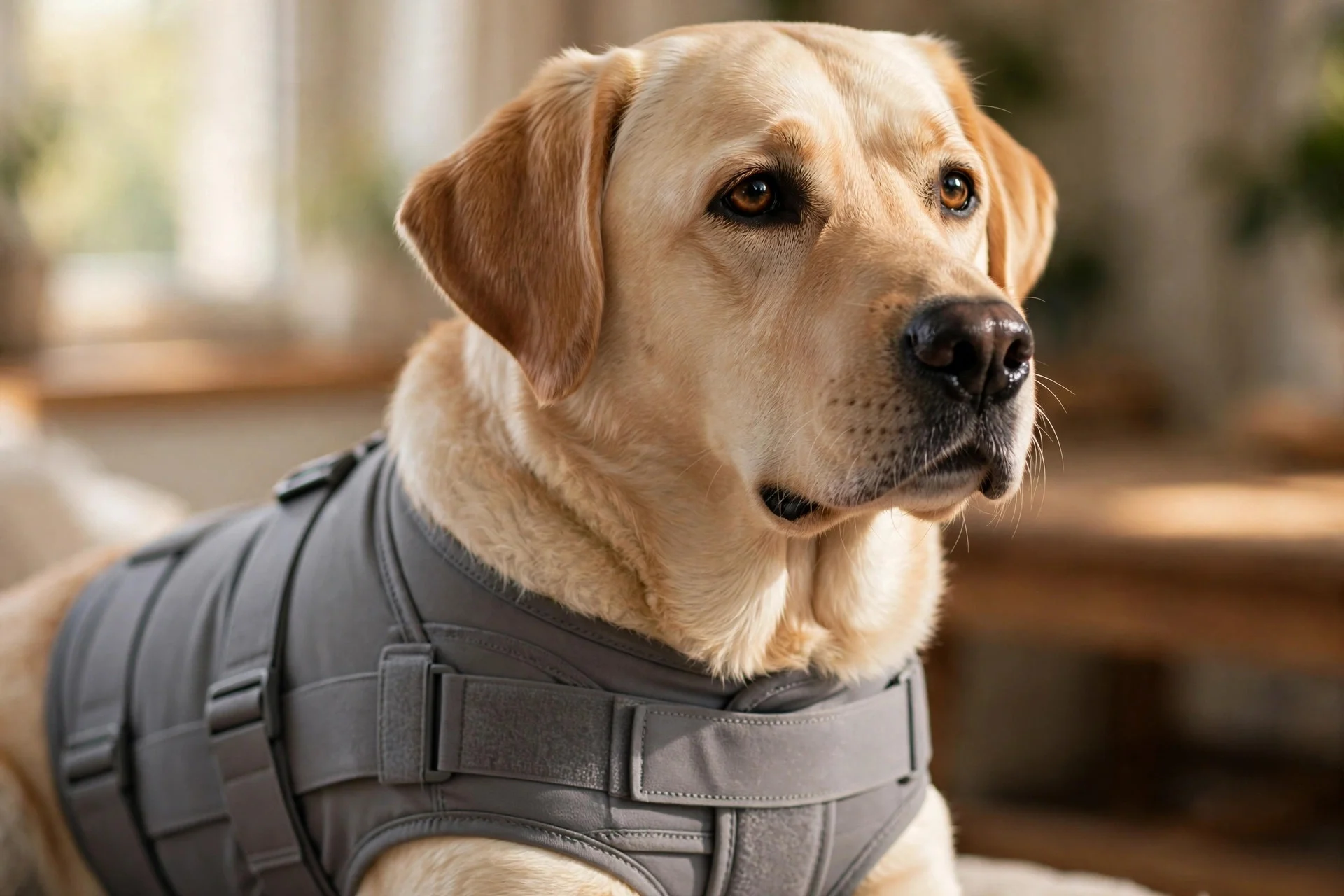
Pressure wraps work on the same principle as swaddling a baby — constant, gentle pressure calms the nervous system. Let your dog wear it a few times in calm situations first, so it becomes a calming signal rather than part of the scary night. No Thundershirt? A snug T-shirt or an ace bandage wrapped in a figure-eight works in a pinch.
Honest take: Helps maybe half of dogs. Mine is in the half it helps — he visibly settles. Worth trying, but don’t bet the whole night on it.
4. Time the Exercise Right
A tired dog copes better. Get the biggest walk of the day done by late afternoon — play session, long walk, whatever wears yours out. By evening, you are inside and staying inside. But don’t take them out at dusk for “one last run” if fireworks might start early. People set them off hours before midnight, and if your dog bolts from a surprise boom, you have a lost-dog situation on the worst night for it.
5. Feed Dinner Early
Anxious dogs often won’t eat — or eat and then throw up. So feed dinner around 4 or 5 PM. Later in the evening, use a stuffed Kong as a distraction: licking and chewing are naturally calming behaviors. Fill it, freeze it in the morning, and break it out around 10 PM. And skip the rich holiday food — turkey skin and gravy on top of anxiety is a recipe for a rough night.
6. Start Desensitization Before the Night (Not On It)
Play firework sounds at very low volume while your dog is relaxed — eating, playing, getting treats — and gradually increase over days or weeks, teaching the brain the sound predicts nothing bad. Free soundtracks on YouTube and Spotify exist for exactly this. Start absurdly quiet and only turn it up when your dog is completely unbothered.
Realistic expectation: This takes weeks, so if New Year’s Eve is tomorrow, skip to the other tips — and start training now for next year.
7. Talk to Your Vet About Prescribed Options
That is not a failure; it means the fear is intense enough to need medical help. Vets can prescribe anti-anxiety medications designed for noise phobias. Have this conversation weeks before the night, because some need to be given hours ahead of time and some need a trial dose.
Important: Never give your dog human medication or another pet’s prescription. Ask your vet about dosing — the right choice depends on your dog’s size, health, and history.
8. Don’t Punish Fear — and Don’t Force Anything
The most important tip on this list. Don’t scold, yell at, or punish your dog for being afraid — fear is not misbehavior, it is an involuntary response, and punishment just adds a second scary thing to the scary night. Stay calm yourself, speak in a normal voice, and let your dog choose where to be.
9. Plan the Post-Midnight Potty Routine
Use a leash even in your own fenced yard, double-check gates before opening the door, and keep the trip short and boring: out, business, back inside. Bring high-value treats to reward coming back in quickly.
Tip: A final potty trip around 11 PM can buy you time — some dogs will hold it until morning if they went late enough.
10. Check ID Tags and Microchip Now, Not Later
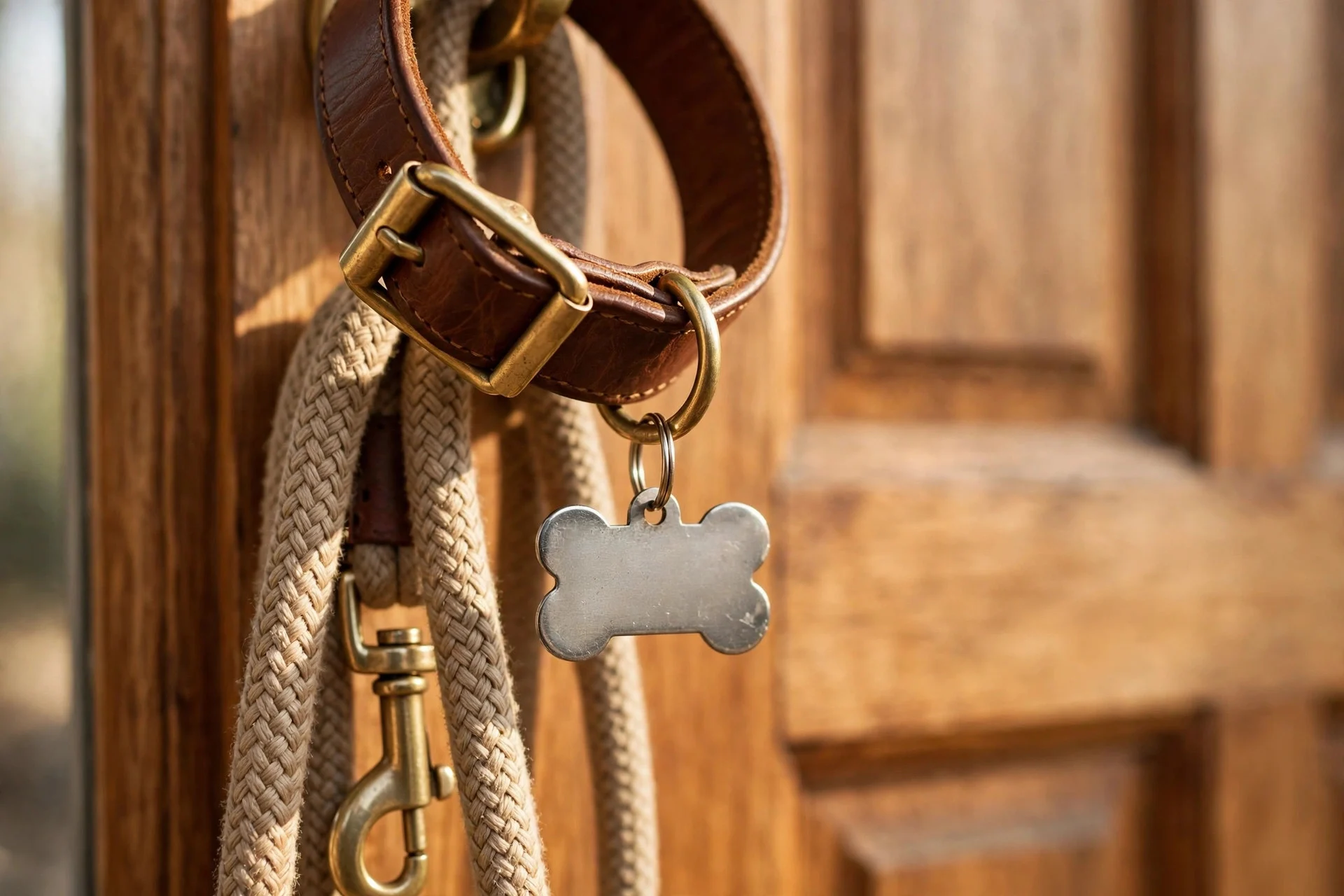
Today, check that the tag on your dog’s collar is readable with your current phone number, and confirm the microchip registration has your current address and number. A chip with your old phone number is as useful as no chip at all.
Warning: Keep the collar on all night, even indoors. Dogs slip out the front door when a guest arrives and fireworks go off at the same moment.
Quick Tips
- Keep your own energy calm. Dogs read your body language — if you are tense and hovering, they take it as confirmation something is wrong.
- Close the doggy door by evening. An open dog door plus midnight fireworks is how dogs end up three neighborhoods away.
- Brief your guests. Front door stays shut, dog stays in, and nobody chases or corners a scared dog.
- Save your vet’s emergency number now. You don’t want to be googling at 1 AM if the night goes badly.
FAQs
Should I comfort my dog during fireworks, or does that reinforce the fear?
Comfort them. The old advice that petting a scared dog “rewards” the fear has been debunked — you cannot reinforce an emotion the way you reinforce a behavior. Calm petting and a relaxed voice help. Just keep it easy; a panicked cooing voice can amp them up.
Do calming treats or CBD work?
Some dogs seem better with calming chews containing L-theanine or chamomile; the evidence for CBD in dogs is still thin. Test anything new on a normal night first — they are mild aids, not a replacement for the strategies above.
What if my dog tries to escape during the fireworks?
Stay calm, don’t chase — chasing turns it into a game. Lure them back with treats or a favorite toy. This is why the safe room, closed doors, and up-to-date ID matter: prevention is everything. If they get out, contact local shelters and lost-pet groups immediately.
Can I leave my dog alone at home on New Year’s Eve?
If the anxiety is mild and you have set up the safe room, noise, and a frozen Kong, many dogs do fine. But if your dog panics — destroys things, injures themselves, tries to escape — they should not be alone that night. This is the one night a year to skip the party or bring them along.
Final Thoughts
Set up the room, start the noise early, feed them early, keep them leashed, and check those tags. And in January, talk to your vet about a plan for next time — your dog will thank you by falling asleep on your feet at 12:05, which is honestly the best outcome you can hope for.