My old Lab, Biscuit, retired from fetch at age eleven. Her hips just couldn’t do the sprinting and skidding anymore, and watching her try broke my heart a little. But here’s what I learned: she didn’t need fetch. She needed a job — something that made her brain work while her body took it easy. The day I figured that out, I got my happy dog back.
Senior dogs need enrichment just as much as puppies do — arguably more, because a bored old dog gets stiff and grumpy. The trick is choosing senior dog enrichment games that are gentle on aging joints and easy on fading senses. Everything below is low-impact and frustration-free.
10 Gentle Enrichment Games for Senior Dogs
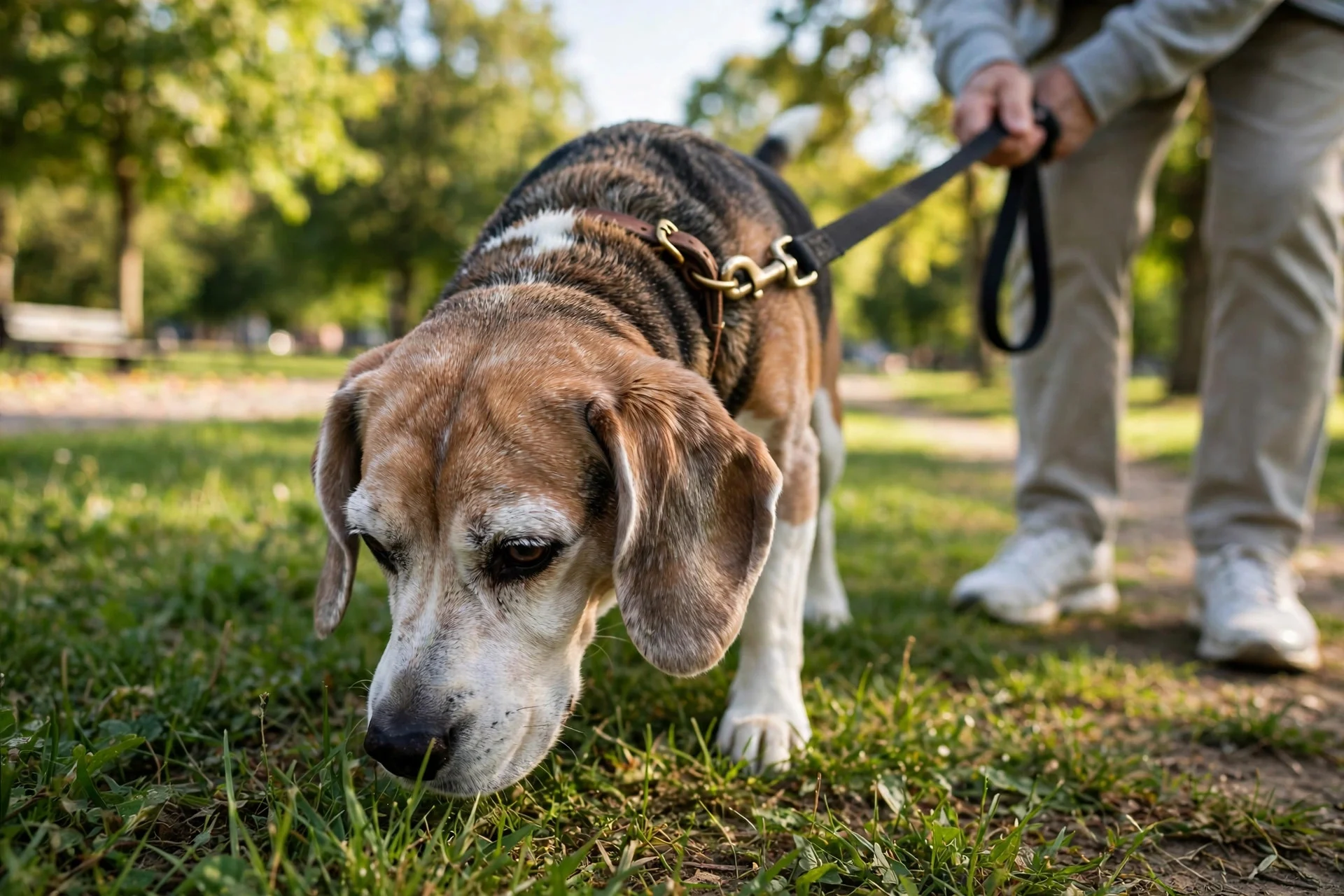
1. The Sniff Walk (No Distance Required)
Forget the three-mile walk. Take your senior dog to one grassy patch and let them sniff for fifteen minutes. Sniffing is intensely tiring for a dog’s brain — all that scent processing is real cognitive work. Let them choose the pace and direction. This is their walk now.
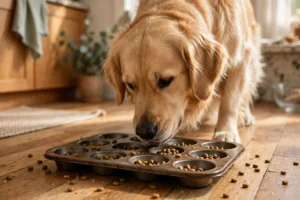
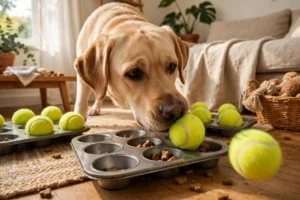
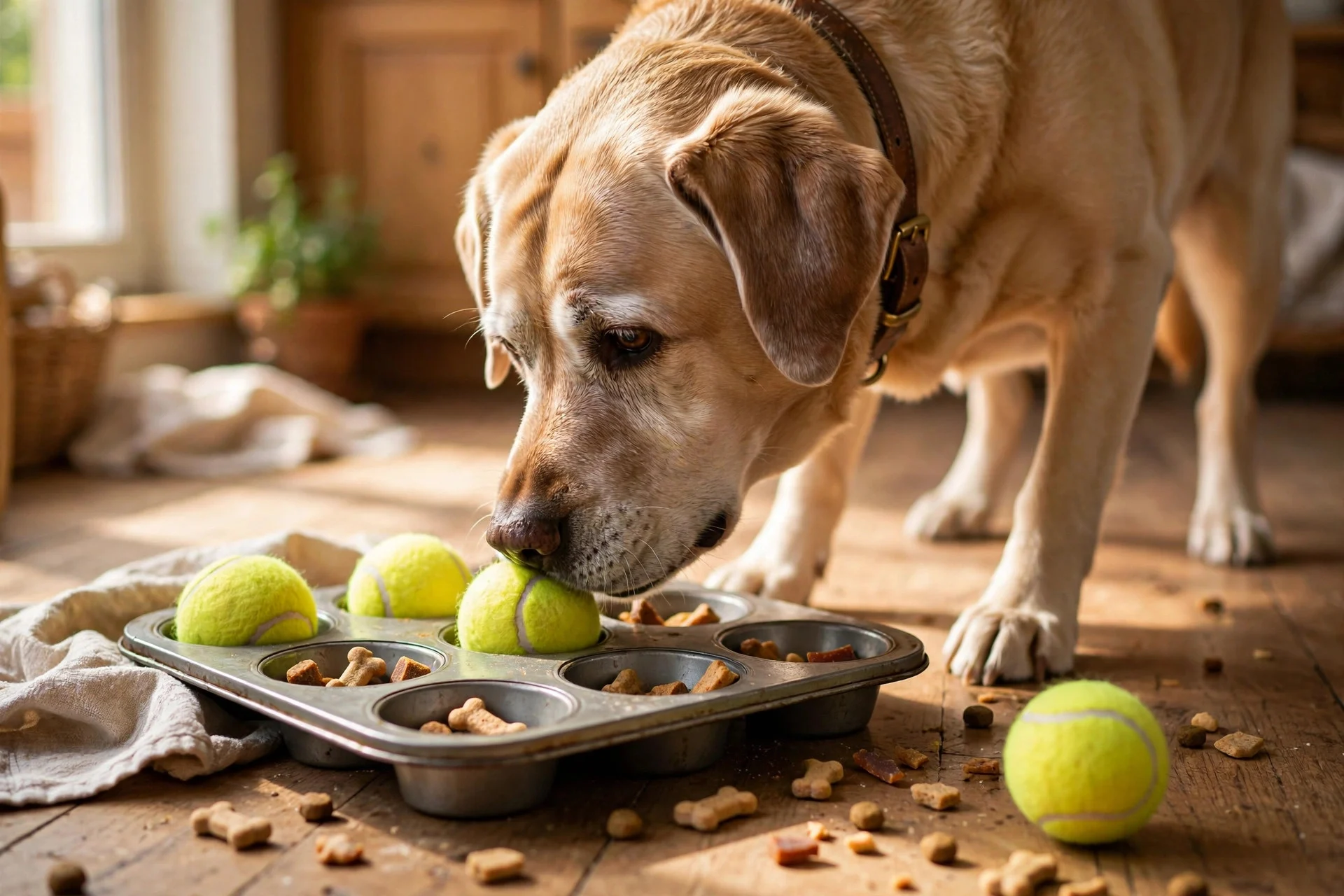
2. Muffin Tin With Tennis Balls
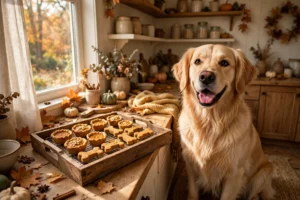
Put treats in a muffin tin and cover each cup with a tennis ball. Your senior dog noses the balls aside to find the treats. It’s a perfect old-dog puzzle: no bending into weird positions, no jumping, no speed required. Just nose work at their own pace. Use soft, smelly treats — older noses don’t always catch faint scents, so go for the good stuff.
3. The “Which Hand” Game
Hide a treat in one closed fist, hold both fists out, and let your dog nose the right one. It sounds almost too simple, but for a senior dog it’s a genuinely engaging little game — and the win feels huge to them. Start with the treat hand slightly open so scent escapes easily. As they get it, make it harder. Three rounds of this and most old dogs are beaming.
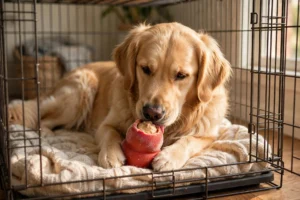
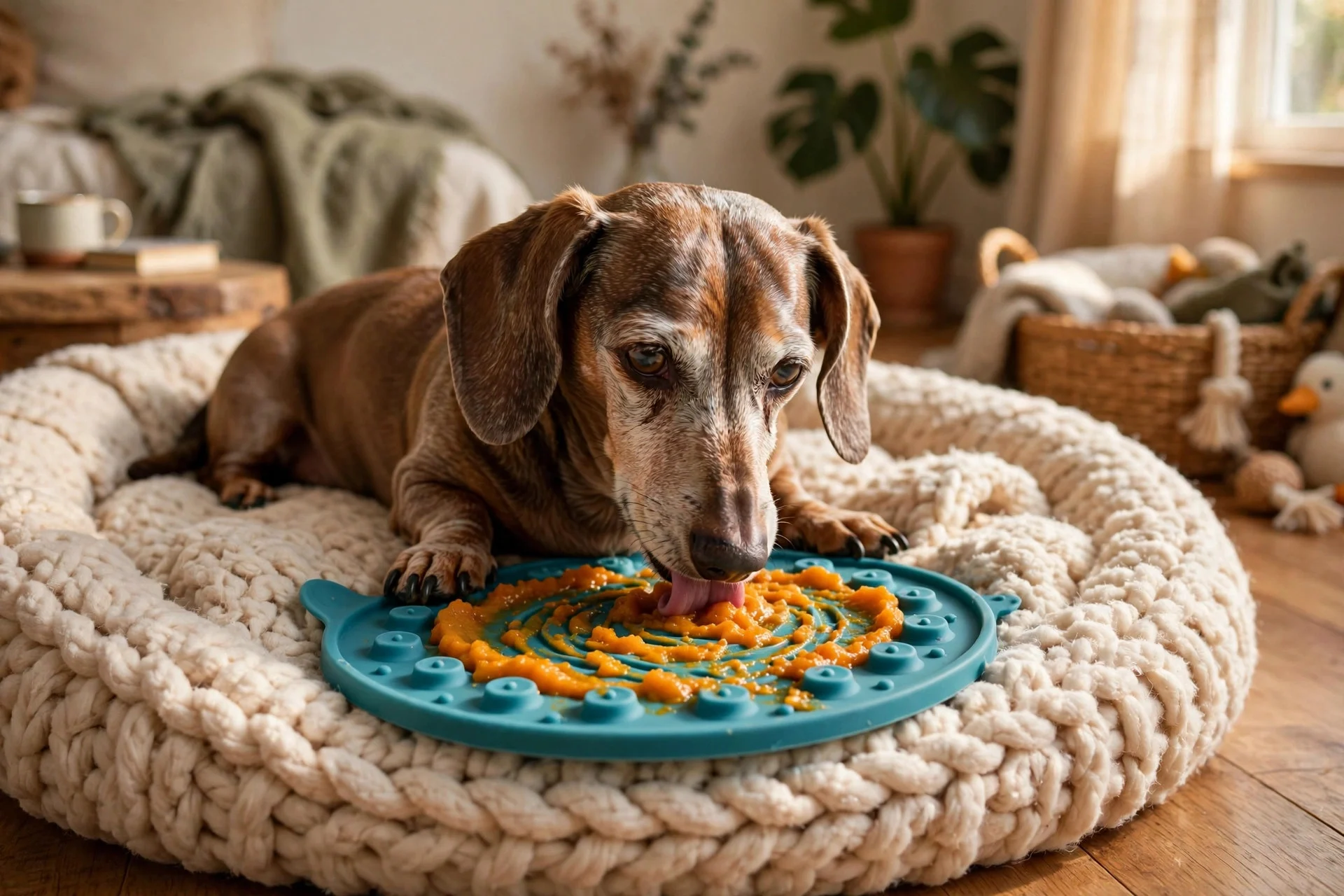
4. Slow Feeder Lick Mat Sessions
Smear a lick mat with plain pumpkin purée or mashed banana and let your senior dog work at it lying down. Licking is calming and requires zero mobility — perfect for arthritic dogs who can’t stand for long. The repetitive licking motion also seems to soothe anxious old dogs. Keep sessions to ten or fifteen minutes; it’s richer than it looks, calorie-wise.
5. Towel Unroll Treasure Hunt
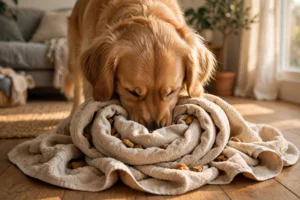
Lay a towel flat, sprinkle treats on it, roll it up loosely, and let your dog unroll it. For seniors, roll it loosely — tight rolls frustrate old dogs whose paws aren’t as dexterous. The goal is a win, not a workout.
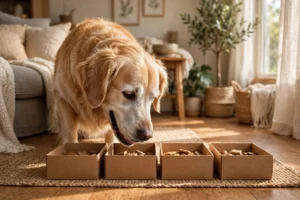
6. Scent Boxes on the Floor
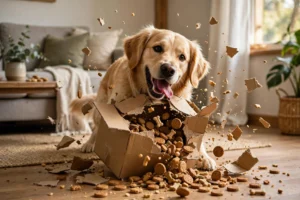
Line up three or four small boxes on the floor, put a treat in one, and let your dog find it. This is nose work at its most accessible — no bending, no climbing, just sniffing along the floor. Older dogs often still have excellent noses even when everything else is fading. Start with the treat visible in the box, then hide it deeper over sessions. It’s dignified, it’s fun, and it works the brain hard.
7. Name That Toy
Teach your senior dog the names of two or three toys, then ask them to find a specific one. This is pure brain work with almost no physical demand — they can play it lying on their bed. It exercises memory, which matters as dogs age.
8. Gentle Food Scatter in the Grass
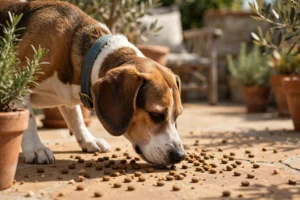
Toss a handful of kibble into short grass and let your dog forage. The uneven ground gives their paws and proprioception a gentle workout (good for wobbly old legs), and the foraging instinct does the rest. Keep the scatter area small — a few square feet — so they don’t have to wander far. Avoid this one right after rain when the ground is slippery. Old hips and mud don’t mix.
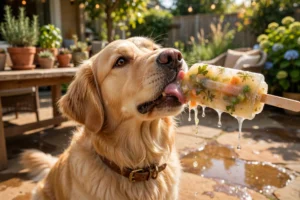
9. Frozen Treats, Senior-Sized
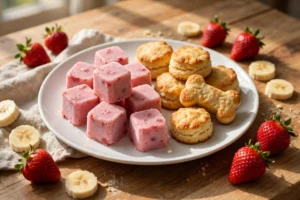
Freeze soft treats (mashed banana, plain yogurt) in silicone molds. Go smaller and softer than for a young dog — rock-hard frozen blocks can crack aging teeth. Slightly thawed is the sweet spot: still cold and interesting, but yielding.
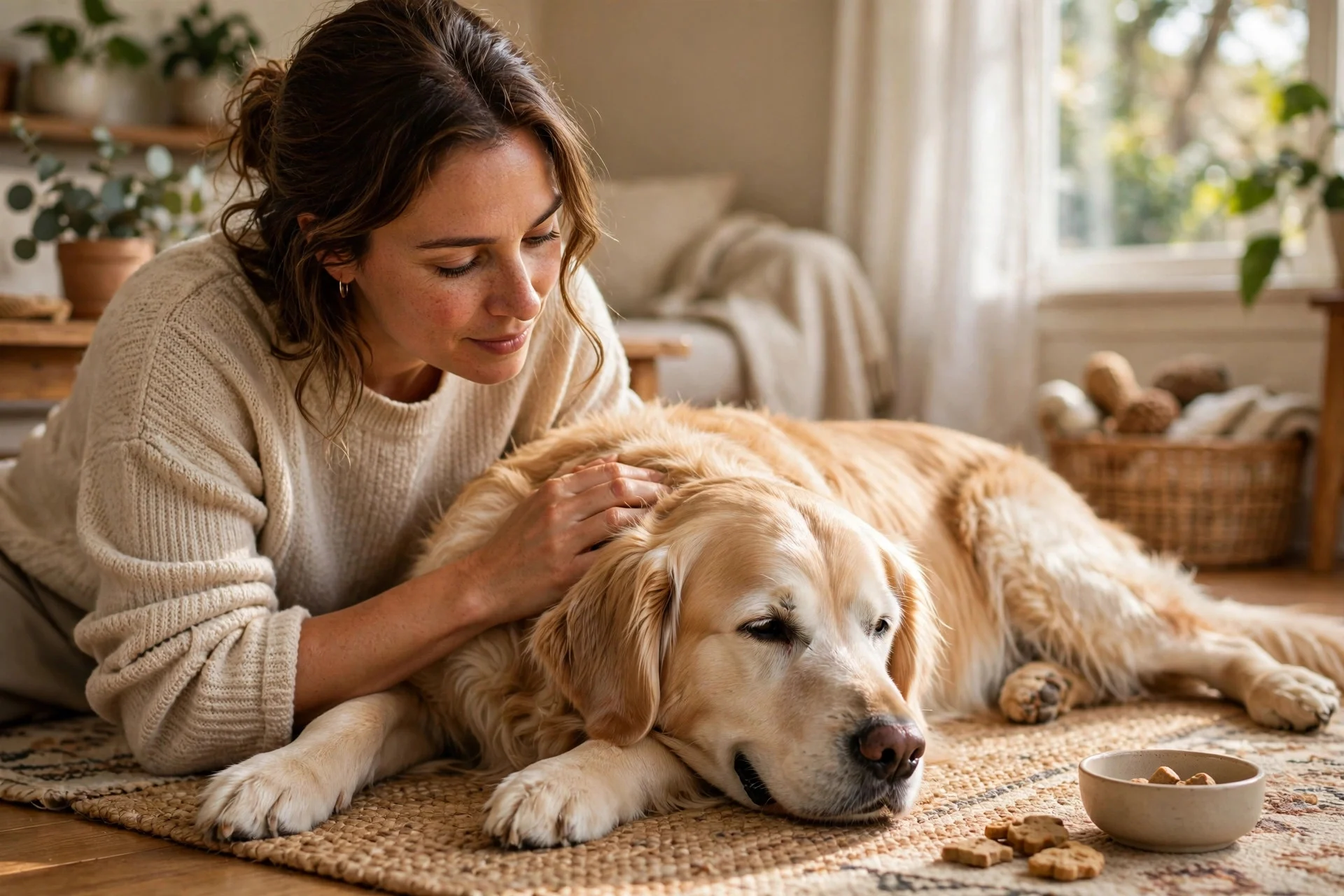
10. The Massage-and-Treat Ritual
This one isn’t a game, exactly, but it’s enrichment in the truest sense: sit with your old dog and do a slow, gentle full-body massage, giving a tiny treat every time you move to a new area. It builds body awareness, it feels wonderful on stiff muscles, and the treat association turns it into something they actively look forward to. Watch for flinching — that tells you where it hurts, which is useful information for your vet too.
Practical Tips for Enriching a Senior Dog’s Life
Shorter is better. A young dog might happily work a puzzle for thirty minutes; a senior dog’s sweet spot is usually five to fifteen. Multiple short sessions beat one long one — think two ten-minute games a day rather than a single marathon. And watch for the signs that they’re done: yawning, looking away, lying down mid-game. That’s not failure, that’s a tired brain, and a tired brain was the goal.
Adjust for the senses. If hearing is fading, use hand signals and scent-based games rather than verbal cues. If vision is going, keep games on the ground, use high-contrast toys, and don’t rearrange the furniture mid-game. Meet the dog where they actually are.
Mistakes to Avoid
The biggest mistake is assuming a senior dog doesn’t need enrichment because they’re “slowing down anyway.” Slowing down is exactly why they need it — mental stimulation keeps cognitive decline at bay and keeps an old dog interested in life. A bored senior dog doesn’t just nap peacefully; they get anxious, they get stiff from inactivity, and they lose spark. Keep the games coming, just make them gentler.
The other mistake is pushing too hard. If your old dog can’t solve a puzzle, make it easier immediately — don’t let them practice frustration. There’s no training value in a senior dog failing repeatedly. Every game should end with a win, even if you have to basically hand them the answer. Their dignity matters more than the difficulty level.
FAQs
My senior dog sleeps most of the day. Do they really need enrichment? Yes — but less of it, and gentler. Even two five-minute games a day make a measurable difference in an old dog’s alertness and mood. Think of it like stretching for humans: you don’t need a marathon, you just need to keep things moving.
What if my senior dog has arthritis? Then every game happens lying down or standing in one spot — no walking puzzles, no games that require getting up and down repeatedly. Lick mats, sniff boxes, and “which hand” are all perfect. And keep the floor non-slip; rugs or yoga mats under the game area prevent the scary splay-legged moments.
Can enrichment help with canine cognitive dysfunction (doggy dementia)? It can’t reverse it, but mental stimulation is one of the few things that genuinely seems to slow it down. Name games, scent work, and novel (but easy) puzzles are the best bets. Talk to your vet too — there are diets and medications that help alongside enrichment.
My old dog gets frustrated and gives up. Should I keep trying? Make it easier, not harder. Frustration means the puzzle is above their current level, and for a senior dog, that’s not a challenge to overcome — it’s a sign to dial back. The goal is engagement and joy, not achievement. An easy win beats a hard-fought loss every time at this age.
Your senior dog gave you their best years. The least we can do is make the slow years interesting. Pick one game from this list, try it tonight, and watch that old tail start wagging like it used to. Gray muzzles still love a good puzzle — they just like it at their own pace.