Peas are a pretty unassuming vegetable in most kitchens — the kind of thing that ends up on a plate almost as an afterthought. For dogs, though, they’re a genuinely solid little snack, easy to keep on hand and easy to portion out. The main thing worth knowing here is less about safety and more about which form of peas you’re actually reaching for.
Can Dogs Eat Peas?
Yes, peas are safe for dogs and are actually a common ingredient in a lot of commercial dog foods already. Plain peas — whether fresh, frozen, or thawed — offer some protein, fiber, and vitamins, and most dogs handle them without any issue. They’re small, easy to portion, and don’t require much prep, which makes them a convenient treat option.
The type of pea and how it’s prepared matters more than whether peas themselves are safe, so let’s break that down.
Fresh and Frozen Peas: The Best Options
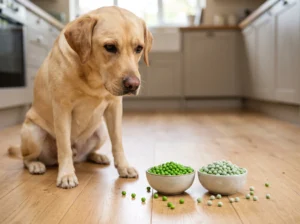
Plain fresh peas, or frozen peas that have been thawed (or even given frozen as a cold, crunchy treat), are the simplest and safest way to offer peas to your dog. No sodium, no additives, no seasoning — just the pea.
Frozen peas specifically are popular with a lot of dog owners as a hot-weather treat, similar to other frozen fruit and vegetable snacks. The cold temperature and firm texture give dogs something satisfying to chew on, and there’s essentially no prep involved beyond scooping some out of the freezer bag.
Canned Peas: Worth a Closer Look
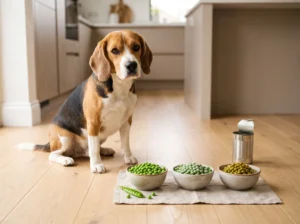
This is where things need a bit more attention. Canned peas are often packed with added sodium, and sometimes with other seasoning or preservatives depending on the brand. A can of peas meant for human cooking isn’t automatically a great choice for your dog, purely because of what else might be in that can beyond the pea itself.
If you want to use canned peas, look specifically for low-sodium or no-salt-added varieties, and ideally rinse them before giving them to your dog to wash off some of the surface sodium regardless. Fresh or frozen peas remain the more straightforward, lower-effort choice if you have the option.
What About Pea Pods?
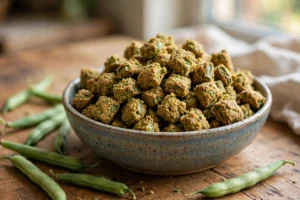
Snap peas and snow peas, where the pod itself is edible, are generally fine for dogs in small amounts too, similar to the peas inside. The pod adds a bit of extra fiber and crunch. As with anything crunchy, cut larger pods into smaller pieces for smaller dogs to reduce any choking risk, and skip pods that have been cooked with butter, oil, or seasoning.
How Many Peas Can a Dog Have?
Peas are low-calorie and generally well-tolerated, so portions can be a bit more relaxed than with higher-sugar fruits, though moderation still applies:
- Small dogs: A tablespoon or two, occasionally
- Medium dogs: A couple tablespoons
- Large dogs: A small handful
Peas aren’t something dogs need in large quantities, and like most vegetables, they work best as an occasional treat or food topper rather than a dietary staple on their own.
Peas and Digestive Sensitivity
Peas contain a decent amount of fiber, which is generally beneficial in moderation but can cause gas or loose stool if a dog eats more than their system is used to at once. This is more of a “too much, too fast” issue than any inherent problem with peas themselves.
If your dog seems a bit gassy or has looser stool after a generous helping of peas, scaling back the portion next time usually resolves it. Our dog diarrhea remedies guide has general at-home care tips for mild digestive upset like this.
A Note on Peas and Grain-Free Dog Food
You may have come across discussions online about peas and legumes in relation to a potential link with a heart condition in dogs called dilated cardiomyopathy (DCM), particularly connected to certain grain-free commercial dog food formulations. This is a topic that’s still being actively studied and involves complex questions about overall diet formulation, not just the presence of peas as an ingredient.
To be clear: this concern is specifically about peas and legumes making up a large proportion of a dog’s primary commercial diet over time, not about occasionally sharing a small handful of peas as a treat. If you have concerns about your dog’s specific diet, particularly around grain-free formulations, this is genuinely a conversation worth having directly with your vet rather than relying on general online commentary, since the research in this area continues to develop.
Which Dogs Should Be Cautious With Peas?
Dogs with kidney issues: Peas contain purines, which some vets recommend limiting for dogs managing certain kidney conditions. If your dog has a diagnosed kidney issue, check with your vet about appropriate protein and vegetable sources.
Dogs with sensitive stomachs: As mentioned, the fiber content can cause gas or loose stool in larger amounts. Our dog treats for sensitive stomachs guide covers gentler alternatives if your dog tends to react to new foods.
Dogs on a specific vet-recommended diet: If your dog is managing a health condition with a carefully formulated diet, it’s worth checking whether peas fit into that plan before adding them in as a regular extra.
How to Prepare Peas for Your Dog
- Choose fresh or frozen peas as the simplest, lowest-effort option.
- Skip seasoning entirely — no butter, salt, or sauce.
- Thaw frozen peas or serve them frozen as a cold treat, depending on your dog’s preference.
- If using canned, choose low-sodium or no-salt-added, and rinse before serving.
- Mix a small amount into your dog’s regular food, or offer plain as a standalone treat.
Peas in Homemade Dog Food
Given their nutritional value and easy availability, peas show up as an ingredient in a number of homemade dog food recipes, usually in modest, balanced amounts alongside protein and other vegetables. If you’re interested in cooking for your dog at home, our crockpot dog food recipes collection includes peas as one of several vegetable components in properly balanced meal formulations, rather than as a standalone large portion.
FAQ: Can Dogs Eat Peas?
Are canned peas bad for dogs? Not inherently, but they’re often high in added sodium, which isn’t ideal. Look for low-sodium or no-salt-added varieties if you’re using canned, and rinse them before serving.
Can dogs eat pea pods? Yes, snap peas and snow peas with edible pods are generally fine in small, appropriately sized pieces, following the same plain-preparation guidance as shelled peas.
Is there a connection between peas and heart disease in dogs? There’s an ongoing area of veterinary research examining a potential link between certain grain-free diets high in peas and legumes and a heart condition called DCM. This concern relates to a dog’s primary commercial diet composition, not occasional small treat portions, but it’s worth discussing your dog’s overall diet with your vet if you have concerns.
Can puppies eat peas? In small, plain amounts, yes, though it’s best to introduce any new food gradually given a puppy’s smaller size and developing digestive system.
Are frozen peas safe to give straight from the freezer? Yes, plain frozen peas straight from the freezer are a popular cold treat option and don’t need to be thawed first if your dog enjoys the colder, firmer texture.
How many peas is too many for a dog? More than a small handful at once, particularly for smaller dogs, risks gas or loose stool given the fiber content. Keeping portions modest and occasional avoids this.
The Bottom Line
Peas are a genuinely easy, low-calorie vegetable to share with your dog, with fresh or frozen being the simplest and safest forms to reach for. Skip heavily salted canned varieties when you can, keep portions reasonable, and if you have broader questions about peas and legumes in your dog’s overall diet, that’s a conversation worth having directly with your vet rather than relying on general online concerns.