The first night I brought my puppy home, she screamed in her crate for forty minutes straight. I sat on the floor next to her, questioning every life choice that had led me to this moment. By night three, she was sleeping through. The difference wasn’t luck — it was a puppy crate training schedule. A boring, predictable, age-appropriate routine that taught her the crate was safe before she ever had to spend real time in it.
Crate training fails for one reason: people move too fast. They put the puppy in, close the door, and hope for the best. This schedule does the opposite — it builds up gradually, respects bladder limits, and turns the crate into your puppy’s favorite spot in the house. Follow it day by day and you’ll skip the screaming phase almost entirely.
The Golden Rules Before You Start
First: the crate is never, ever used as punishment. The second you shove an upset puppy in there as a time-out, the crate becomes a prison in their mind, and you’ll spend weeks undoing it. Second: every puppy’s bladder has a limit, and it’s roughly one hour per month of age, up to about eight hours. A ten-week-old puppy physically cannot hold it for four hours. Planning around biology instead of fighting it is the entire game.
Puppy Crate Training Schedule
| Puppy Age | Max Crate Time (awake) | Nighttime | Focus This Stage |
|---|---|---|---|
| 8–10 weeks | 30–60 min | 2–3 hr stretches | Positive association only |
| 10–12 weeks | 1–2 hours | 3–4 hr stretches | Door-closed naps |
| 3–4 months | 2–3 hours | 5–6 hours | Alone-time practice |
| 4–6 months | 3–4 hours | 6–8 hours | Longer absences |
| 6+ months | 4–5 hours | Full night | Normal routine |
Days 1–3: Make the Crate Amazing
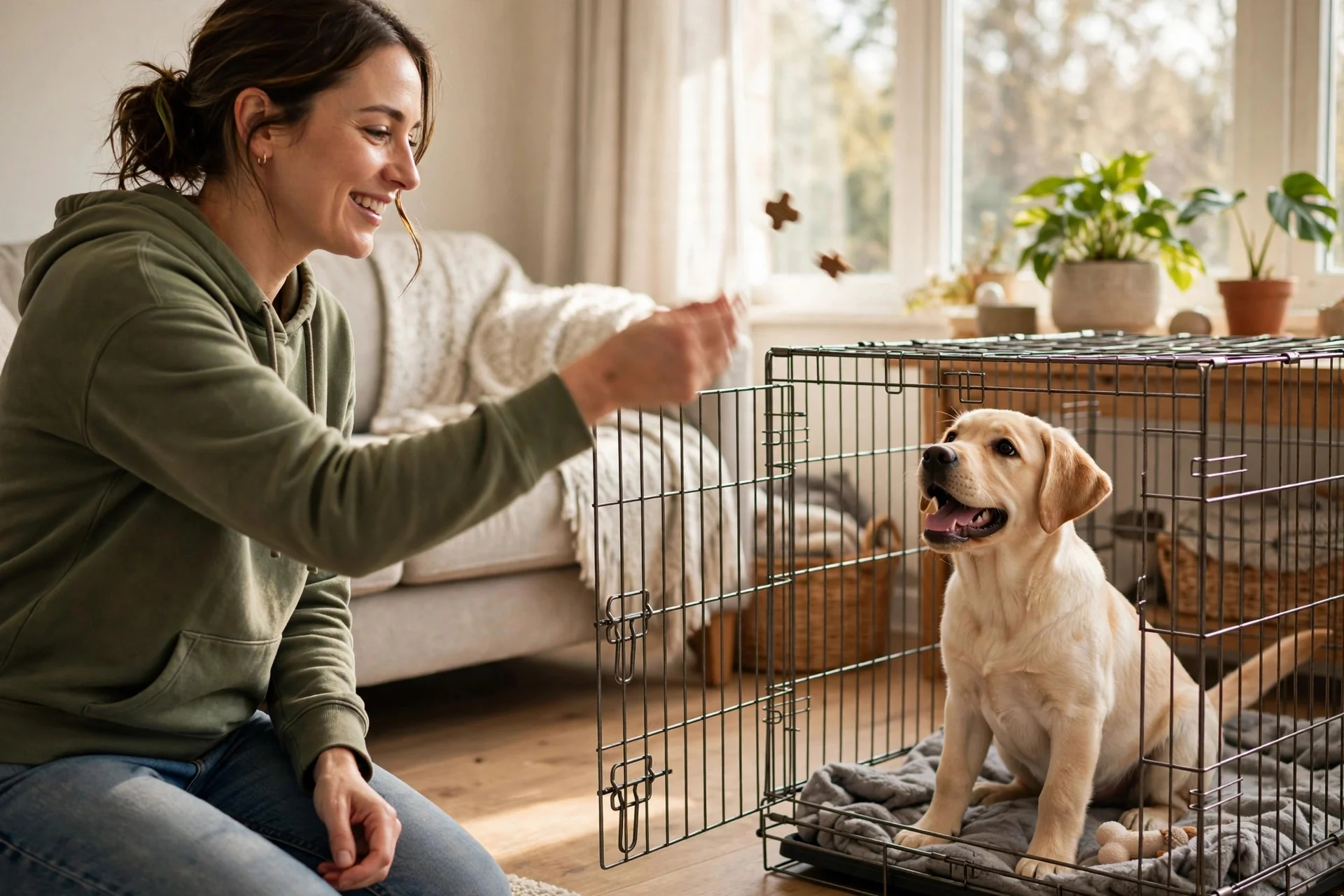
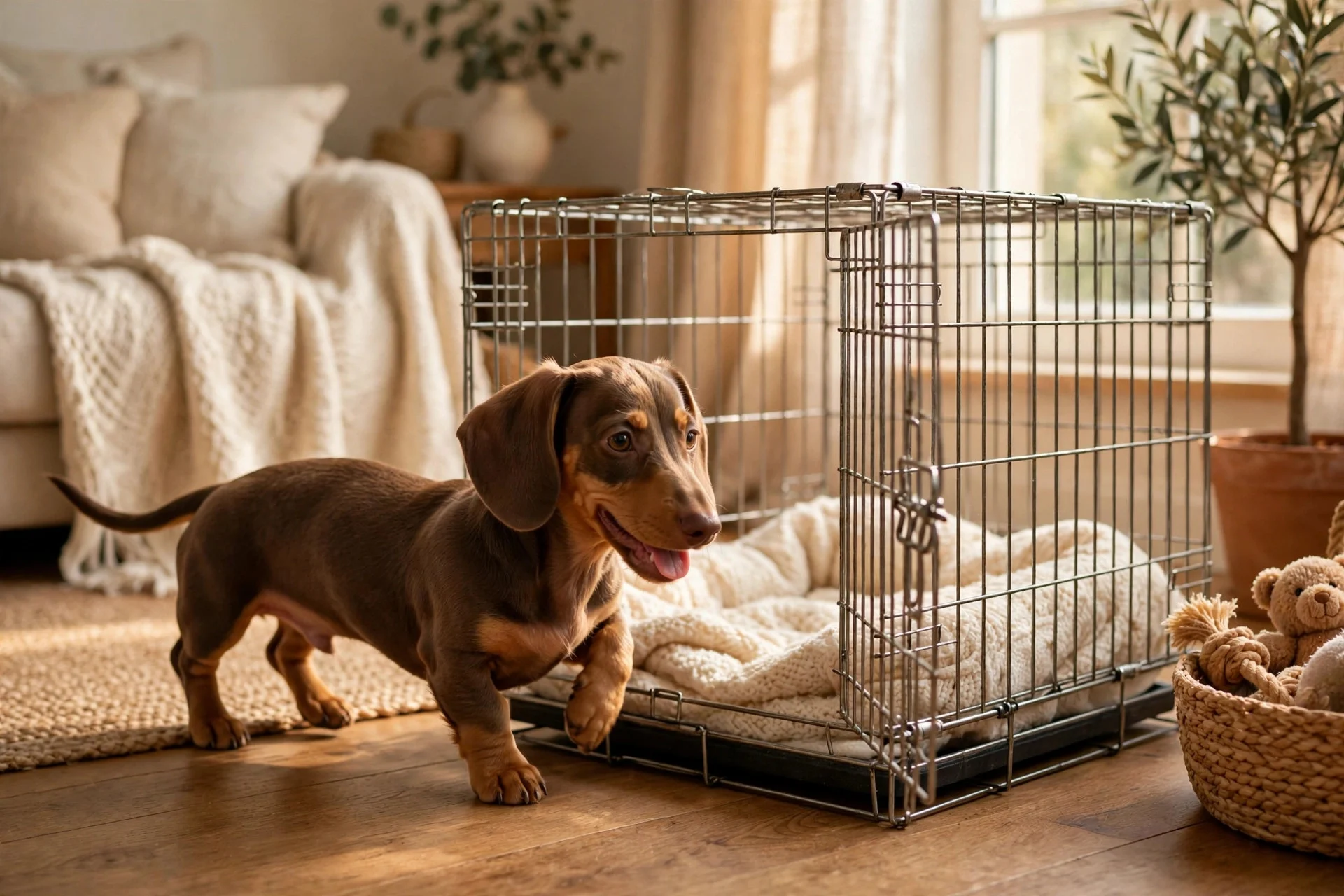
Don’t close the door at all. Seriously. For the first three days, the crate is just a magical treat dispenser that happens to be shaped like a box. Toss high-value treats inside and let your puppy wander in and out freely. Feed meals in the crate with the door open. Play crate games: toss a treat in, puppy runs in, treat, puppy comes out, repeat. You’re building one association — crate equals good things — and you’re not asking for anything in return yet. Patience here pays off enormously later.
Days 4–7: Door Closed, You Present
Now start closing the door for very short periods while you sit right next to the crate. Thirty seconds. Treat through the bars. Open. One minute. Treat. Open. Work up to five-minute stretches over several days, always with you visible. If your puppy fusses, you’ve gone too long — back up to a duration that was easy and rebuild. The goal this week isn’t duration, it’s the realization that the door closing is no big deal because it always opens again.
Week 2: Short Absences
Start leaving the room for brief moments — thirty seconds, then a minute, then five. Give your puppy a frozen Kong or a chew when you leave so your departure predicts something good. Come back before they get upset. This is the critical skill: your puppy learns that you leaving is temporary and boring, not scary. Most puppies who “can’t be left alone” were simply left alone too long, too soon. Two steps forward, one step back is still progress.
Week 3 and Beyond: Building Duration
Now you can start stretching crate time toward the age-appropriate limits in the chart. Add fifteen to thirty minutes at a time, not hours. Keep departures and arrivals boring — no dramatic goodbyes, no excited reunions. The crate should feel like the most uneventful part of the day. By week four, most puppies are napping happily in the crate and even choosing to go in on their own. That’s the finish line: a puppy who sees the crate as their bedroom, not their cell.
Practical Tips
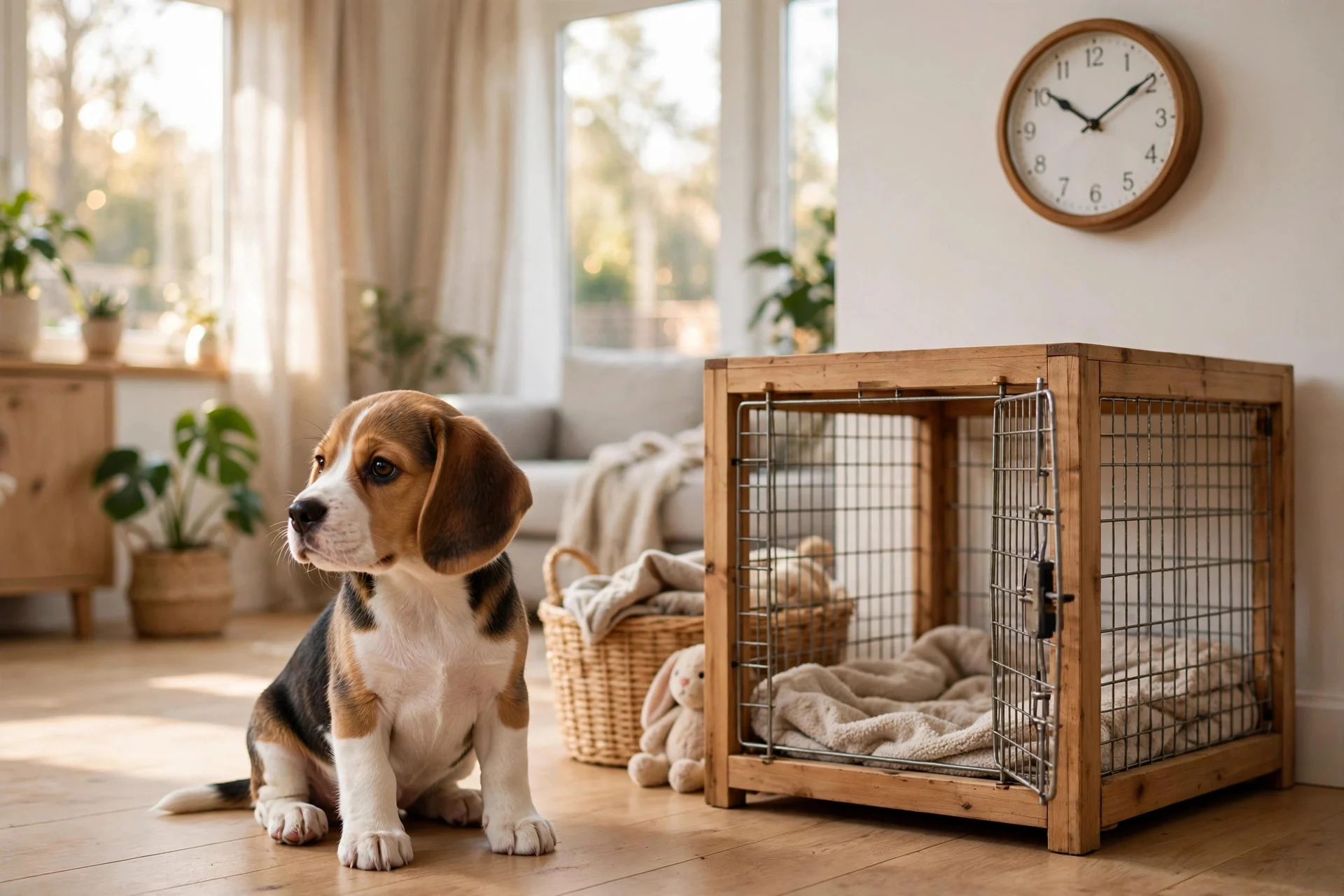
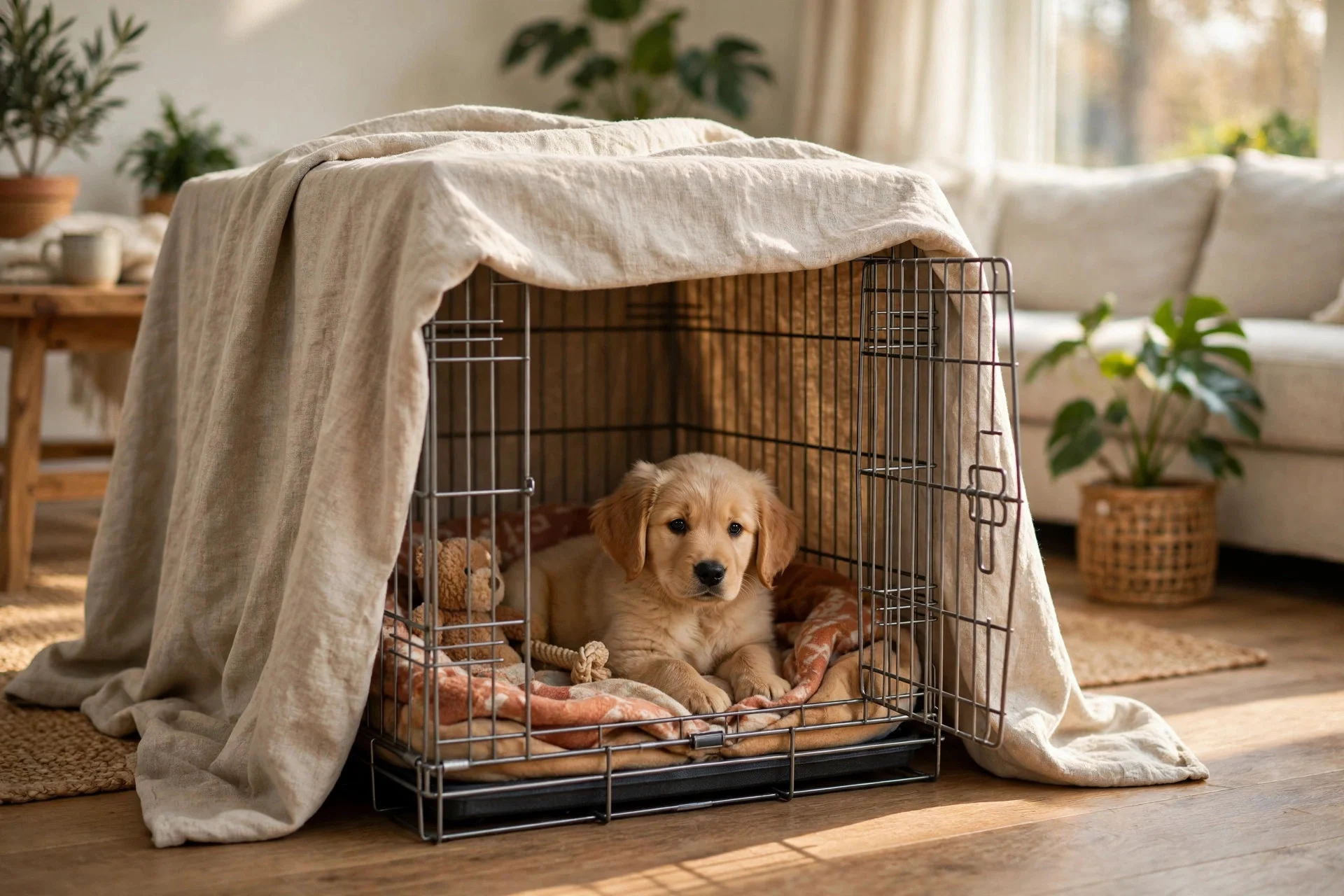
Cover the crate with a blanket on three sides. It makes it den-like and blocks visual stimulation that keeps puppies wired. Leave the front uncovered for airflow. And put the crate where the family hangs out during the day — a puppy isolated in a back room learns that the crate means loneliness. A puppy crated in the living room learns that the crate is just where naps happen while life goes on around them.
Nighttime is the hardest part, so stack the deck: last potty break right before bed, no water for an hour before (for young puppies), a warm snuggle toy, and a ticking clock or white noise nearby. For the first week, set alarms for those 2–3 hour stretches — waking your puppy for a potty break beats cleaning the crate at 3 AM. They’ll stretch longer naturally as their bladder grows.
Mistakes to Avoid
The number one mistake is letting the puppy “cry it out.” An eight-week-old puppy crying in a crate isn’t being manipulative — they’re genuinely distressed, and leaving them to panic teaches them that the crate is terrifying and that you won’t come. Always respond to real distress. The trick is responding calmly — a quiet potty break, then back in — not with a dramatic rescue that teaches them screaming gets them out.
The second mistake is too much crate time. The chart’s maximums are maximums, not targets. A puppy crated for every waking hour isn’t being trained, they’re being warehoused — and they’ll come out wild, bitey, and unable to settle. Crate time should alternate with play, training, and cuddles. If your schedule requires more crate time than the chart allows, you need a puppy pen, a sitter, or a different plan. The puppy’s needs don’t bend to your calendar.
FAQs
Should the crate be in my bedroom? For the first couple of weeks, yes. Your puppy just left their mother and littermates — sleeping alone in a strange house is a lot. A crate next to your bed lets them smell and hear you, which is enormously comforting. You can move it to its permanent spot gradually after they’re settled, a few feet at a time over several nights.
My puppy only cries when the door is closed. What do I do? Go back to door-open training and rebuild more slowly. The door closing is a separate skill from liking the crate, and some puppies need extra time on it. Practice “door closed for one treat, then open” dozens of times before trying real durations. Boring repetition is what makes it normal.
When can I stop crating at night? Most puppies are ready to sleep uncrated somewhere between six months and a year, depending on the dog. The test: can they be trusted alone in a puppy-proofed room for a few hours without destroying anything or having accidents? If yes, try it. Many dogs keep loving their crate and choose to sleep in it with the door open for years. Let them.
Is it okay to crate during the workday? Only within the age limits in the chart — and for young puppies, that means you need midday help. An eight-week-old puppy cannot do an eight-hour workday in a crate, full stop. A midday dog walker, a neighbor, or coming home at lunch isn’t optional at that age, it’s required. Plan for it before the puppy arrives.
Crate training done right is one of the greatest gifts you give your puppy: a safe place that’s truly theirs, house training on fast-forward, and the ability to settle anywhere for the rest of their life. Go slow, follow the chart, and trust the process. Night one might be rough. Night thirty will be silent. And you’ll wonder why you ever stressed about it.