The doorbell rings. Your dog explodes. The delivery driver backs away slowly. Your baby wakes up. And you stand there yelling “QUIET!” over the barking, which — let’s be honest — just sounds like you’re barking too. I’ve been there. My dog used to treat the doorbell like a personal alarm system that only she was authorized to operate.
Here’s the good news: dog barking at doorbell is one of the most trainable behaviors there is, because the trigger is completely predictable. It happens the same way, in the same place, every time. That predictability is your superpower. These five methods work — pick the one that fits your dog, commit to it for two weeks, and enjoy the silence.
5 Ways to Stop the Doorbell Barking
1. Teach an Incompatible Behavior (The “Go to Mat” Method)
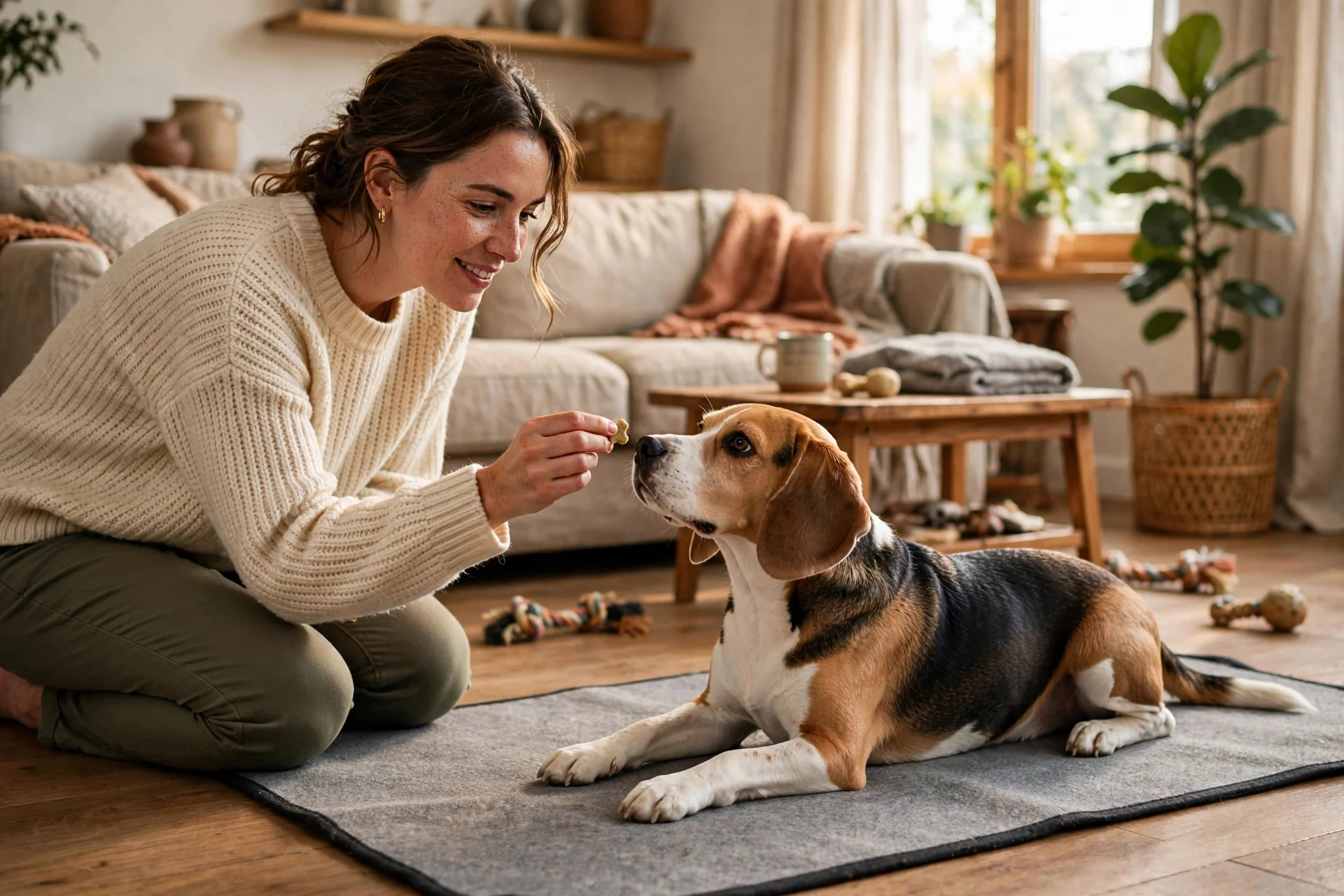
A dog can’t bark frantically at the door while lying calmly on a mat in the other room — the two behaviors are physically incompatible. Train “go to mat” separately first: lure your dog to a mat, reward, repeat until they run there on cue. Then add the doorbell at low volume (record it on your phone), and reward mat-going during the sound. Gradually increase the volume over sessions. Within two weeks, most dogs hear the bell and trot to their mat expecting a treat. You’ve replaced the explosion with a job.
2. Desensitize the Sound Itself
Play doorbell sounds from your phone at very low volume while your dog does something pleasant — eating dinner, getting a massage, playing. So low they barely notice. Over days, inch the volume up. The goal is to make the sound boring through sheer repetition without any exciting consequence. A doorbell that’s rung 200 times with nothing happening stops being news. This works best combined with method 1, but even alone it takes the edge off dramatically.
3. Change What the Doorbell Predicts
Right now, your dog thinks doorbell means INTRUDER ALERT. Change the prediction: doorbell means treats rain from the sky. For one week, every time the bell rings (have a friend ring it, or use a recording), immediately scatter a handful of amazing treats on the floor away from the door. Your dog can’t bark with a mouth full of chicken. After enough repetitions, the bell triggers “oh boy, snacks!” instead of “DEFEND THE HOUSE.” Classical conditioning does the heavy lifting here — you’re not training a behavior, you’re changing an emotion.
4. Manage the Environment (The Underrated Fix)
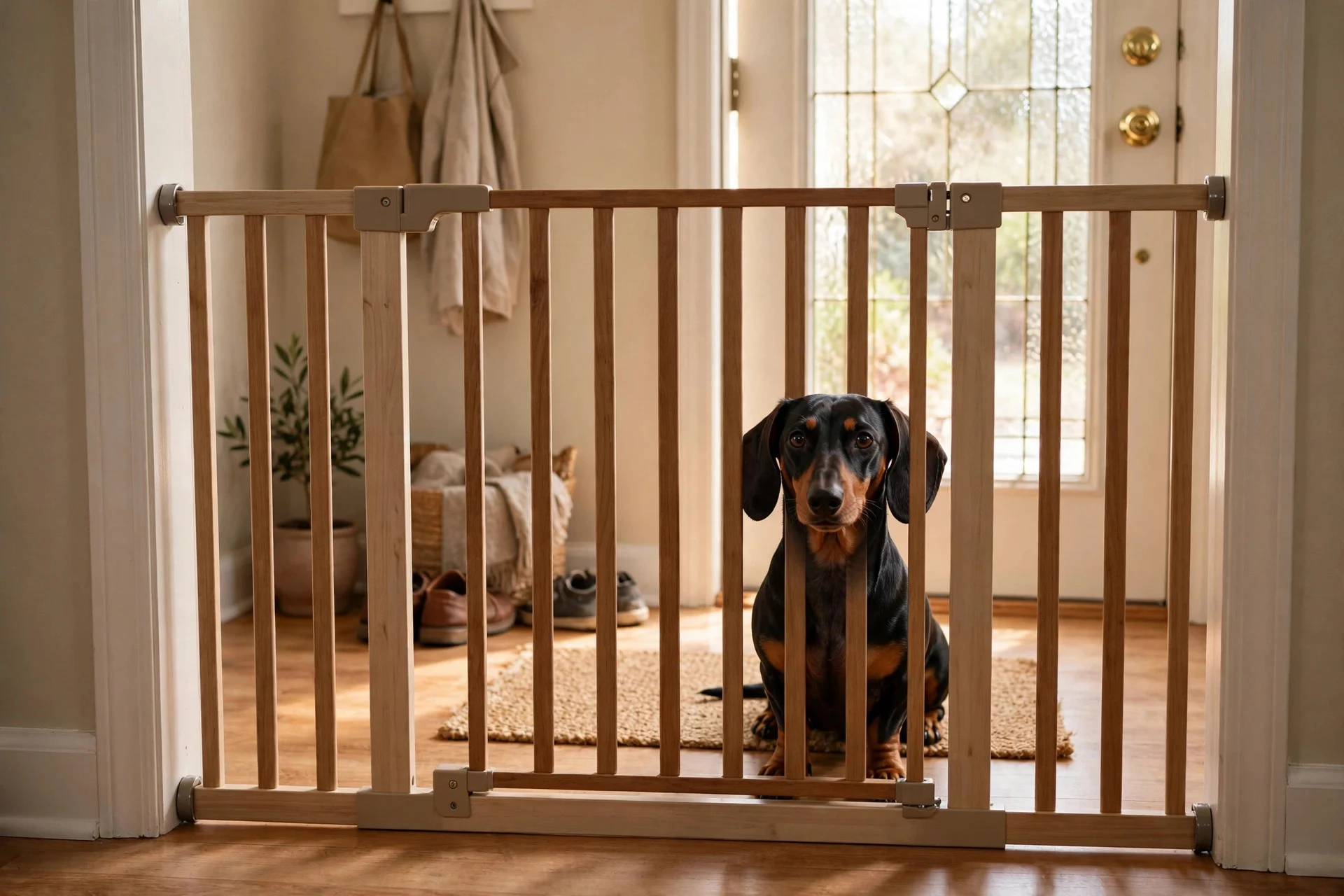
Sometimes the smartest training is no training. If your dog can’t see the front door, the barking often drops by half immediately. Close the blinds near the door. Put up a baby gate so they can’t sprint to the entryway. Change your doorbell chime to something less triggering (many video doorbells let you customize it). And put a sign on the door: “Dog in training — please don’t knock, text when you arrive.” Management isn’t giving up; it’s setting your dog up to succeed while the training kicks in.
5. Teach “Quiet” as a Real Cue
Most people yell “quiet!” at a barking dog, which has never worked in the history of dogs. Instead, teach it properly: wait for a pause in barking (even a one-second pause), mark it with “yes,” treat. Your dog learns that silence — not barking — earns rewards. Then add the cue word before the pause you can predict. Practice during calm moments first, then with mild triggers, then with the actual doorbell. A trained “quiet” cue gives you an off-switch for the moments when management fails and the training isn’t finished yet.

Practical Tips
Recruit helpers. You cannot train doorbell behavior alone — you need someone to ring the bell while you work with the dog. Bribe a neighbor, a friend, or a teenager with pizza. Ten minutes of setup reps (ring, treat, ring, treat) is worth more than a month of trying to train during real deliveries, when you’re stressed and the driver is waiting.
Train when the dog is calm, not when they’re already amped. A dog who’s been barking at the window all afternoon is over threshold and can’t learn. Do your doorbell sessions after a walk or play session, when your dog’s energy is manageable. Learning happens in a calm brain. An aroused brain just rehearses the barking.
Mistakes to Avoid
Yelling at a barking dog is the number one mistake, and almost everyone does it. From your dog’s perspective, you’re joining in — the whole pack is barking now, which confirms this is definitely a situation worth barking about. If you need to intervene vocally, use a calm, low, boring voice. Better yet, don’t use your voice at all — redirect with a treat scatter or a mat cue instead.
The second mistake is punishing the barking with spray bottles, shake cans, or shock collars. These might suppress the barking in the moment, but they don’t change how the dog feels about the doorbell — they just add fear to the existing arousal. A dog who’s afraid of the doorbell and the punishment is a dog with two problems instead of one. Positive methods take a little longer, but they actually fix the underlying reaction instead of just muting it.
FAQs
How long until I see results? Most dogs show noticeable improvement within one to two weeks of consistent practice (a few short sessions a day). Full reliability — calm behavior at every real doorbell — typically takes four to six weeks. Dogs who’ve been rehearsing the barking for years take longer than young dogs. You’re rewriting a habit, not installing software.
What if my dog barks at knocks too, not just the bell? Train them the same way — knocks are just another trigger sound. Record knocking on your phone and use it in your desensitization sessions. Many dogs generalize quickly: once the doorbell means “go to mat,” knocks often follow within days. If not, run the same protocol with the knock sound specifically.
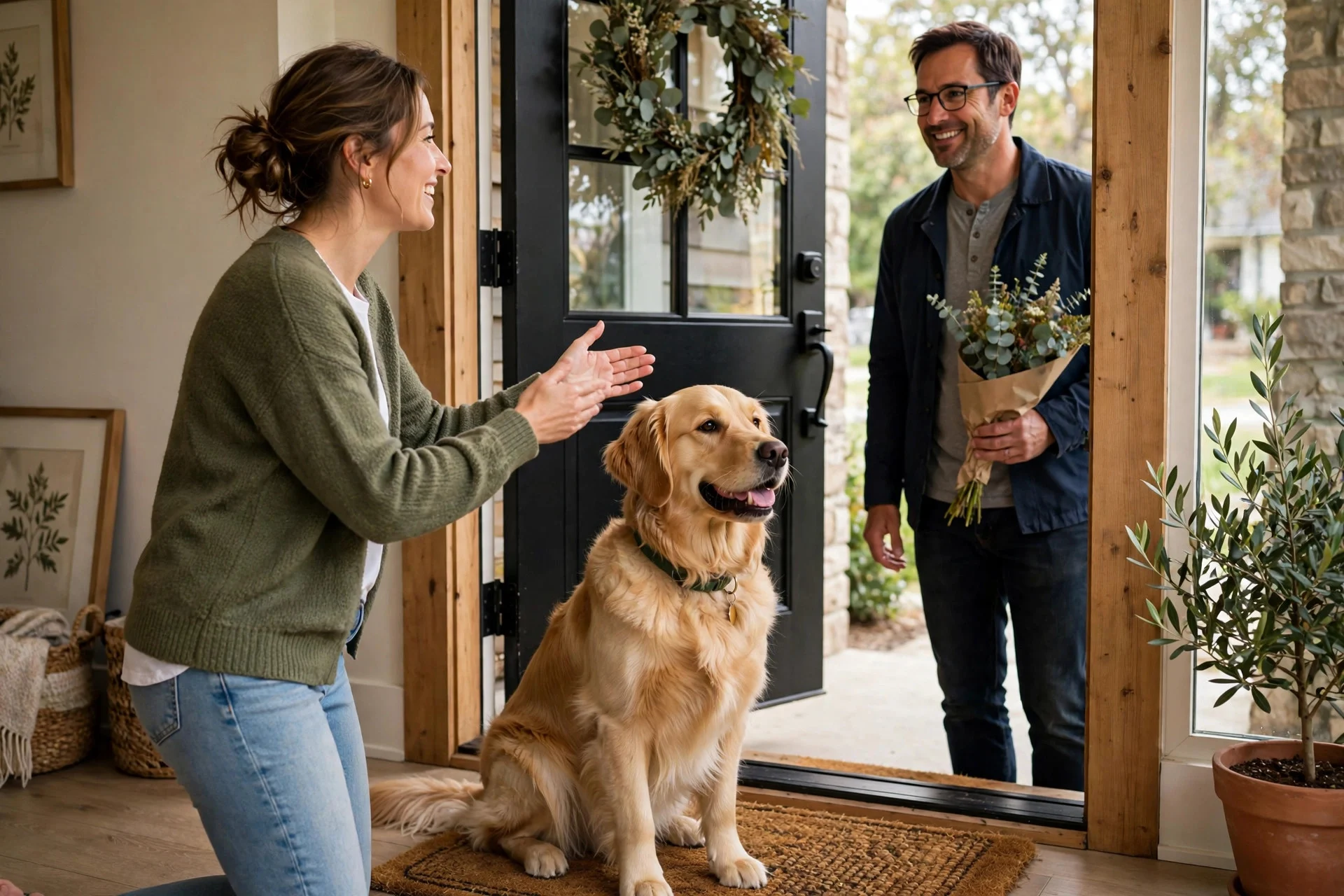
My dog is fine with the bell but goes crazy when they see the visitor. Help? That’s a separate issue — it’s not the sound, it’s the stranger at the door. The mat method still works beautifully here: the dog goes to their mat and stays there while you handle the door. You’re managing the greeting, not just the sound. Practice with friends playing visitor before you test it on the actual mail carrier.
Should I just disconnect the doorbell? Honestly? It’s not a terrible short-term management strategy while you train. A lot of trainers recommend it — remove the trigger, train the replacement behavior with recordings, then reintroduce the real bell. There’s no prize for suffering through daily barking explosions while you’re working on the fix. Manage now, train always.
Five methods, two weeks of consistent practice, and a doorbell that stops ruining your life. Pick one, start tonight with a phone recording and some good treats, and recruit your bell-ringer. Your delivery drivers — and your blood pressure — will thank you.