Mushrooms are one of the more confusing entries on any “can dogs eat this” list, mainly because the answer genuinely depends on which mushroom you’re talking about. A dog sniffing around a grocery-store mushroom is a completely different situation than a dog sniffing around your backyard after rain. Let’s separate the two, because lumping them together is where most of the confusion comes from.
Can Dogs Eat Mushrooms?
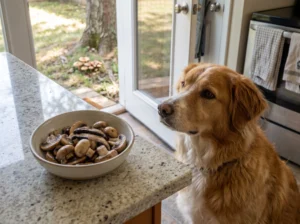
Store-bought culinary mushrooms — the kind you’d buy at a grocery store, like button, cremini, portobello, or shiitake — are generally safe for dogs in small amounts when plain and cooked. Wild mushrooms, on the other hand, are a completely different story, and this is where the real danger lies.
This split matters a lot more with mushrooms than with almost any other food on this kind of list, so it’s worth treating them as two separate questions entirely.
Store-Bought Mushrooms: Generally Low Risk
Common culinary mushrooms sold in grocery stores are typically safe for dogs when served plain, cooked, and unseasoned. They’re not particularly nutritious for dogs in any meaningful way, but they’re also not something to panic over if your dog steals a piece off a cutting board.
A few notes if you’re sharing store-bought mushrooms:
- Cook them first. Raw mushrooms can be harder to digest and slightly tougher on the stomach.
- Skip the seasoning entirely. Mushrooms sautéed in garlic, onion, butter, or heavy oil bring in other ingredients that are the actual concern, not the mushroom itself.
- Cut them into small pieces, especially for smaller dogs, to reduce any choking risk.
- Introduce a small amount first, since some dogs may have mild digestive sensitivity to mushrooms even when they’re a safe variety.
Wild Mushrooms: A Genuinely Serious Risk
This is the part that deserves real attention. Wild mushrooms found in yards, parks, hiking trails, or wooded areas can range from completely harmless to severely toxic, and the tricky part is that it’s often impossible to tell the difference just by looking. Some of the most dangerous mushroom species closely resemble harmless ones.
Certain wild mushroom species can cause:
- Liver failure
- Kidney failure
- Severe neurological symptoms
- Death, in serious cases involving highly toxic species
This isn’t an exaggeration for the sake of caution — mushroom toxicity in dogs is a genuine veterinary emergency category, and unlike a lot of the foods on typical “can dogs eat” lists, the outcome can be severe even from a relatively small amount of the wrong species.
The Golden Rule With Wild Mushrooms
If your dog eats a wild mushroom, treat it as toxic until proven otherwise. Don’t try to identify the mushroom yourself using an app or a quick internet search and decide it’s probably fine. Mushroom identification is genuinely difficult even for experienced foragers, and misidentifying a toxic species as a safe one is a mistake with serious consequences.
Instead:
- Get your dog to a vet immediately, or call an emergency animal poison line.
- If possible, safely collect a sample of the mushroom (photograph it or bring a piece in a bag) without handling it excessively, since this can help with identification and appropriate treatment.
- Note where and when it happened, along with any details about how much your dog may have eaten.
- Don’t wait for symptoms to appear before seeking help. Some of the more dangerous mushroom toxins don’t cause symptoms right away, and by the time they do, organ damage may already be underway.
Symptoms of Mushroom Poisoning in Dogs
Symptoms vary significantly depending on the mushroom species involved, but general signs to watch for include:
Early symptoms (may appear within a few hours):
- Vomiting
- Diarrhea
- Drooling
- Abdominal pain
- Weakness
More serious symptoms (may develop over the following day or two, depending on the toxin):
- Jaundice (yellowing of the gums or eyes, indicating liver involvement)
- Seizures
- Disorientation or unusual behavior
- Excessive thirst or urination (possible kidney involvement)
- Collapse
One of the more dangerous aspects of certain mushroom toxins is a delayed symptom pattern — a dog may seem to recover after initial vomiting and diarrhea, only to develop serious organ damage a day or two later. This is exactly why “wait and see” isn’t a safe approach with wild mushroom ingestion, even if your dog seems fine at first.
Why Dogs Eat Mushrooms in the First Place
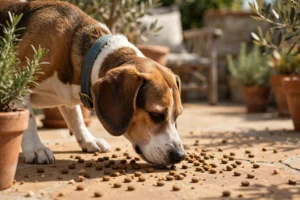
Dogs are naturally curious, and mushrooms popping up in a yard after rain are right at nose height and easy to grab during a normal sniff-around. Puppies in particular tend to explore the world mouth-first, which makes yard supervision especially important during mushroom season (typically after rain, in warmer months, though this varies by region).
Preventing Wild Mushroom Exposure
- Check your yard regularly, especially after rain, and remove any mushrooms you find before letting your dog out unsupervised.
- Supervise dogs closely on walks and hikes, particularly in wooded or grassy areas where wild mushrooms are more likely to appear.
- Train a reliable “leave it” command, which can be genuinely useful for interrupting a dog before they grab something off the ground. If you haven’t worked on this yet, our guide to teaching leave it covers foundational training that applies here.
- Be extra cautious in fall, when many mushroom species are more prevalent in yards and wooded areas.
- Know your local emergency vet’s contact information ahead of time, so you’re not scrambling to find it during an actual emergency.
If You Grow Mushrooms or Buy a Mushroom Growing Kit
Home mushroom-growing kits have become fairly popular, and if you have one, treat it the same way you’d treat any other food-prep area your dog shouldn’t have access to. Keep growing kits somewhere your dog can’t reach, since even culinary varieties are best given in small, prepared amounts rather than let your dog graze on a growing kit freely.
Safer Snacks If Your Dog Loves Sniffing Around the Kitchen
If your dog is the type to hover around while you’re cooking, hoping for a dropped ingredient, there are plenty of genuinely dog-safe options to redirect that hopeful staring toward instead:
- Small pieces of plain, cooked egg
- Blueberries, easy to toss over for good behavior
- Homemade peanut butter dog treats, kept on hand for exactly this kind of moment
FAQ: Can Dogs Eat Mushrooms?
Are all wild mushrooms toxic to dogs? No, but since it’s often impossible to reliably tell toxic and non-toxic species apart just by appearance, every wild mushroom should be treated as a potential risk.
Is it safe to let my dog eat mushrooms that grow in my lawn? No. Lawn mushrooms are wild mushrooms, regardless of how tame your yard seems, and should be removed before your dog has access to the area.
Can dogs eat mushroom soup or gravy? These often contain onion, garlic, cream, or excessive salt, all separate concerns beyond the mushroom content itself. Best avoided.
What’s the most dangerous type of mushroom for dogs? Certain wild species, sometimes called death cap-type mushrooms, are associated with severe liver toxicity and are among the most dangerous. Since accurate identification is difficult, all wild mushrooms should be treated with the same level of caution.
How quickly do symptoms of mushroom poisoning appear? This varies significantly by species. Some cause symptoms within hours, while others have a delayed onset of a day or more, which is part of why prompt veterinary evaluation matters even without visible symptoms yet.
Are dried or powdered mushroom supplements safe for dogs? Some mushroom supplements are marketed specifically for pets and formulated with dog-safe species and dosing, but this is different from a dog eating a fresh mushroom found outside. If you’re considering a supplement, check with your vet first rather than assuming all mushroom products are equivalent.
The Bottom Line
Store-bought culinary mushrooms are a reasonably low-risk, low-reward food for dogs when plain and cooked. Wild mushrooms are an entirely different category, carrying genuine potential for severe poisoning that can be hard to predict just by looking. Keep your yard checked, supervise outdoor time, and if your dog ever eats a wild mushroom, treat it as an emergency and get to a vet right away rather than waiting to see what happens.