Every 4th of July, more dogs go missing than on any other day of the year. Not because owners are careless — because fireworks turn even the most confident dog into a panicked escape artist who can clear a fence you swore was jump-proof.
My dog used to shake so hard during fireworks that the whole couch vibrated. We’ve gotten it mostly under control over the years, and 4th of July dog safety is now a system in our house, not a scramble. Here are the twelve things that actually make a difference.
12 Fireworks Tips for the 4th of July
1. Exercise hard, early in the day
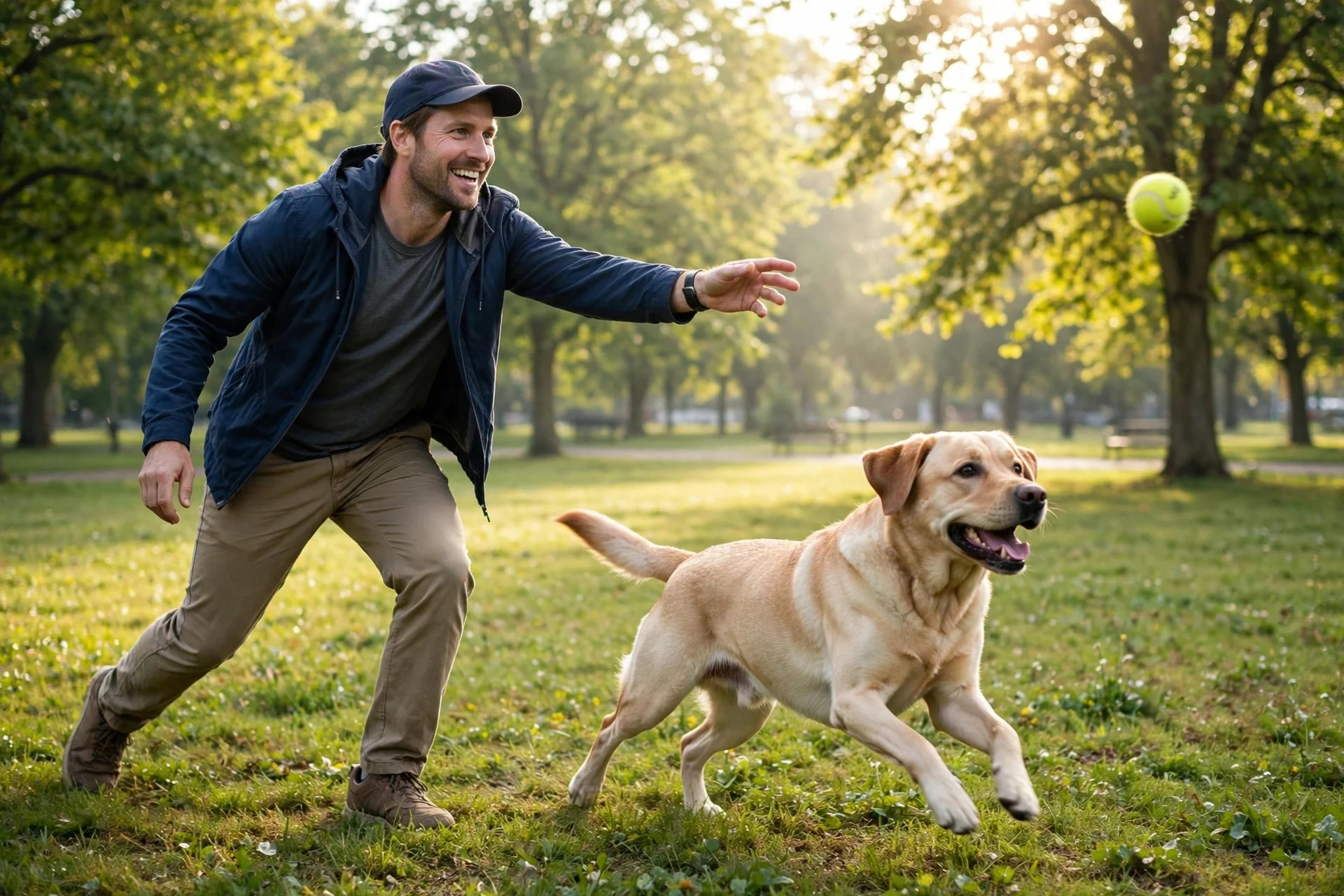
A tired dog handles stress dramatically better. I do the big walk or fetch session in the morning — a solid 45 minutes — so by evening she’s pleasantly worn out. Don’t exercise during the fireworks to “distract” them; a panicked dog on a leash near loud bangs is a recipe for a slipped collar. Morning exertion, evening calm. That’s the formula.
2. Build a safe den before dark
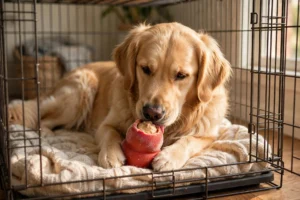
Dogs instinctively seek small, enclosed spaces when frightened. Set one up before the fireworks start: a crate with blankets draped over it, a closet with the door cracked, or a bathroom with their bed inside. Add a worn t-shirt that smells like you. Don’t force them in — just make it available and rewarding with a stuffed Kong. My dog heads to hers on her own now, which tells me the association worked.
3. Drown it out with white noise
You can’t silence fireworks, but you can shrink them. Close all windows, draw the curtains (flashing lights scare dogs too), and run the loudest white noise you’ve got — a fan on high, the TV at solid volume, or a white noise app. Classical music playlists marketed for anxious dogs genuinely seem to help; I run one every year. The goal isn’t silence, it’s making the booms less sharp and sudden.
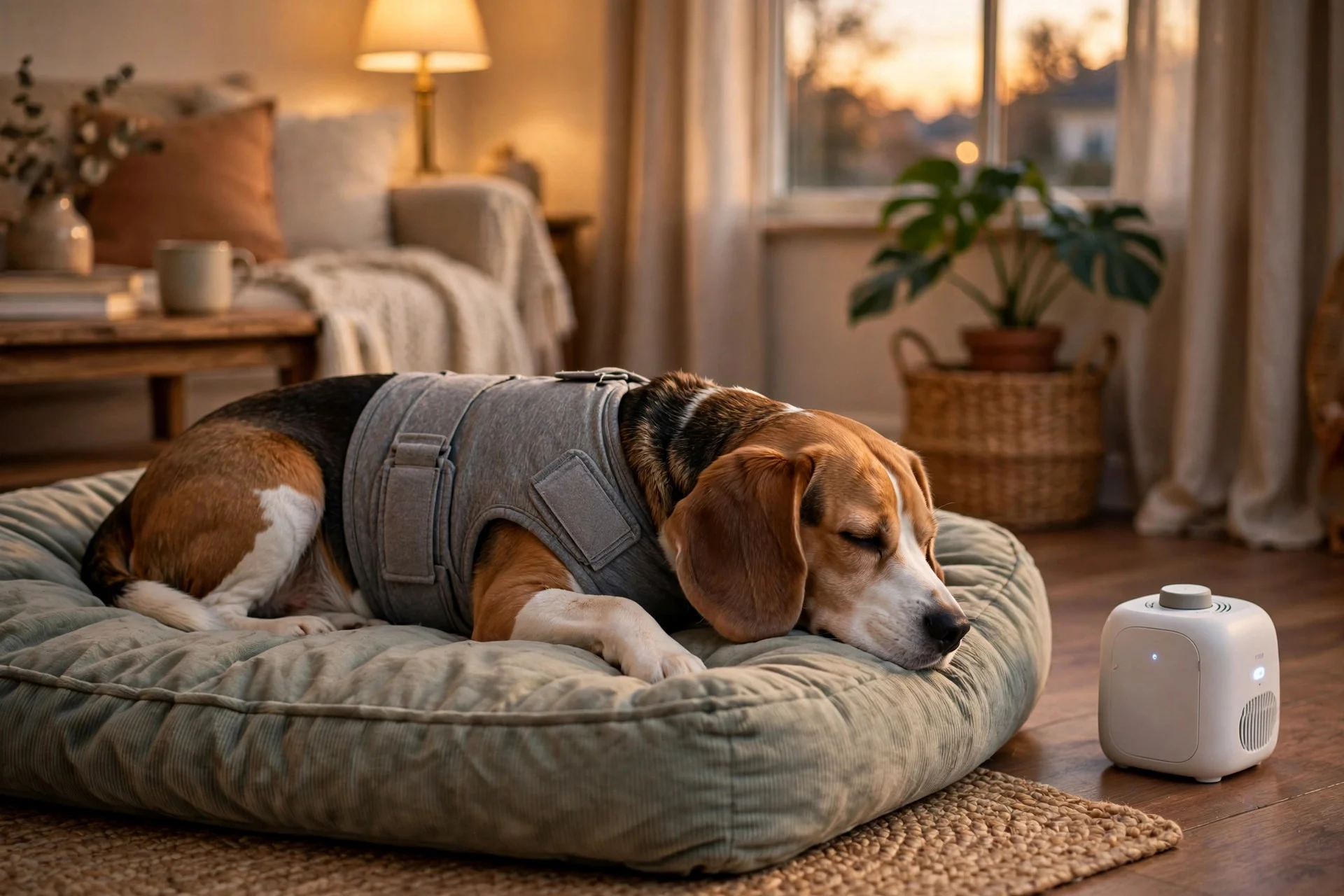
4. Try a snug wrap or Thundershirt
The science is mixed, but plenty of owners — me included — see a real difference. The gentle, constant pressure seems to have a calming effect on many dogs, similar to swaddling an infant. If you don’t want to buy one, a snug t-shirt or an Ace bandage wrapped in a figure-eight around the torso works on the same principle. Put it on before the anxiety starts, not after — once they’re in full panic, it’s much harder to help.
5. Stay home. Seriously.
The single most effective thing you can do is be there. Your calm presence tells their nervous system there’s no emergency. If you must go out, have someone the dog trusts stay. A dog alone during fireworks is how fences get jumped.
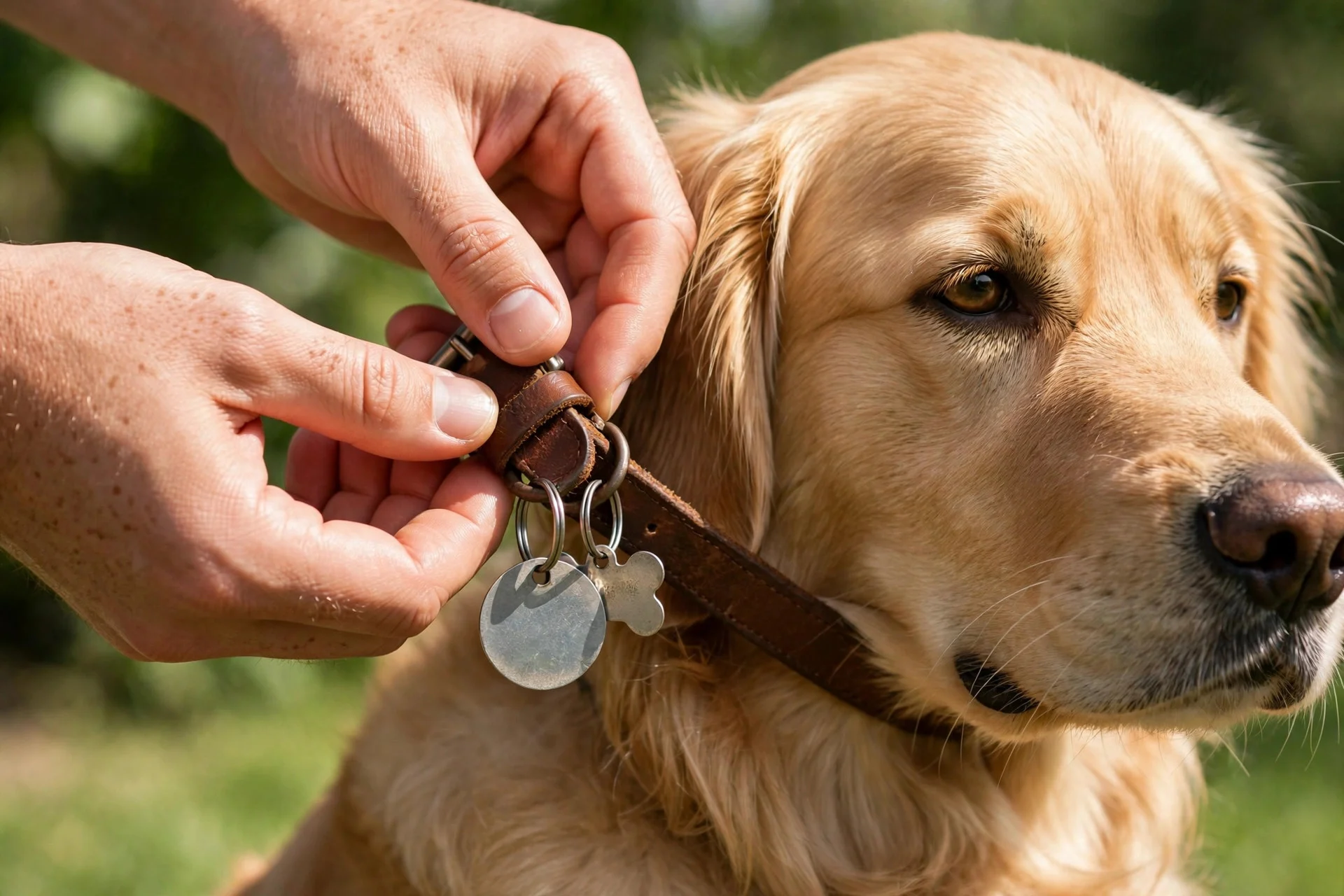
6. Double-check ID tags and microchip
Do this today, not on July 4th. Tags should be on the collar with a current phone number — not the old one from two moves ago. Verify your microchip registration is current (people forget this constantly; the chip is useless if the contact info is stale). On the night itself, keep the collar on even indoors. If the worst happens and they bolt, ID is what brings them home. July 5th is the busiest day of the year at shelters. Don’t contribute to it.
7. Get everyone inside before dusk
Fireworks don’t wait for the official show — neighborhoods start popping them at sundown, sometimes earlier. I bring the dog in by 7 PM and the yard is off-limits for the rest of the night. Potty breaks happen on-leash, even in a fenced yard, because a terrified dog can do astonishing things to get away from the noise. One panicked leap is all it takes. Leash on, quick trip, back inside.
8. Don’t punish the fear
This one’s important. When your dog shakes, pants, drools, or tries to climb into your lap, that’s fear — not misbehavior. Scolding a frightened dog (“stop it!”, “no!”) doesn’t teach bravery; it teaches them that scary noises plus angry owner equals double scary. Stay matter-of-fact and calm. Gentle petting is fine — the old myth that comforting “rewards” fear has been debunked. You can’t reinforce an emotion.
9. Talk to your vet about options beforehand
For severely anxious dogs, there are real medical options — from daily anti-anxiety meds started weeks ahead, to situational meds like trazodone or sileo prescribed for the night itself. These need a vet visit in advance; you can’t get them on July 3rd. Even if you’ve managed without meds before, it’s worth the conversation, especially as dogs age and anxiety often worsens. Don’t self-dose with human medications — many are toxic to dogs.
10. Start desensitization training early
This is the long game, and it works. Play firework sounds at very low volume while giving treats, over weeks, gradually increasing. The dog learns: boom sound = chicken appears. It takes consistency — a few minutes a day for a month or more — so start in May, not July. There are free desensitization tracks online designed exactly for this. It won’t make a terrified dog love fireworks, but it can take the edge from panic down to unease.
11. Feed dinner early and keep it light
Anxious dogs get upset stomachs, and a full rich dinner plus adrenaline is a vomiting combination. I feed about two hours earlier than usual on the 4th, slightly smaller portion, nothing fancy. Save the special treats for the morning. And keep the water bowl full — panting dogs dehydrate fast. This is a small thing, but nobody wants to clean up stress-vomit at midnight during the grand finale.
12. Have a lost-dog plan ready
Have a recent photo of your dog on your phone right now. Know your shelter’s number and your vet’s emergency line. If they get out, search immediately — most lost dogs are found within a few miles. Post on local lost-pet groups, and check the shelter in person, not just by phone.
Setting Up the Evening
My actual July 4th timeline: big morning walk, normal afternoon, dinner at 4 PM, dog inside by 7 with her den set up, white noise on, Thundershirt on, Kong delivered. Then I sit with her through the worst of it, reading a book like it’s any other night. Boring is the goal. Boring means it’s working.
If you have guests over, brief them: doors stay closed, the dog stays inside, nobody “takes her out to see the pretty lights.” Every year someone means well and creates a problem. Head it off.
Mistakes That Make It Worse
Taking the dog to the fireworks. “She’ll get used to it” is not how fear works. Flooding a frightened dog with the scary thing at full intensity usually makes the phobia worse, not better. Leave them home.
Leaving them in the yard “because they’re fine usually.” Fireworks change the equation entirely. Panic gives dogs strength and determination you wouldn’t believe. Inside, doors locked, every time.
Trying a new calming product for the first time on July 4th. Supplements, wraps, medications — test everything on a calm day first. You need to know it works (and doesn’t cause weird reactions) before the night you actually need it.
Fireworks FAQs
Why are dogs so scared of fireworks but fine with thunder?
Many dogs fear both, actually — but fireworks are worse because they’re unpredictable, sharper, and come with flashing lights and sulfur smells. Thunder at least follows a pattern dogs can learn. Fireworks are random by design, which is exactly what makes them terrifying to an animal that can’t understand the cause.
Do calming treats actually work?
Some do, mildly, for mildly anxious dogs — look for products with L-theanine or casein, and give them well before the noise starts (they need 30–60 minutes). For truly panicked dogs, treats alone won’t cut it; that’s a vet conversation. And check every label for xylitol, as always.
At what age should I start desensitization?
As early as possible — puppyhood is ideal, but it works at any age. Older dogs can absolutely learn new associations; it just takes more repetitions. The key rule at every age: keep the volume low enough that the dog notices but doesn’t react, and always pair with something great. If they show fear, you’ve gone too loud — back up.
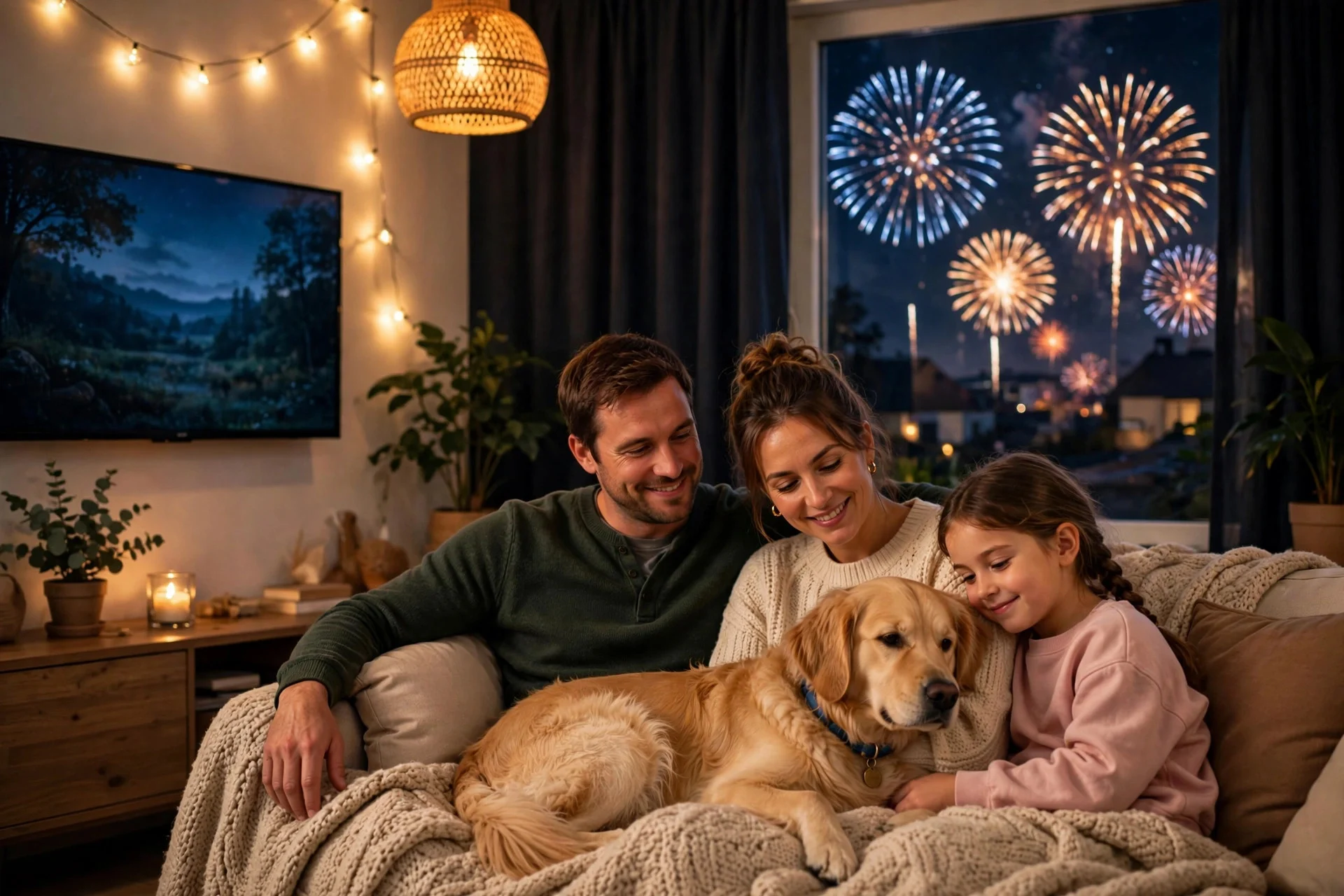
Exercise, den, noise cover, your presence — those four cover the vast majority of cases. Do the prep, keep them inside, ride it out together. By midnight it’s over. She’ll snore like nothing happened, which is frankly a little insulting after all that effort.