My dog used to inhale her dinner in forty-five seconds flat. Then she’d spend the next ten minutes looking for more food, burping, and occasionally throwing the whole thing back up. The vet called her a “gulper” and suggested a slow feeder bowl. I bought one, it worked, and then I realized these DIY slow feeder dogs ideas work just as well with stuff already in my kitchen. Twelve dollars saved, problem solved either way.
Dogs who eat too fast aren’t just annoying at mealtimes — they’re at real risk of choking, vomiting, and in large deep-chested breeds, bloat, which is a genuine emergency. Slowing them down is one of the simplest health upgrades you can make, and every idea below does the same job as the store-bought bowls: turning a ninety-second inhale into a ten-minute meal.
10 DIY Slow Feeder Ideas
1. The Muffin Tin Method
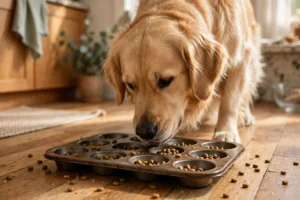
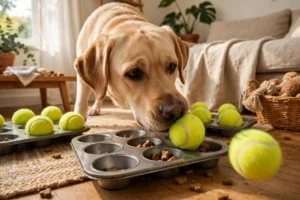
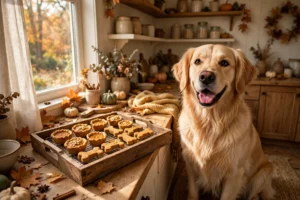
Scatter kibble across a 12-cup muffin tin instead of a bowl. Your dog has to eat cup by cup. It slows most gulpers down by five to eight minutes, and you already own the equipment. This is the fastest DIY slow feeder in existence — thirty seconds of setup, zero cost.
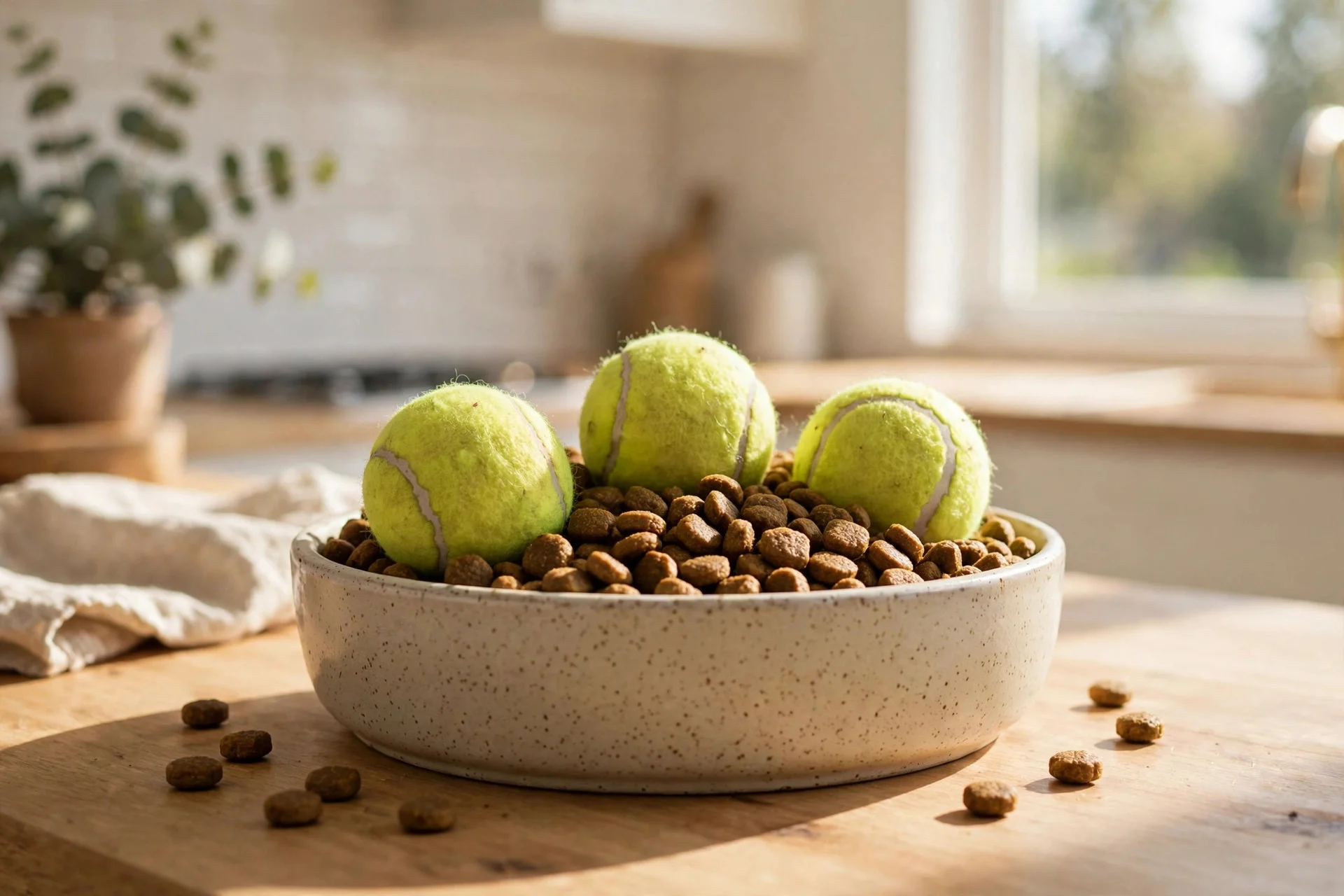
2. Tennis Balls in the Bowl
Drop two or three clean tennis balls into your dog’s regular food bowl on top of the kibble. Your dog has to nose the balls around to get to the food underneath. It’s crude but remarkably effective — the balls create obstacles that force slower, more deliberate eating. Make sure the balls are too big to fit entirely in your dog’s mouth. For tiny dogs, use golf-ball-sized rubber balls instead.
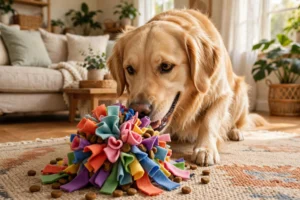
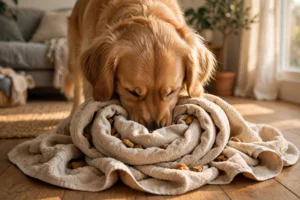
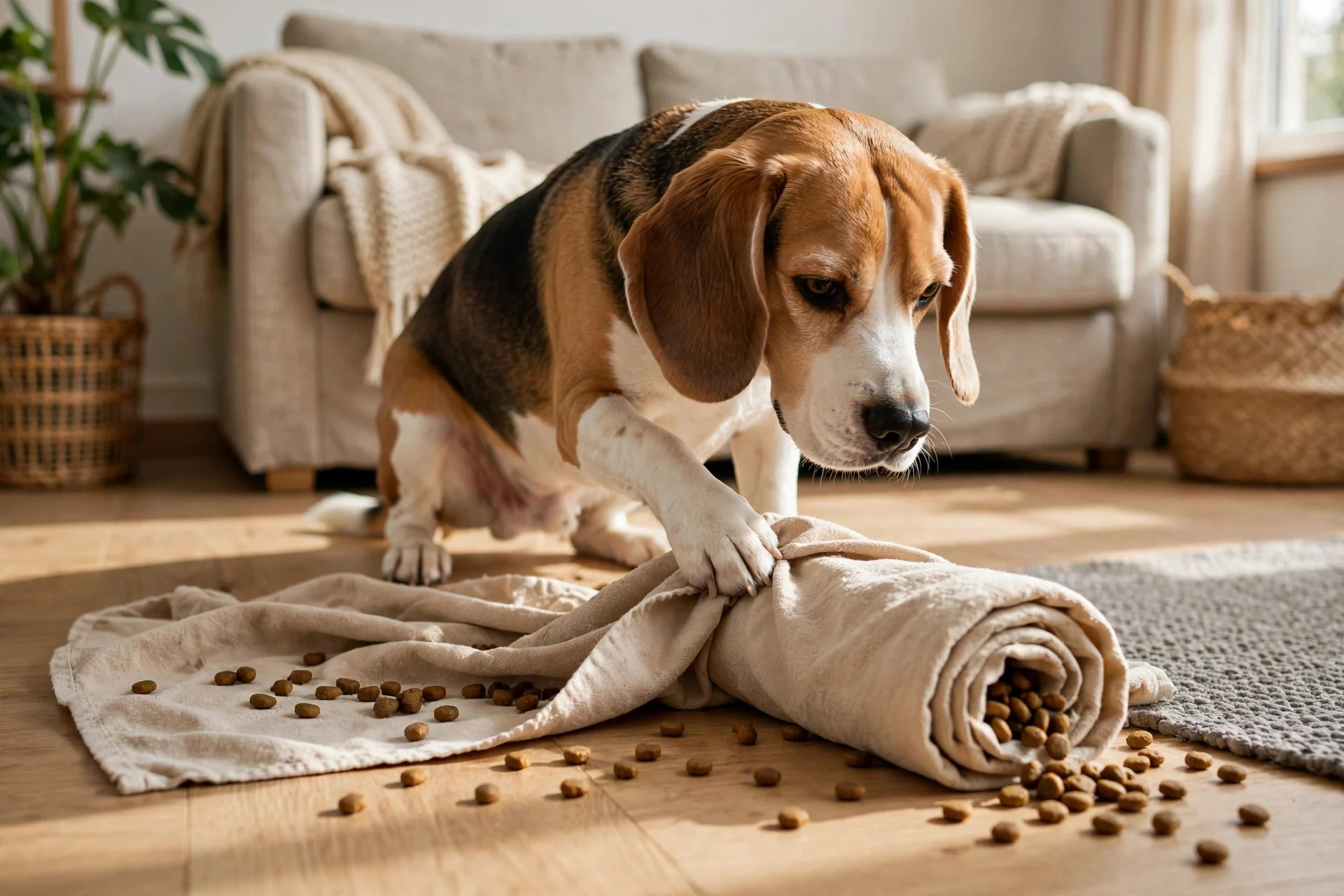
3. The Towel Roll Burrito
Spread kibble on a towel, roll the towel up, and let your dog unroll it to eat. Most dogs take eight to twelve minutes to work through a rolled towel. Roll it tighter as your dog gets better at it. Use a dedicated “dog towel” — it will get disgusting within a week.
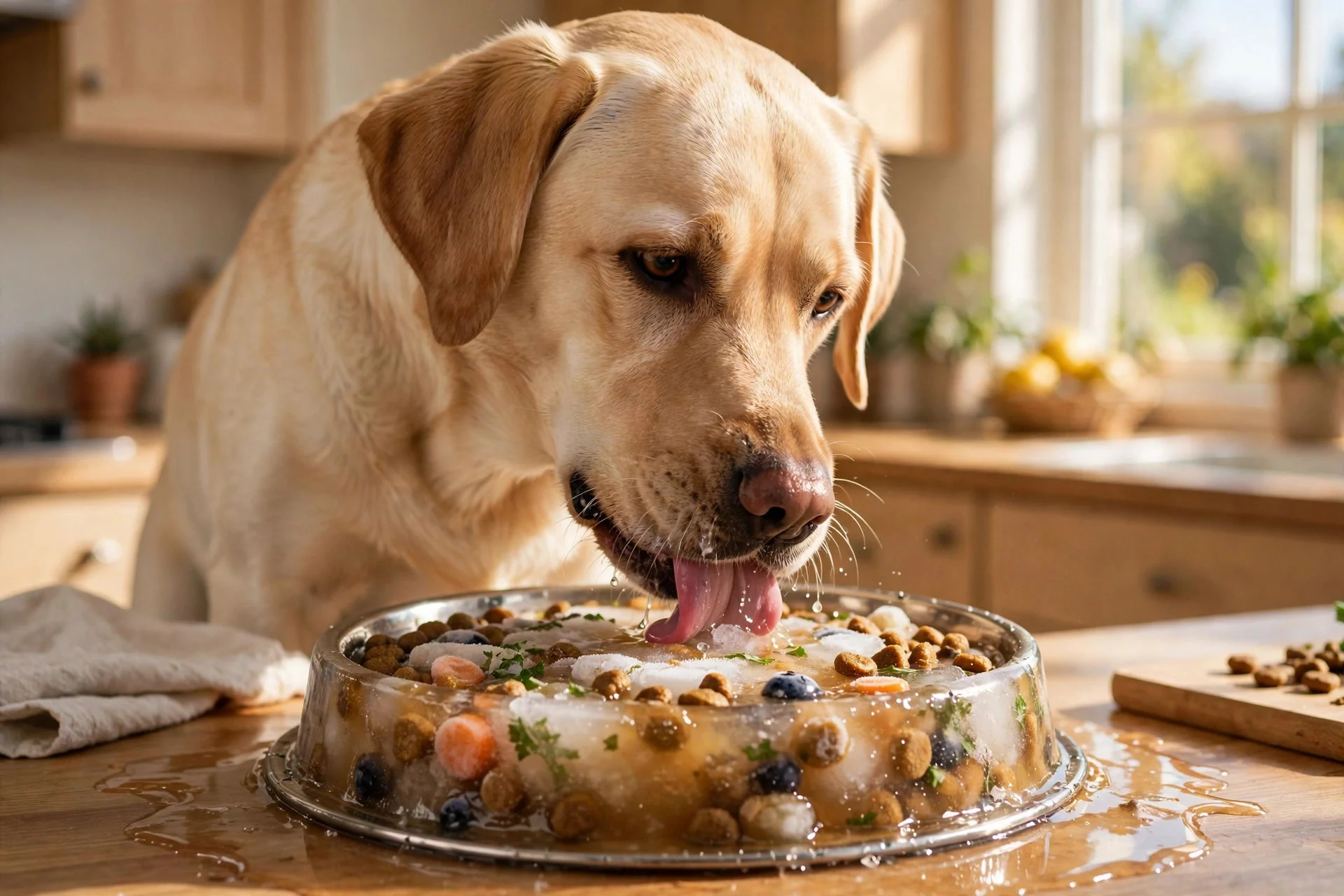
4. Frozen Bowl (Summer Favorite)
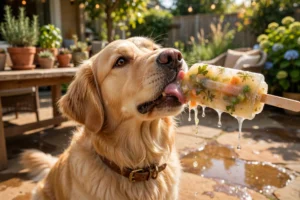
Mix kibble with a little water or low-sodium broth (no onion, no garlic), pour into a bowl, and freeze solid. A ninety-second meal now takes twenty minutes, and it’s cooling on hot days. Start with a thin layer of liquid — a fully frozen deep bowl can frustrate some dogs into giving up.
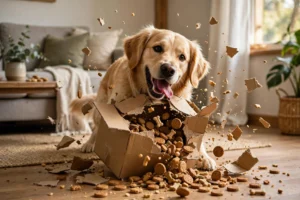
5. The Box-in-Box Feeder
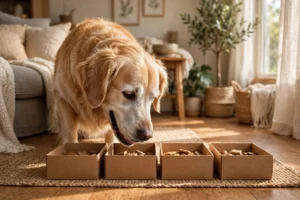
Put your dog’s food bowl inside a slightly larger cardboard box, so they have to reach over the box edge to eat. The awkward angle alone slows most dogs down. For advanced gulpers, put the bowl inside a box inside another box. Remove all tape and staples first. When the boxes get soggy or shredded, recycle them and grab new ones. Free forever.
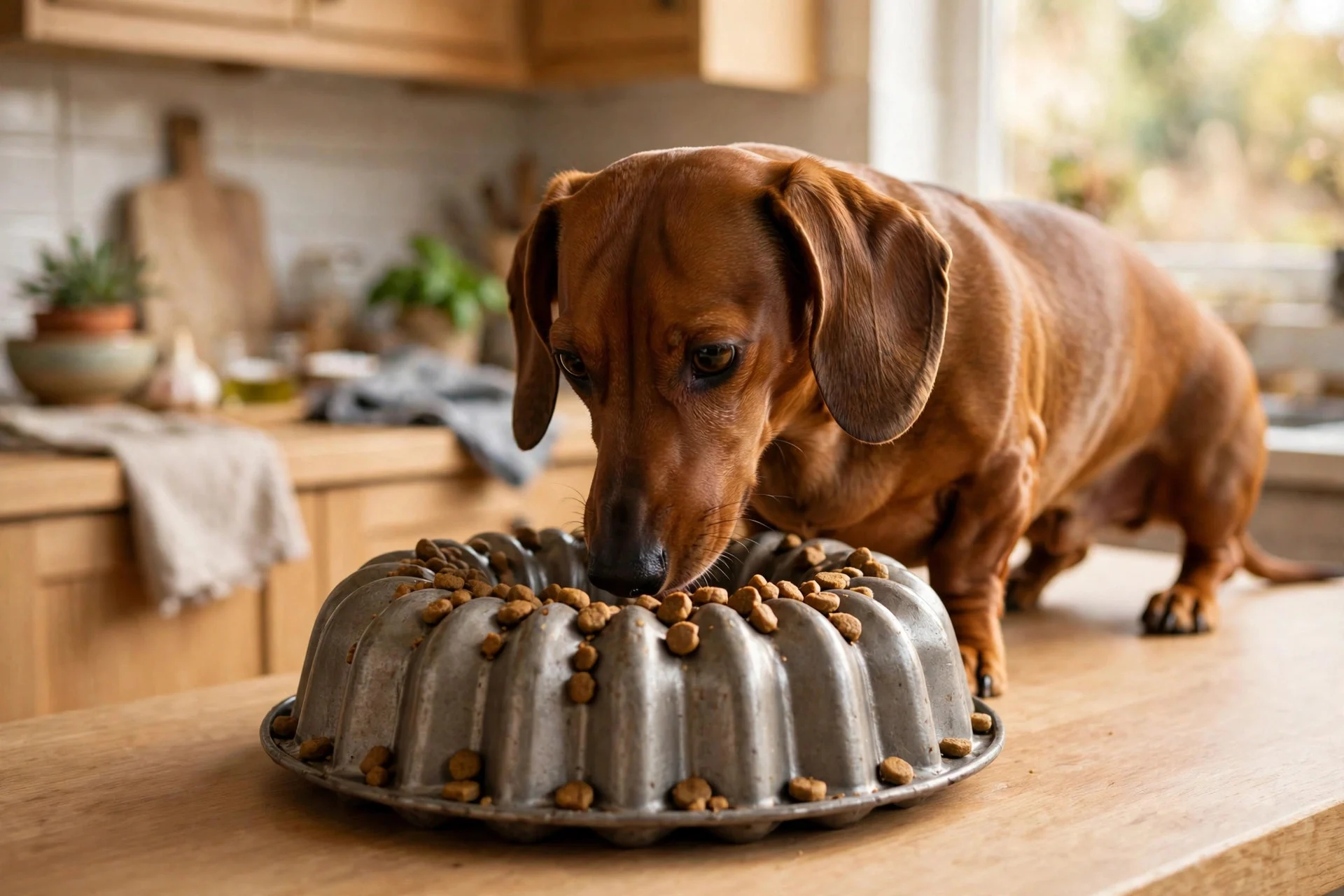
6. Bundt Pan Feeder
A bundt pan — the cake pan with the hole in the middle — makes an outstanding slow feeder. The ridges and center tube create natural obstacles. Pour the food in and watch your dog work the grooves. The nonstick coating makes cleanup easy.
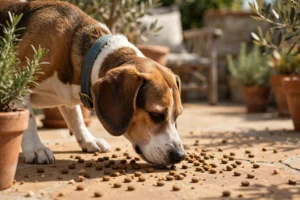
7. The Scattered Floor Feed
Skip the bowl entirely and scatter kibble across a clean floor. Your dog has to find and eat each piece individually — the slowest possible way to eat a meal, and genuine foraging enrichment. Do it on tile or a washable mat, not carpet. Ask me how I know.
8. Egg Carton Puzzle
Put kibble in the cups of a cardboard egg carton and close the lid. Your dog has to open it (or at least nose into it) to eat. The twelve little compartments portion the meal naturally, and the lid adds a puzzle element. Use cardboard cartons, not styrofoam — styrofoam crumbles into pieces dogs will swallow. One carton lasts a few meals before it falls apart.
9. Layered Lick Mat Dinner
For dogs who eat wet food or toppers, spread the meal across a large lick mat in a thin layer instead of piling it in a bowl. Licking is inherently slower than gulping, and the mat’s texture forces small tonguefuls. A meal that vanished in a minute now takes ten. This works especially well for dogs who also need calming — licking releases those soothing endorphins.
10. The Wobble Bowl Trick
Place your dog’s bowl inside a larger, lightweight bowl or on a slightly unstable surface (like a folded towel on a tray). The bowl shifts and wobbles as they eat, forcing them to slow down and stabilize it with their paws. It’s a mild physical challenge on top of the eating slowdown. Don’t use anything actually tippy — you want wobble, not spills. A bowl that dumps dinner on the floor teaches nothing except floor-eating.
Practical Tips
Start with the easiest option and escalate only if needed. Some dogs slow down perfectly well with just tennis balls in the bowl — they don’t need the frozen block and the bundt pan and the towel burrito all at once. Watch your dog eat with each method and time it. You’re aiming for five to fifteen minutes per meal. Longer than that and some dogs get frustrated and quit, which defeats the purpose.
Keep hygiene in mind. DIY feeders made from cardboard, towels, and egg cartons need regular replacing — they harbor bacteria fast. Cardboard items should be swapped every few days, towels washed weekly, and anything that smells funky goes straight in the bin. A slow feeder that gives your dog a stomach bug is worse than fast eating.
Mistakes to Avoid
The most common mistake is making the feeder so hard that your dog gives up and doesn’t eat. This happens a lot with frozen meals — people freeze the whole bowl solid on day one, and the dog stares at an ice block for twenty minutes and walks away. Build difficulty gradually. Day one should be almost as easy as a regular bowl, just slightly slower. Ramp up over a week or two.
The other mistake is using the wrong size obstacles. Tennis balls that fit entirely in a small dog’s mouth are a choking hazard, not a slow feeder. Egg cartons with staples, boxes with tape, towels with loose threads — every DIY feeder needs a safety check before it meets your dog. If you wouldn’t let a toddler chew on it unsupervised, don’t leave it with your dog unsupervised either.
FAQs
Do slow feeders really prevent bloat? They reduce one risk factor (eating too fast), which is meaningful for deep-chested breeds like Great Danes, German Shepherds, and Standard Poodles. But bloat has multiple causes, and a slow feeder isn’t a guarantee. If your dog is a high-risk breed, talk to your vet about the full prevention picture — feeding schedule, exercise timing, and whether gastropexy makes sense.
My dog figured out how to flip the muffin tin. Now what? Congratulations, you have a smart dog. Put the muffin tin on a non-slip mat or inside a shallow box so it can’t be flipped. Or graduate to a harder method like the frozen bowl. Dogs who solve puzzles fast need the difficulty ladder to keep climbing — that’s a feature, not a bug.
Can puppies use DIY slow feeders? Yes, and it’s actually ideal — you’re building good eating habits from the start. Just keep it easy for young puppies (tennis balls in the bowl, scattered feeding) and supervise everything. Puppies are still learning that food comes reliably, so never make it so hard they get anxious about eating.
How slow is slow enough? Five to fifteen minutes per meal is the target range. Under two minutes is still gulping. Over twenty minutes and most dogs lose interest or get frustrated. Time your dog with a new method and adjust — you’re calibrating, not guessing.
You don’t need a fancy slow feeder bowl to fix fast eating. A muffin tin, some tennis balls, and a towel will get you 90% of the way there for exactly zero dollars. Pick the easiest idea on this list, try it at tonight’s dinner, and time your dog. I bet you’ll be surprised how much calmer mealtimes get when the food lasts longer than a commercial break.