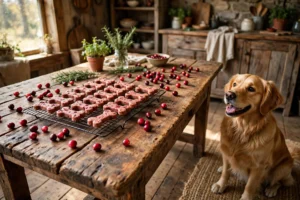
For years, my dog’s “enrichment” was whatever happened to occur to me. Some days she’d get a frozen Kong and a training session and a sniff walk — the full spa treatment. Other days she’d get nothing but a bowl of kibble and a guilty look from me at bedtime. The inconsistency was the problem, not the effort. Dogs thrive on routine, and I was giving her chaos.
Then I made an actual dog enrichment schedule, and everything changed. Not a rigid military timetable — just a simple daily rhythm that guaranteed she got mental stimulation every single day without me having to think about it. This is the system I landed on, and I’m sharing the whole thing: the why, the daily plan, and a printable-style planner you can adapt to your own life.

Why a Schedule Beats Random Enrichment
Dogs are creatures of habit in the best way. When enrichment happens on a predictable rhythm, your dog starts anticipating it — and anticipation is itself enriching. My dog now hears the freezer open at 7 AM and does a little spin, because freezer means frozen Kong, and frozen Kong means the day has officially started. That tiny ritual took two weeks to build and it brings her visible joy every single morning.
The other reason is you. Let’s be honest: on a busy Tuesday, you’re not going to invent a novel enrichment activity from scratch. But you will follow a plan that’s already written down. A schedule removes decision fatigue. Tuesday is snuffle mat day. You don’t think about it, you just do it. The dogs of organized owners aren’t luckier — they’re just benefiting from a system.
The Daily Enrichment Schedule
Here’s the framework. It’s built around a typical workday, but the time blocks are flexible — shift everything to match your life. The key is hitting each type of enrichment daily, not the exact clock times.
| Time | Activity | Type | Duration |
|---|---|---|---|
| 7:00 AM | Frozen Kong or lick mat with breakfast | Food puzzle / calming | 15–20 min |
| 7:30 AM | Sniff walk (let them lead with their nose) | Sensory / physical | 20–30 min |
| 12:00 PM | Midday training session (3–5 known cues + 1 new) | Mental / bonding | 10 min |
| 5:30 PM | Active play (fetch, flirt pole, or tug) | Physical / prey drive | 15 min |
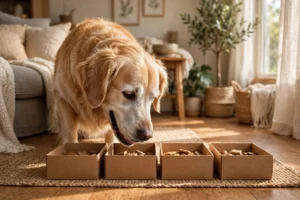
| 6:00 PM | Dinner via snuffle mat or scattered feeding | Foraging | 10–15 min |
| 8:00 PM | Calm chew or gentle massage | Relaxation / bonding | 15 min |
That’s roughly ninety minutes of enrichment spread across the day — and notice that most of it replaces things you were already doing. Breakfast was happening anyway; now it’s in a Kong. The walk was happening anyway; now it’s a sniff walk. Dinner was happening anyway; now it’s foraging. You’re not adding ninety minutes to your day. You’re upgrading ninety minutes you already spend.
The Five Types of Enrichment (And Why You Need All of Them)
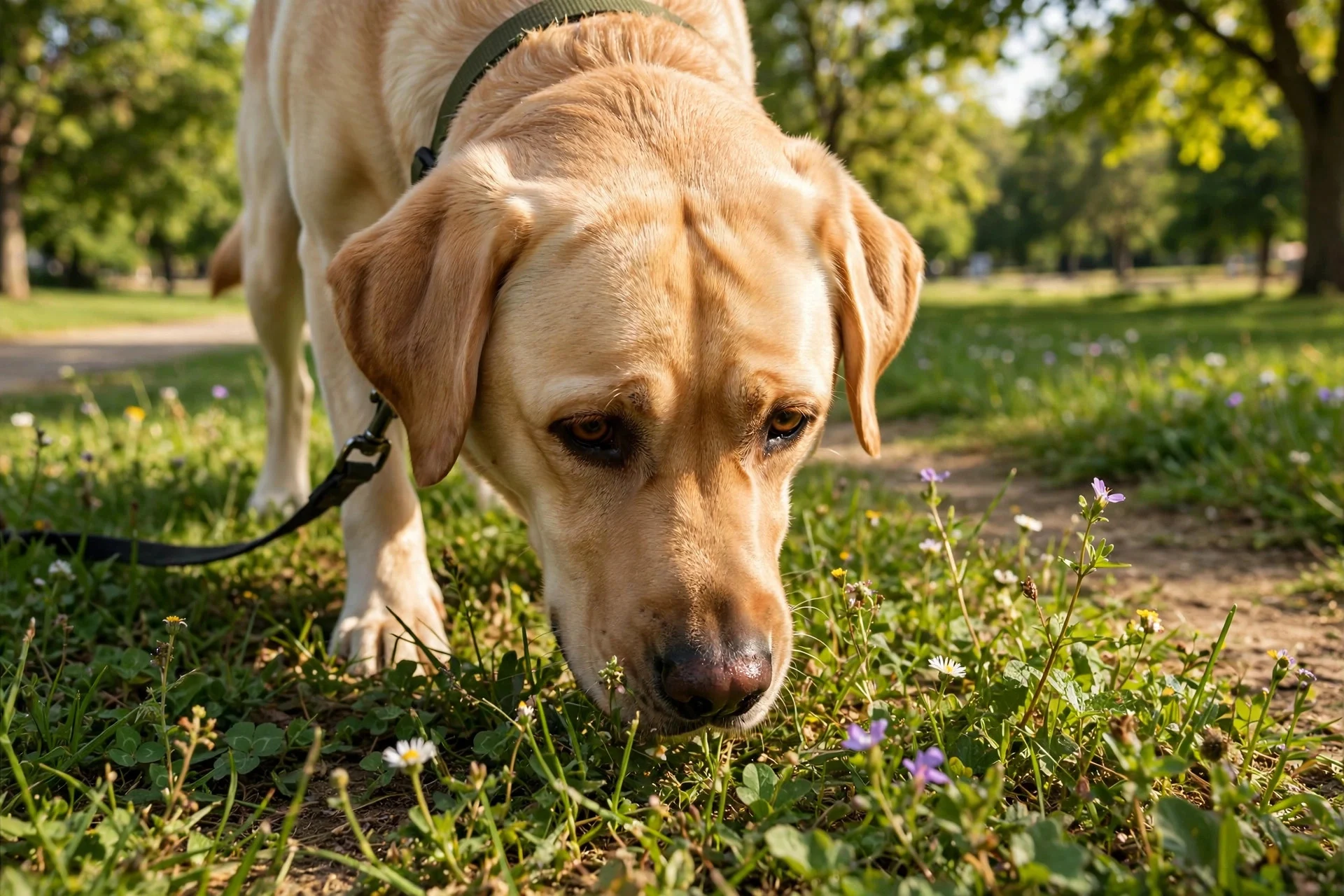
Not all enrichment is interchangeable. A dog who gets tons of food puzzles but never sniffs anything new is like a person who only does crossword puzzles — mentally active, but narrowly. The five types: food-based (puzzles, Kongs, snuffle mats), sensory (sniff walks, novel smells, different textures), social (play with you, polite greetings, training), physical (fetch, flirt pole, swimming), and calming (lick mats, chews, massage). The schedule above hits all five every day. That’s the whole secret — variety across types, not just variety within one type.
Adapting the Schedule to Your Life
Work from home? Move the midday session to whenever you take a break, and add a bonus sniff walk in the afternoon. Gone all day? Front-load the morning (frozen Kong + sniff walk), use a timed feeder or a pet sitter for midday, and make the evening session count. Got a puppy? Halve every duration and double the nap time — puppies need eighteen to twenty hours of sleep, and an overtired puppy is a bitey demon. Got a senior? Swap active play for sniff walks and gentle nose games, and keep everything low-impact.
The schedule is a template, not a law. If your dog hates lick mats but loves snuffle mats, swap them. If Tuesdays are chaos, make Tuesday the easy day (frozen Kong + chew, done). The only non-negotiable is consistency — some enrichment, every day, covering multiple types. Everything else is customization.

Weekly Rotation: Keeping It Fresh
Here’s where most schedules die: week three, when the dog has the routine memorized and the novelty wears off. The fix is a weekly rotation layered on top of the daily schedule. Keep the time blocks the same, but change the contents each week. Week one: frozen Kong for breakfast. Week two: snuffle mat. Week three: scattered feeding. Same slot, different puzzle. Your dog keeps the comforting routine and gets fresh challenges. It’s the best of both worlds.
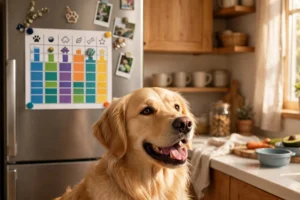
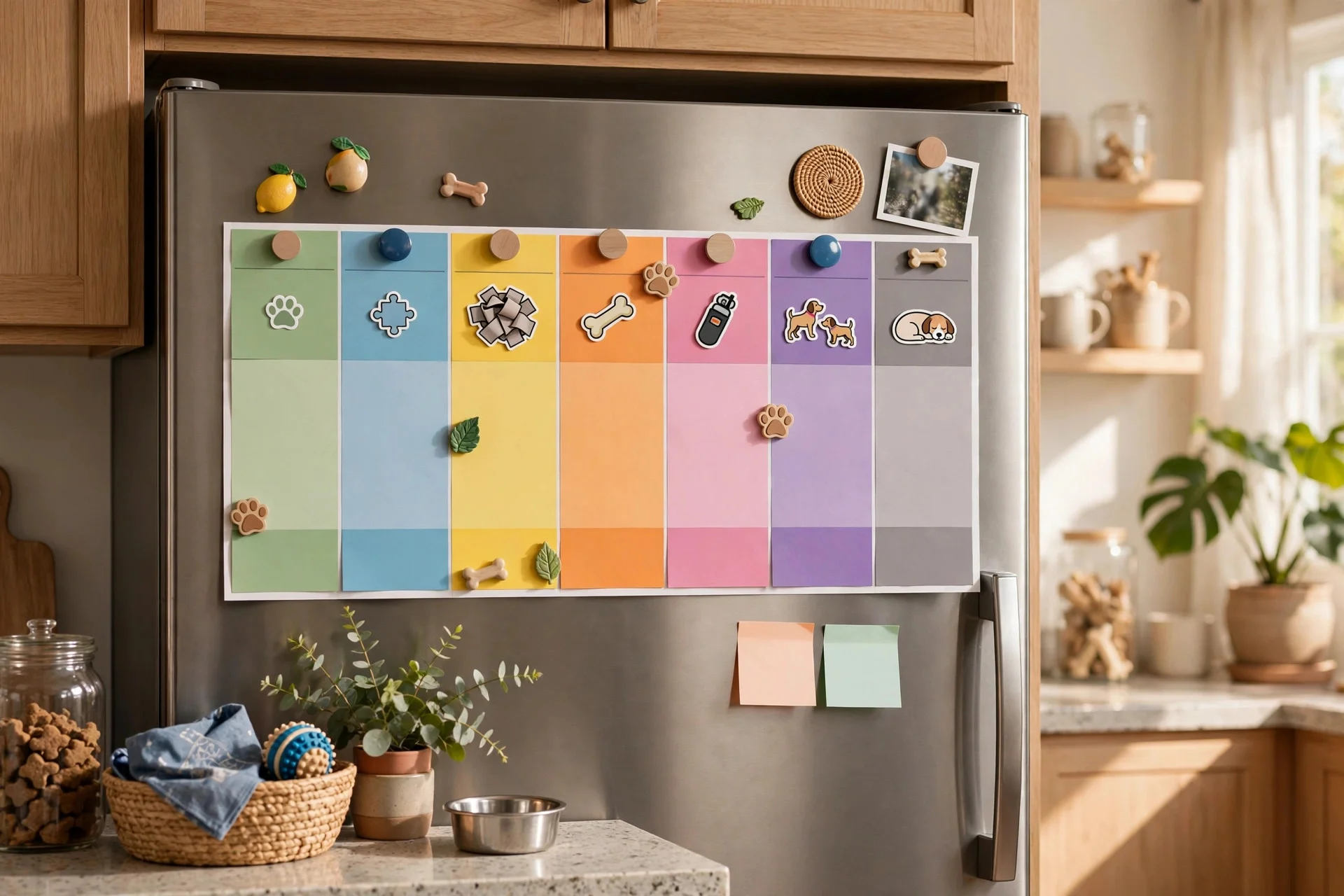
I keep a simple list on the fridge: four breakfast options, four dinner options, four midday activities. Each Sunday I pick one from each column for the coming week. It takes two minutes and it means I never have to think about it during the week. Decision fatigue: eliminated. Dog happiness: maintained.
Mistakes to Avoid
The biggest mistake is building a schedule you can’t sustain. If you plan a thirty-minute training session every lunch break and you actually get ten minutes, you’ll feel guilty and quit the whole thing within a week. Start smaller than you think you should. A schedule you actually follow beats an ambitious one you abandon. You can always add more later.
The second mistake is forgetting rest. Enrichment is stimulation, and stimulation needs recovery. A dog who’s “enriched” from dawn to dusk without real downtime gets wired, not happy. Naps are part of the schedule too — that 8 PM calm chew exists specifically to wind things down. An overtired dog is just as cranky as an under-stimulated one. Balance, always.
FAQs
How do I start if my dog has never had structured enrichment? Start with just the morning piece — breakfast in a Kong instead of a bowl. Do that for a week. Then add the sniff walk. Then the evening chew. Layer it in over a month. Going from zero to the full schedule overnight overwhelms both of you, and overwhelmed humans quit.
What if I miss a day? Nothing happens. Your dog will survive a boring Tuesday. The schedule is a habit, not a contract — missing a day doesn’t reset anything. Just pick it back up tomorrow. The dogs of imperfect owners who try most days are doing vastly better than the dogs of owners who gave up because they couldn’t be perfect.
Can I use this schedule for multiple dogs? Yes, with one adjustment: give each dog their own enrichment items and separate spaces. Two dogs sharing one snuffle mat isn’t enrichment, it’s a resource-guarding incident waiting to happen. The schedule scales fine — you just need duplicates of the equipment and enough space for everyone to work in peace.
Is there a printable version of the planner? The table above is designed to be screenshot-friendly — snap it, print it, stick it on the fridge. For the weekly rotation, any piece of paper with four columns (breakfast / midday / dinner / evening) works. Fancy planners are nice, but a sticky note you’ll actually use beats a beautiful template you’ll ignore.
A schedule sounds boring. I know. But here’s what I’ve learned: the most “boring” thing I did for my dog — writing down a daily enrichment plan — produced the most visible change in her happiness of anything I’ve ever tried. Ninety minutes a day, mostly repurposed from things you’re already doing, and a dog who knows exactly how good today is going to be. Try it for two weeks. Your dog will thank you in the way dogs do — with that full-body wiggle that says today was a good day.