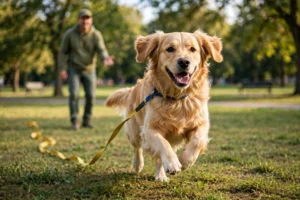
There’s regular recall — the “come” your dog does in the backyard for a biscuit. And then there’s emergency recall: the one word that makes your dog stop dead and sprint back to you when they’re chasing a squirrel toward a road. That second one isn’t a trick. It’s a life insurance policy. And most dogs don’t have one.
An emergency recall dogs actually respond to is trained differently from normal recall. It uses a special word, otherworldly rewards, and a very specific protocol. It’s not harder than regular training — it’s just more deliberate. These five steps will build you a recall that works when it matters most, which is the only time it really counts.
Emergency Recall Training in 5 Steps
Step 1: Choose Your Emergency Word
Pick a word your dog has never heard before — something silly and distinctive like “pronto,” “emergency,” or “cookiesaurus.” This is critical: the emergency word must have zero history of being ignored. If you’ve ever said “come” fifty times while your dog pretended not to hear you, that word is poisoned. The emergency word starts with a clean slate, and it stays special forever. Never use it for anything except this training and real emergencies.
Step 2: Charge the Word (The Fun Part)
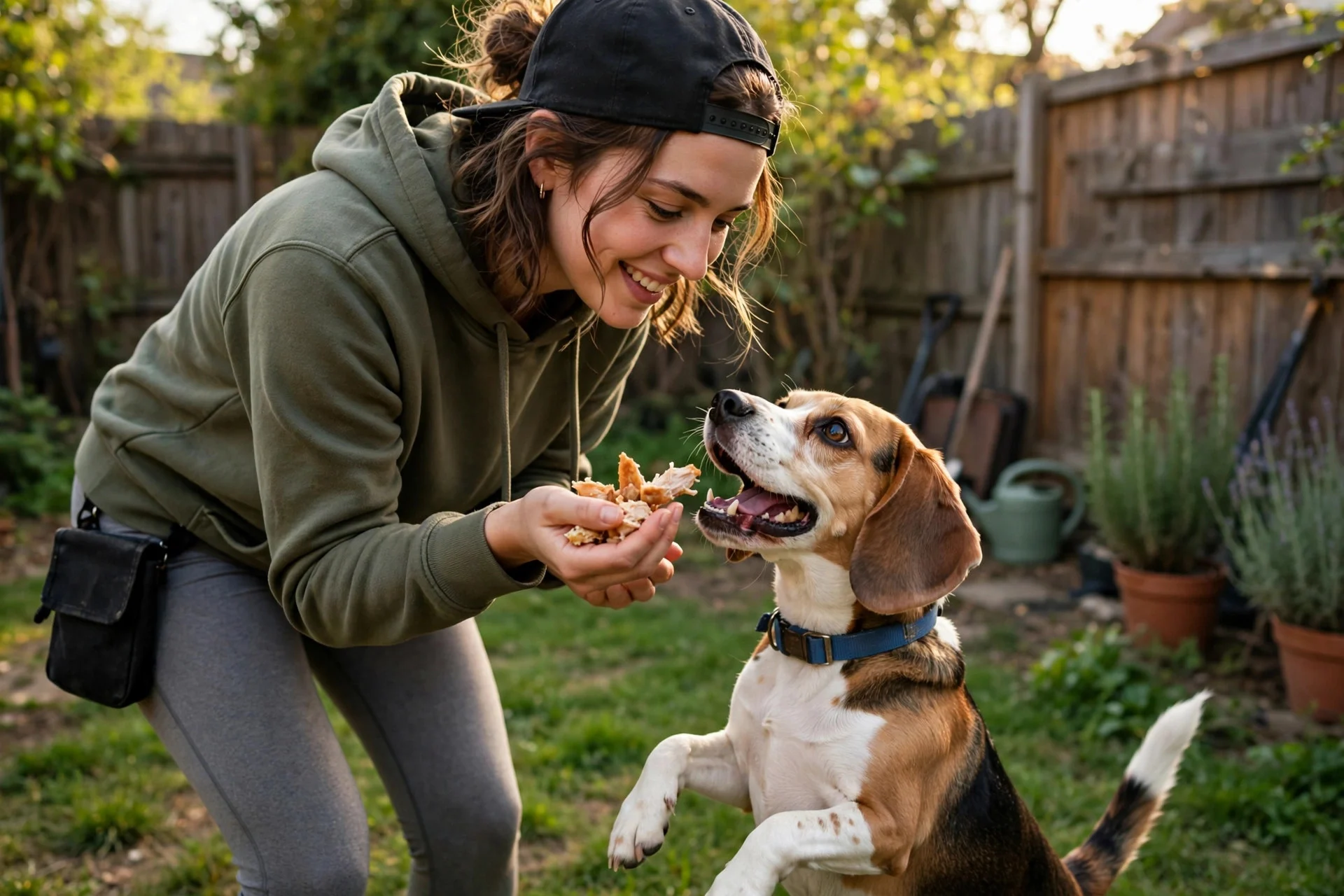
For one week, say the emergency word and immediately give your dog something extraordinary — real chicken, cheese, hot dog pieces, whatever makes your dog lose their mind. Say the word, deliver the jackpot, repeat ten times a day. Your dog doesn’t have to do anything. You’re just building an association: that weird word predicts the best thing that has ever happened. By day seven, saying the word should make your dog’s head whip around with pure joy. That’s the foundation everything else builds on.
Step 3: Add Distance Indoors
Now wait until your dog is mildly distracted (sniffing the other room, looking out the window), say the emergency word in an excited voice, and jackpot them when they come. Start at ten feet. Then twenty. Then from another room. Always pay like a slot machine that just hit — a handful of high-value treats, not a single biscuit. If your dog doesn’t come, you moved too fast. Go back to an easier distance. There is no penalty for going slow here, and there’s a huge penalty for rushing.
Step 4: Take It Outside (On Leash First)
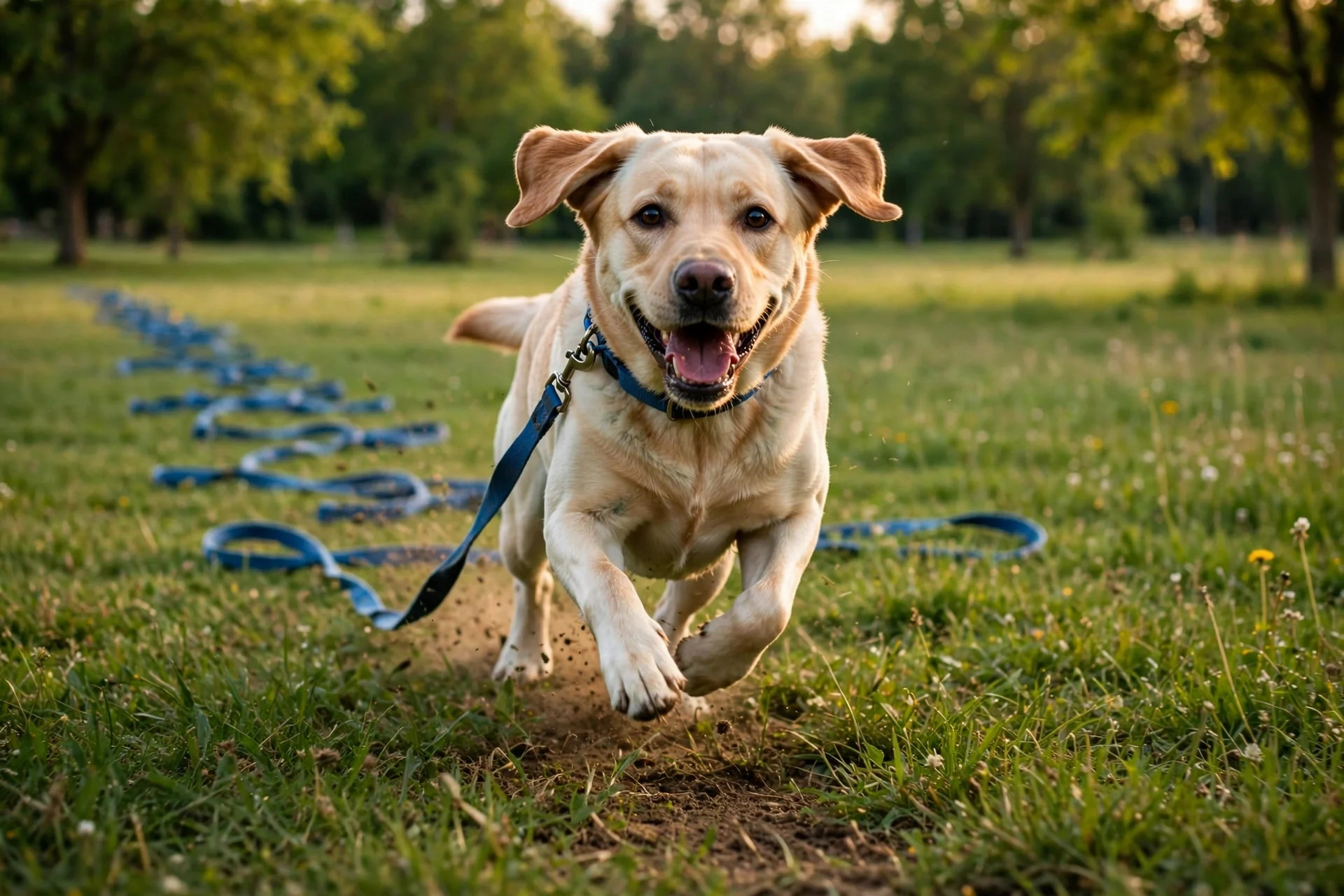
Move to the yard or a quiet park, with your dog on a long line (twenty to thirty feet). Let them get interested in something, say the word, and reward the recall with the full jackpot plus a party — cheering, playing, the works. The long line is your safety net, not a correction tool. Never reel them in like a fish; it’s just there so they can’t practice ignoring you. Practice in gradually more distracting environments over weeks, not days.
Step 5: Proof It and Maintain It
Once your dog is nailing it in moderate distractions, test it in harder ones — always on the long line, always with the jackpot ready. And here’s the part everyone skips: maintain it forever. Use the emergency word in a surprise drill once or twice a month for the rest of your dog’s life, and always pay the jackpot. An emergency recall you trained last year and never refreshed is a recall you don’t actually have. Maintenance takes thirty seconds a month. Skip it at your peril.
Practical Tips
The reward has to be disproportionate. This is not the time for “good dog” and a pat on the head. Emergency recall gets the best food, every single time, for the life of the dog. Real meat. Cheese. Whatever your dog would sell their soul for. The economics have to work in your favor: coming back to you must always, always beat whatever they were chasing. If the squirrel is more rewarding than you are, you’ve lost before you started.
Practice when you don’t need it. The emergency word should be used in drills, not just emergencies. Every real emergency use should be followed by more practice sessions to keep the association strong. And here’s a subtle one: after a real emergency recall, don’t immediately leash up and end the fun. That teaches the dog that coming back means the fun stops. Recall, jackpot, then release them back to play sometimes. Coming to you should never predict punishment or the end of freedom.

Mistakes to Avoid
The cardinal sin: punishing a slow recall. If your dog takes thirty seconds to come back and you scold them when they arrive, you’ve just taught them that coming to you leads to punishment. Next time, they’ll take sixty seconds. Or never come at all. No matter how frustrated you are, no matter what they did out there — when your dog comes to you, it’s a party. Every. Single. Time. This rule has no exceptions, and breaking it is the fastest way to destroy a recall.
The other big mistake is using the emergency word casually. “Pronto!” to get them in from the yard for dinner. “Pronto!” when you can’t find the leash. Every casual use dilutes the word’s power. The emergency word is a fire alarm, not a doorbell. If you find yourself reaching for it in non-emergencies, that’s a sign your regular recall needs work — train that separately, and keep the emergency word sacred.
FAQs
How long does emergency recall training take? The charging phase is one week. Reliable indoor recall takes another two to three weeks. Outdoor reliability in real distractions takes two to three months of consistent practice. Anyone who promises faster is selling something. This is a life-safety skill — it’s worth doing right.
Can I train this with an older dog? Absolutely. Age doesn’t matter for this — what matters is the clean-slate word and the jackpot rewards. I’ve seen eight-year-old dogs learn a rock-solid emergency recall in a couple of months. Old dogs can absolutely learn new life-saving tricks.
What if my dog is highly prey-driven? Then this training is even more important for you, and it’ll take longer. High prey drive means the competing motivation (the squirrel) is extremely strong, so your rewards have to be extraordinary and your practice has to be extensive. It’s still very achievable — sighthounds and terriers learn this all the time. Just budget more time and better chicken.
Should I still use a leash in unfenced areas? Yes. Emergency recall is a backup system, not a primary containment strategy. It’s the airbag, not the seatbelt. Train it, maintain it, hope you never need it — and keep using the leash. The best emergency recall in the world still isn’t 100%, and the stakes are too high to gamble.
Five steps, one special word, and a lifetime supply of really good chicken. That’s the entire investment for a skill that could one day save your dog’s life. Start charging that word tonight — future you, sprinting toward a road with your heart in your throat, will be very glad you did.