Bringing a baby home when you already have a dog is one of life’s great juggling acts. You love them both fiercely, you’re running on no sleep, and somewhere in the back of your mind there’s a worry you don’t say out loud: what if my dog doesn’t handle this well?
Here’s what I want you to know: most dogs adjust beautifully, especially when you prepare. This guide to introduce dog to new baby life safely is built on one non-negotiable rule — never leave a dog and a baby together unsupervised, not for a second, no matter how gentle your dog is. Everything else flows from there. Let’s get your household ready.
Introducing Your Dog to a New Baby: 10 Safety Steps
1. Start preparing months before the baby arrives
Don’t wait until the due date. Three to four months out, start shifting your dog’s routine toward what post-baby life will look like: slightly different walk times, a bit less one-on-one attention, new household sounds. Dogs handle gradual change far better than overnight upheaval. If your dog’s world changes the same day a screaming newborn appears, that’s two massive stressors stacked on top of each other. Spread them out and everyone breathes easier.
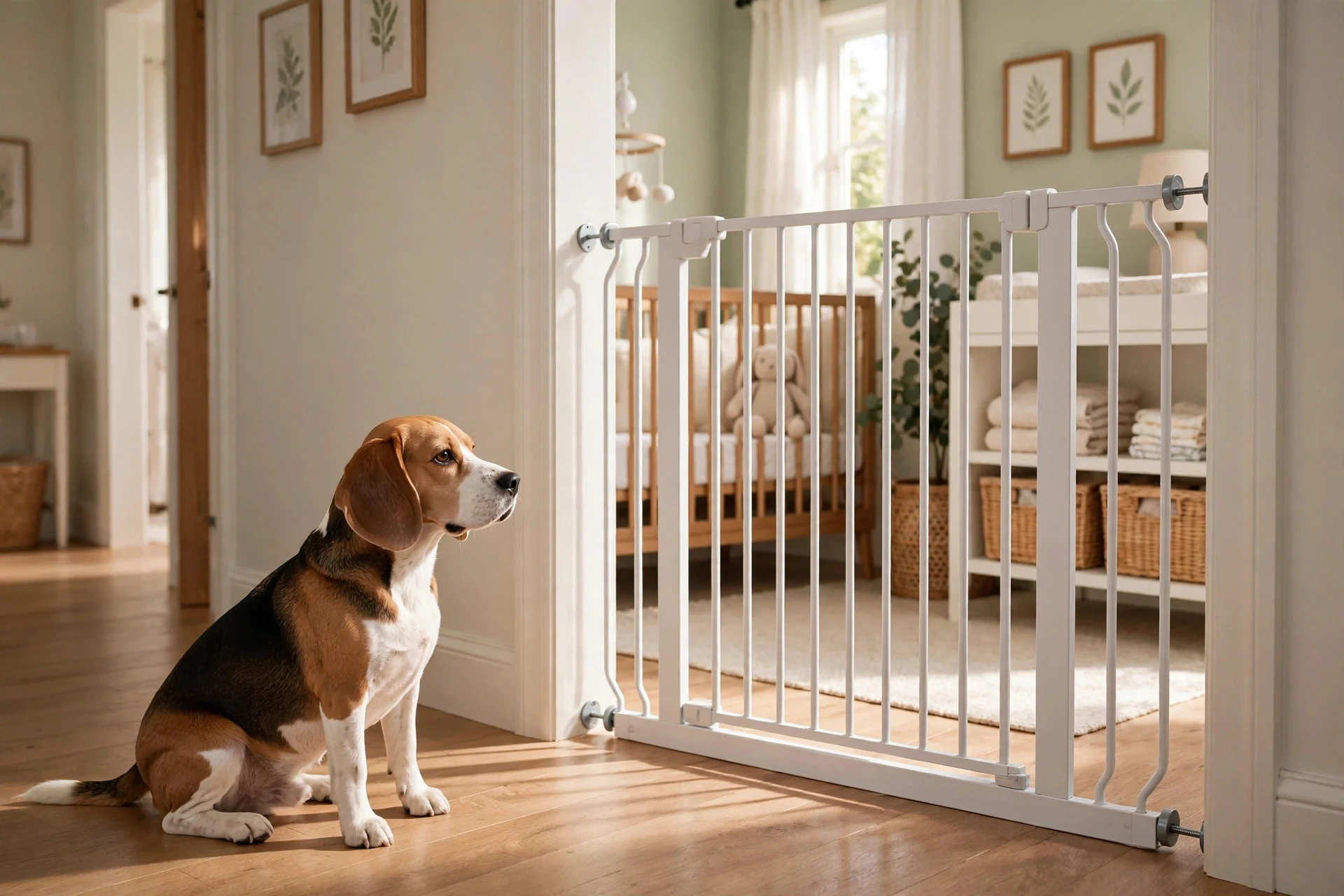
2. Set up baby zones and dog zones now
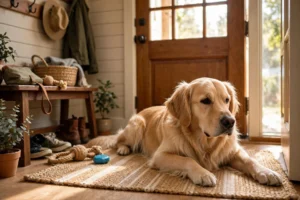
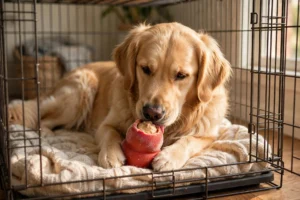
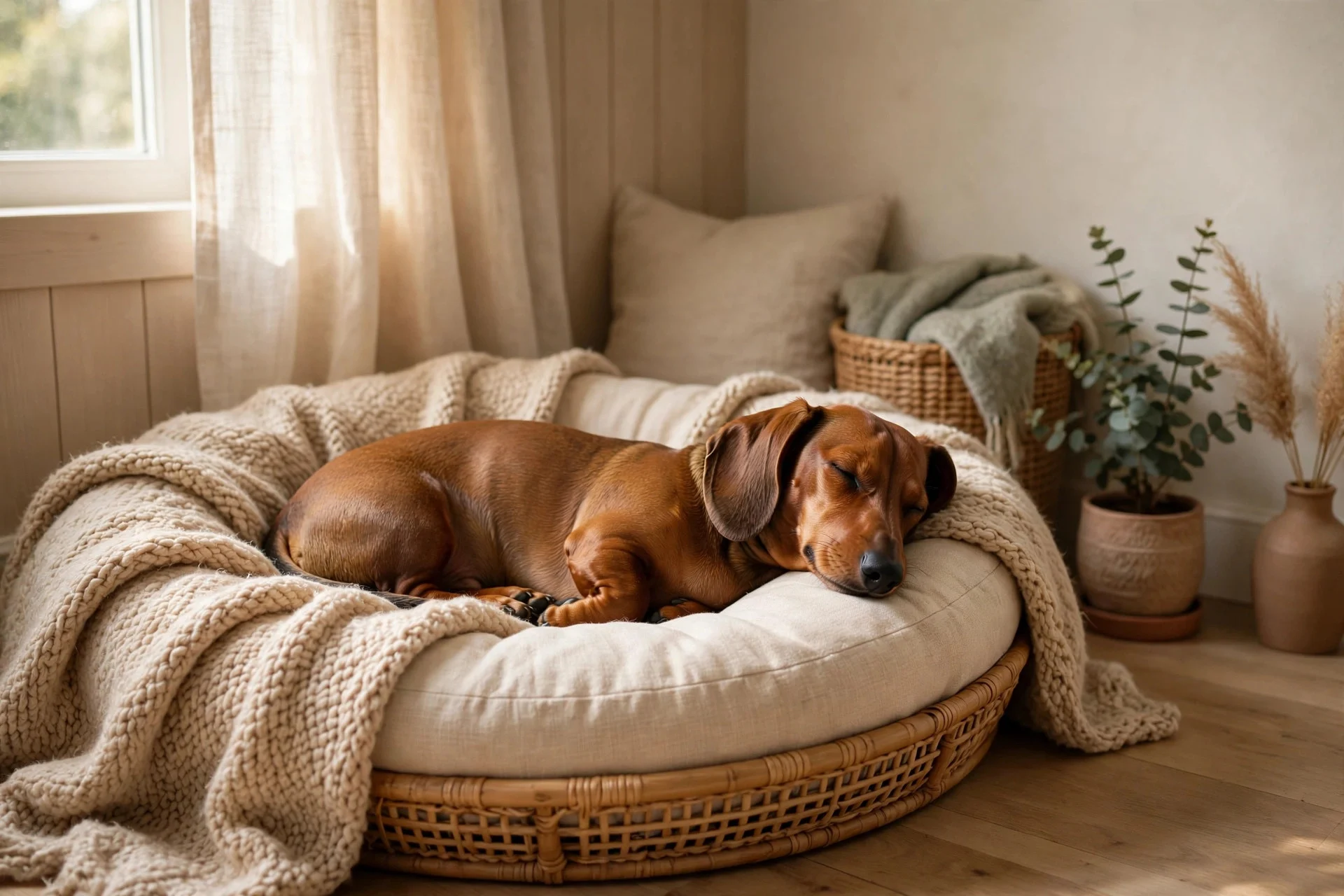
Install baby gates, set up the nursery, and establish which rooms are dog-free — before the baby arrives, so the boundaries feel normal, not like punishment. Your dog needs a comfortable retreat space (a crate, a bed in a quiet room) where they can decompress away from baby chaos. Dogs who can choose to leave a stressful situation rarely have problems. Dogs who feel trapped in one sometimes do. Give them the choice.
3. Desensitize to baby sounds and gear
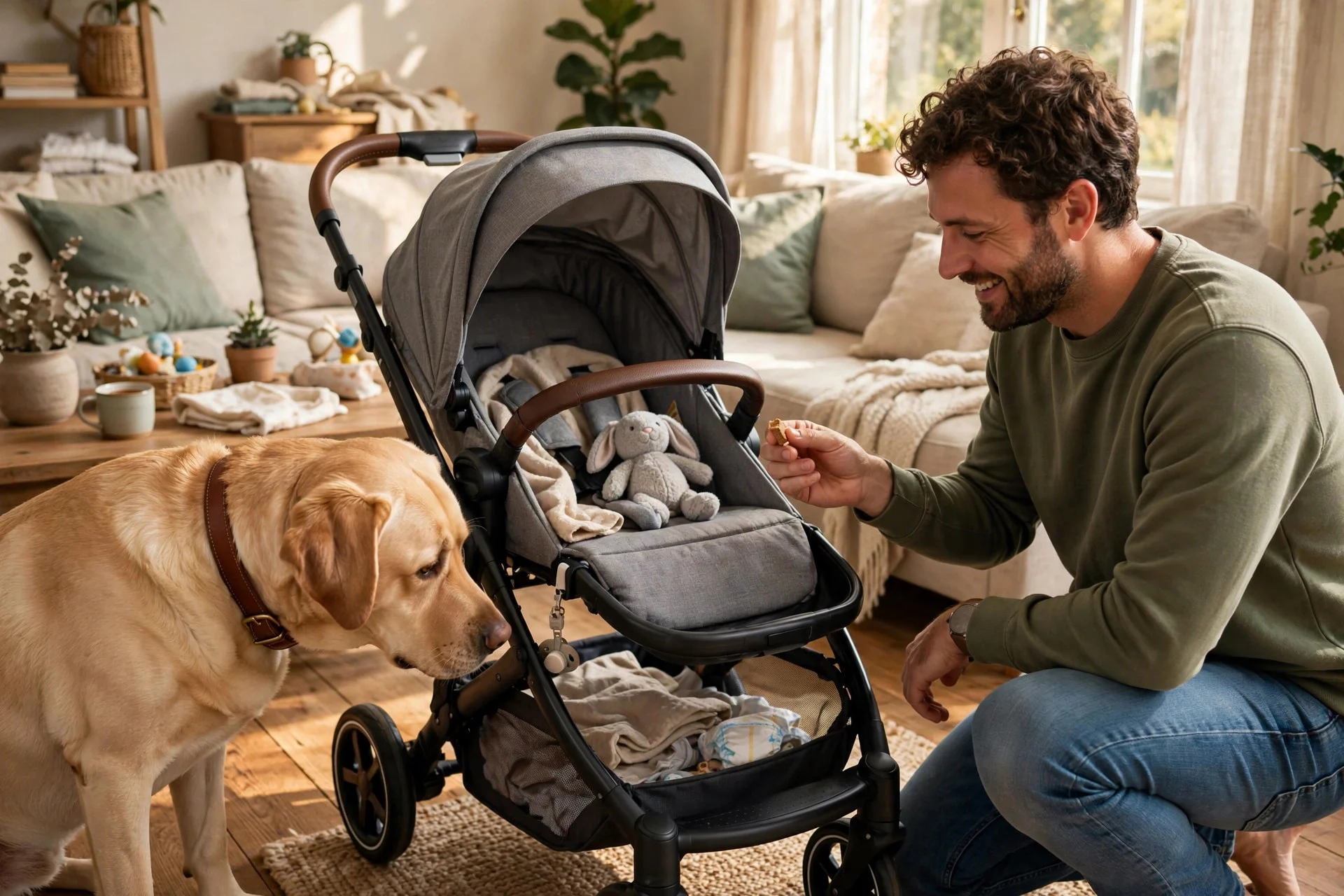
Play recordings of babies crying at low volume while your dog gets treats — gradually increase the volume over weeks. Set up the stroller, swing, and crib early, and let your dog sniff everything (treats for calm investigation). The goal is boring familiarity: by the time the real baby arrives, the gear is old news and the crying sound predicts good things.
4. Practice stroller walks
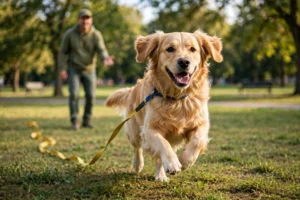
Walking a dog while pushing a stroller is a skill, and you don’t want to learn it with a newborn inside. Practice with an empty stroller: teach your dog to walk calmly beside it, not pulling ahead or lagging behind. A front-clip harness helps enormously here. If your dog is a dedicated puller, consider whether someone else can handle walks for the first few weeks.
5. Brush up on basic training
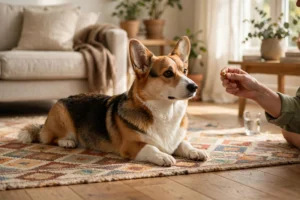
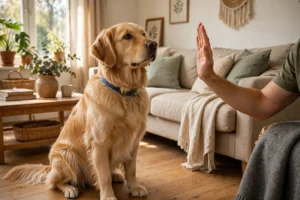
The months before baby arrives are the perfect time to polish “leave it,” “place” (go to your bed), and a solid recall. “Place” is the superstar here — a dog who will happily settle on a mat on cue is a dog you can manage beautifully during feeds, diaper changes, and fussy evenings. Keep training sessions short and positive. You’re not cramming for an exam; you’re building habits that’ll run on autopilot when you’re exhausted.
6. Plan the first meeting carefully
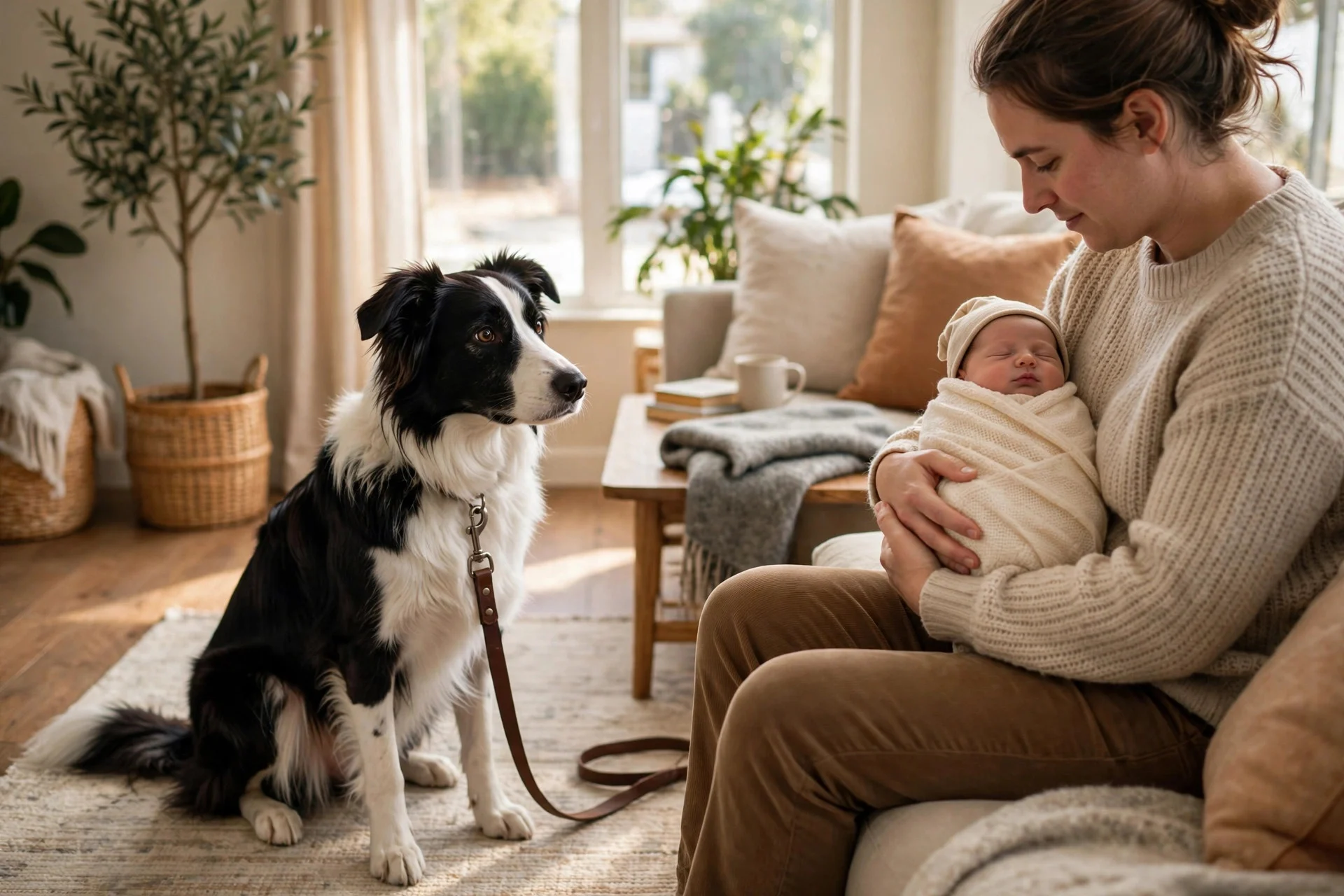
When you get home from the hospital, greet your dog alone first — they’ve missed you, let them get the wiggles out. Then bring the baby in (in someone’s arms, ideally not yours at first so your hands are free). Keep your dog leashed, let them sniff from a respectful distance, and reward calm behavior generously. Keep it short — five minutes of calm is a perfect first meeting. There’s no need for face-to-face contact. Distance and calm are the win.
7. Supervise every single interaction
This is the rule that never expires. Not when the baby is six months old, not when your dog has been perfect for a year. Babies grab ears, poke eyes, and fall onto dogs without warning — and even the gentlest dog has a limit. Active supervision means you’re watching, you’re within arm’s reach, and your phone is in your pocket. “My dog would never” are famous last words. Every dog deserves the protection of supervision, and every baby deserves it too.
8. Protect your dog’s resources and routine
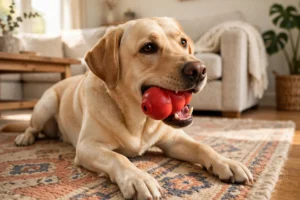
Keep high-value items — bones, favorite toys, food bowls — completely separate from baby areas. A toddler toddling toward a dog’s bone is a bite-risk scenario you can entirely prevent with baby gates and closed doors. Maintain your dog’s walk and feeding schedule as much as humanly possible; routine is a stress buffer. And carve out even five minutes of one-on-one time with your dog daily.
9. Learn your dog’s stress signals
Lip licking, yawning when not tired, turning away, whale eye (whites of eyes showing), freezing — these are your dog saying “I’m uncomfortable.” When you see them, calmly increase distance between dog and baby. No scolding; your dog is communicating, and you want to keep that communication channel open.
10. Give it time — months, not days
Some dogs take to babies immediately. Others need weeks or months to fully relax, and that’s completely normal. Don’t rush physical closeness, don’t force interactions for cute photos, and don’t panic if your dog seems aloof or anxious at first. Adjustment timelines vary enormously. What matters is the trajectory: gradually calmer, gradually more relaxed. If you’re seeing escalation instead — growing tension, guarding, snapping — bring in a certified professional trainer right away. Early help works.
Practical Tips for the First Weeks
Accept help with the dog — a friend who can take them for a long walk in week one is worth their weight in gold. Keep a treat jar by the nursery door so you can reward calm behavior without thinking about it. And lower your standards everywhere else: survival mode is temporary.
Warnings Worth Taking Seriously
Never let your dog lick the baby’s face — dogs’ mouths carry bacteria that newborns can’t handle. Don’t leave the baby on the floor with the dog loose in the room, even while sleeping; a startled dog can react before you can intervene. And watch for resource guarding around baby items — some dogs guard the baby’s toys or even the baby themselves, which needs professional guidance, not DIY fixes.
FAQs About Dogs and New Babies
Should I let my dog sniff the baby?
A brief, controlled sniff from a calm dog is fine and actually helps them process the new arrival. Keep it short, keep your dog leashed or held, reward calm behavior, and don’t allow prolonged hovering or face-to-face contact. Sniffing is information-gathering for dogs — let them gather it safely.
What if my dog seems jealous of the baby?
Dogs don’t feel jealousy the way we do, but they absolutely notice a sudden drop in attention and can act out — demanding behavior, accidents, restlessness. The fix is proactive: maintain their routine, schedule daily one-on-one time, and reward calm behavior around the baby. Most “jealousy” fades once the dog’s needs are being met again.
When can my dog and baby play together?
Not until the child is old enough to understand and follow rules around the dog — usually around four to five years old, and even then with supervision. Before that, all interactions should be structured, brief, and adult-managed. “Playing together” as an unsupervised concept doesn’t exist for young kids and dogs. Ever.
Do I need to rehome my dog if I’m worried?
Almost certainly not. The vast majority of concerns can be managed with preparation, supervision, and boundaries. Rehoming is a last resort for genuinely dangerous situations assessed by a professional — not for normal adjustment struggles. If you’re worried, a certified trainer can evaluate your specific situation and give you a clear plan.
You can love your dog and your baby completely, and keep them both safe — those things aren’t in conflict. Prepare early, supervise always, and give everyone time to adjust. A year from now, you’ll have a dog who naps through nap time and a toddler who knows the dog’s name. It’s worth every baby gate.