Onions are in almost everything — soups, sauces, leftovers, that one dish you made last night that’s now sitting in the fridge. Which is exactly why onion poisoning shows up in dogs more often than people expect. It’s rarely from someone handing their dog a raw onion on purpose. It’s the sneaky exposure that gets dogs into trouble.
So let’s talk about why onions are a problem, what counts as “onion” in this context (more than you’d think), and what to actually do if your dog gets into some.
Why Onions Are Toxic to Dogs
Onions belong to the allium family, along with garlic, leeks, chives, and shallots. All of them contain compounds that damage a dog’s red blood cells, leading to a condition called hemolytic anemia — basically, the body destroying its own red blood cells faster than it can replace them.
This isn’t a “mild tummy ache” kind of toxicity. Red blood cells carry oxygen throughout the body, so when enough of them get damaged, a dog’s organs and tissues start running short on oxygen. Left untreated, this can become life-threatening.
Here’s the part that catches a lot of owners off guard: cooking doesn’t neutralize the toxin. Whether onions are raw, cooked, powdered, dehydrated, or sautéed into a sauce, they’re still dangerous. The concentration actually goes up in some processed and powdered forms, since the water content is removed.
All Forms of Onion Are a Problem
It’s not just the chunky pieces you’d obviously notice. Onion shows up in:
- Raw and cooked onions (any color — white, yellow, red)
- Onion powder and onion salt (very concentrated, easy to overlook in seasoning blends)
- Onion flakes or dehydrated onion
- Broths and stocks made with onion
- Gravies and sauces
- Many soups, stews, and casseroles
- Some baby foods (occasionally used as a “safe” human-food treat, but not always onion-free — always check labels)
- Pizza, if there’s onion in the sauce or toppings
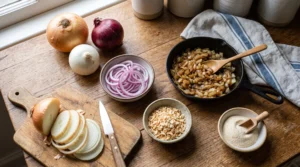
Onion powder in particular deserves extra caution. A small sprinkle of seasoning that seems harmless to us can be a meaningfully large dose for a dog, especially a small one.
How Much Onion Is Dangerous?
There’s no single “safe” amount, and it depends on your dog’s size and how much onion was consumed relative to their body weight. Toxicity tends to be cumulative, meaning repeated small exposures — like getting table scraps with a bit of onion seasoning every night — can add up over time even if no single incident seemed like a big deal.
This is different from something like grape toxicity, where the reaction is unpredictable regardless of amount. With onions, more onion generally does mean more risk, but because it’s hard to calculate a “safe” threshold at home, the standard advice is simple: dogs shouldn’t eat onion in any form, ever.
Symptoms of Onion Toxicity in Dogs
Here’s what makes onion poisoning tricky — symptoms often don’t show up right away. It can take a few days for red blood cell damage to become noticeable, which means your dog might seem completely fine the day they ate something onion-containing.
Symptoms typically to watch for over the following days:
- Weakness or lethargy
- Pale or yellowish gums (a sign of anemia)
- Rapid breathing or panting
- Elevated heart rate
- Reduced appetite
- Vomiting or diarrhea (our dog diarrhea remedies guide is a good general reference, though onion-related digestive symptoms should always be paired with a vet call)
- Dark or reddish-tinted urine (a sign of red blood cell breakdown)
- Collapse, in severe cases
If your dog ate something with onion in it a day or two ago and now seems unusually tired or pale-gummed, don’t chalk it up to “just an off day.” Call your vet. For a broader look at what changes in a dog’s behavior or appearance can signal, our common signs and symptoms guide is a helpful reference point.
What to Do If Your Dog Eats Onion
- Note what and how much was eaten. Was it a slice of raw onion, a bowl of onion soup, or a dish seasoned with onion powder? This matters for figuring out the risk level.
- Call your vet right away, even if your dog seems fine. Because symptoms can be delayed, waiting to see how they act isn’t a reliable way to judge whether treatment is needed.
- Mention the exact form of onion, since powdered and concentrated forms carry a higher risk per bite than a raw, watery slice.
- Follow your vet’s guidance on next steps. This might include inducing vomiting if it’s caught early, or monitoring bloodwork over the following days to check for anemia developing.
- Watch closely for several days afterward, not just the first few hours, since symptoms of hemolytic anemia can take time to appear.

Onion Hides in More Recipes Than You’d Think
If you make your own dog meals or share home-cooked food, onion is one of the easiest ingredients to accidentally include. It’s a base ingredient in an enormous number of recipes, which is why it’s worth double-checking before sharing leftovers.
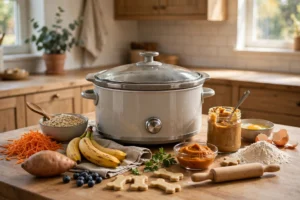
If you follow homemade dog food recipes, like our crockpot dog food recipes, you’ll notice they’re built specifically to avoid onion, garlic, and other alliums — which is exactly why it’s safer to follow a dog-specific recipe rather than just handing over a portion of your own dinner.
The same goes for broths. If you’re making homemade chicken broth dog treats, always use a plain, onion-free broth rather than a store-bought or homemade broth made for human cooking, since many broths use onion as a flavor base.
Foods That Are Actually Safe to Share
If you want to give your dog a little something from the kitchen without the onion-related risk, these are solid options:
- Small pieces of cheese, for dogs who tolerate dairy
- Slices of banana
- Plain, unseasoned cooked chicken (no onion or garlic seasoning)
- Homemade dog treats made with dog-safe ingredients, where you control exactly what goes in
Preventing Accidental Onion Exposure
A few habits that make a real difference:
- Read labels on seasoning blends. Onion powder is often mixed into garlic salt, meat rubs, and pre-made spice blends without it being obvious at a glance.
- Keep table scraps out of the “treat” rotation unless you know exactly what’s in the dish.
- Store cooked onions and onion-based leftovers where your dog can’t reach them, including counters and low shelves.
- Be cautious at gatherings, where dishes with onion are more likely to be left within snout’s reach.
- Double-check baby food jars before using them as a training treat, since not all varieties are onion-free.
For a broader reference on what other everyday foods to watch out for, our safe and unsafe foods for dogs and cats guide rounds up more of the common kitchen hazards.
FAQ: Can Dogs Eat Onions?
Is a small amount of onion in a sauce really dangerous? It depends on the concentration and your dog’s size, but because toxicity can build up with repeated small exposures, it’s safest to avoid it consistently rather than assuming a “little bit” is fine.
Are cooked onions safer than raw onions? No. Cooking doesn’t remove the toxic compounds, and some processed forms like onion powder are actually more concentrated.
How long after eating onion do symptoms appear? Symptoms of hemolytic anemia can take a few days to become noticeable, which is part of what makes onion toxicity easy to miss until it’s more advanced.
Can small breeds handle onion better than large breeds? No — if anything, smaller dogs are at greater risk from the same amount of onion, since toxicity is generally weight-dependent.
Is onion powder worse than fresh onion? Yes, generally. Powdered and dehydrated onion is more concentrated, meaning a small amount can represent a larger effective dose than the equivalent weight of fresh onion.
My dog licked a plate that had onion residue on it — should I worry? A quick lick of residue is a much lower-risk exposure than eating a chunk of onion, but if you notice any unusual symptoms over the following days, it’s still worth mentioning to your vet.
The Bottom Line
Onions are one of those everyday kitchen staples that quietly cause more accidental poisonings than people expect, mainly because they’re hiding in so many dishes, sauces, and seasoning blends. Keep onion-containing food away from your dog in every form, double-check labels on anything you’re tempted to share, and if you ever suspect your dog got into something onion-based, call your vet rather than waiting to see how they feel in a few days.