Pineapple has a way of turning into a whole event in the kitchen — the spiky top, the tough skin, the juice going everywhere. If your dog is circling the counter while you deal with all that, you might be wondering if any of it is worth sharing. The short version: the middle part, yes. Everything else, no thank you.
Can Dogs Eat Pineapple?
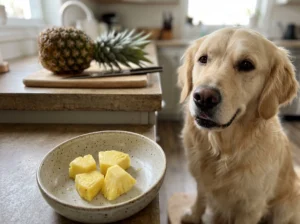
Yes, dogs can eat pineapple flesh in small amounts. It’s not toxic, and it actually offers some decent nutritional value — vitamin C, fiber, and natural enzymes. Most dogs find the sweet-tart flavor pretty appealing, though it’s got a fairly bold taste, so reactions can go either way the first time.
Like most fruit, it’s a “yes, but keep it modest” situation rather than a free-for-all.
The Parts You Actually Want to Give
Fresh pineapple flesh, cut into small pieces, is the part your dog should be eating. This is where all the nutritional benefit lives, and it’s easy enough to prepare once the outer parts are dealt with.
The Parts to Skip Entirely
The skin. Tough, fibrous, and genuinely difficult to chew or digest. Pineapple skin can cause mouth irritation and digestive upset, and it’s not something a dog’s stomach handles well even in small amounts.
The core. The central core of a pineapple is denser and tougher than the surrounding flesh, and it’s a common source of choking or blockage concerns if given to a dog. Skip it along with the skin.
The crown (leafy top). Not something dogs should be chewing on. It’s tough, spiky, and offers nothing worth the trouble.

Basically, if you’ve ever tried to eat a piece of pineapple skin or core yourself, you already know it’s not pleasant — and it’s even less appropriate for your dog.
How to Prepare Pineapple for Your Dog
- Cut off the crown, skin, and core, keeping only the soft, juicy flesh.
- Cut the flesh into small, bite-sized pieces, scaled appropriately to your dog’s size.
- Serve fresh, or freeze for a firmer treat — frozen pineapple chunks are a popular warm-weather option for the same reason frozen watermelon or mango is.
- Skip canned pineapple in syrup. If you’re using canned pineapple at all, choose one packed in its own juice with no added sugar, and even then, fresh is the better option when it’s available.
How Much Pineapple Can a Dog Have?
Pineapple is sweeter and more sugar-dense than a lot of other dog-safe fruits, so portion size matters here more than with something like blueberries.
- Small dogs: A couple of small pieces, occasionally
- Medium dogs: A small handful of pieces
- Large dogs: Slightly more, but still kept occasional
Because of the sugar content, pineapple isn’t a great daily treat, especially for dogs managing their weight or blood sugar. Treat it as a special, occasional addition rather than a routine one.
Signs Your Dog Had Too Much Pineapple
- Vomiting
- Diarrhea
- Stomach discomfort or gas
- Loose stool from the natural enzymes and fiber, especially with larger amounts
Pineapple contains an enzyme called bromelain, which can have a mild laxative-ish effect in larger quantities — worth keeping in mind if your dog seems to have a looser stool than usual after eating more pineapple than intended. Our dog diarrhea remedies guide has general at-home care tips for mild digestive upset like this, though if symptoms are severe or persist beyond a day, it’s worth checking in with your vet.
Which Dogs Should Be More Cautious With Pineapple?
Dogs with sensitive stomachs: The natural enzymes and fiber content can be a bit much for a sensitive digestive system. If this describes your dog, our dog treats for sensitive stomachs guide covers gentler alternatives worth trying first.
Diabetic dogs: Given the sugar content, pineapple should be given sparingly if at all, and ideally only with guidance from your vet on how it fits into an overall diet plan.
Dogs prone to gas or bloating: Pineapple’s fiber and enzyme content can contribute to gassiness in some dogs. If your dog is already prone to this, it might be worth skipping pineapple or keeping portions especially small.
Does Pineapple Actually Stop Dogs From Eating Poop?
This one comes up a lot, so it’s worth addressing. There’s a popular home-remedy claim that feeding a dog pineapple makes their stool taste unpleasant enough to discourage coprophagia (stool-eating behavior). This isn’t something that’s reliably supported, and it shouldn’t be relied on as an actual solution if your dog has this habit. If stool-eating is a recurring issue, it’s worth discussing with your vet, since it can sometimes point to a nutritional gap or behavioral cause worth addressing directly rather than trying to mask with pineapple.
Frozen Pineapple: A Nice Warm-Weather Option
Similar to other fruit treats, frozen pineapple chunks tend to be a hit in the summer months. The colder, firmer texture holds a dog’s interest a bit longer and offers a refreshing option on a hot day. Simply prep the flesh as described above, then freeze in a single layer before transferring to a container, so the pieces don’t clump together.
If you’re building out a rotation of frozen fruit treats for your dog, this pairs well with other options like frozen watermelon dog treats or frozen banana dog treats, giving a bit of variety through the hotter months.
Other Fruits Worth Trying
If pineapple turns out to be a hit, or if your dog isn’t a fan of the bold flavor, these fruits are also generally safe in moderation and offer some variety:
- Mango, another tropical option with a similar prep process
- Strawberries, lower in sugar and easy to portion
- Blueberries, a great low-calorie training treat
- Watermelon, hydrating and gentle on the stomach
FAQ: Can Dogs Eat Pineapple?
Can dogs eat canned pineapple? If you’re using canned, choose one packed in its own juice with no added sugar. Pineapple canned in heavy syrup should be avoided due to the added sugar content. Fresh is generally the better option when available.
Is pineapple skin dangerous for dogs? It’s not toxic, but it’s tough to digest and can cause mouth or stomach irritation. It’s best kept away from your dog entirely.
Does pineapple really stop dogs from eating their own poop? This is a popular but unreliable home remedy. If your dog has this habit, it’s worth discussing with your vet rather than relying on pineapple as a fix.
Can puppies eat pineapple? In small amounts, yes, though it’s best introduced gradually given a puppy’s smaller size and more sensitive digestive system.
Why does my dog have loose stool after eating pineapple? Pineapple contains bromelain and a good amount of fiber, both of which can have a mild loosening effect on stool, especially in larger amounts. This usually resolves on its own once the pineapple works its way through.
Is fresh or frozen pineapple better for dogs? Both are equally safe as long as the skin and core are removed. Frozen simply offers a firmer texture that some dogs enjoy more, particularly in warm weather.
The Bottom Line
Pineapple can be a fun, occasional treat for dogs who enjoy the flavor, as long as you stick to the flesh and skip the skin, core, and crown entirely. Keep portions modest given the natural sugar content, and don’t be surprised if your dog’s reaction to that first bite is somewhere between confused and delighted — pineapple’s bold flavor tends to get one extreme or the other.