The doorbell rings, and your dog turns into a furry missile. Paws on the delivery guy’s chest, muddy prints on your mother-in-law’s coat, and you standing there apologizing for the tenth time this week. Sound familiar? If you’re searching for how to stop dog jumping, you’ve already survived the embarrassing part. Now let’s fix it.
Here’s the uncomfortable truth: jumping works for dogs. Every time someone pets them, laughs, or even pushes them off while saying “no no no,” the dog learns that launching at humans gets a reaction. Our job is to make jumping boring and keeping four paws on the floor the best deal in the house. These five methods actually work — but only if everyone in the house follows them, including the guests.
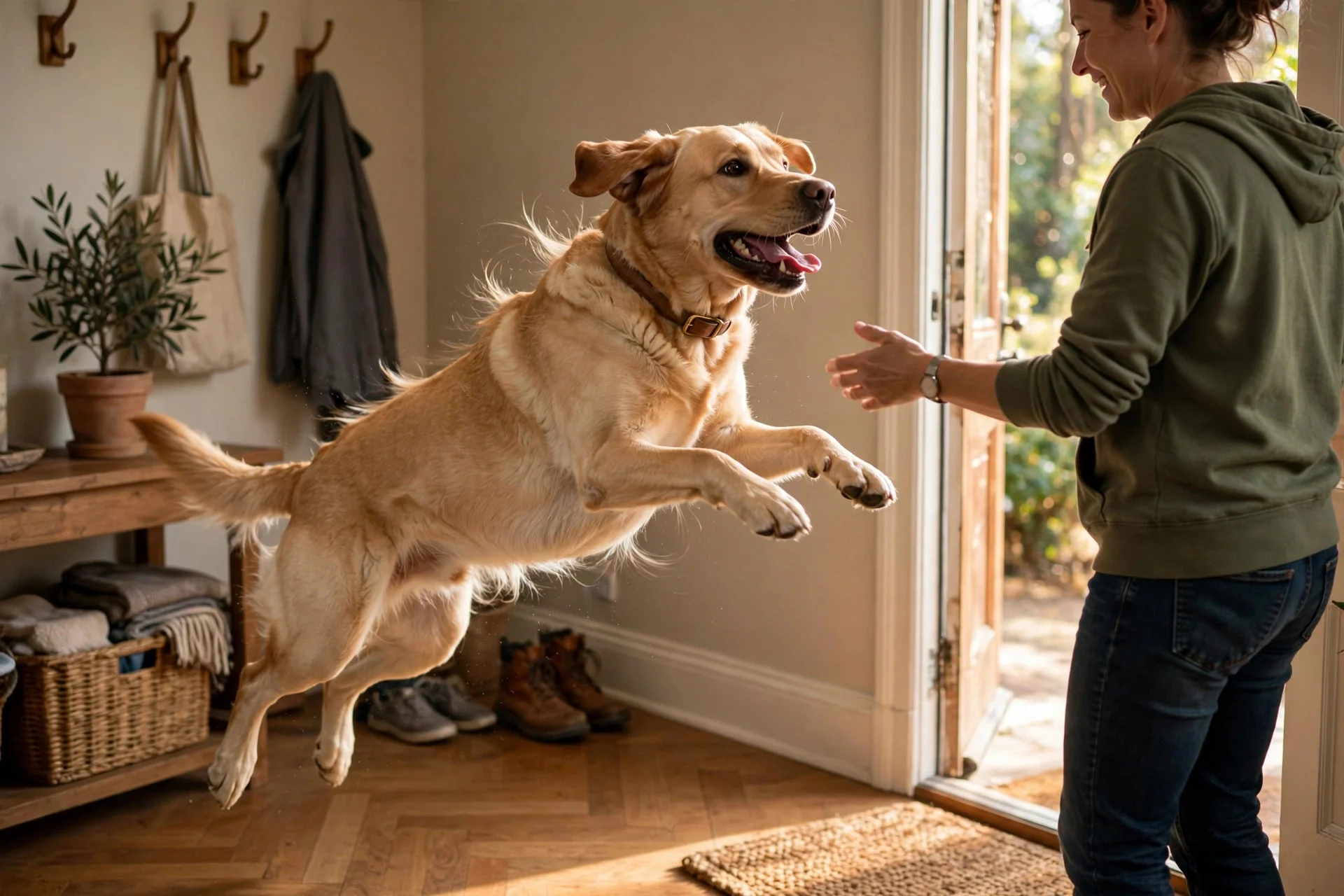
5 Ways to Stop Your Dog From Jumping
1. Become the Most Boring Human Alive
The moment your dog’s paws leave the ground, turn sideways, fold your arms, and stare at the ceiling. No eye contact, no talking, no pushing. You’re a statue. The second all four paws hit the floor, mark it with a cheerful “yes!” and deliver a treat or calm petting. Most dogs figure this out within a few sessions because jumping suddenly produces nothing — and standing produces snacks. The hard part isn’t the dog. It’s getting your family to stop greeting the jumping with giggles.
2. Reward “Four on the Floor” Before They Jump
Don’t wait for the jump. When you walk in the door, watch your dog’s body language. The instant you see them decide to stay grounded — even for one second — reward it. Toss a treat to the floor between their paws so they learn that looking down pays better than leaping up. Practice this 10 to 15 times a day in short bursts. You’re building a habit, not teaching a trick, so repetition in real moments (arrivals, greetings) beats formal sessions.
3. Teach an Incompatible Behavior: Sit to Greet
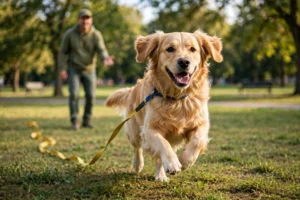
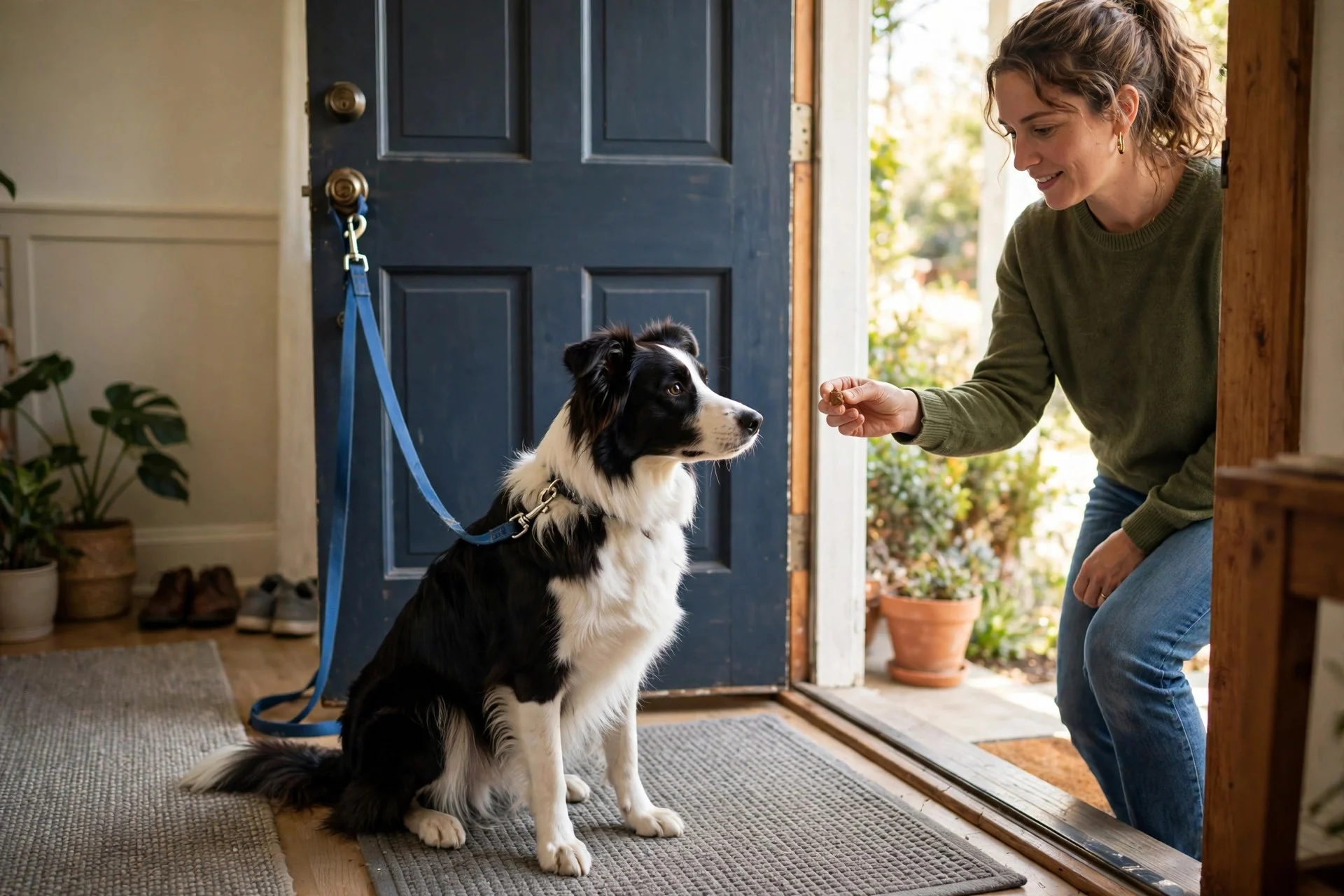
A dog can’t jump and sit at the same time. Train a rock-solid sit, then start asking for it before any greeting happens. At first, have a helper hold your dog on a leash while a “guest” (start with a family member) approaches. Dog sits? Guest moves closer and delivers a treat. Dog breaks the sit? Guest turns and walks away — no scolding, just lost opportunity. Repeat in 5-minute sessions. Within two or three weeks, most dogs start offering the sit automatically when someone walks up.
4. Manage the Environment (Stop Practicing the Bad Habit)
Every successful jump is practice for the next one. Until the training sticks, use a leash when guests arrive, or put your dog behind a baby gate with a stuffed Kong while people settle in. Let the dog join the humans only after the excitement drops — usually 5 to 10 minutes. This isn’t punishment. It’s preventing rehearsal. A dog that can’t practice jumping learns the new rules twice as fast as one who gets to jump on every third visitor.
5. Train Your Guests, Not Just Your Dog
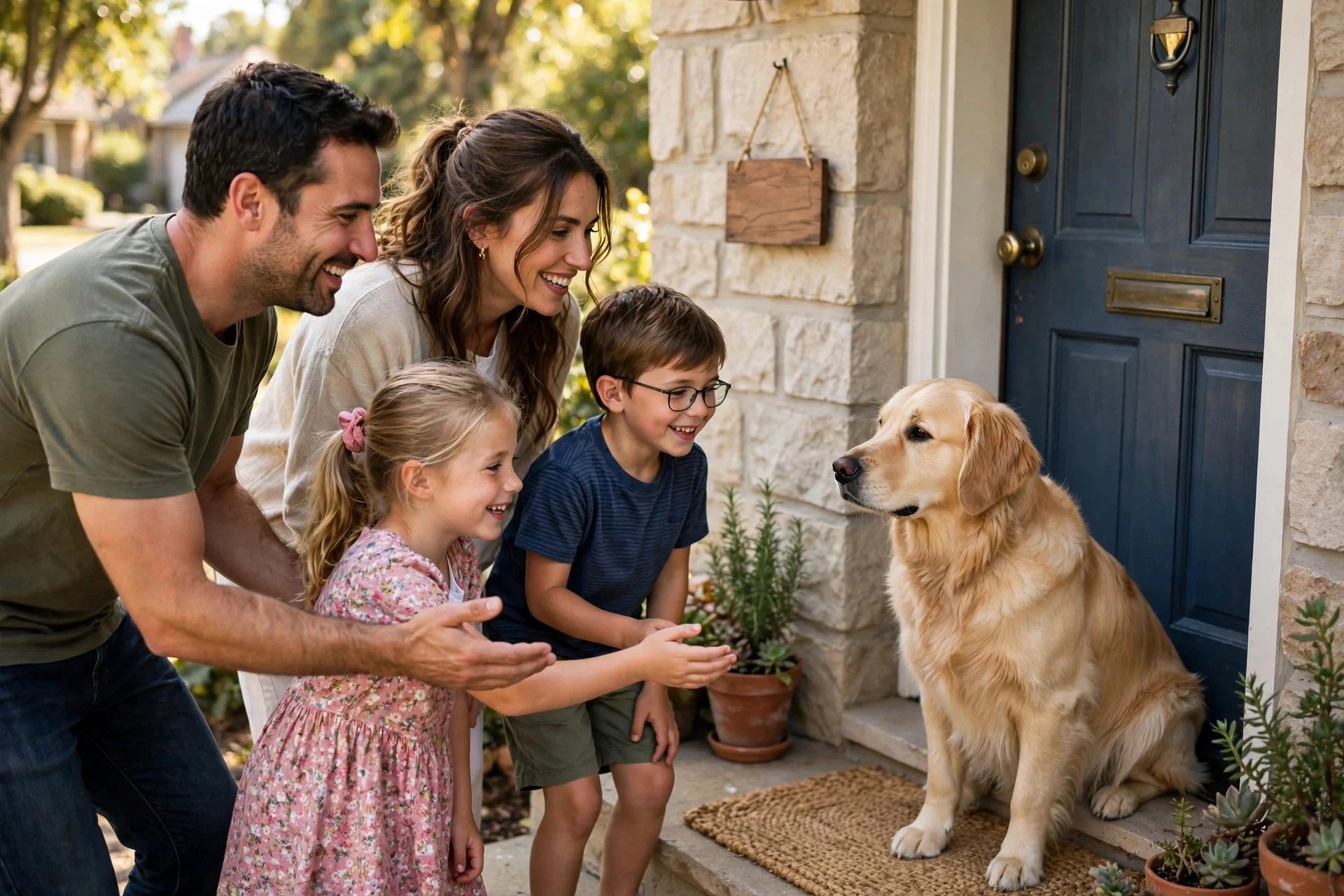
This is the one everyone skips. Put a small sign by your door: “We’re training — please ignore the dog until all four paws are down.” Ask visitors to turn away from jumping and only pet the dog when it’s calm. Most guests are happy to help once they know the rules. The ones who insist on baby-talking the dog while it climbs their legs? Your dog goes behind the gate for those visits. Protecting the training matters more than one person’s feelings.
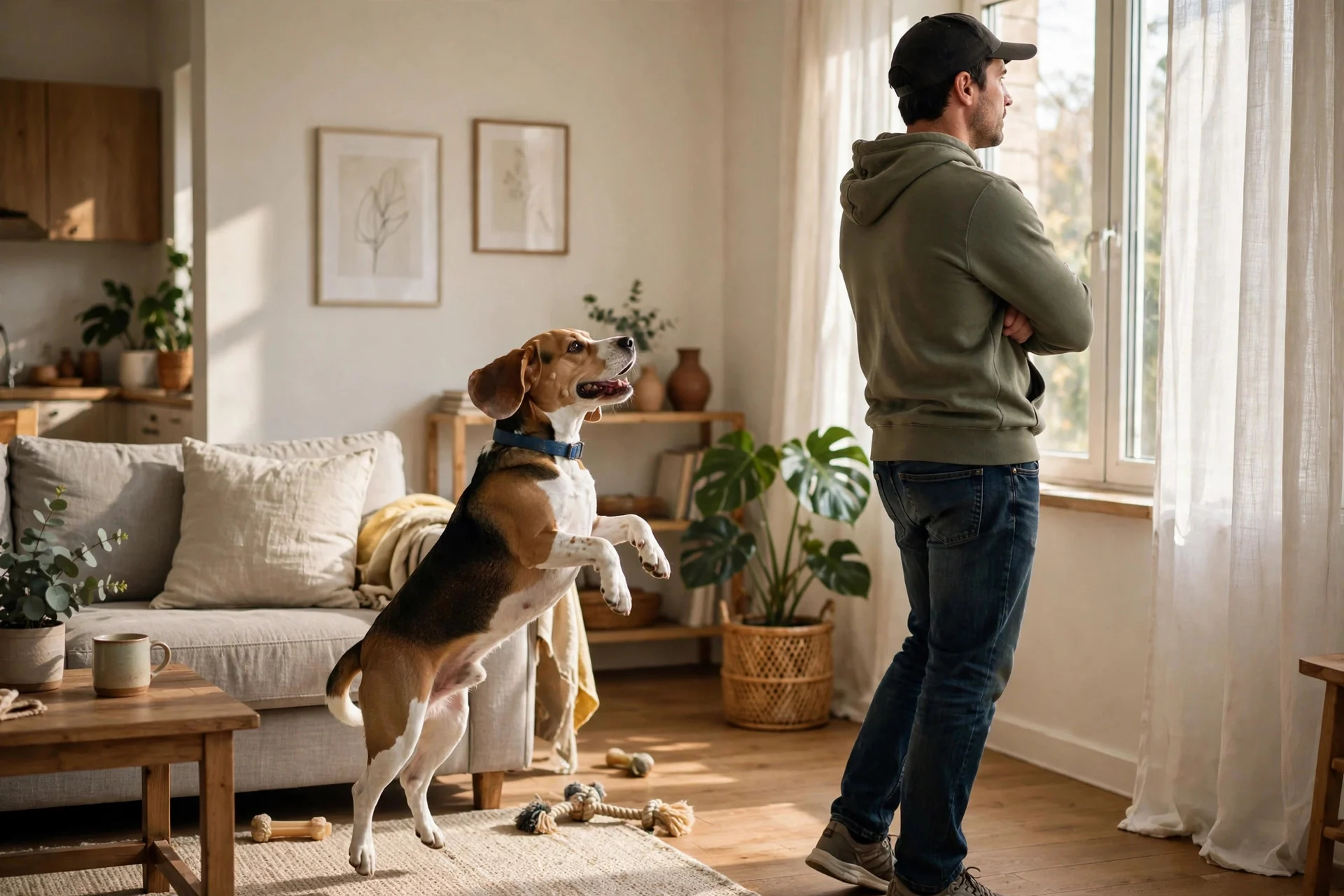
How Long Does It Actually Take?
For a young dog with a mild jumping habit, expect noticeable improvement in two to three weeks of consistent work. For an adult dog who’s been rehearsing jumps for years — especially big, social breeds — plan on six to eight weeks before it’s reliable. Consistency across every human in the house is what sets the timeline. One person who rewards jumping can undo a week of everyone else’s work.
Keep sessions short: 5 to 10 minutes, two or three times a day, plus real-life practice at every doorbell and greeting. And if your dog shuts down — goes flat, avoids you, stops offering behaviors — you’re pushing too hard. Back up to an easier step and end on a win. Training should feel like a game, not a test.
Mistakes That Make Jumping Worse
Kneeing the dog in the chest is the classic bad advice. It can injure the dog, scare them, and for many dogs it’s just more exciting physical contact — which is what they wanted. Same with yelling “no” while pushing them off; to a dog, that’s a wrestling invitation.
Another common mistake: only training when guests come over. That’s like only practicing piano at the recital. Drill the basics daily in boring moments so the behavior holds up in exciting ones. And don’t forget exercise — a dog with an hour of pent-up energy is far harder to keep grounded than one who’s had a good walk and a sniff around the block.
FAQs
My dog only jumps on certain people. Why?
Because those people reward it. It’s almost always the visitor who squeals, bends down, and gives attention — or kids, who are face-height and impossible to resist. Brief those people specifically, or manage the dog around them until the habit is solid.
Should I use a spray bottle or shake can?
I’d skip both. Startling punishments can suppress jumping in the moment but often create new problems — fear of guests, anxiety at the door, or a dog that only behaves when you’re holding the bottle. Reward-based methods take a little longer but the results actually last.
What about small dogs? Jumping seems harmless.
A 10-pound dog launching at a toddler’s face or an elderly neighbor is not harmless. And small dogs are the worst offenders precisely because everyone laughs instead of training. The same five methods work — you just need less floor space.
My rescue dog jumps out of anxiety, not excitement. Different approach?
Partly. The mechanics are the same (reward calm, manage greetings), but go slower and watch stress signals — lip licking, yawning, tucked tail. Anxious dogs need confidence-building first: short, positive sessions and zero punishment. If the anxiety is severe, loop in a certified behaviorist.
Jumping is one of the most fixable behavior problems out there, because it’s almost always about attention — and you control the attention. Pick one method, get the whole household on board, and give it three honest weeks. Your mother-in-law’s coat will thank you.