It’s 2 a.m. The puppy is screaming in the crate. You’re lying awake wondering if you’re torturing a baby animal or building character. Every new puppy owner hits this night. Here’s what I wish someone had told me: when you crate train puppy at night the right way, the crate becomes the place your puppy wants to be — not a tiny jail cell they dread.
The secret is that nighttime crate training isn’t really about the night. It’s about everything you do during the day to make the crate feel safe, plus a realistic plan for those first two weeks of interrupted sleep. These seven tips cover both. And rule number one, the one that underpins everything: the crate is never, ever used as punishment.
7 Tips for Crate Training at Night
1. Make the Crate Awesome During the Day First
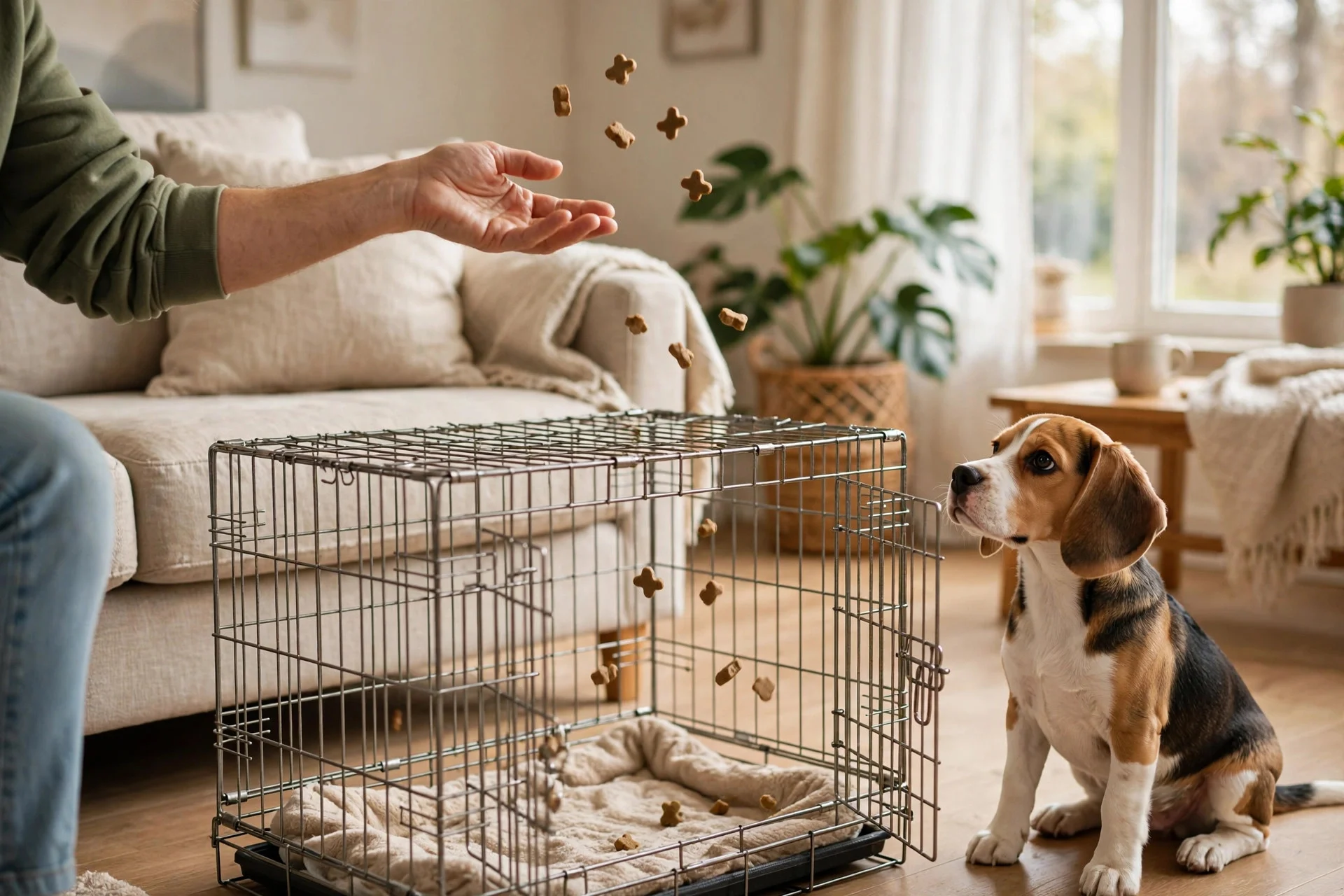
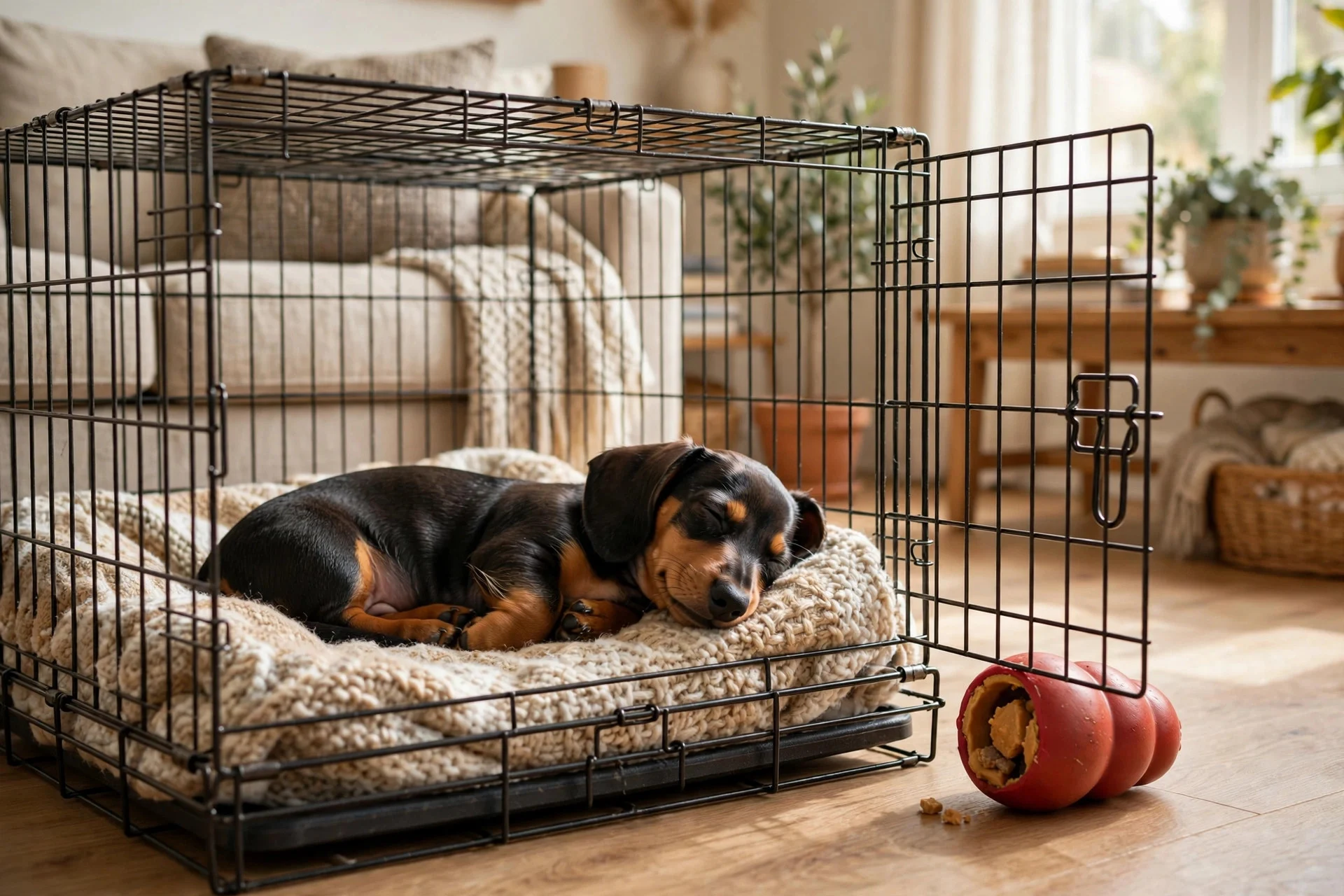
Don’t wait until bedtime to introduce the crate. During the day, toss high-value treats inside and let your puppy wander in and out freely — door open, zero pressure. Feed meals in the crate. Hide a stuffed Kong in there. You want at least two or three days of “crate equals amazing things” before the first overnight. A puppy who has chosen to nap in the crate voluntarily during the day will protest far less at night. Skip this step and you’re asking a baby to sleep in a strange box. Would you?
2. Tire Them Out (The Right Way) Before Bed
A puppy with unspent energy cannot settle. In the hour before bed, do a play session — fetch, tug, a short training game — then follow it with 15 minutes of calm-down time: gentle petting, a chew, dim lights. Think toddler bedtime routine. The goal is a puppy who’s pleasantly tired, not wired. Avoid wild play right before crating; you’ll just lock in a zoomie-filled box. Most puppies do best with bedtime between 10 and 11 p.m., after a final potty break.
3. Set Up the Crate Like a Den, Not a Cage
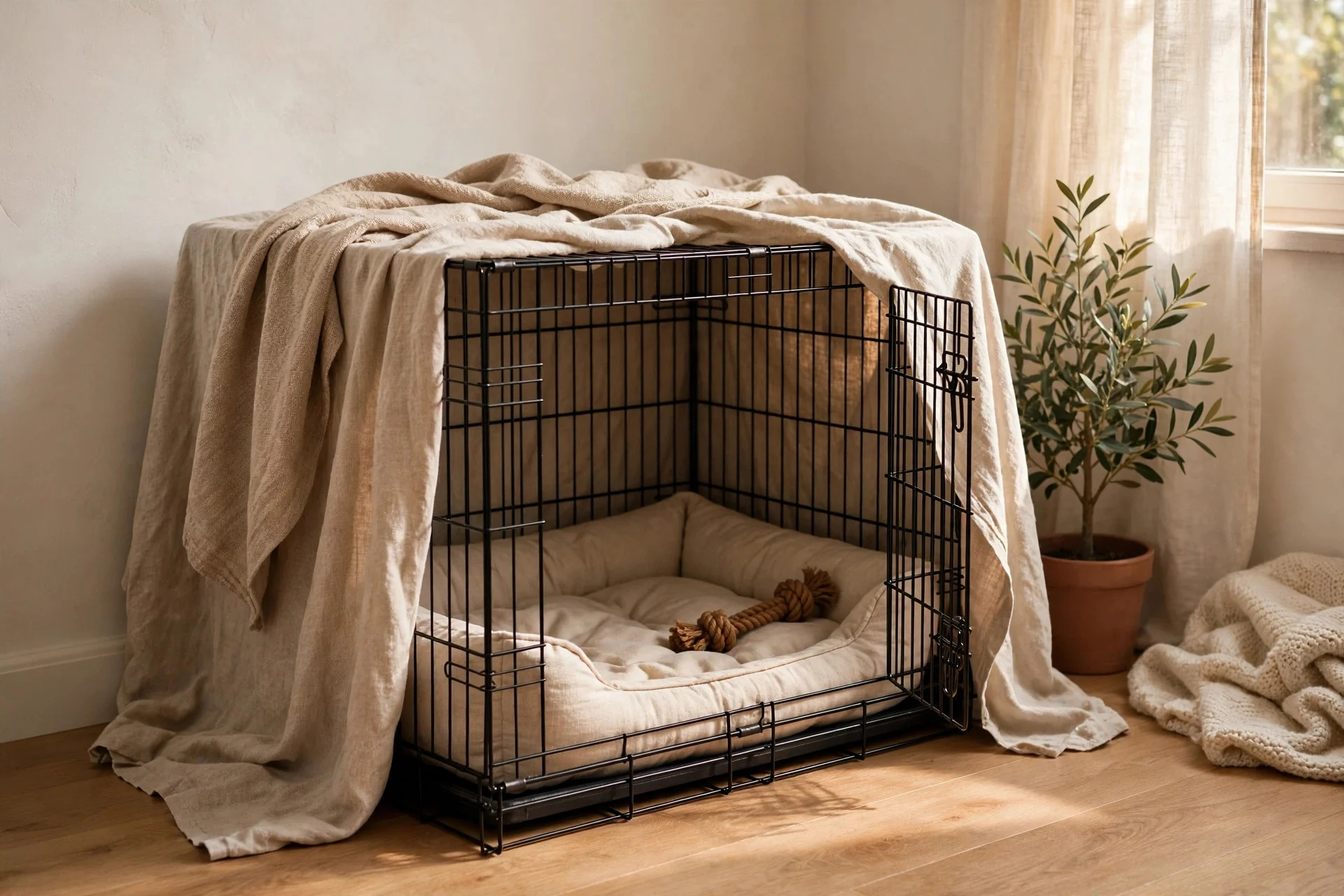
Cover three sides with a blanket to make it dark and den-like, leaving the front open for airflow. Add a soft bed, a safe chew, and something that smells like you (an old t-shirt works). Keep the crate in your bedroom for the first couple of weeks — hearing you breathe makes an enormous difference to a puppy who just left their littermates.
4. Plan for Potty Breaks (Set Your Alarm)
A young puppy physically cannot hold it all night. The rule of thumb: age in months plus one equals max hours between breaks, so an 8-week-old puppy needs out every 2 to 3 hours. Set alarms. When the alarm goes, carry the puppy straight outside (don’t let them walk — they’ll pee on the way), keep it boring and businesslike, then straight back to the crate. No play, minimal light, no fanfare. You’re teaching them that nighttime breaks are functional, not social events. Most puppies sleep through the night by 12 to 16 weeks.
5. Respond to Crying Correctly (This Is the Hard Part)
Here’s how to tell the difference: a sudden sharp whine after sleeping usually means “I need to pee” — take them out immediately. Rhythmic, escalating crying right after crating usually means “I don’t want to be alone” — wait it out. But never let a puppy cry to the point of panic — panting, drooling, frantic clawing. That’s distress, not protest. Sit by the crate and let them sniff your fingers through the bars until they’re calm.
6. Keep Arrivals and Departures Boring
When you crate the puppy at night, don’t make a big emotional goodbye. Just a calm “night night,” a treat tossed in, door closed. In the morning, wait for a moment of quiet before opening the door — even two seconds of silence — then greet calmly. Big hellos and goodbyes teach the puppy that separations are dramatic events. Boring in, boring out. Within a week or two, crating at night becomes as unremarkable as brushing your teeth.
7. Never Use the Crate as Punishment (Ever)
This is the rule that makes all the other rules work. The moment the crate becomes “where you go when you’re bad,” nighttime becomes a punishment and the crying gets ten times worse. If your puppy needs a time-out during the day, use a different space — a gated kitchen or pen. The crate stays sacred: treats, meals, chews, sleep, and nothing else. Protect this association fiercely, especially with kids in the house who might be tempted to send the puppy “to their room.”
What the First Two Weeks Actually Look Like
Let’s be honest: nights one through three are usually rough — crying, multiple potty breaks, little sleep for you. Nights four through seven typically improve noticeably. By week two, most puppies sleep 4 to 5 hour stretches, and by 12 to 16 weeks many sleep through the night.
Keep a simple log: bedtime, wake times, whether they pottied. Patterns emerge fast, and you’ll spot when to drop the 2 a.m. alarm. If your puppy shuts down during the day — lethargic, won’t eat — that’s not a training problem, that’s a vet visit.

Mistakes That Make Nights Worse
The biggest mistake is a crate that’s too big. A crate should be just large enough to stand, turn, and lie down — any bigger and the puppy will pee in one corner and sleep in the other. Use the divider panel that comes with most wire crates.
Another classic: giving up after two bad nights and letting the puppy sleep in your bed “just until they’re older.” As a 3 a.m. surrender, it teaches the puppy that persistence gets them exactly what they want. Decide your sleeping arrangement in advance and stick with it for at least three weeks before reevaluating.
FAQs
Should the crate be in my bedroom or another room?
Your bedroom for the first two to three weeks, no question. Proximity reduces crying dramatically, and you’ll hear genuine potty needs faster. Once the puppy sleeps through the night reliably, you can gradually move the crate to its permanent spot — move it a few feet per night, not across the house in one go.
My puppy pees in the crate every night. What’s wrong?
Usually one of three things: the crate is too big, you’re waiting too long between breaks, or there’s a urinary issue. Rule out medical causes first if it’s sudden or excessive. Then shrink the space and set more frequent alarms. Never punish crate accidents — the puppy isn’t being defiant, they just couldn’t hold it.
How long is too long in the crate at night?
For an 8-week-old puppy, 2 to 3 hours between breaks. This stretches naturally with age — by 4 months, most manage 6 hours; by 6 months, a full night. During the day, the guideline is roughly one hour per month of age, maxing around 4 to 5 hours for young puppies.
What if my puppy screams for an hour straight?
An hour of sustained screaming is too much — something’s wrong with the setup, not the puppy. Check: are they overtired or undertired? Do they need to potty? Is the crate comfortable? Did you skip the daytime positive association? Go back to basics, and consider sleeping next to the crate for a few nights. There’s no prize for toughing it out while your puppy panics.
Those first sleepless nights feel endless, but they’re genuinely short. Most owners look back a month later and laugh at how dramatic week one felt. Build the positive association, keep the routine boring and predictable, and protect the crate’s reputation like it matters — because to your puppy, it does.