Sweet potatoes might be the perfect dog chew: naturally sweet, packed with fiber and vitamins, and tough enough when dehydrated to keep a dog busy. One ingredient, no mystery chemicals, and a fraction of the cost of store-bought chews. If you’ve never dehydrated anything before, this is the ideal first project.
These dehydrated sweet potato dog treats come in five variations — from basic chews to training-sized bites. All you need is sweet potatoes, an oven or dehydrator, and a little patience. Here’s how to make them right.
5 Dehydrated Sweet Potato Chew Variations
1. Classic Sweet Potato Chews
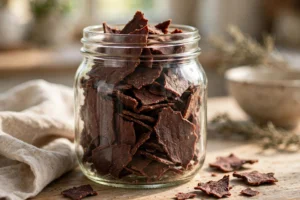
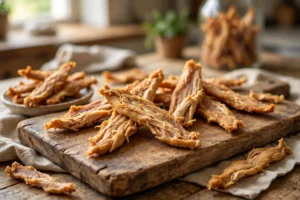
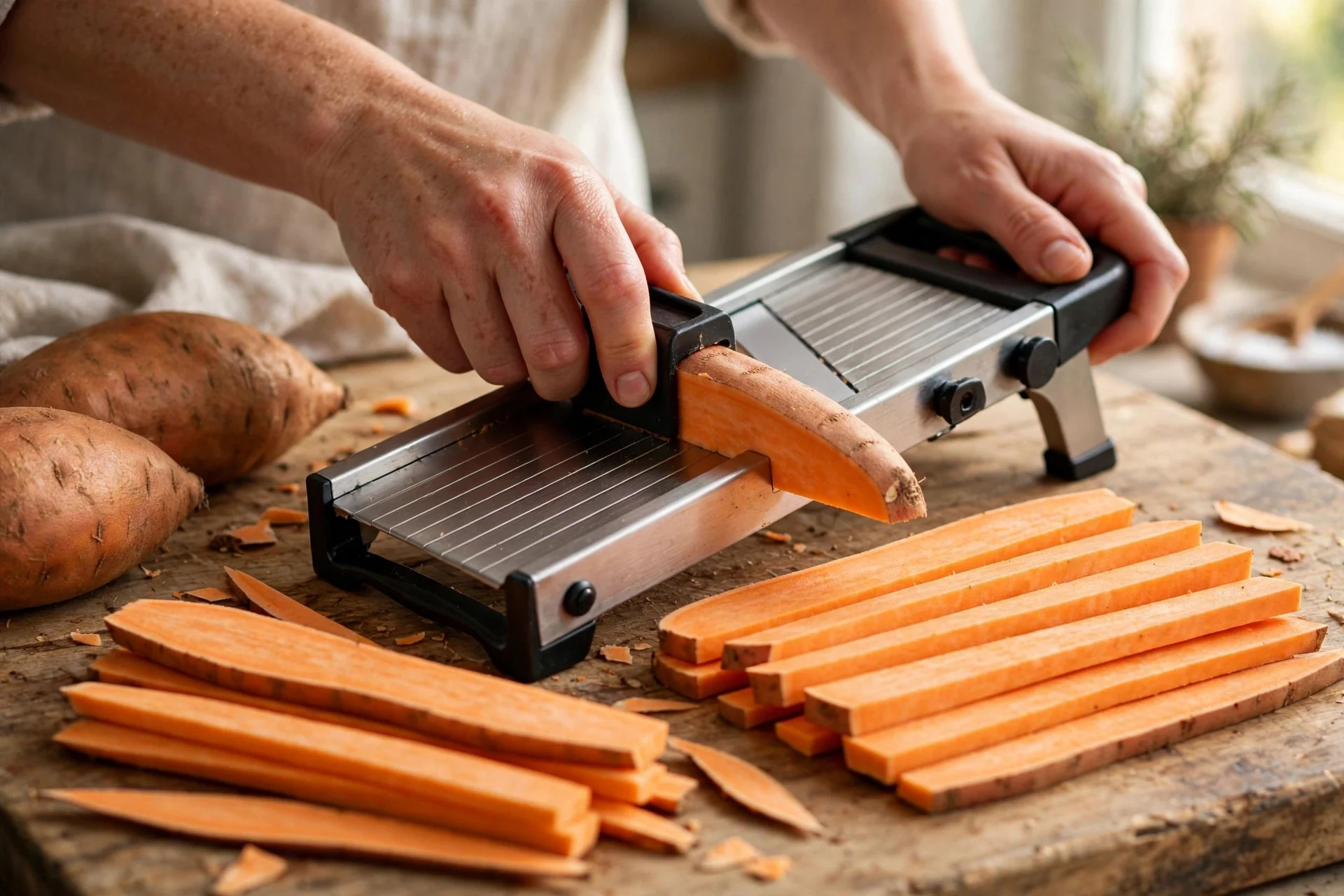
The baseline that everything else builds on. Wash two large sweet potatoes and slice them lengthwise into ¼-inch planks — thick enough to be chewy, thin enough to dry through. A mandoline makes this fast and even, which matters because uneven slices dry unevenly. Arrange on a dehydrator tray or a parchment-lined baking sheet without overlapping. Dehydrate at 135°F for 6–8 hours, or bake at 200°F for 2½–3 hours, flipping halfway. They’re done when they’re leathery and bend without snapping — pliable, not brittle. Let them cool completely before storing. These keep 2–3 weeks in an airtight container at room temperature.
2. Sweet Potato Training Bites
Same sweet potato, smaller format. Dice peeled sweet potato into ½-inch cubes — the size of a large pea. These dehydrate faster (4–5 hours at 135°F) and come out as chewy little nuggets perfect for training rewards. The small size means they dry more evenly, so this is actually the most foolproof variation. Use them like commercial training treats: a pocketful for walks, a handful for training sessions. Because they’re single-ingredient and low-fat, you can be more generous than with rich treats. Store the same way as the classic chews.
3. Cinnamon-Dusted Chews
For dogs who like a little extra. Prepare the classic planks as above, then lightly dust both sides with Ceylon cinnamon before dehydrating — about ½ teaspoon total for two potatoes. The cinnamon adds an appealing smell and a subtle flavor dogs seem to enjoy, plus its mild antioxidant properties. Use Ceylon, not cassia, since these are meant as a regular treat (cassia’s coumarin adds up with daily use). The dusting is light enough that it won’t affect drying time. These smell incredible coming out of the dehydrator — fair warning, your kitchen will smell like a bakery.
4. Peanut Butter-Coated Chews
The high-value version. Make the classic chews first and let them cool completely. Then spread a THIN layer of xylitol-free peanut butter on one side of each chew — thin is the operative word; you’re flavoring, not frosting. Return them to the dehydrator for another 1–2 hours at 135°F to set the coating. The result is a chew with a savory-sweet shell that drives dogs wild. Because of the peanut butter, these are richer — treat them as a special reward, not an everyday chew. And the xylitol rule is absolute: check the label every time. Store in the fridge for up to two weeks since the peanut butter coating is more perishable than plain dried sweet potato.
5. Sweet Potato & Apple Chips
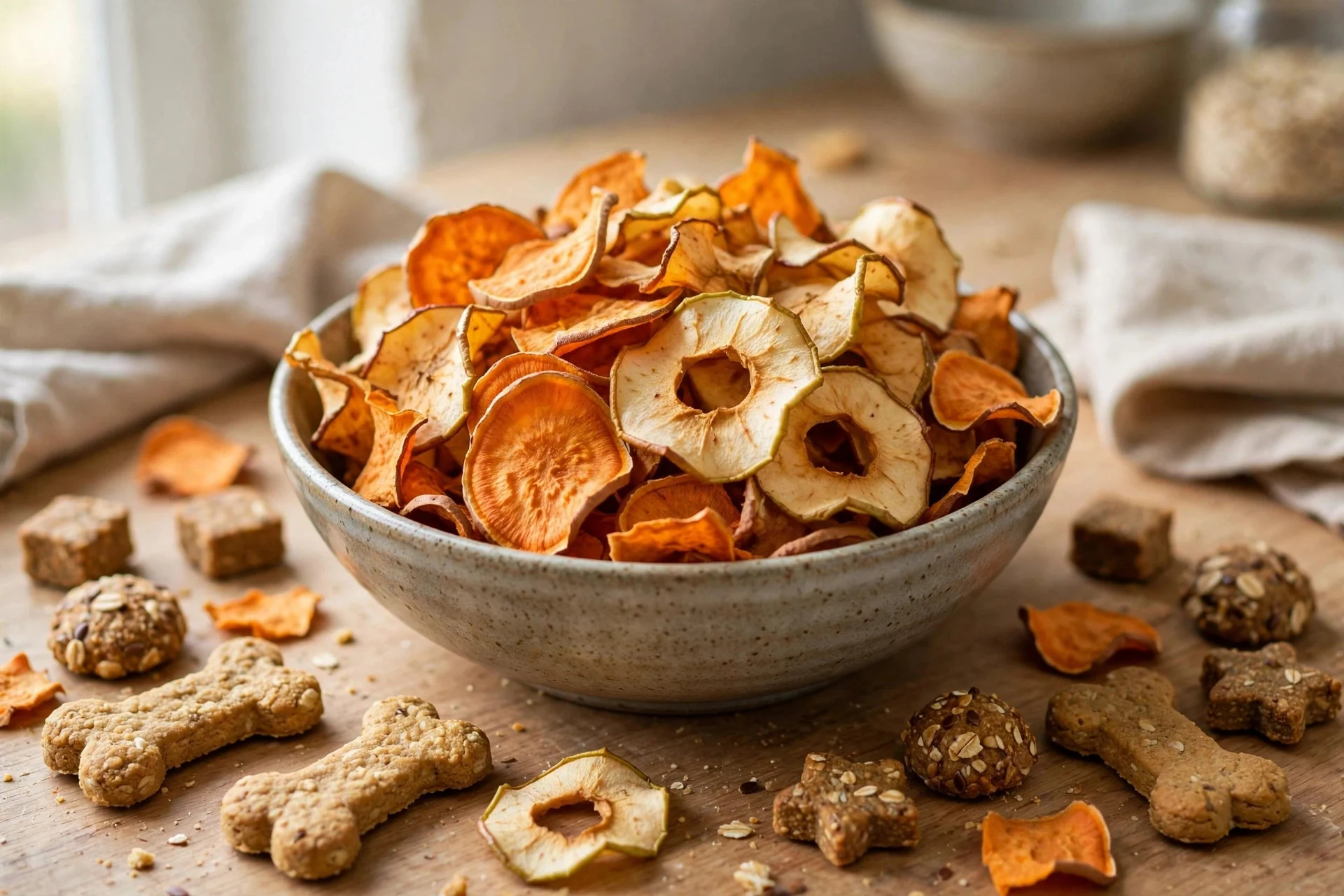
The combo chew. Slice sweet potato into thin rounds (⅛ inch — thinner than the planks) and core an apple, slicing it into matching rounds. Alternate them on the tray. The apple adds a different sweetness and a slightly crispier texture that contrasts nicely with the chewy sweet potato. Both dry at the same rate at 135°F (about 5–6 hours for this thickness). Remove apple seeds first — they contain amygdalin, which isn’t great in quantity. The mixed bag looks beautiful too, which matters if you’re gifting these. Dogs don’t care about presentation, but the humans receiving them do.
Dehydrating Tips for Perfect Chews
Uniform thickness is everything. The number one reason homemade chews fail is uneven slicing — thick spots stay moist while thin spots turn to charcoal. A mandoline slicer is the best $15 you’ll spend on dog treats. Use the hand guard. Seriously.
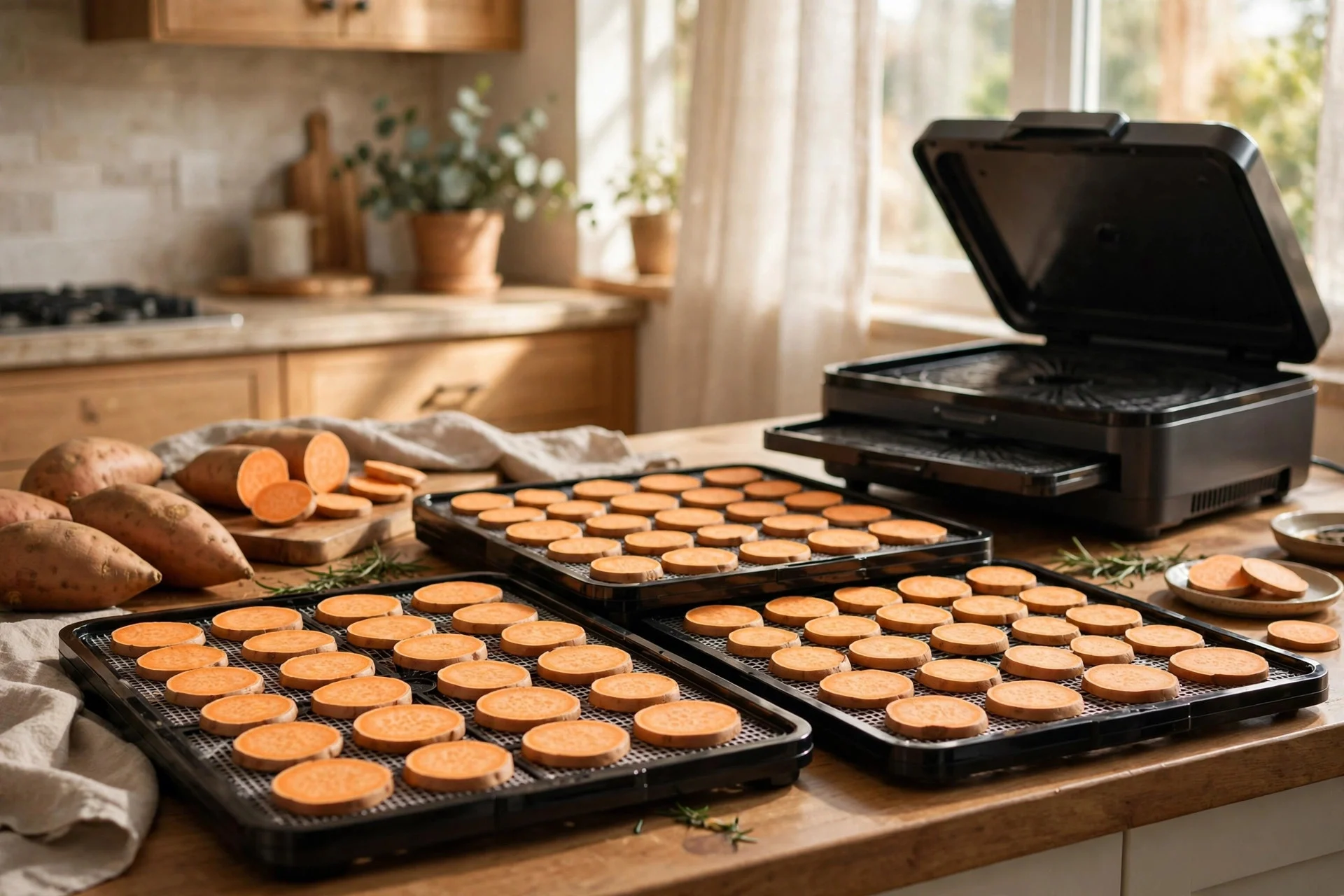
Don’t rush with higher heat. It’s tempting to crank the oven to 300°F and be done in an hour, but high heat cooks the outside while the inside stays moist — and moisture means mold. Low and slow (135°F dehydrator, 200°F oven max) dries all the way through. Patience is the ingredient most people skip.
Test for doneness properly. A finished chew should be leathery and flexible — it bends without breaking and feels dry to the touch with no soft or cool spots. If any part feels damp or cool, give it another hour. Under-dried chews are the ones that mold in the jar.
Storage and Shelf Life
Cool completely before storing — this is non-negotiable. Warm chews in a sealed container create condensation, and condensation creates mold. Spread them on a rack for at least an hour after dehydrating.
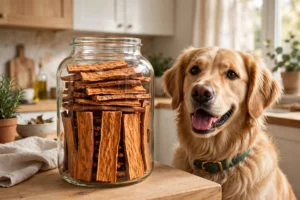
Room temperature works for plain chews: an airtight jar or zip bag in a cool, dark pantry keeps them good for 2–3 weeks. Add a food-safe silica packet if you have one — it absorbs any residual moisture. The fridge extends that to a month, and the freezer to three months (thaw at room temperature before serving).
Peanut butter-coated chews always go in the fridge, and use them within two weeks. The added fat shortens shelf life significantly. When in doubt, sniff — rancid or off smells mean toss the batch.
Mistakes to Avoid
Don’t use marshmallow-soft slices. If your “chews” are still soft and pliable like fresh sweet potato, they’re not done. They need to be leathery and dry throughout. Soft spots = moisture = mold risk.
Don’t season them like human food. No salt, no brown sugar, no marshmallow, no “candied” preparations. Dogs want the sweet potato itself — the natural sugars caramelize slightly during dehydrating and that’s plenty. Every added ingredient is a potential problem.
Don’t forget the xylitol check on peanut butter. Every jar, every time. It bears repeating because it’s the single most dangerous mistake in this entire article. Xylitol-free isn’t a suggestion — it’s the rule.
FAQs
Can I make these without a dehydrator?
Yes — a regular oven at its lowest setting (usually 170–200°F) works fine. Prop the door open slightly with a wooden spoon to let moisture escape. It takes a bit longer than a dehydrator, but the results are the same.
Are sweet potato chews safe for puppies?
Yes, once they’re eating solid food well. Cut the chews smaller for tiny mouths, and supervise — puppies are enthusiastic chewers who occasionally bite off more than they can handle.
How do I know if my chews have gone bad?
Look for mold (fuzzy spots), off smells, or unusual softness/moisture. When in doubt, throw them out — sweet potatoes are cheap, vet visits aren’t.
Can I use white potatoes instead?
Stick to sweet potatoes. White potatoes must be cooked thoroughly (raw white potato contains solanine), and they’re less nutritious. Sweet potatoes are safer and dogs prefer the taste.
Five variations, one ingredient at the core, and a treat that’s healthier and cheaper than anything in the pet aisle. Start with the classic chews, get your technique dialed in, and then play with the variations. Your dog won’t mind being the taste tester.