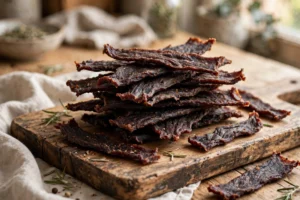
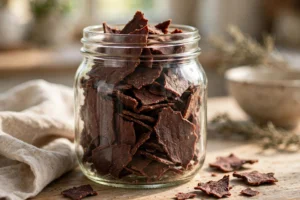
If you’ve ever watched your dog demolish a bag of store-bought chicken jerky, you know the look: intense, focused, gone in sixty seconds. The problem is the ingredient list reads like a chemistry exam, and half the time you have no idea where the chicken actually came from. These dehydrated chicken dog treats fix all of that — one or two ingredients, made in your kitchen, and your dog will act like you’ve invented fire.
Dehydrating chicken isn’t complicated, but it does have one non-negotiable rule: every single piece needs to hit 165°F internally. No exceptions, no “it looks done,” no shortcuts. Chicken that undercooks is a salmonella risk for your dog and for everyone who touches the treats. Get a cheap instant-read thermometer and use it. Once you’ve got that handled, the rest is easy.
8 Dehydrated Chicken Treat Recipes
1. Plain Chicken Breast Strips
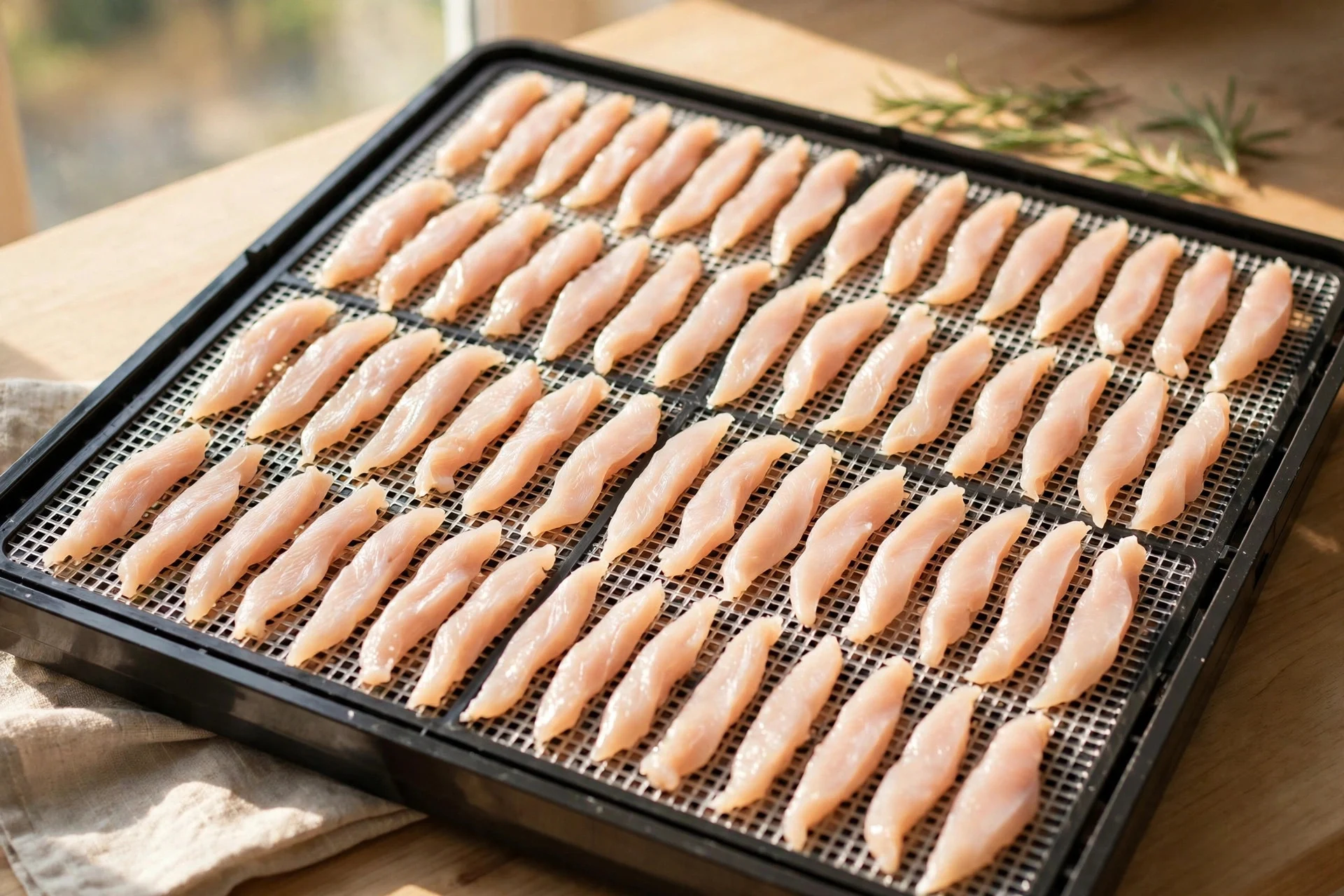
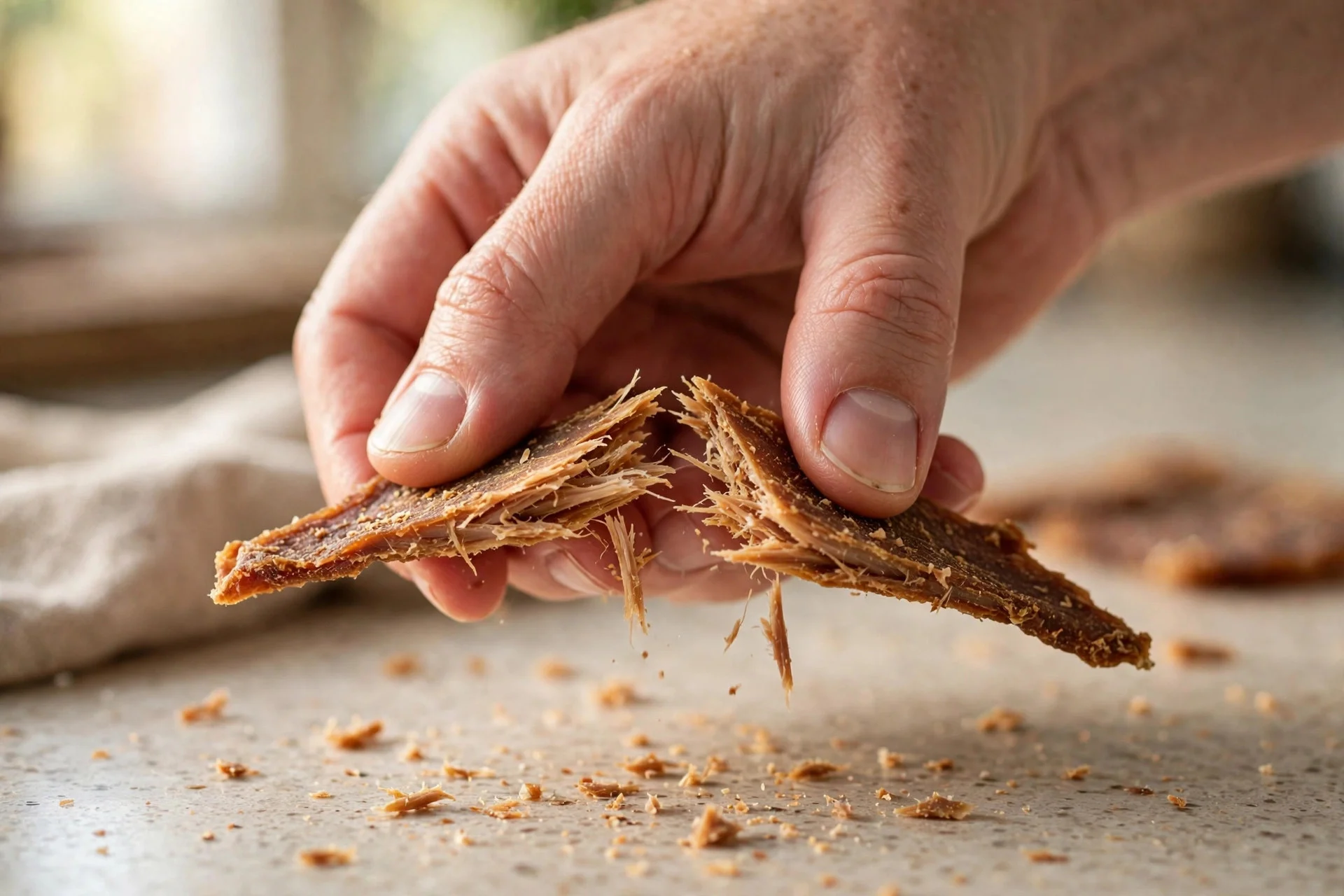
The gold standard. Slice boneless, skinless chicken breast into ¼-inch strips against the grain — thinner means they dry faster and more evenly. Lay them on dehydrator trays without touching. Dehydrate at 160°F for 4–6 hours, flipping halfway. When done, they should snap when you bend them, not feel rubbery. Check a thick piece with your thermometer: 165°F internal. My dogs would sell me for these. Store in an airtight container for up to two weeks.
2. Chicken Breast Coins
Same chicken, different shape — and shape matters for small dogs. Slice breast into thin coins, about the size of a quarter, ⅛-inch thick. These dry in 3–4 hours at 160°F and make perfect training rewards. One dog I fostered was a senior with about six teeth left; these thin coins softened up in his mouth and he could actually eat them. Confirm 165°F on the thickest coin before you call it done.
3. Chicken Tender Jerky Twists
Chicken tenders have a natural seam down the middle. Cut along it, then twist each half loosely before dehydrating. The twist creates more surface area, so they dry in about 4 hours at 160°F with a nice chewy-not-brittle texture. Great for dogs who like to work at a treat instead of inhaling it. 165°F internal — say it with me now, every time.
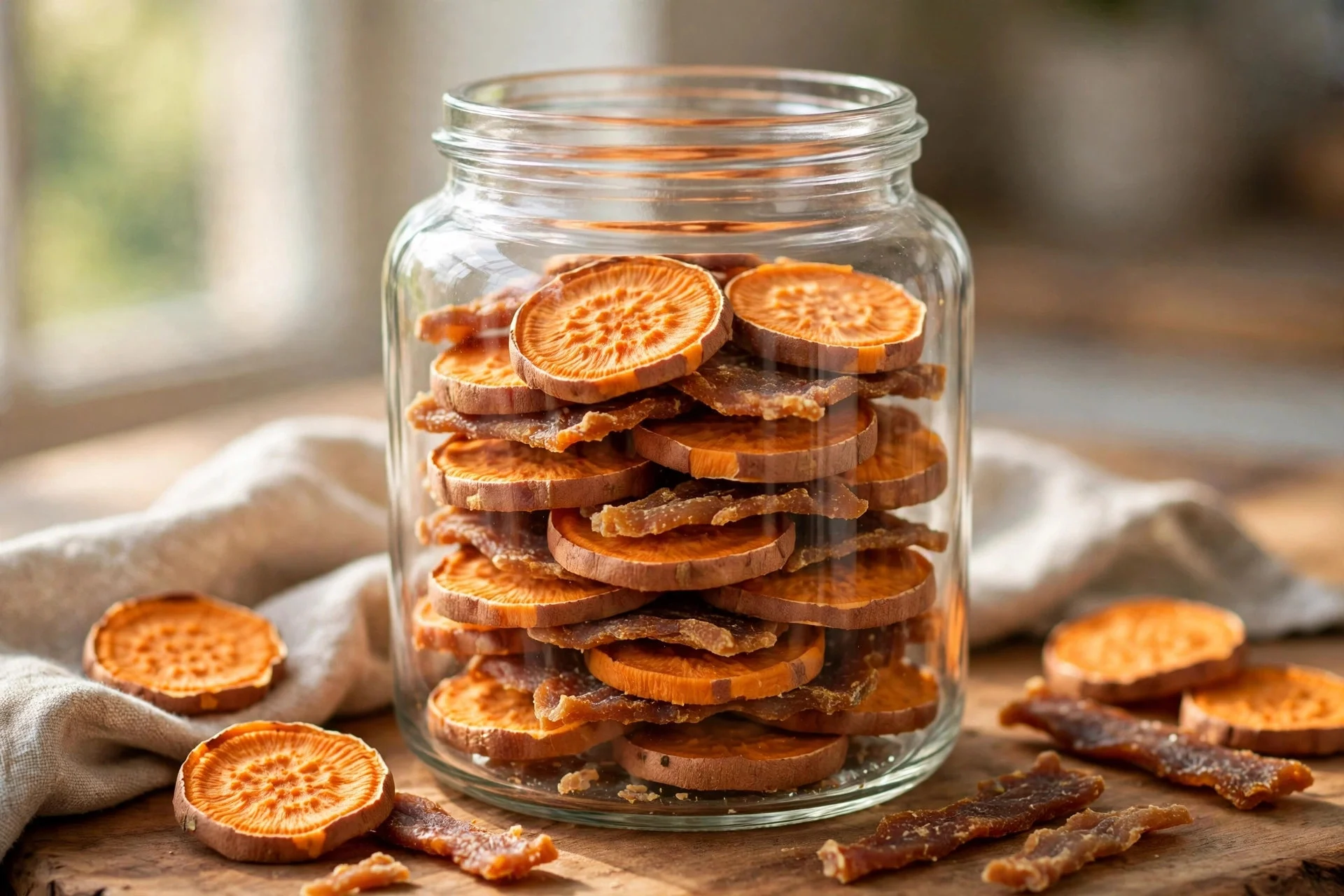
4. Chicken and Sweet Potato Jerky
Slice sweet potato into ¼-inch rounds and top each with a thin chicken strip. The two dry together in 5–6 hours at 160°F, and the sweet potato adds fiber while the chicken provides the protein punch. These are a little higher in natural sugar, so keep them as occasional treats rather than daily rations. Verify 165°F on the chicken portion — the potato insulates it slightly, so check carefully.
5. Chicken Liver Chips
Chicken livers are nutrition bombs — vitamin A, iron, B vitamins — but that vitamin A means moderation is key. A few chips per day max, not a whole meal’s worth. Slice livers ¼-inch thick, dehydrate at 160°F for 5–6 hours until completely dry and brittle. They’ll smell intense. Your dog will lose their mind. Store them well-sealed because the smell is aggressive. 165°F, as always.
6. Chicken Gizzard Bites
Gizzards are cheap, tough, and dogs go absolutely feral for them. Trim off any silverskin, cut into bite-sized pieces, and dehydrate at 160°F for 6–8 hours — they’re dense, so they take longer. The finished bites are satisfyingly chewy and basically indestructible in a treat pouch. Confirm 165°F on the largest piece. These were my old Lab’s all-time favorite, and he had strong opinions about treats.
7. Turmeric Chicken Strips
Toss your ¼-inch chicken strips in a tiny amount of turmeric — about ½ teaspoon per pound of chicken — before dehydrating. Turmeric is anti-inflammatory in small amounts, and it won’t stain your dog’s fur if you keep the dose light. Dehydrate at 160°F for 4–6 hours. The yellow tint is normal. Same rule: 165°F internal temp on every batch. Don’t add black pepper — dogs don’t need it and some are sensitive to it.
8. Chicken and Pumpkin Bites
Spread a thin layer of plain pumpkin purée (not pie filling — check the label) on chicken breast strips before dehydrating. The pumpkin dries into a chewy coating that’s gentle on sensitive stomachs. 4–5 hours at 160°F. These are my go-to for road trips because they don’t crumble into dust in the treat bag. Verify 165°F on the chicken as always.
Practical Dehydrating Tips
Start with cold chicken straight from the fridge — it slices thinner and more evenly than warm chicken. Partially freeze the breast for 30 minutes before slicing and you’ll get perfect ¼-inch strips every time. Keep pieces uniform in size so everything finishes at the same time; otherwise half your batch is jerky and half is chicken leather.
Don’t overcrowd the trays. Air circulation is the whole game in dehydrating. If pieces touch, they trap moisture and create spots that never fully dry — that’s where bacteria throw a party. And always, always check the thickest piece with your thermometer. If it’s 165°F, the rest are fine.
Mistakes That Ruin a Batch
The biggest mistake is pulling treats early because they “look done.” Chicken that bends without snapping still has moisture inside, and moisture means mold within a week. When in doubt, give them another hour. The second biggest mistake is seasoning like you’re cooking for humans — no onion powder, no garlic powder, no salty rubs. Dogs don’t need it, and onion and garlic are toxic to them even in dried form.
Also: don’t use chicken with added “flavor solutions” or injected broth. Read the package. Plain chicken, nothing else. And never dehydrate ground chicken into patties unless you’re confident about your temp checking — thicker ground pieces are harder to verify.
FAQs
Do I need a dehydrator, or can I use my oven?
Your oven works fine. Set it to its lowest temperature (usually 170°F) and prop the door open an inch with a wooden spoon for airflow. It takes a bit longer than a dehydrator and uses more energy, but the treats come out the same. Still verify 165°F internal.
How long do homemade dehydrated chicken treats last?
About two weeks in an airtight container at room temperature, up to a month in the fridge. If you see any moisture inside the container or smell anything off, toss the batch. Vacuum-sealed bags buy you more time.
Can puppies eat dehydrated chicken treats?
Yes, but break them into small pieces — they’re chewy and a whole strip is a choking risk for a little puppy. And as with any treat, keep them under 10% of daily calories.
Why does my chicken smell weird while dehydrating?
Mild chicken smell is normal. Sour or rotten smell means the meat was already turning before you started — raw chicken only keeps 1–2 days in the fridge, so start with fresh meat.
Dehydrated chicken treats are one of those rare wins: dead simple, dirt cheap per batch, and genuinely better than most of what you’d buy. Just respect the thermometer, keep it plain, and watch your dog lose all composure. Totally worth it.