Dogs often need a cone after surgery, injury, or skin irritation. The cone stops them from licking or biting wounds, which helps healing. But many dogs hate the traditional plastic cone. It can be uncomfortable, noisy, and stressful.

That is why many owners look for homemade alternatives. A DIY dog cone can be softer, cheaper, and more comfortable while still doing the job.
This guide explains when to use a cone, what to consider, and 5 easy homemade dog cone ideas you can make at home.
What Is a Dog Cone?
A dog cone, also called an Elizabethan collar, is a protective device worn around a dog’s neck to prevent licking, scratching, or biting injured areas.
It is commonly used after surgery or during skin problems.
When Does a Dog Need a Cone?
A cone is necessary in situations like:
- After surgery
- Skin infections
- Wounds or cuts
- Hot spots
- Allergies causing excessive licking
Preventing licking is important because it can delay healing and lead to infections such as Dermatitis in dogs.
Why Choose a Homemade Dog Cone?
More Comfortable
DIY cones are often softer than plastic ones.
Budget Friendly
You can use items already available at home.
Less Stressful
Dogs feel calmer with softer materials.
What to Consider Before Making a DIY Cone
Proper Size
The cone should extend past your dog’s nose to prevent reaching wounds.
Secure Fit
It should not be too tight or too loose.
Soft but Durable Material
Choose materials that are comfortable but strong enough to hold shape.
5 Easy Homemade Dog Cone Ideas
1. Towel Dog Cone
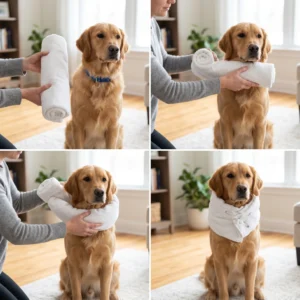
A towel cone is simple and quick.
Materials
- Soft towel
- Tape or clips
How to Make
- Roll the towel lengthwise
- Wrap it around your dog’s neck
- Secure with tape or clips
Why It Works
It is soft and prevents your dog from bending their neck fully.
2. Pillow Collar Cone
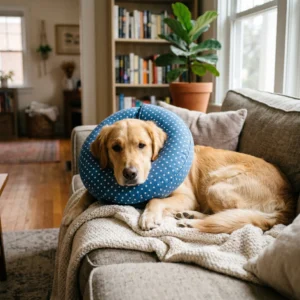
This acts like a neck pillow.
Materials
- Small pillow or cushion
- Fabric cover or cloth
How to Make
- Wrap the pillow around your dog’s neck
- Secure it gently
Why It Works
It blocks movement without causing discomfort.
3. Cardboard Cone
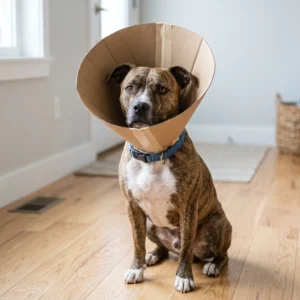
A simple structured option.
Materials
- Cardboard sheet
- Tape
How to Make
- Cut cardboard into a cone shape
- Wrap around neck
- Tape securely
Why It Works
It mimics a traditional cone at a lower cost.
4. T-Shirt Cone Alternative
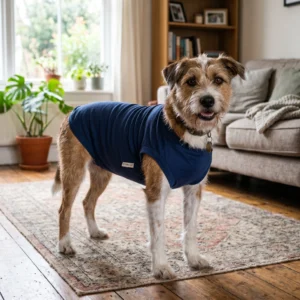
A creative and comfortable option.
Materials
- Old T-shirt
How to Make
- Put the shirt on your dog
- Tie it to cover the affected area
Why It Works
It prevents licking of wounds on the body.
5. Foam Cone
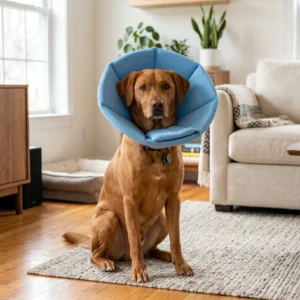
A softer structured option.
Materials
- Foam sheet
- Velcro or tape
How to Make
- Cut foam into a cone shape
- Wrap around neck
- Secure with Velcro
Why It Works
It is lightweight and comfortable.
How to Make Sure the Cone Works Properly
Check Reach
Your dog should not be able to reach the wound.
Monitor Comfort
Watch for signs of stress or discomfort.
Adjust Fit
Make sure it stays in place without restricting breathing.
How Long Should a Dog Wear a Cone?
It depends on the condition.
- Minor issues: a few days
- Surgery recovery: 7–14 days
Follow your vet’s advice for best results.
Can Dogs Sleep with a Homemade Cone?
Yes, if it is comfortable and properly fitted.
Soft cones are usually better for sleeping than hard plastic ones.
Common Mistakes to Avoid
Making It Too Loose
A loose cone will not prevent licking.
Using Unsafe Materials
Avoid sharp edges or hard materials that can injure your dog.
Not Monitoring Your Dog
Always check how your dog reacts to the cone.
When to Use a Professional Cone Instead
DIY cones are helpful, but not always enough.
Use a proper medical cone if:
- Your dog keeps removing the DIY cone
- The wound is serious
- Healing is slow
Tips to Help Your Dog Adjust
- Keep your dog calm
- Offer treats for positive behavior
- Supervise during the first few hours
- Remove obstacles from your home
Alternatives to Dog Cones
If cones are not suitable, consider:
- Recovery suits
- Soft inflatable collars
- Bandaging (under vet guidance)
Final Verdict
A homemade dog cone can be a simple and effective solution for preventing licking and helping your dog heal.
Options like towel wraps, pillow collars, and foam cones are easy to make and more comfortable than traditional plastic cones. However, they must be properly fitted to work correctly.
If the injury is serious or your dog keeps removing the cone, it is better to use a professional option or consult your veterinarian.