
Eggs are one of those foods that split dog owners into two camps: the ones who scramble up a plain egg as a special breakfast treat, and the ones who’ve heard eggs are somehow dangerous and avoid them entirely. Neither camp has the full picture. Eggs are actually a solid, nutritious option for most dogs — but how you prepare them changes the equation quite a bit.
Can Dogs Eat Eggs?
Yes, dogs can eat eggs, and cooked eggs are widely considered one of the better “human food” options to share. They’re packed with protein, plus a good mix of vitamins and minerals, which is part of why you’ll see eggs listed as an ingredient in a lot of commercial dog foods already.
The bigger question isn’t really “can dogs eat eggs” so much as “how should eggs be prepared,” and that’s where cooked versus raw becomes the important distinction.
Cooked Eggs: The Safer, Recommended Option

Plain, fully cooked eggs — scrambled, boiled, or poached, with no seasoning, butter, oil, salt, or add-ins — are generally the go-to way to give your dog eggs. Cooking eliminates the main risks associated with raw eggs, which we’ll get into below, while keeping the nutritional benefits intact.
A few notes on cooking eggs for dogs:
- Skip the butter, oil, salt, and seasoning entirely. Plain is genuinely best here.
- Avoid seasoning blends that might contain onion or garlic powder, which are toxic to dogs even in small amounts.
- Let the egg cool before serving, especially for smaller dogs who might be more prone to burning their mouths on something fresh off the stove.
- Chop or mash the cooked egg if you’re giving it to a smaller dog or a puppy, to make it easier to eat.
Why Raw Eggs Are Riskier
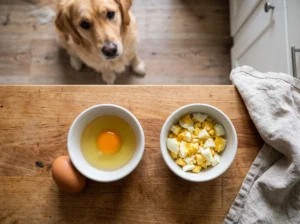
This is the part most people either overlook or have heard conflicting advice about. Raw eggs carry two separate concerns:
Salmonella and bacterial contamination. Raw eggs can carry salmonella and other bacteria, which pose a risk to your dog and, frankly, to you too if you’re handling raw eggs and then touching your dog’s bowl or your own food. Dogs can get salmonella poisoning just like humans can, with symptoms like vomiting, diarrhea, and lethargy.
Biotin deficiency from raw egg whites specifically. Raw egg whites contain a protein called avidin, which binds to biotin (a B vitamin) and prevents the body from absorbing it properly. This isn’t usually a concern from an occasional raw egg, but with regular, ongoing raw egg white consumption, it can contribute to a biotin deficiency over time, which affects skin and coat health. Cooking the egg deactivates avidin, which is one of the main reasons cooked eggs are the safer long-term choice.
Some raw-food diet advocates feed raw eggs to dogs regularly and report no issues, but the general veterinary consensus leans toward cooked eggs being the lower-risk option, particularly for regular feeding rather than an occasional treat.
What About Eggshells?
Eggshells aren’t toxic, and some owners crush them up as a calcium supplement mixed into homemade dog food. If you’re going this route, the shells need to be finely ground into a powder, since whole or coarsely crushed shell pieces can be a choking hazard or cause mouth or digestive irritation.
That said, adding calcium supplements to a dog’s diet isn’t something to do casually or without guidance, since getting the balance wrong can cause its own health issues over time. If you’re interested in eggshells as a calcium source, it’s worth discussing appropriate amounts with your vet rather than guessing based on something you read online.
How Many Eggs Can a Dog Have?
This depends heavily on your dog’s size, activity level, and overall diet. As a general guide for an occasional treat or addition:
- Small dogs: About a quarter to half an egg, occasionally
- Medium dogs: About half an egg, occasionally
- Large dogs: A whole egg, occasionally
Eggs shouldn’t replace a significant portion of your dog’s regular diet unless specifically recommended and balanced by a vet, since dogs need a complete, balanced diet that eggs alone don’t provide. Think of eggs as a protein-rich treat or topper, not a meal replacement.
Are There Dogs Who Shouldn’t Eat Eggs?
Dogs with egg allergies: Some dogs are allergic to eggs, just like some humans are. If it’s your dog’s first time trying eggs, start with a small amount and watch for symptoms like itching, swelling, digestive upset, or skin irritation.
Dogs with pancreatitis or fat sensitivity: Egg yolks in particular contain more fat than the whites. Dogs prone to pancreatitis may need to stick to egg whites only, or avoid eggs altogether, depending on your vet’s guidance.
Dogs with existing kidney issues: Because eggs are high in protein, dogs managing certain kidney conditions may need portion adjustments. This is a conversation to have with your vet rather than a decision to make solo if your dog has a diagnosed condition.
Signs of a Problem After Eating Eggs
Keep an eye out for the following, particularly after your dog’s first time eating eggs, or if they got into a larger amount than intended:
- Vomiting
- Diarrhea (our dog diarrhea remedies guide has general at-home care tips for mild cases)
- Itching or skin irritation, which may point to an allergy
- Lethargy
- Loss of appetite
If your dog ate a large amount of raw egg and starts showing symptoms like vomiting, diarrhea, and lethargy within the following day or two, this could point to salmonella exposure, and it’s worth calling your vet, especially if symptoms are more than mild.
Eggs in Homemade Dog Food and Treats
Eggs are actually a common ingredient in homemade dog food and treat recipes, largely because they’re an accessible, affordable source of protein that most dogs digest well when cooked. If you’re interested in incorporating eggs into your dog’s meals more intentionally, our homemade dog food recipes with eggs collection is built specifically around using eggs safely and in appropriate portions, rather than guessing at ratios on your own.
Eggs also show up as a binding ingredient in some treat recipes, helping hold everything together the way flour or oats might in a human baked good. If you’re baking treats at home, our homemade dog dental treats recipe is one example that uses egg as part of the mix.
A Simple Way to Add Eggs to Your Dog’s Bowl
If you want to try adding a bit of cooked egg to your dog’s regular meals, scrambling a plain egg with no oil, butter, salt, or seasoning and mixing a small chopped portion into their regular food is an easy way to start. Watch how they handle it over the next day before making it a more regular addition, and keep the portion modest relative to their overall meal.
FAQ: Can Dogs Eat Eggs?
Are raw eggs ever okay for dogs? Some raw-feeding diets include raw eggs, but the general recommendation is to stick with cooked eggs due to the salmonella risk and the biotin-binding effect of raw egg whites, particularly with regular feeding.
Can dogs eat eggshells? Finely ground eggshell is sometimes used as a calcium supplement, but it should be powdered fully to avoid choking or irritation, and any supplementation is worth discussing with your vet first.
Is it okay to give my dog eggs every day? Occasional eggs are generally fine for most healthy dogs, but daily eggs should be discussed with your vet, especially to make sure your dog’s overall diet stays balanced.
Can puppies eat eggs? Yes, cooked eggs in small, age-appropriate portions are generally fine for puppies, though it’s worth introducing any new food gradually and keeping an eye out for any reaction.
Do eggs help with a dog’s coat and skin? Eggs contain nutrients that support skin and coat health as part of a balanced diet, though they’re not a substitute for addressing an underlying skin issue, which should be evaluated by a vet if it’s ongoing.
What’s the difference between egg whites and egg yolks for dogs? Egg yolks contain more fat and calories, while egg whites are leaner but, if raw, carry the biotin-binding concern mentioned above. Cooked whole eggs are generally the simplest, safest choice for most dogs.
The Bottom Line
Eggs are a genuinely good addition to a dog’s diet when they’re fully cooked and served plain, offering solid protein and nutrients without much fuss. Skip the raw eggs, skip the seasoning, and keep portions occasional relative to your dog’s size and overall diet. If your dog has any existing health conditions like pancreatitis or kidney issues, it’s worth checking with your vet before making eggs a regular thing.

























