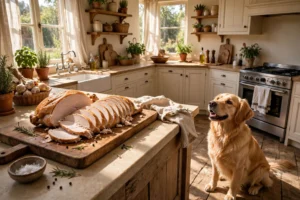
Yes — dogs can eat turkey, and plain cooked turkey breast is one of the better meats you can share with them. It’s lean, high in protein, and easy on most stomachs.
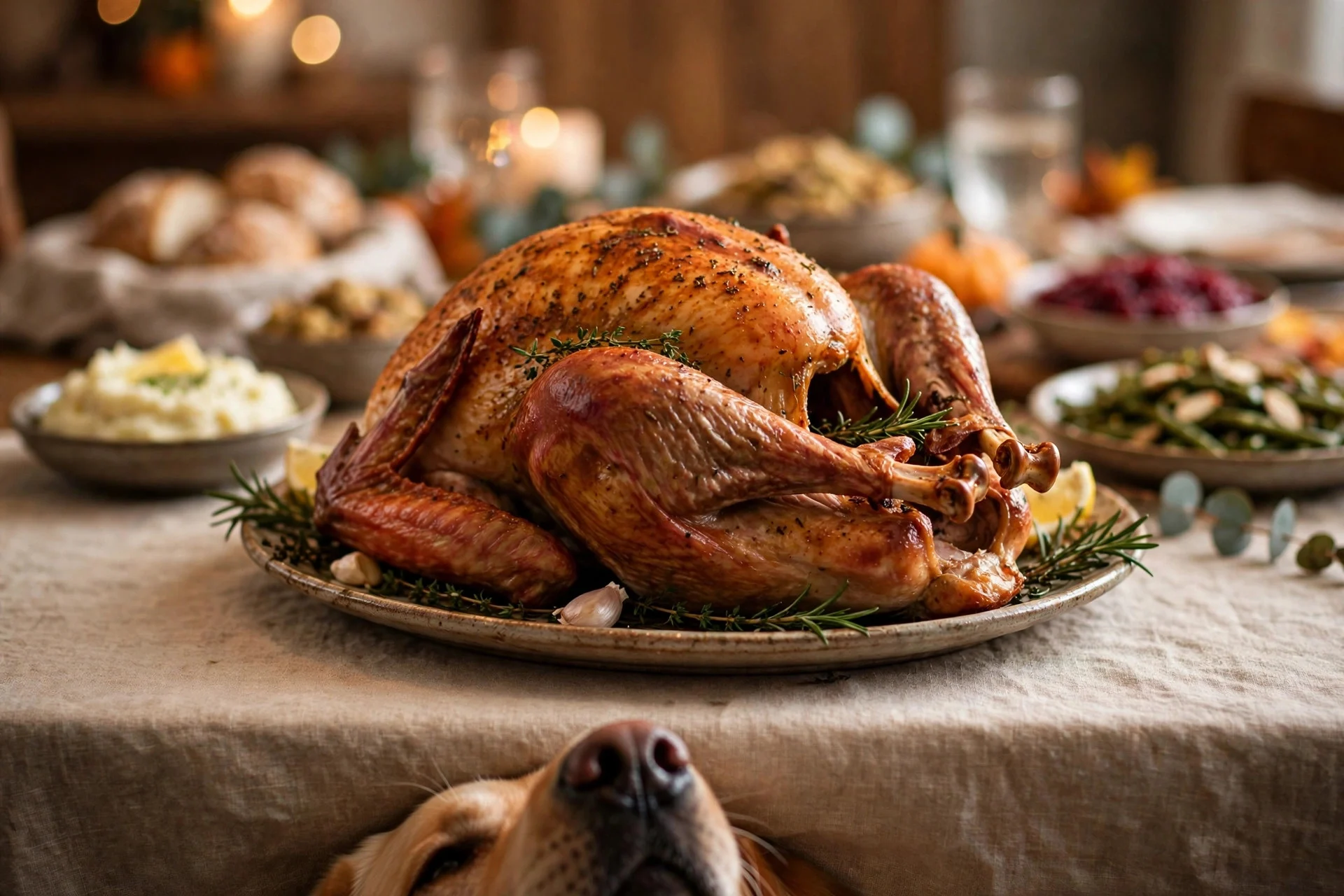
But here’s the thing: the turkey most of us actually serve at Thanksgiving barely resembles “plain turkey.” It’s rubbed with garlic and herbs, basted in butter, draped in crispy seasoned skin, and surrounded by onion-loaded stuffing and rich gravy. Every one of those extras ranges from mildly upsetting to genuinely dangerous for dogs. So if you’re asking can dogs eat turkey while your dog stares at the roasting pan — the real answer is: the meat, yes. The trimmings, absolutely not. Let’s sort it out properly.
Why Plain Turkey Is Good for Dogs
Turkey breast is about as clean a protein as it gets. A 3-ounce serving of roasted turkey breast has roughly 26 grams of protein and only about 2 grams of fat — leaner than most beef cuts and even leaner than a lot of commercial dog treats. That protein supports muscle maintenance, and because the fat is low, it doesn’t hit the pancreas the way fattier meats do.
It also brings B vitamins (niacin and B6 especially), plus selenium and zinc, which support immune function and healthy skin. And practically speaking, turkey is one of the proteins vets reach for in elimination diets. That tells you something — it’s gentle enough for dogs with touchy stomachs. I’ve used plain shredded turkey as a bland-diet protein for my own dog during a rough stomach week, and our vet gave it a thumbs up.
The Parts That Cause Trouble
Turkey skin is the number one offender. It’s basically a fat delivery system, and a big greasy helping can trigger pancreatitis — painful, expensive, and occasionally life-threatening. This isn’t theoretical. Emergency vets see a spike in pancreatitis cases every single Thanksgiving weekend, and skin is usually the culprit.
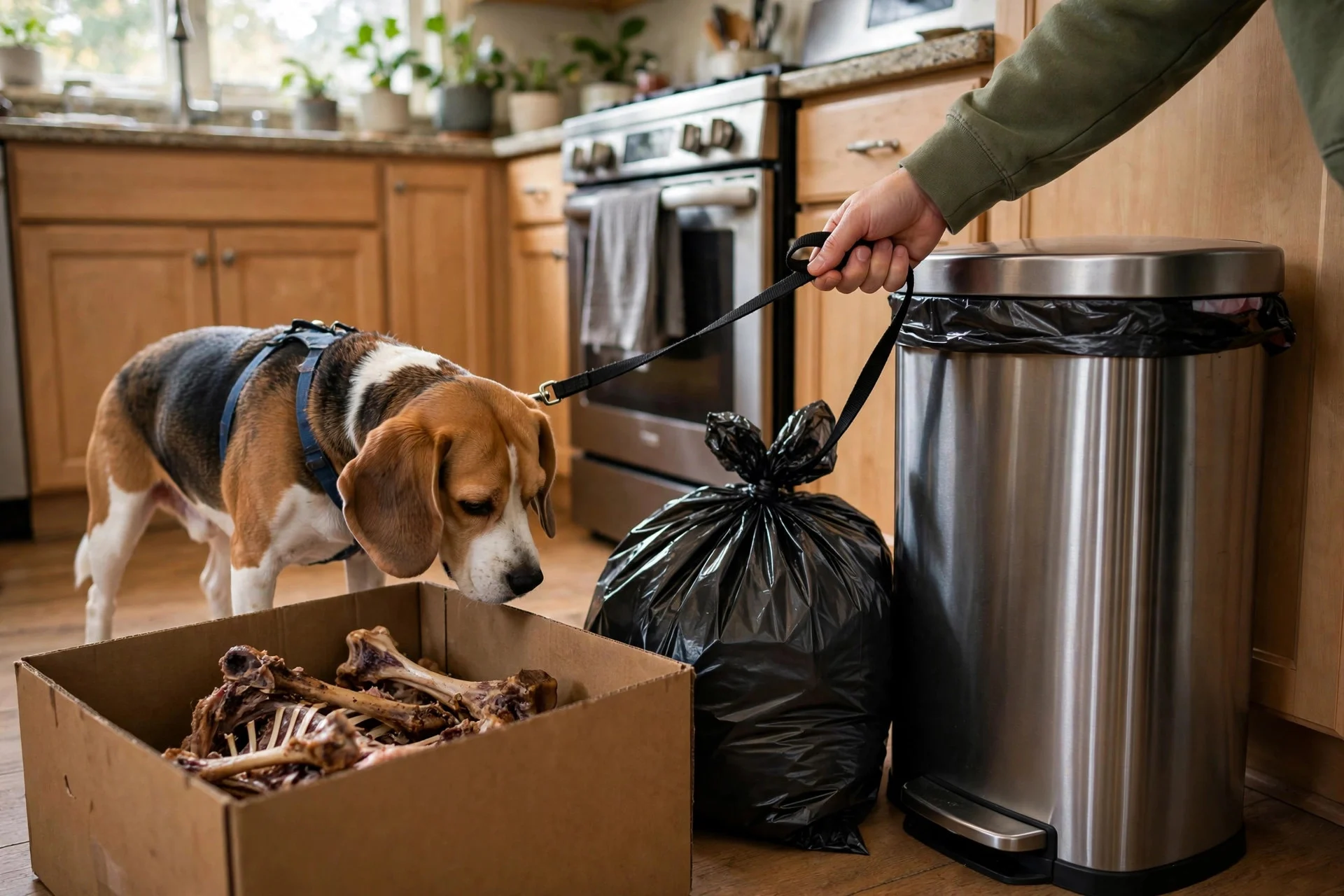
Cooked bones are the second problem. Cooking makes turkey bones brittle, and they splinter into sharp shards that can cut the mouth, lodge in the throat, or puncture intestines. Never hand your dog the carcass to “clean up,” no matter how happy it would make them.
Then there’s seasoning. Garlic and onion — both common in turkey rubs, brines, and stuffing — are toxic to dogs. They damage red blood cells, and it doesn’t take a huge amount to cause harm. A garlic-rubbed, butter-basted bird is a minefield. Same goes for the gravy (onion plus fat plus salt) and most stuffing.
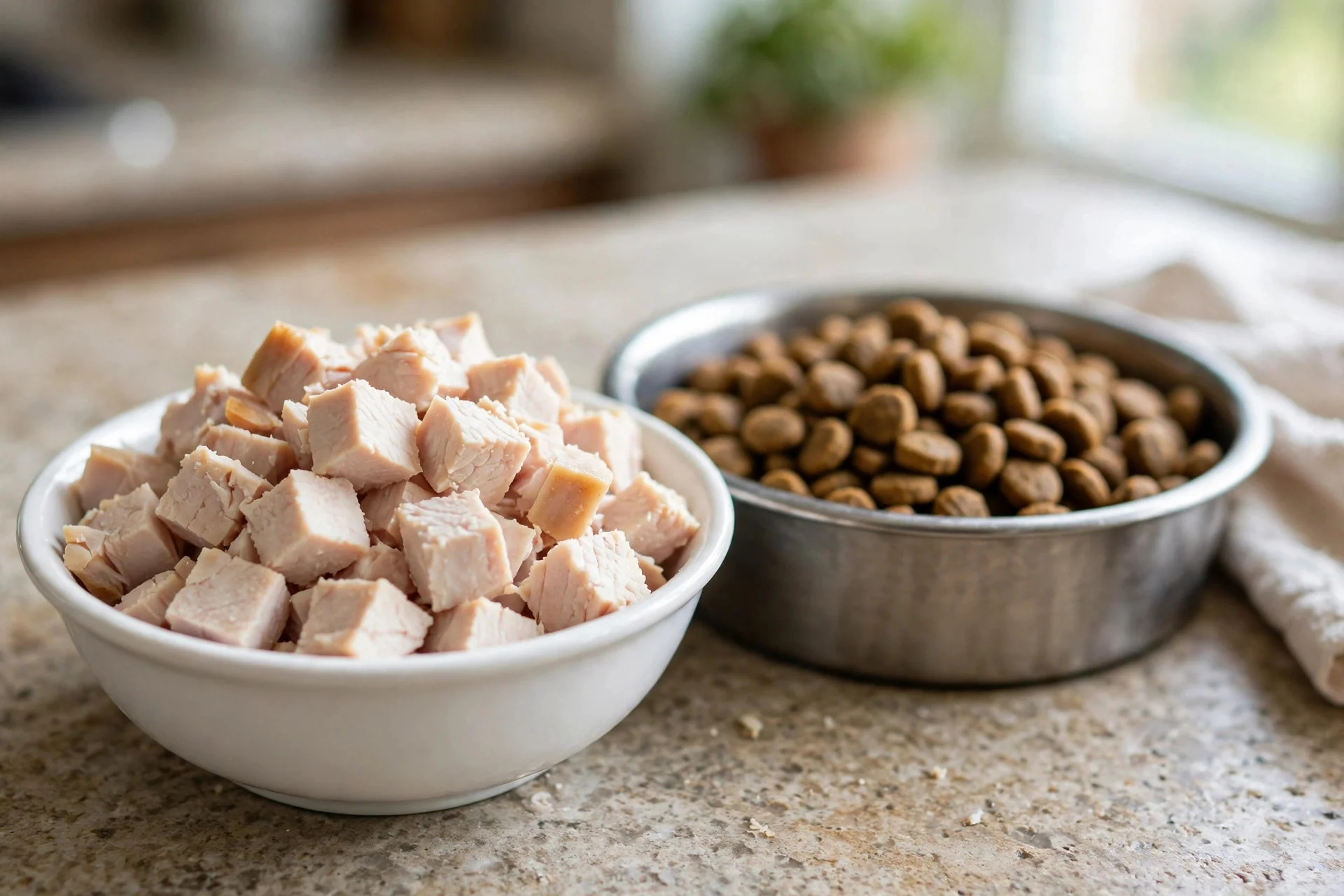
How Much Turkey Can Your Dog Have?
Think of turkey as a topper or treat, not a meal replacement — unless your vet has designed a homemade diet around it. The usual 10% rule applies: extras shouldn’t exceed 10% of daily calories.
| Dog size | Weight | Plain turkey breast (per day) |
|---|---|---|
| Small | Under 20 lbs | 1–2 tablespoons, diced |
| Medium | 20–50 lbs | ¼ cup, diced |
| Large | 50–90 lbs | ½ cup, diced |
| Extra large | 90+ lbs | ¾ cup, diced |
Those are generous upper ends for an occasional treat, not daily rations. And this assumes plain, unseasoned meat — no skin, no drippings, no exceptions.
How to Serve Turkey Safely
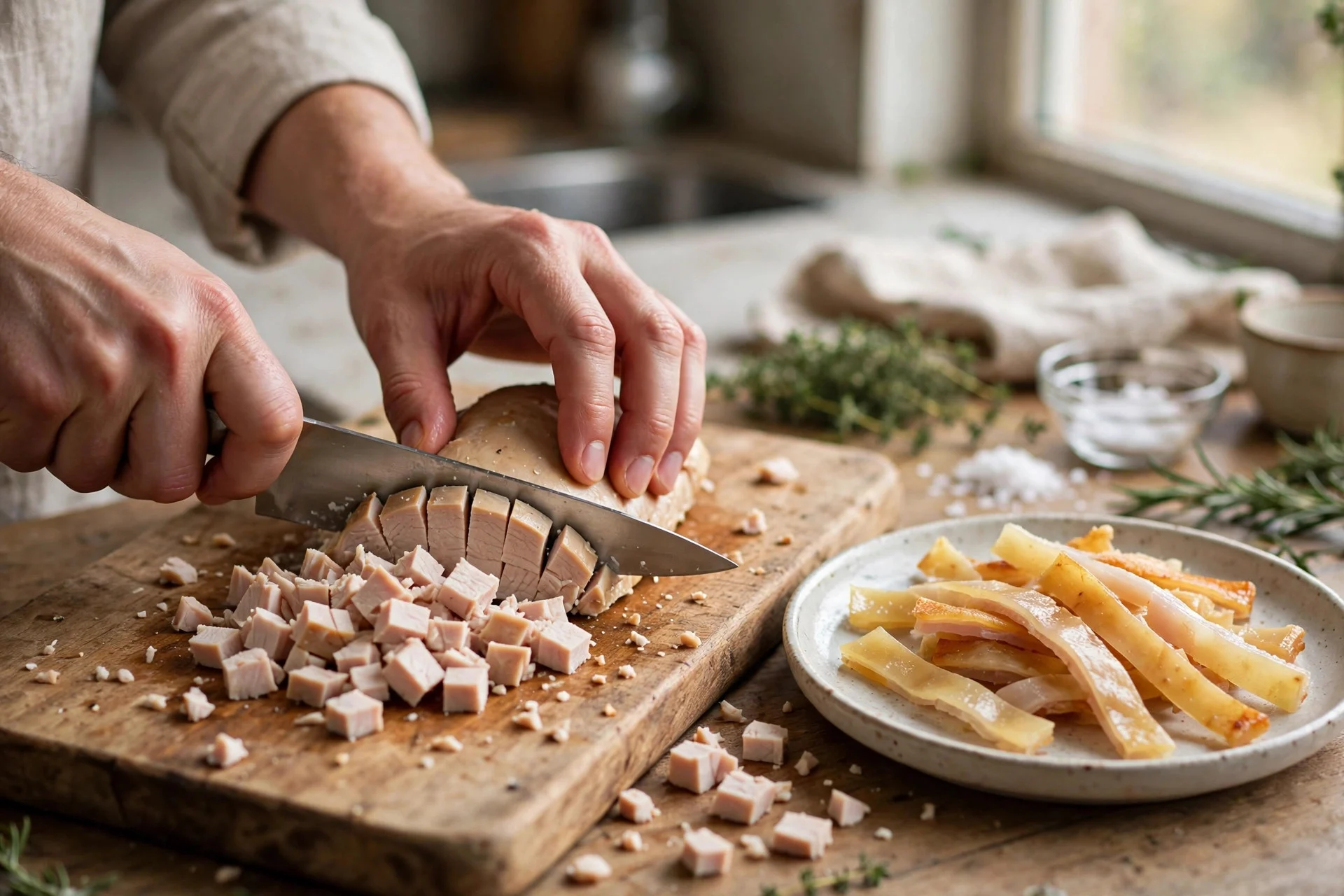
Keep it boring. That’s the whole secret. Pull meat from the breast (the leanest part), trim off every bit of skin and visible fat, and make sure no seasoning, butter, or onion bits come along for the ride. Dice it small — especially for little dogs — so nobody tries to inhale a chunk whole.
Cook it to 165°F internally if you’re preparing a portion separately, and skip the deep fryer entirely. Want to make your dog their own little Thanksgiving plate? Plain turkey with some plain cooked sweet potato and green beans is a genuinely nice meal. Mine gets exactly that every year while we eat the “real” dinner, and he’s never once complained.
Thanksgiving Turkey Mistakes to Avoid
The biggest one: letting guests feed the dog under the table. Everyone thinks a little skin “won’t hurt,” and by the end of dinner your dog has eaten a drumstick’s worth of seasoned skin. Tell people upfront — no table scraps, period. I say it with a smile and hand the worst offenders a dog treat to give instead. Works every time.
Second: the trash. Dogs are Olympic-level trash raiders, and a turkey carcass in a kitchen garbage can is irresistible. Tie the bag shut and take it straight outside. Every year, dogs end up in surgery for eating turkey bones out of the trash.
Third: assuming “a little gravy” is fine. Gravy is concentrated fat, salt, and often onion. A spoonful can upset a small dog’s stomach for days. And fourth: brined turkeys. If you brined your bird in a super-salty solution, the meat itself is saltier than usual. Cook a small plain portion separately before the seasoning goes on — that’s what I do now, and the dog’s portion is sorted before the chaos starts.
FAQs
Can dogs eat turkey skin?
They shouldn’t. The skin is almost pure fat, and fatty foods are the top trigger for pancreatitis in dogs. A tiny stolen scrap probably won’t cause disaster, but don’t deliberately feed it — and don’t let it become a habit.
Can dogs eat turkey bones?
No — not cooked ones, ever. Cooked turkey bones splinter and can cause choking, mouth injuries, or intestinal damage. Raw turkey bones (like raw necks, fed appropriately) are a different conversation to have with your vet, but cooked bones are always off the table.
Can dogs eat deli turkey slices?
An occasional plain slice isn’t an emergency, but deli turkey is loaded with sodium and often contains garlic powder or onion powder. It’s not a good regular treat. If you want sandwich-style convenience, cook and slice your own plain breast instead.
Can dogs eat ground turkey?
Yes — plain cooked ground turkey (93% lean or leaner) is a great option, and it’s what a lot of homemade dog food recipes use. Cook it without oil, butter, or seasoning, and drain off any fat.
So: turkey itself? Great dog food. Thanksgiving turkey as served? A minefield. Carve off a plain portion before the butter and seasoning go on, keep the bones and skin far away, and your dog can absolutely join the feast — safely.