Yes — dogs can eat salmon, but only when it’s fully cooked. Raw or undercooked salmon can carry a parasite that causes salmon poisoning disease, which is fatal in the vast majority of untreated dogs. That one rule is the whole story in a nutshell.
Cooked salmon, on the other hand, is genuinely good for them. It’s a lean protein packed with omega-3s, and most dogs go absolutely feral for the smell of it hitting a hot pan. So if you’re asking can dogs eat salmon while your dog performs their best “starving orphan” routine next to the counter — yes. Cook it first, keep it plain, skip the seasoning. Here’s the full breakdown.
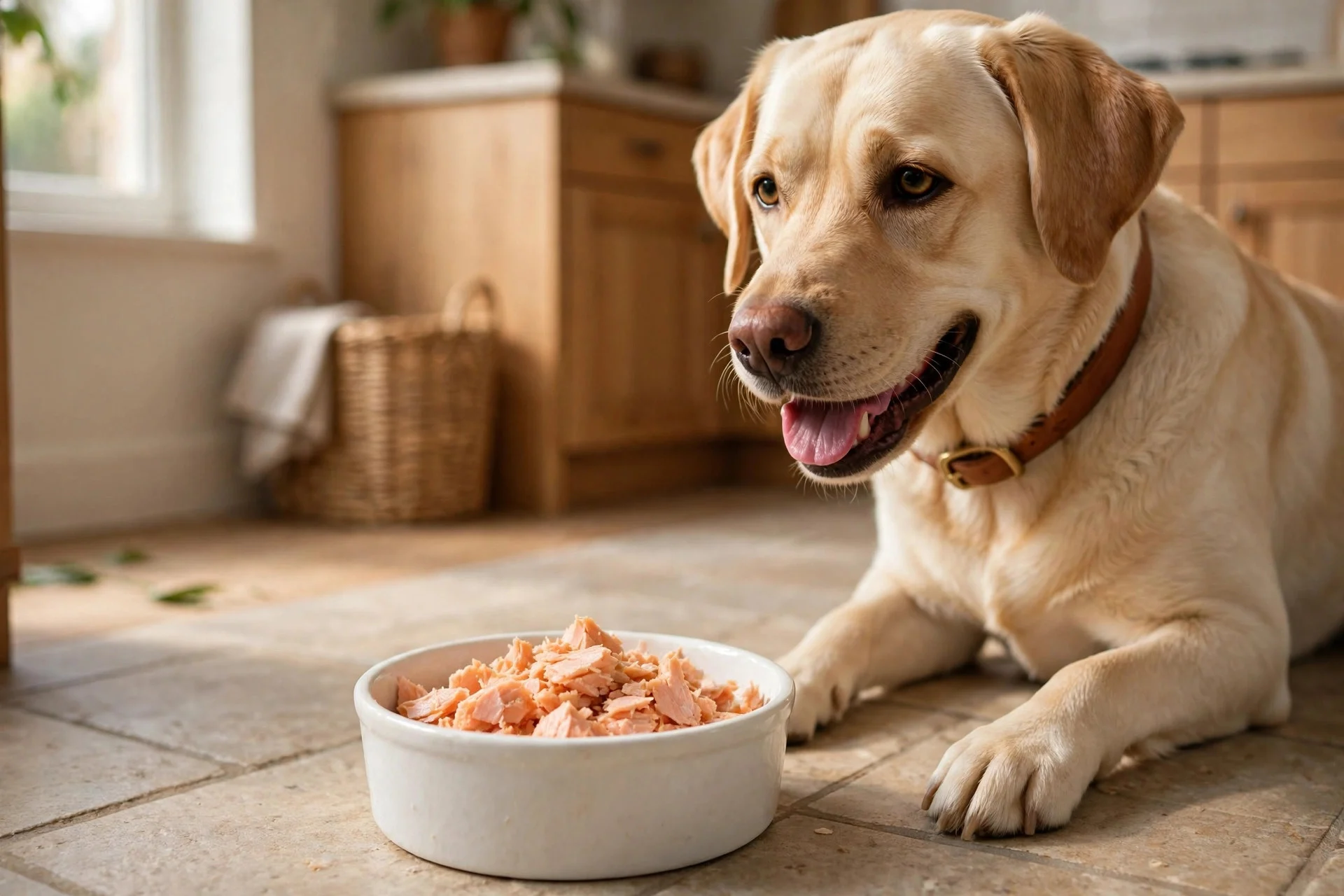
Why Cooked Salmon Is Good for Dogs
Salmon is one of the better fish you can share with a dog. A 3-ounce serving of cooked salmon delivers roughly 22 grams of protein, plus omega-3 fatty acids (EPA and DHA) that support healthy skin, a shinier coat, calmer joints, and brain development in puppies. It also brings B vitamins, selenium, and potassium to the table.
It’s also one of the proteins vets reach for in elimination diets when a dog might be reacting to chicken or beef. That tells you something about how well most dogs tolerate it. My own dog gets a few flakes of plain cooked salmon mixed into her kibble when I cook fish for dinner, and she has never once turned her nose up at it. Not once. She hears the pan sizzle and materializes from whatever room she was napping in.
The Raw Salmon Problem
Here’s where it gets serious. Raw salmon — along with raw trout, steelhead, and a few other fish from the Pacific Northwest — can carry a microscopic fluke parasite called Nanophyetus salmincola. The fluke itself isn’t the killer. It’s the bacteria living inside it, Neorickettsia helminthoeca, which causes salmon poisoning disease.
Symptoms show up 5 to 7 days after eating the raw fish: vomiting, high fever, bloody diarrhea, swollen lymph nodes, and crushing lethargy. Without treatment, it kills roughly 90 percent of infected dogs. With prompt veterinary treatment — doxycycline plus fluids — most dogs recover fully. But “most dogs recover if you get to the vet fast” is not a gamble worth taking over table scraps.
And don’t count on your home freezer to save you. The parasite survives typical home freezing. Commercial sushi-grade freezing protocols are stricter, but even that isn’t a guarantee I’d bet my dog’s life on. The only reliable kill step is heat: cook the fish until it’s opaque all the way through and flakes easily with a fork, reaching 145°F internally.
Safe Salmon vs. Salmon to Avoid
| Salmon type | Verdict |
|---|---|
| Plain cooked salmon (baked, grilled, poached) | Safe — the best choice |
| Canned salmon (no salt added, drained) | Safe in small amounts — soft bones are fine |
| Raw salmon / sushi / sashimi scraps | Never — salmon poisoning risk |
| Smoked salmon / lox | Avoid — far too salty |
| Salmon with garlic, onion, or heavy seasoning | Avoid — toxic seasonings |
| Salmon patties with onion or breadcrumbs | Avoid — check every ingredient |
Smoked salmon deserves a special callout because it looks harmless. It’s not raw in the parasite sense, but it’s cured with enough salt to upset most dogs’ stomachs, and large amounts can cause serious sodium issues. A tiny stolen lick won’t send anyone to the ER, but don’t serve it on purpose.
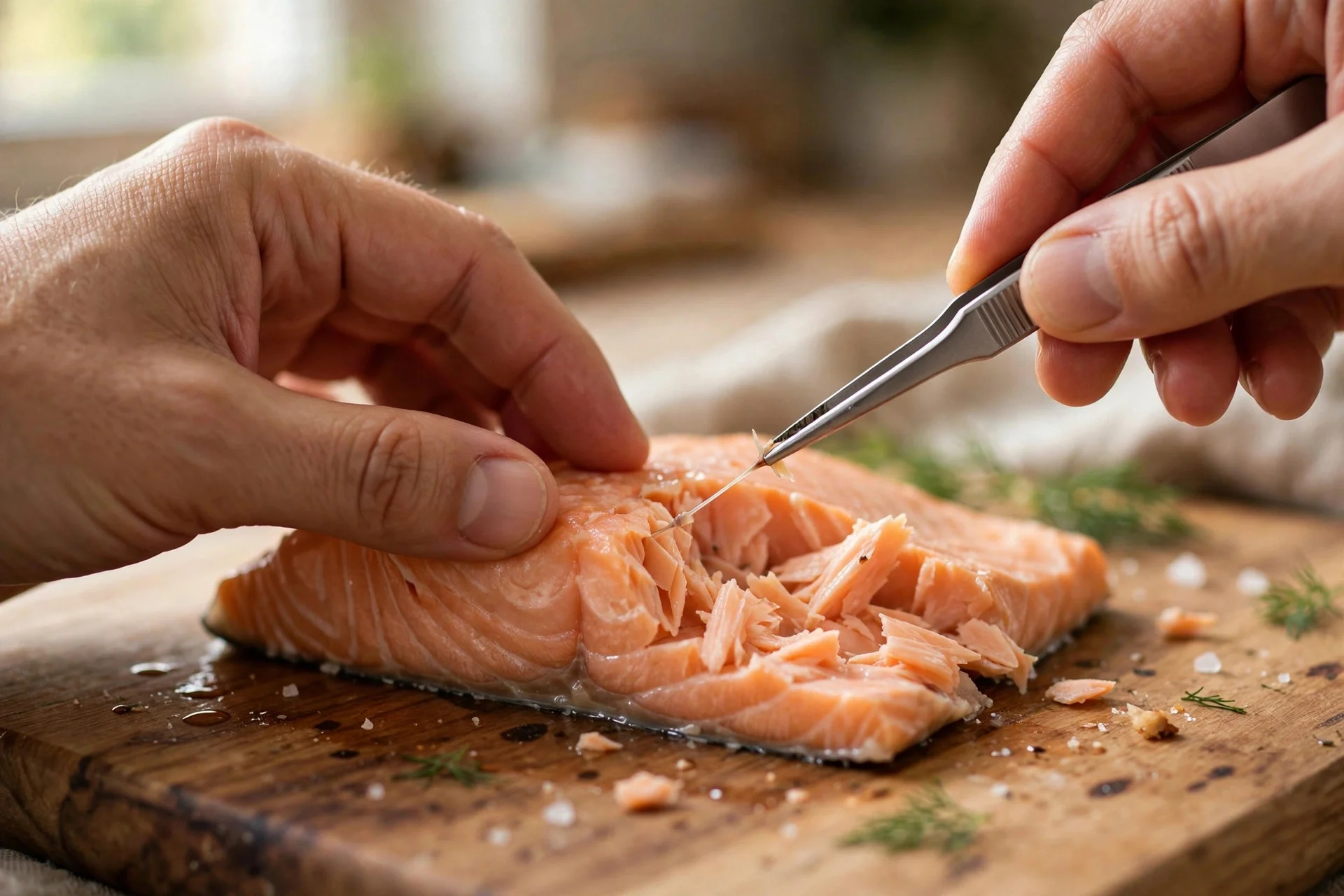
How to Serve Salmon Safely
Keep it boring. That’s the entire method. Bake, grill, or poach a plain fillet with no oil, butter, garlic, onion, or seasoning blends. Cook it to 145°F internally — opaque flesh that flakes easily. Then pick through it carefully for pin bones, which are thin, annoying, and easy to miss. Run your fingers along the fillet; you’ll feel them.
What about the skin? Salmon skin is technically edible, but it’s the fattiest part of the fish. A small piece is fine for most dogs, but a whole skin’s worth of grease can trigger vomiting or, in sensitive dogs, pancreatitis. I give my dog the meat and eat the crispy skin myself. Everybody wins.
If you’re using canned salmon, look for “no salt added” on the label and drain it well. The tiny soft bones in canned salmon are fully edible — they crumble under a fork — so no need to pick them out. Just watch the sodium on regular canned varieties, and rinse if that’s all you have.
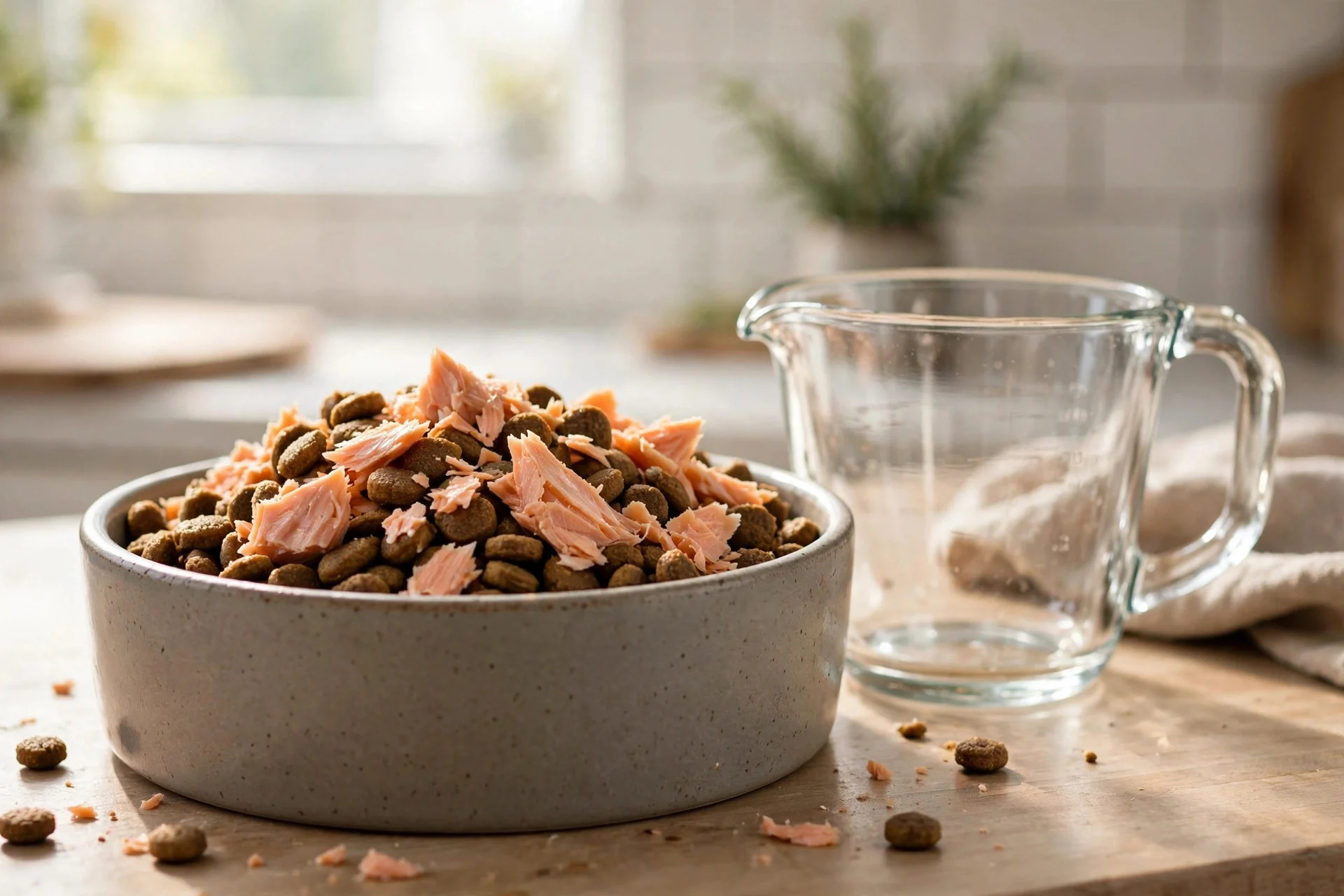
How Much Salmon Can Dogs Have?
Think of salmon as a topper or occasional treat, not a meal replacement — unless your vet has built a homemade diet around it. The 10% rule applies: extras shouldn’t exceed 10% of daily calories.
| Dog size | Weight | Plain cooked salmon (occasional treat) |
|---|---|---|
| Small | Under 20 lbs | 1–2 tablespoons, flaked |
| Medium | 20–50 lbs | ¼ cup, flaked |
| Large | 50–90 lbs | ½ cup, flaked |
| Extra large | 90+ lbs | ¾ cup, flaked |
Those are generous upper ends for an occasional treat, not a daily ration. And this assumes plain, boneless, fully cooked fish — no seasoning, no skin pile, no exceptions.
Mistakes to Avoid
Don’t toss your dog the raw trimmings while you’re prepping dinner. This is how most salmon poisoning cases happen — not from deliberate feeding, but from a well-meaning cook sharing scraps off the cutting board. Prep the dog’s portion from the cooked fillet, not the raw one.
Don’t assume “a little raw” is fine because your dog eats raw food. Commercial raw diets are formulated and tested; a random raw fillet from the grocery store is not the same thing. The parasite risk is specific and real.
And don’t forget the seasoning check on leftovers. That beautiful miso-glazed or garlic-butter salmon from last night’s dinner? The fish is fine, but the glaze isn’t. If the salmon touched garlic, onion, or a heavy spice rub, it stays on your plate.

FAQs
Can dogs eat salmon skin?
A small piece, yes — it’s not toxic. But the skin holds most of the fat, so large amounts can cause vomiting or diarrhea, and in sensitive dogs it can contribute to pancreatitis. Meat over skin is the safer default.
Can dogs eat canned salmon?
Yes, in small amounts. Choose no-salt-added varieties, drain well, and don’t worry about the soft bones — they’re edible. Rinse regular canned salmon to cut the sodium.
Can dogs eat smoked salmon or lox?
Best avoided. It’s far too salty for dogs, and the cure doesn’t reliably eliminate every risk the way thorough cooking does. A stolen nibble isn’t an emergency, but don’t serve it intentionally.
My dog ate raw salmon — what now?
Call your vet right away, even if your dog seems fine. Symptoms take 5 to 7 days to appear, and early treatment with antibiotics is what makes the difference. Don’t wait for vomiting to start.
Cooked salmon is one of the genuinely great proteins you can share with your dog — lean, omega-rich, and wildly popular with the four-legged crowd. Just remember the one rule that matters: heat it through, keep it plain, and leave the raw stuff for the humans with better health insurance.