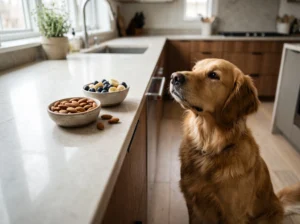
You know the scene. Thunder cracks outside, and your 70-pound “brave protector” is suddenly trying to squeeze behind the toilet. Shaking. Panting. Drooling on your socks.
I’ve lived that scene more times than I can count. These calming dog treats won’t turn a thunderstorm into a spa day, but they can take the edge off — especially when you pair them with a solid routine. Below are 7 recipes I actually make at home, built around ingredients like chamomile, oats, and peanut butter that are known for their gentle calming properties. No weird powders. No sketchy supplements.

7 Calming Dog Treat Recipes
1. Chamomile Peanut Butter Bites
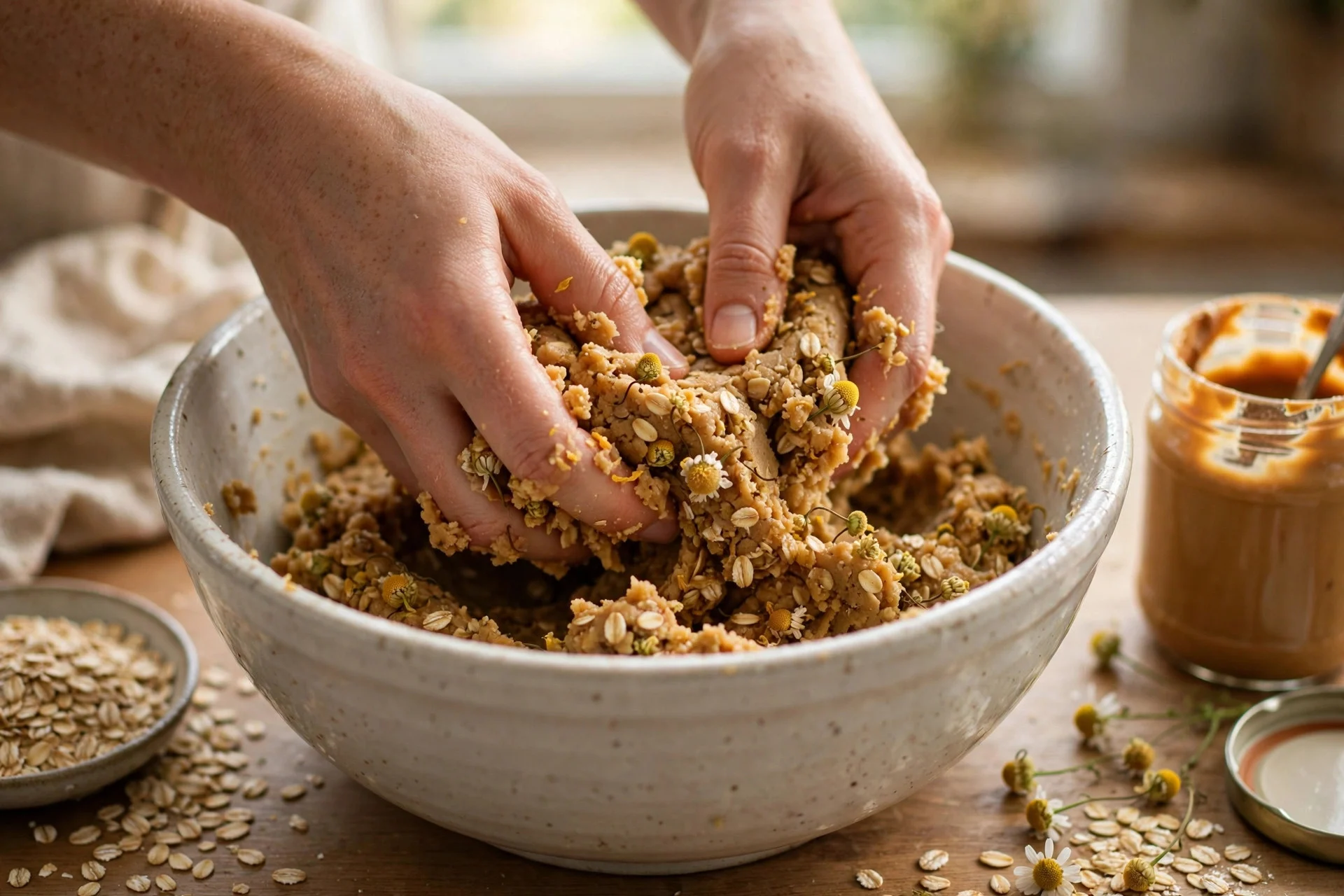
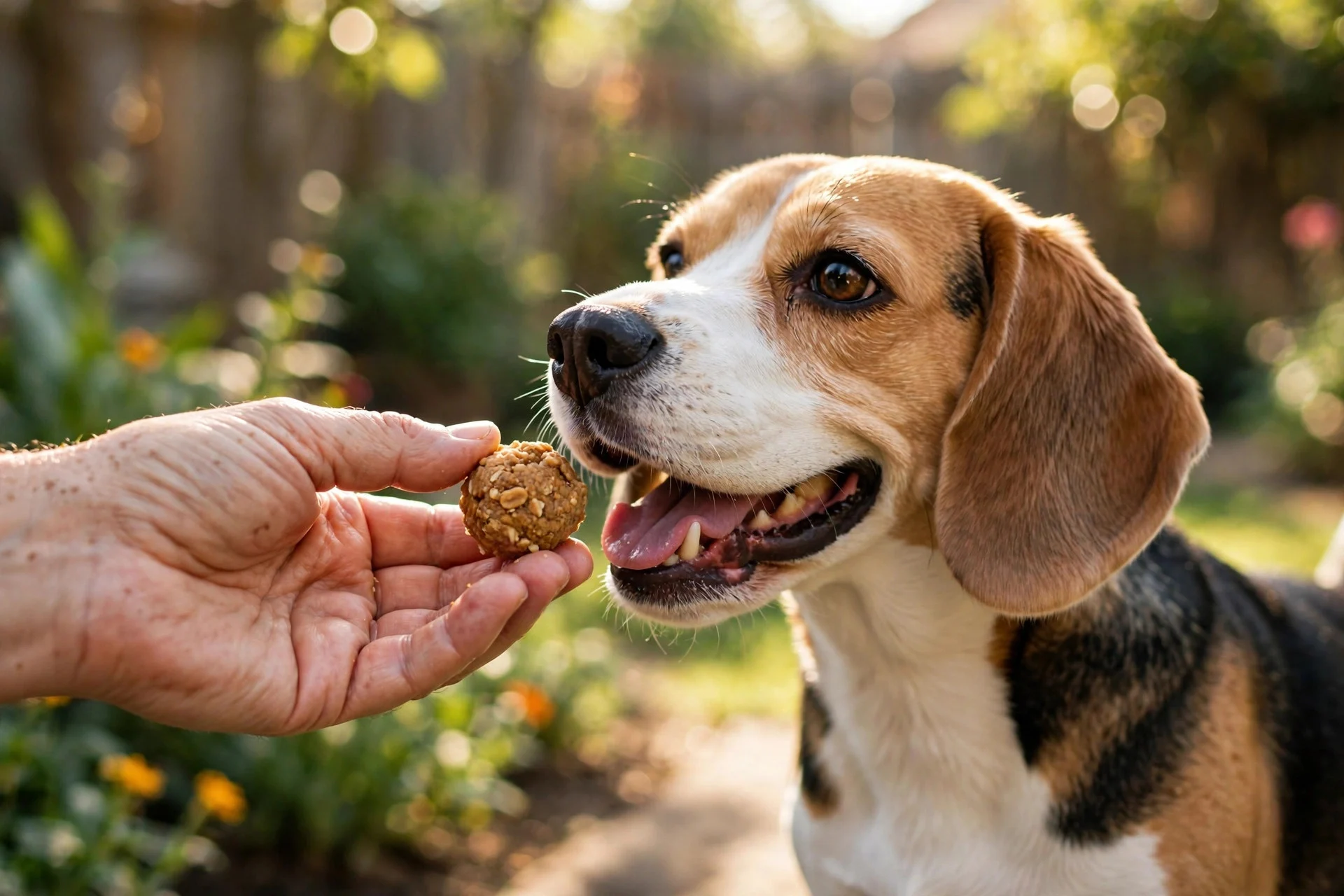
This is the one I reach for most. Brew a strong cup of chamomile tea, let it cool, then mix half a cup into a dough of 1 cup peanut butter (xylitol-free — always), 2 cups oat flour, and one egg. Roll into small balls, flatten slightly, and bake at 350°F for about 20 minutes. The chamomile gives them a mild, drowsy edge that seems to help my Golden settle about 40 minutes after eating one. One warning that matters more than anything else in this article: check your peanut butter label for xylitol (sometimes listed as birch sugar). It’s deadly to dogs, and it hides in some “natural” brands.
2. Banana Oat Calming Cookies
Dead simple. Mash two very ripe bananas, stir in 2 cups of rolled oats and a tablespoon of honey, then drop spoonfuls onto a lined baking sheet. Bake at 325°F for 15 minutes. That’s it. Bananas contain vitamin B6 and a bit of magnesium, both linked to calmer moods, and the oats keep the texture chewy rather than crumbly. Use spotty, overripe bananas — the kind you’d throw out. Dogs prefer them sweeter, and you’ll feel less guilty about the fruit flies.
3. Frozen Pumpkin Yogurt Drops
For dogs that won’t touch a baked biscuit when they’re stressed, cold treats sometimes work better. Mix 1 cup plain canned pumpkin (not pie filling) with half a cup of plain unsweetened yogurt, then dollop teaspoon-sized drops onto parchment and freeze for 2 hours. The licking action itself is calming — that’s the whole idea behind lick mats. Give one or two about 30 to 45 minutes before the scary thing starts, whether that’s fireworks or the vacuum cleaner.
4. Blueberry Chamomile Pupsicles
Brew chamomile tea, let it cool completely, pour it into silicone molds, drop in a few blueberries per mold, and freeze. These are perfect for summer storm season when it’s too hot for baked treats anyway. The whole thing takes five minutes of actual work. My tip: use a silicone muffin tray instead of tiny molds. Bigger pupsicles last longer, which means more licking, which means more calming. Small dogs get the mini ones — use your judgment on size.
5. Honey Ginger Soft Chews
A no-bake option for dogs with sensitive teeth. Warm 2 tablespoons of honey just enough to make it runny, stir in a quarter teaspoon of ground ginger (not more — ginger is strong stuff), then mix with 1 cup oat flour until you get a stiff dough. Roll into pea-sized balls and refrigerate. Ginger has mild anti-nausea properties, which helps dogs whose anxiety shows up as car sickness or drooling. But keep these small. Honey is still sugar, and nobody needs a wired, sugary anxious dog.
6. Sweet Potato Chamomile Biscuits
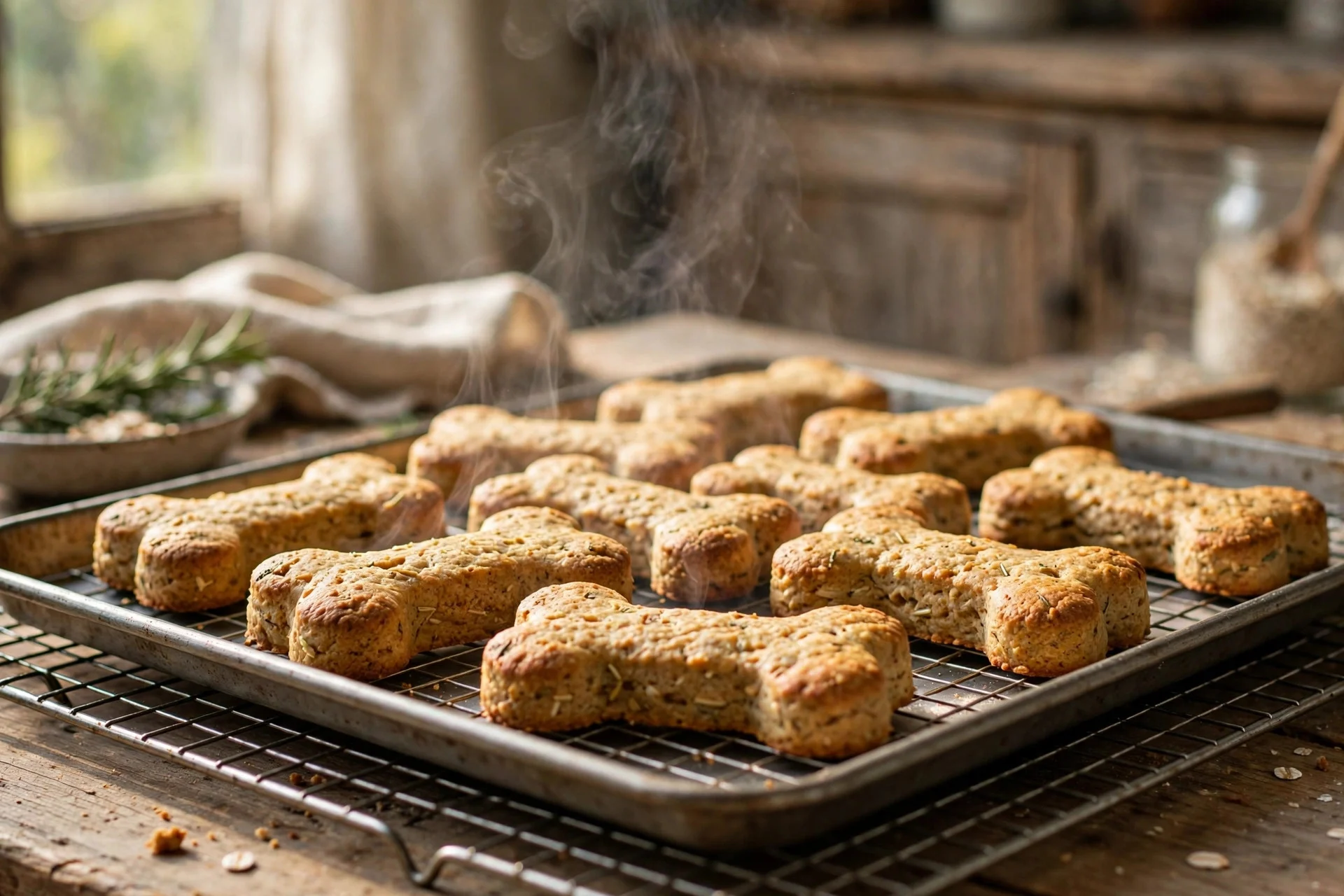
Mash one large baked sweet potato (skin off), stir in a quarter cup of cooled strong chamomile tea and 2 cups of whole wheat or oat flour. Roll the dough thin — about a quarter inch — cut into shapes, and bake at 350°F for 25 minutes until crisp. Thin biscuits bake up crunchier, and the crunching seems to give anxious dogs something to focus on besides the thunder. These keep for two weeks in an airtight jar, so I usually make a double batch before July 4th.
7. Turkey Tryptophan Training Bites
Here’s one most people don’t think of: turkey contains tryptophan, the same amino acid behind the Thanksgiving-nap legend. Mix 1 cup of cooked, unseasoned ground turkey with 1 cup oat flour and one egg, roll into pea-sized balls, and bake at 350°F for 15 minutes. I use these specifically during desensitization work — tiny, high-value, and easy to dole out one at a time while playing storm sounds at low volume. They won’t sedate anyone, but as a training reward during calm behavior, they’re genuinely useful.
Tips for Getting the Most Out of Calming Treats
- Timing matters more than the recipe. Give the treat 30 to 60 minutes before the stressful event. Shoving a biscuit at a dog mid-panic rarely works — once they’re over threshold, most dogs won’t eat at all.
- Pair treats with a safe space. A treat plus a familiar blanket in a quiet room beats a treat alone every time. You’re building an association: scary noise happens, good things happen too.
- Keep them small. These are tools, not meals. Treats should stay under 10% of daily calories, and calming recipes with honey or peanut butter add up fast.
- Store them right. Baked treats last about two weeks in an airtight container. Frozen ones keep two months. I label everything with the date because I absolutely will forget otherwise.
- Test on a calm day first. Make sure your dog actually likes the treat — and tolerates the ingredients — before you need it to work during a storm.
Mistakes to Avoid
The biggest mistake is expecting a miracle. Calming treats are a support act, not the headliner. If your dog’s anxiety is severe — destroying crates, hurting themselves, panicking for hours — that’s a vet conversation, possibly involving real anti-anxiety medication. No biscuit competes with that, and pretending otherwise isn’t fair to the dog.
Second mistake: too many treats. I’ve seen people hand out a dozen “calming” biscuits during a storm and then wonder why the dog has diarrhea on top of anxiety. Not an improvement.
And the one I’ll repeat until I’m blue in the face: check every peanut butter label for xylitol. It goes by “birch sugar” now too. One teaspoon can kill a small dog. This isn’t a “maybe avoid” thing.
Calming Treat FAQs
Do calming treats actually work?
Honestly? Mildly. Chamomile has genuine mild sedative properties, and the act of chewing or licking releases calming endorphins in dogs. But they’re best thought of as one piece of a bigger plan — routine, safe space, desensitization, and for serious cases, vet-prescribed medication. Anyone selling you a treat as a cure is selling you something.
How long before fireworks should I give them?
About 30 to 60 minutes. Digestion takes time, and you want the ingredients working before the first boom, not during it. For predictable events like July 4th or New Year’s Eve, I set a phone reminder. For surprise thunderstorms, the frozen ones are fastest to grab.
Can puppies have calming treats?
Yes, in smaller portions. Stick to the simplest recipes — banana oat or pumpkin yogurt — for puppies under six months, and skip anything with honey for very young pups. When in doubt, ask your vet. It takes two minutes and beats a midnight emergency search.
Can I give calming treats every day?
You can, but watch the calories. A daily chamomile biscuit is fine for most dogs. A daily handful of peanut butter balls is a weight-gain plan. If your dog needs daily anxiety support, that’s worth a vet visit to talk about longer-term options.
Start with the chamomile peanut butter bites — they’re the crowd favorite for a reason. And if storms are your dog’s main trigger, look into desensitization training next. Treats plus training beats treats alone, every single time.