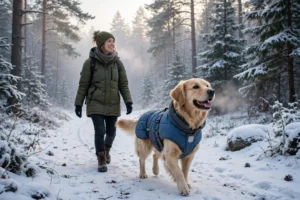
We’ve driven eight hours with a Golden Retriever in the back seat more times than I can count, and I’ve learned that holiday travel with your dog is either a wonderful adventure or a complete disaster — and the difference is almost entirely preparation. Traveling with a dog for the holidays adds a layer of complexity to an already chaotic season, but it’s absolutely doable if you plan ahead.
This holiday travel with dog checklist is what I run through before every trip. Print it, screenshot it, whatever works — just don’t wing it.

The Holiday Travel Checklist
1. Vet check and paperwork
Before anything else: make sure vaccinations are current and grab a copy of the records. If you’re crossing state lines, some states technically require a health certificate — most people never get asked for it, but having one costs little and covers you. If you’re flying, the airline will require specific documentation, usually issued within 10 days of travel. Also confirm your dog’s flea/tick and heartworm prevention is current. Holiday boarding facilities and family homes with other pets will thank you.
2. Update ID tags and microchip
Holiday travel is prime lost-dog season: unfamiliar houses, doors constantly opening, fireworks, stressed animals bolting. Before you leave, check that the tag on your dog’s collar is legible and has your cell number (not your home landline). Then log into your microchip registry and confirm your contact info is current — and add your destination address as a secondary contact if the registry allows it.
3. Pack the food (and then some)
Bring your dog’s regular food — enough for the whole trip plus two extra days in case of delays. Switching foods suddenly causes stomach upset, and the last thing you need over the holidays is a dog with diarrhea in someone else’s guest room. And bring a few familiar treats; new environments are stressful, and familiar food is comforting.
4. Water and bowls
Pack their regular bowls (familiar smells matter) plus a collapsible travel bowl for the car. Bring water from home for the first day or two — some dogs get upset stomachs from unfamiliar water, which sounds fussy until it happens to you at midnight in a hotel.
5. Medications and first aid
Pack all regular medications with clear dosing instructions, plus a few extra days’ worth. Add a basic pet first-aid kit: gauze, antiseptic wipes, tweezers (ticks don’t take holidays), any prescribed anti-anxiety meds, and your vet’s phone number saved in your phone.
6. Bedding and comfort items
Bring their bed or at least a familiar blanket. A dog’s own bedding smells like home, and that matters enormously in a strange place. If your dog is crate-trained, bring the crate too; it’s their safe den, and it gives your hosts a break when needed.
7. Leash, collar, harness — plus backups
Pack the everyday leash and a backup. Holiday destinations mean unfamiliar territory, and a broken leash clip in a strange neighborhood is a nightmare scenario. And keep the leash on during the drive’s rest stops — rest areas are where dogs slip collars and bolt.
8. Plan your route with dog stops
For road trips, plan a stop every 2–3 hours for water, a bathroom break, and a short walk. Look up dog-friendly rest stops or parks along your route in advance — there are apps for this. Never leave your dog in the car during stops, even in winter (cars still heat up in sun, and theft is a real risk at busy holiday rest areas).
9. Confirm pet policies everywhere
Call ahead — don’t just check the website. Confirm with your hotel, your Airbnb host, and your relatives that the dog is genuinely welcome, and ask about the specifics: Are there other pets? Is the yard fenced? Are there rooms the dog can’t enter? For hotels, ask about pet fees (they range from $25 to $150+) and whether there are size or breed restrictions.
10. Prep for the destination house
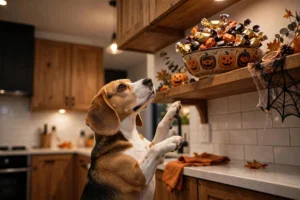
Someone else’s home is full of dog hazards: holiday plants (poinsettias, mistletoe, lilies), chocolate everywhere, unattended plates, open doors, other people’s medications in guest bathrooms. Do a quick sweep when you arrive. Ask where the dog is and isn’t allowed.
11. Keep the routine as normal as possible
Same feeding times. Same walk schedule, as close as you can manage. Same bedtime wind-down. Dogs handle travel stress much better when the daily rhythm stays familiar, even if the location changed. Morning walk first, then join the festivities.
12. Have an exit plan
Know where the nearest emergency vet is at your destination — look it up before you leave, not at 11 p.m. on Christmas Eve. Save the number in your phone. Also have a plan for overwhelming moments: a quiet room where the dog can decompress when the house gets loud, and permission from yourself to skip an outing if your dog is stressed. A calm dog in a quiet room beats a panicking dog at a party every time.
Flying With Your Dog: The Short Version
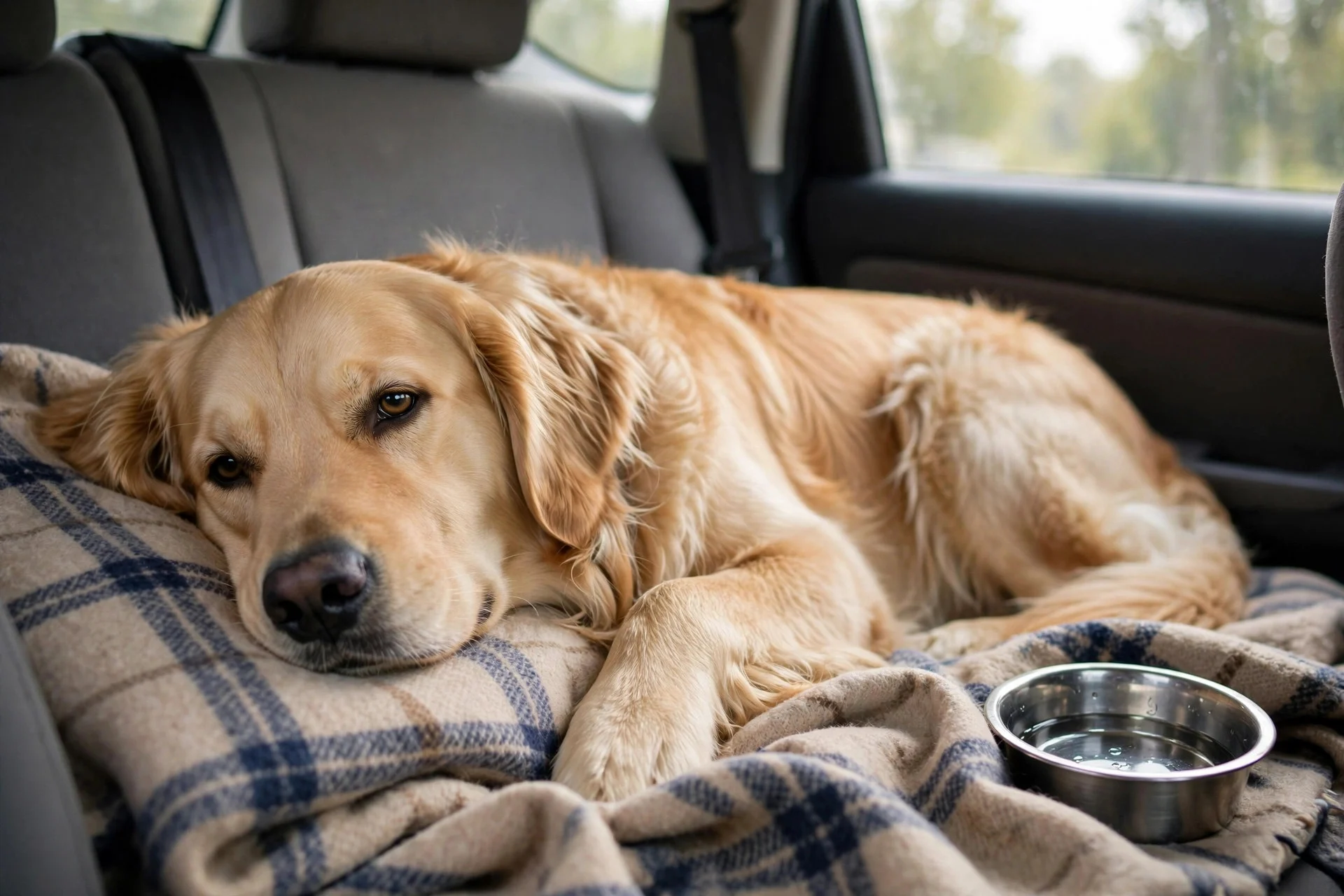
Driving is almost always less stressful than flying, but sometimes you have no choice. If you’re flying:
- Book direct flights only. Layovers multiply the risk of delays, missed connections, and lost pets.
- Small dogs can often fly in-cabin in an airline-approved carrier that fits under the seat. Book early — airlines limit the number of in-cabin pets per flight.
- Large dogs fly as cargo, which is safe when done right but stressful. Avoid travel during extreme temperatures — airlines embargo pet cargo above 85°F or below freezing.
- Talk to your vet about sedation. Most vets actually advise against sedating dogs for flights (it can affect breathing and balance), but there are anti-anxiety options worth discussing.
- Exercise them hard before the airport. A tired dog handles the whole ordeal better.
Common Holiday Travel Mistakes
Assuming “dog-friendly” means the same thing everywhere. One hotel’s “pet-friendly” is another’s “dogs under 25 pounds only, $150 fee, ground floor only.” Call and confirm the details.
Forgetting the regular food. “We’ll just buy some there” leads to stomach upset at the worst possible time. Pack it.
No ID update. The number one reason lost holiday dogs don’t make it home quickly is outdated tags and microchips. Ten minutes. Do it.
Over-scheduling the dog. Not every holiday outing needs the dog along. A long, calm day at the house with a frozen Kong beats being dragged to three different gatherings.
Holiday Travel FAQs
Should I board my dog or bring them along?
It depends on the dog and the trip. Confident, social dogs who travel well usually love coming along. Anxious dogs, dogs who don’t do well in new environments, or trips packed with events where the dog would be alone in a hotel room all day — those dogs are often happier with a trusted sitter or a good boarding facility. Be honest about which category your dog is in.
How do I keep my dog calm during a long car ride?
Exercise before you leave, a comfortable spot in the car (crate or secured back seat — never loose in the front), familiar bedding, a long-lasting chew, and regular stops every 2–3 hours.
What should I do if my dog gets sick while traveling?
This is why you looked up the emergency vet in advance. For mild stomach upset, withhold food for 12 hours (water is fine), then offer small bland meals. For anything more serious — vomiting that won’t stop, lethargy, suspected poisoning, injury — go straight to the emergency clinic. Don’t wait until morning “to see.” Holiday hours are limited, so earlier is always better.
How far in advance should I book pet-friendly hotels?
As early as possible — holiday season books up fast, and pet-friendly rooms are always the first to go. For Thanksgiving and Christmas travel, booking 2–3 months ahead isn’t overkill. When you book, confirm the pet policy in writing (email is fine) so there’s no surprise at check-in.
Holiday travel with a dog takes more planning, but here’s the thing nobody tells you: the holidays are better with them there. The photos, the morning walks in a new place, the way they supervise present-opening like it’s their job.
Plan ahead, pack the checklist, and go make some memories.