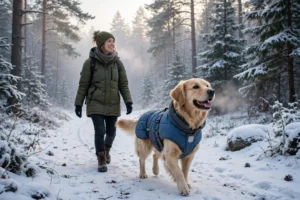
Do dogs need coats in winter? Short answer: it depends on the dog. Short-haired, small, senior, and puppy dogs usually need a coat in winter — honestly, below about 45°F is when I start reaching for one. Thick double-coated breeds like Huskies, Malamutes, and Newfoundlands? They’ll look at you like you’ve insulted them. The coat question isn’t really about winter; it’s about your specific dog.
I’ve owned both ends of the spectrum — a Golden who shivered in November and a friend’s Husky who slept in snowdrifts by choice. Here are the seven rules I use to decide, so you can stop guessing.
7 Rules for Dog Coats in Winter
Rule 1: Coat Type Matters Most
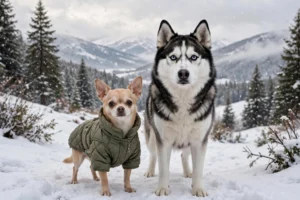
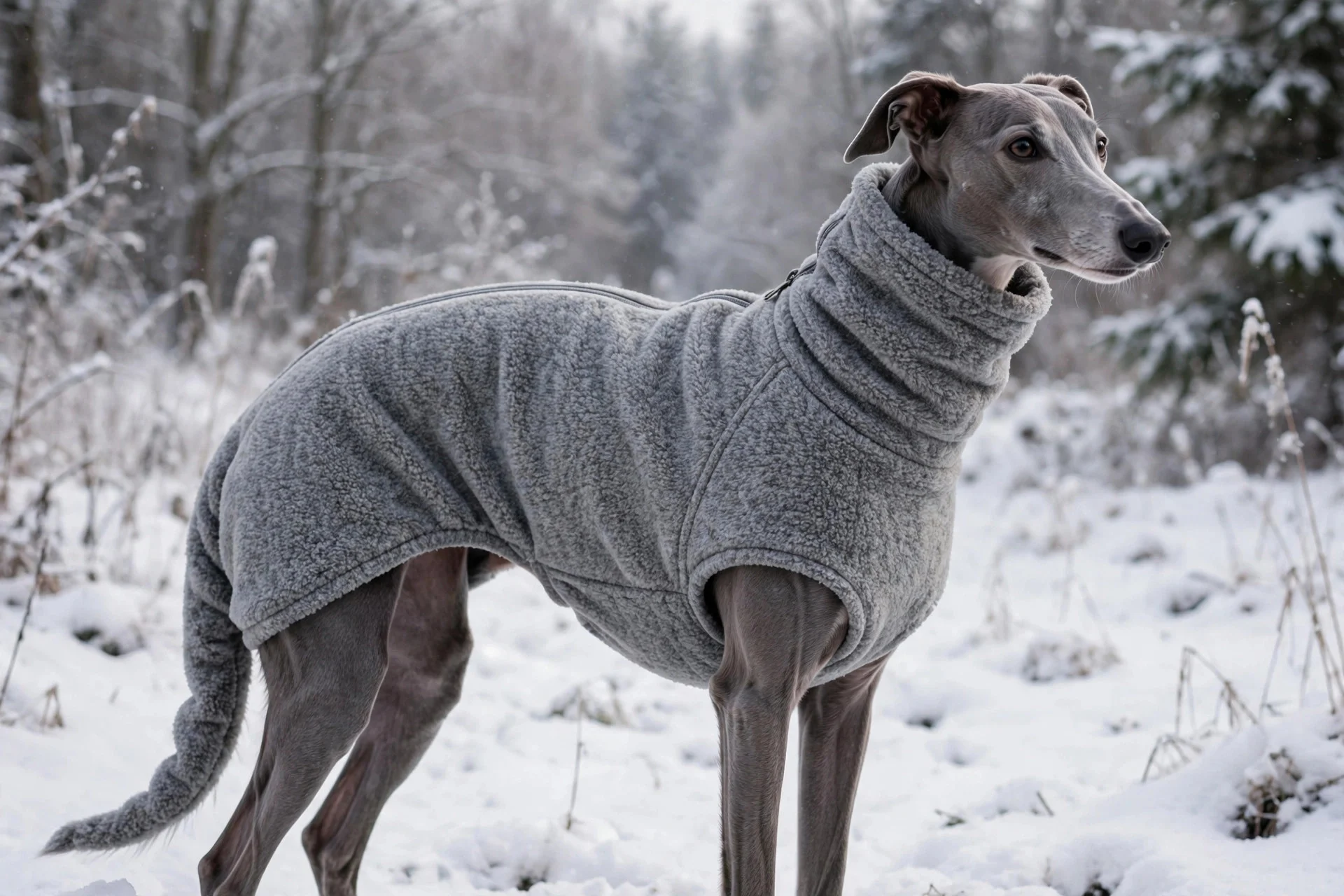
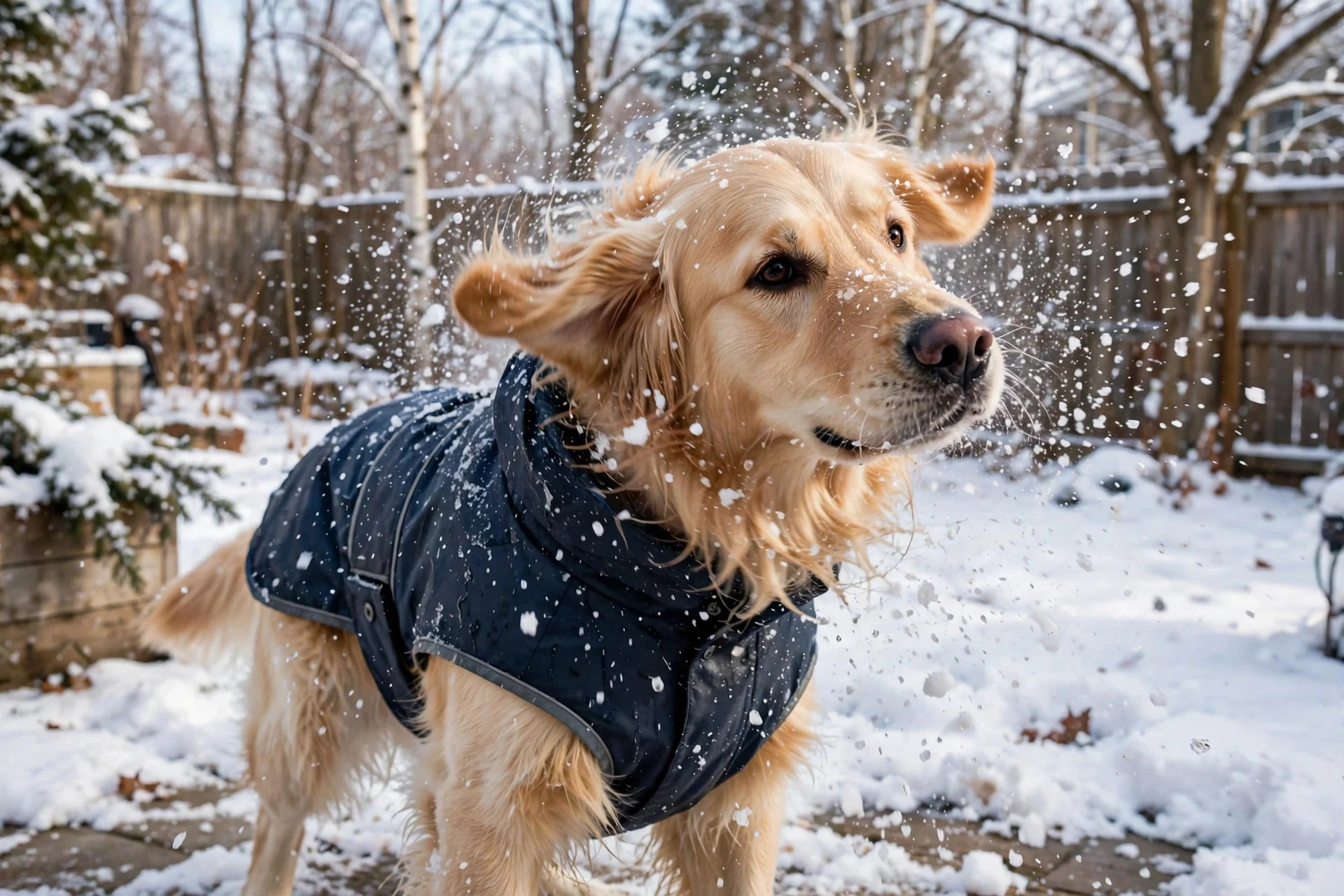
This is the single biggest factor. Dogs with thin, single coats or very short hair — Greyhounds, Whippets, Boxers, Pit Bulls, French Bulldogs, Chihuahuas, Dalmatians — feel the cold fast and almost always benefit from a coat. Dogs with thick double coats — Huskies, Malamutes, Samoyeds, Newfoundlands, Bernese Mountain Dogs — are built for cold and usually don’t need one. In between are the medium-coated breeds like Labradors and Goldens: fine in mild cold, but a coat helps below freezing, especially if they’re clipped short or getting older. When in doubt, look at what nature gave your dog.
Rule 2: Size Changes Everything
Small dogs lose heat faster than big dogs — it’s just physics. Less body mass, more surface area relative to size, and they’re closer to the cold ground. A 10-pound dog in 35°F weather is experiencing something very different from an 80-pound dog in the same air. My rule of thumb: dogs under 20 pounds should get a coat around 45°F and below. Medium dogs (20-50 pounds) around 35-40°F depending on coat. Big, thick-coated dogs can often handle the 20s without one. Tiny breeds like Yorkies and Chihuahuas? They basically need a coat the moment fall arrives.
Rule 3: Age and Health Tip the Scale
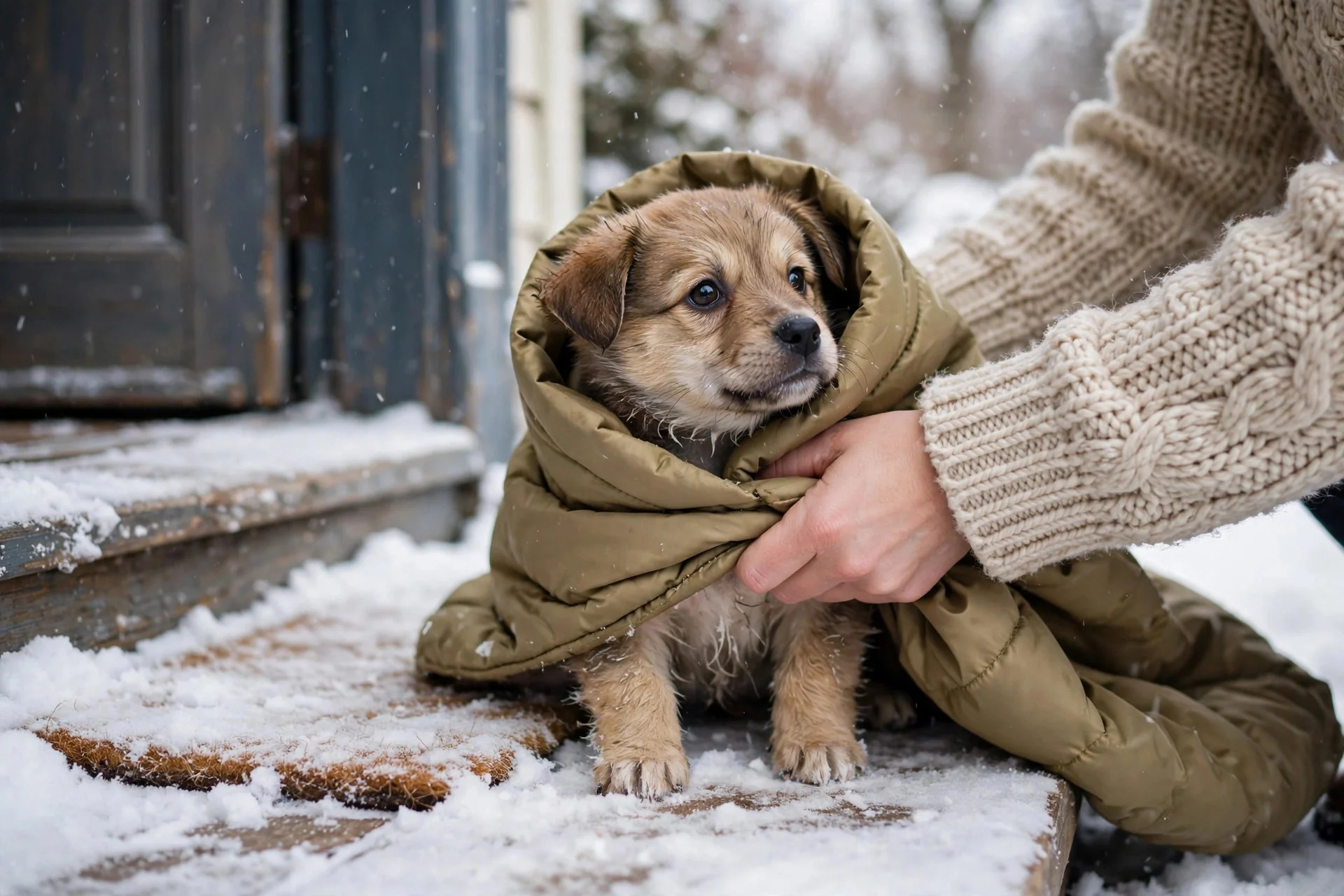
Puppies under six months have thin, immature coats and almost no body fat — they chill fast. Senior dogs lose the ability to regulate body temperature efficiently, and arthritis gets worse in the cold (a coat keeps those stiff joints a bit warmer). Dogs with health conditions — heart disease, kidney issues, diabetes, or anything that affects circulation — are also more cold-sensitive. If your dog falls into any of these categories, default to using a coat. Our vet once told me my aging Golden needed a coat a full 10 degrees earlier than she had as a young dog. He was right.
Rule 4: Know the Actual Temperature Thresholds
Let’s put real numbers on this. Above 45°F: most healthy adult dogs are fine without a coat. 35-45°F: small, short-haired, young, and senior dogs should wear one. 20-35°F: most dogs except thick double-coated breeds benefit from a coat on walks. Below 20°F: coat up nearly everyone, keep outings short, and watch for shivering regardless of breed. Below 0°F: quick potty trips only, coat or not. And always factor in wind chill — a windy 25°F day can feel like 10°F to a small dog. When I check the weather, I look at the “feels like” number, not the actual temperature.
Rule 5: Fit Matters More Than Fashion
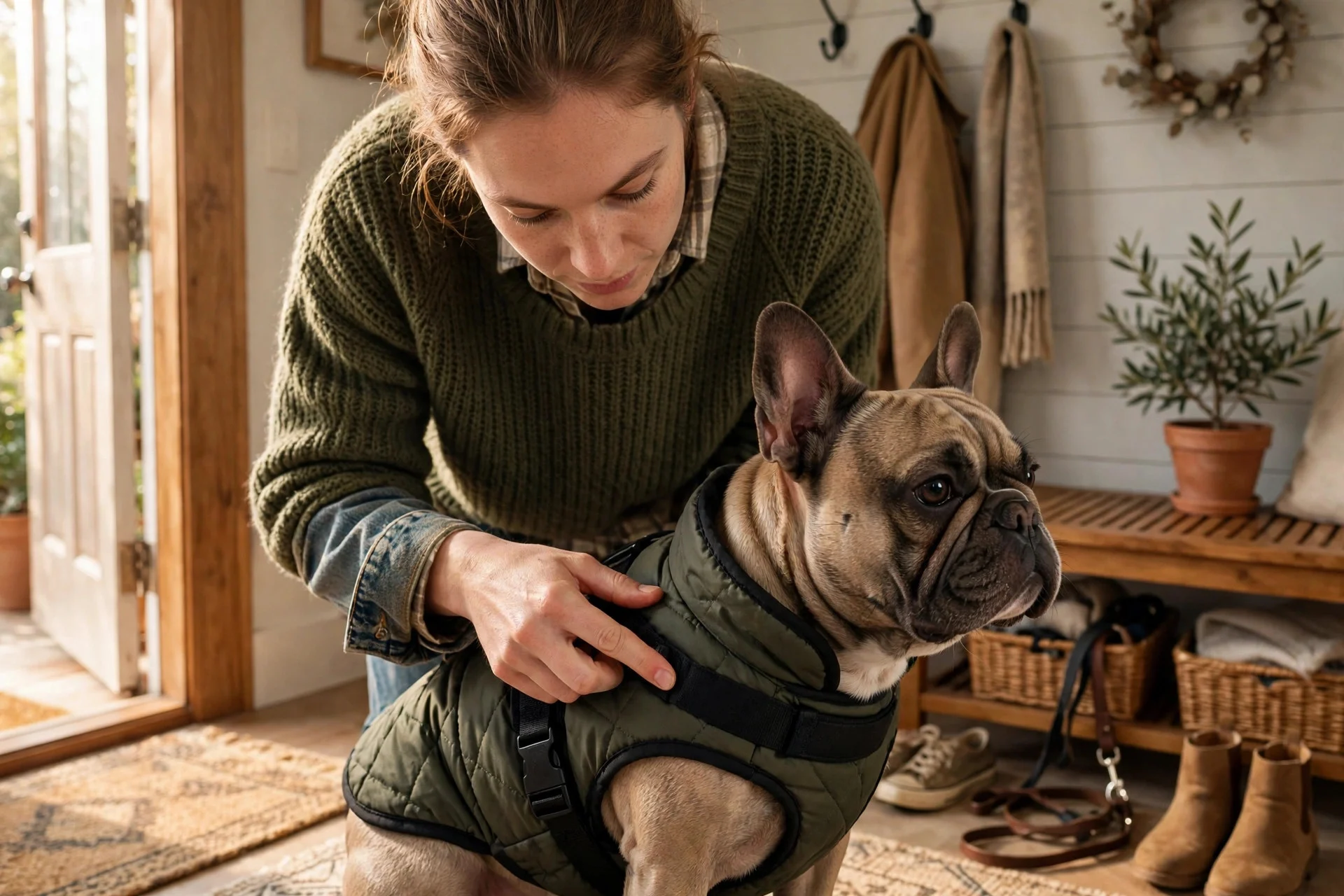
A badly fitting coat is worse than no coat — it chafes, restricts movement, and rides up so the belly (the part that needs covering most) is exposed. Here’s how it should fit: covers from the base of the neck to the base of the tail, snug around the chest without gaping, belly coverage at least halfway down, and no rubbing behind the front legs. You should be able to slide two fingers under the straps. Measure your dog’s chest girth and back length before ordering — don’t guess by weight alone, since a stocky 40-pounder and a lanky 40-pounder wear very different sizes. And skip anything with dangling straps or hoods; they’re chew targets.
Rule 6: Let Them Acclimate
Here’s something people forget: dogs that live in heated houses all winter never develop their full winter coat. A dog kept at 72°F indoors 24/7 then thrown into 20°F weather is going to feel it, coat or not. You can’t fully fix this — your dog lives with you, not in a barn — but you can help by keeping indoor temperatures reasonable and giving them regular (short) outdoor exposure through fall so the transition isn’t a shock. This is also why the first cold snap of the season always feels worse than the same temperature in February. Give it a couple of weeks; dogs do adjust.
Rule 7: Watch the Dog, Not the Thermometer
All the rules above are guidelines. Your dog is the actual authority. Signs your dog is cold: shivering, tucking the tail, lifting paws off the ground, hunching, whining, or trying to turn back toward home. Signs your dog is fine: relaxed body, normal pace, nose to the ground, the usual sniff-everything routine. I learned this the hard way with my Beagle — the charts said he’d be fine at 30°F, but he told me otherwise with very clear body language. Trust what you see over what you read. If your dog’s miserable, the coat goes on regardless of what the “rules” say.
Common Mistakes
- Coating a double-coated breed unnecessarily. Huskies and Malamutes can overheat in a coat — their fur is doing the job. Watch for panting and restlessness.
- Leaving the coat on indoors. Take it off inside. Dogs overheat in heated houses, and damp coats against skin cause irritation.
- Buying for looks instead of coverage. If it doesn’t cover the belly and chest, it’s a costume, not a coat.
- Forgetting the paws. A warm body with freezing paws is still a cold dog. Paw balm or boots complete the picture.
- Assuming one coat fits all winter. A light fleece for fall and a waterproof insulated coat for deep winter is the ideal setup if your budget allows.
FAQs
Do dogs really need coats, or is it just for looks?
It’s genuinely needed for many dogs — small breeds, short-haired breeds, puppies, and seniors lose heat fast and can get dangerously cold. For thick double-coated breeds, it’s mostly unnecessary and can cause overheating. The key is matching the coat to the dog, not the trend.
At what temperature should I put a coat on my dog?
For cold-sensitive dogs (small, short-haired, young, senior), around 45°F and below. For medium-coated healthy adults, around freezing (32°F) and below. For thick double-coated breeds, usually not needed until it’s well below 20°F, if at all. Wind chill lowers all these thresholds.
Can a dog overheat wearing a coat?
Yes, especially double-coated breeds and during active play. Signs include excessive panting, restlessness, and trying to rub the coat off. If your dog is running hard and panting in the cold, the coat is probably doing more harm than good — take it off and let their natural coat work.
Should my dog wear a coat in the rain too?
A waterproof coat in cold rain is a great idea — wet fur loses its insulating power fast, and a soaked dog chills much quicker than a dry one. In warm rain, skip it; the coat will just trap heat. Look for a waterproof (not just water-resistant) shell for wet winter weather.
The Bottom Line
So, do dogs need coats in winter? Some absolutely do, some definitely don’t, and most fall somewhere in between depending on the day. Start with your dog’s coat type, size, and age, check the actual temperature, and then — most importantly — watch your dog. They’ll tell you. And if you’re standing in the pet store aisle unsure, remember: a $30 fleece that keeps your shivering Chihuahua happy is one of the best purchases you’ll make all winter.