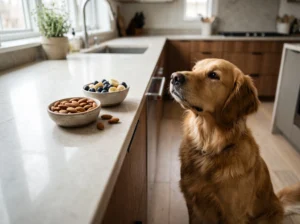
There’s a special kind of guilt that hits when your dog starts doing the winter sidewalk dance. You know the one — three steps, then a paw lifts. Three more steps, another paw. By the end of the block they’re hopping like the pavement is lava. That’s why dog paw protection winter care matters — the right balm, booties, and a quick post-walk routine make cold months comfortable again.
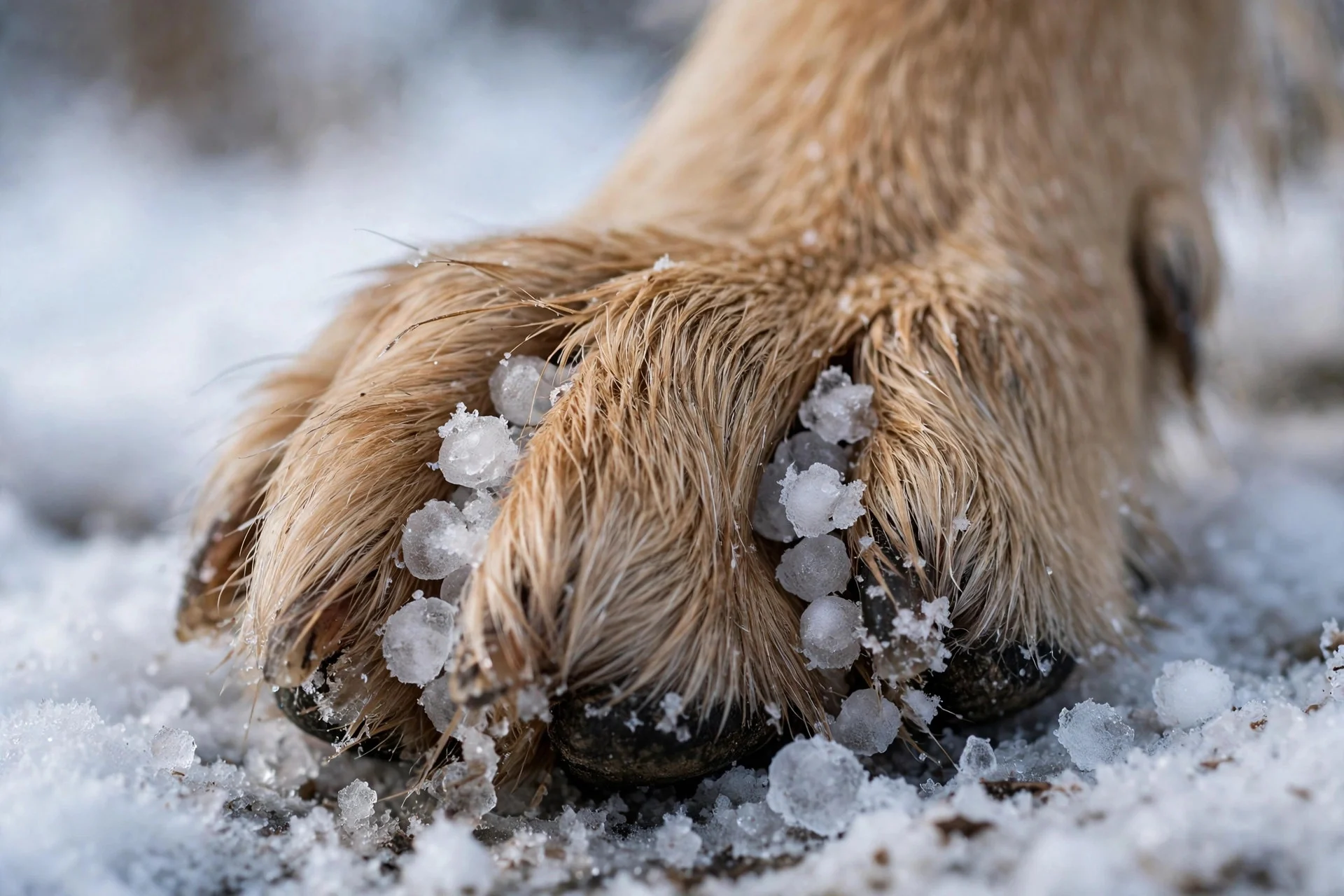
It’s not drama. Rock salt and ice-melt chemicals sting raw paw pads, and ice balls pack between their toes like tiny frozen marbles. Good dog paw protection for winter isn’t complicated, but it does take a little routine. Here’s the one I use, refined over a lot of cold Januaries with a dog who’d rather eat snow than wear booties.
8 Winter Paw Protection Tips That Actually Work
1. Rinse paws after every single walk
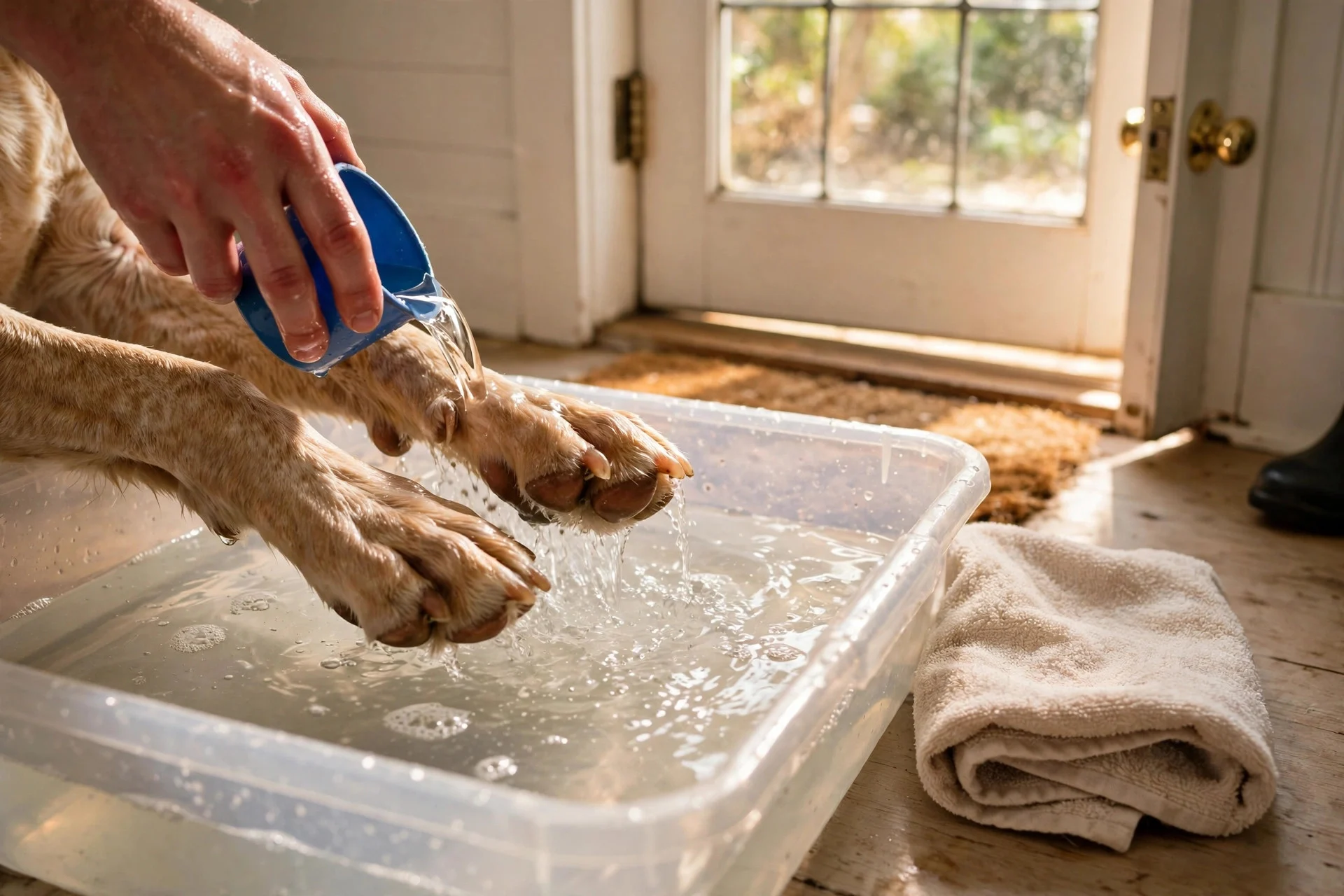
This is the big one. Salt doesn’t just irritate on contact — it keeps burning as long as it sits there, and most dogs will lick it off, which means they’re swallowing the stuff too. I keep a shallow plastic tub by the front door, fill it with lukewarm (never hot) water, and dunk each paw for about five seconds. Then a quick towel dry. The whole thing takes under a minute once it’s habit. Skip the fancy paw washers if you want; a $3 dish tub works exactly as well.
2. Apply paw balm before you head out
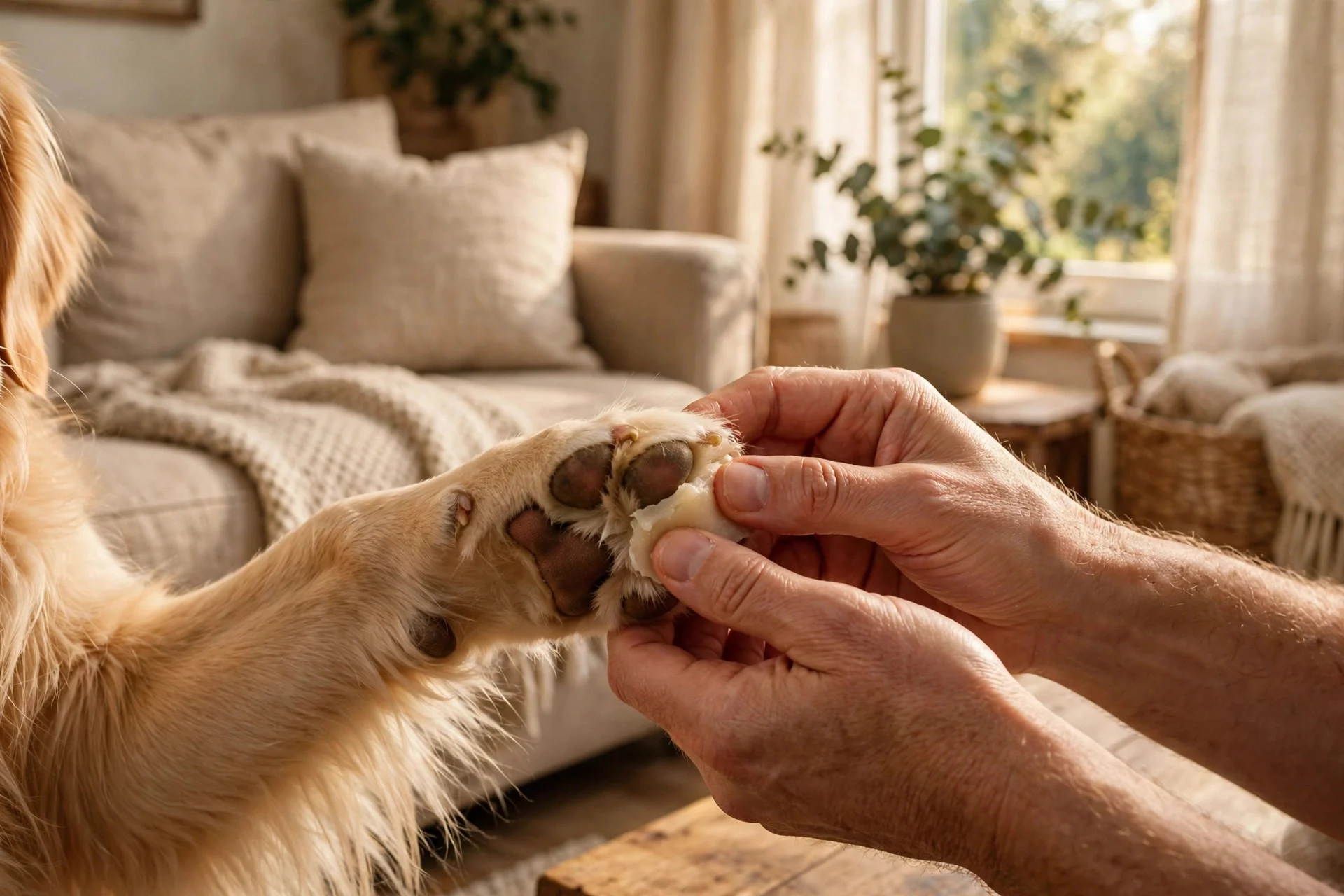
Think of it as chapstick for feet. A thin layer of paw balm — or plain coconut oil in a pinch — creates a barrier between the pads and the salt. I rub a pea-sized amount into each pad about five minutes before we leave, so it has time to absorb instead of sliding off on the rug. Don’t glob it on thick. Too much and your dog will spend the walk licking their feet, which defeats the purpose. Reapply on long walks if you’re out more than 30 minutes.
3. Try booties — but introduce them right
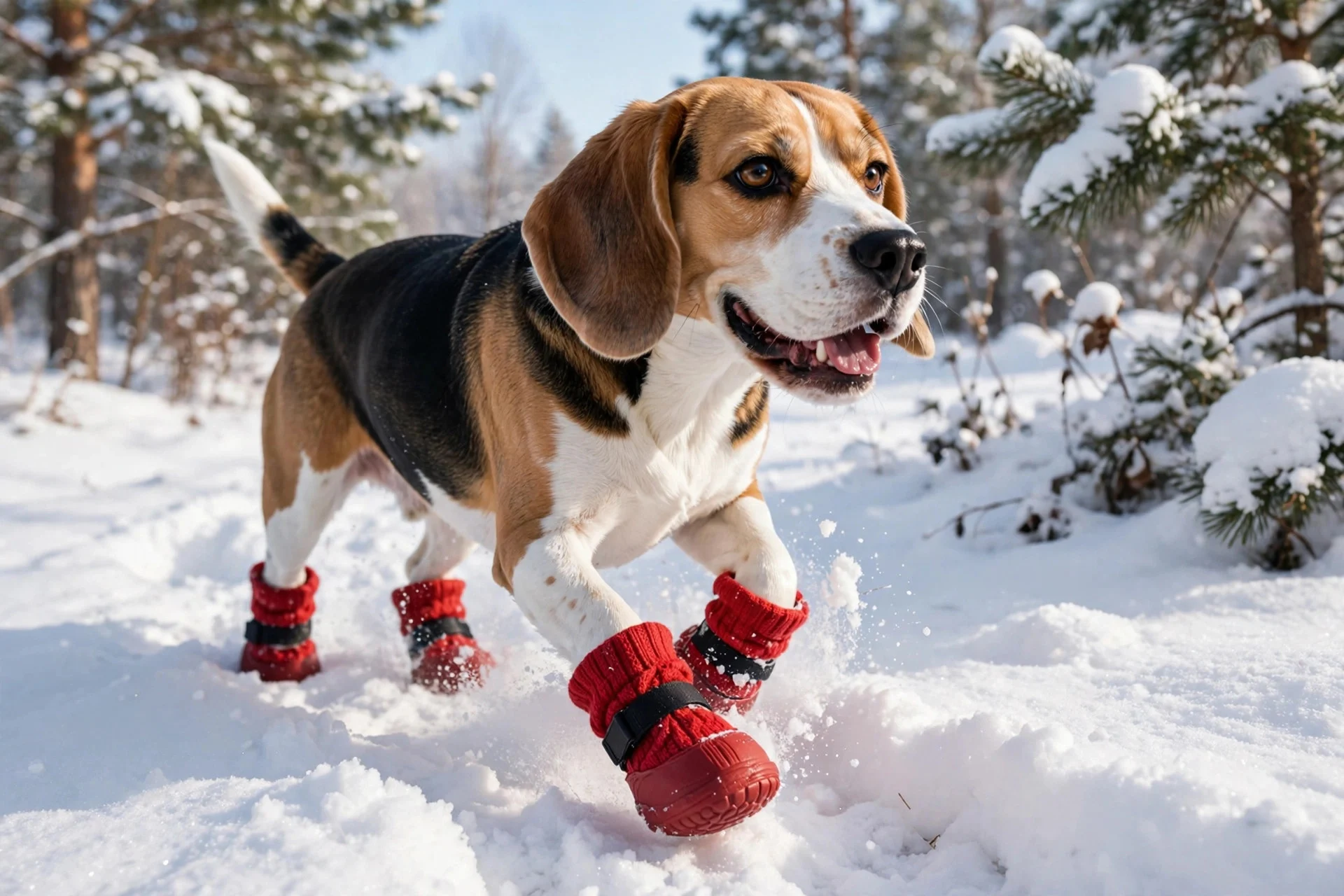
Booties are the gold standard, and also the number one source of comedy in my house. The mistake most people make is strapping all four on and heading out the door, then wondering why their dog is doing a high-stepping march of protest. Start indoors: one bootie, treat, take it off. Next day, two booties, treats, short indoor walk. Most dogs accept them within a week. Measure paws properly — too loose and they twist off in snowbanks, too tight and they cut circulation. And bring a spare. You will lose one in a snowdrift.
4. Trim the fur between the toes
Long-haired breeds collect ice balls between their toes like they’re building a collection. Those ice clumps pull on the skin with every step, which hurts and can crack the webbing. Every couple of weeks in winter, I flip each paw over and trim the fur flush with the pads using blunt-tipped scissors. Takes three minutes. If you’re nervous about nicking the skin — fair — ask your groomer to do it during a winter groom. This one small trim makes a bigger difference than most people expect.
5. Switch to pet-safe ice melt at home
You can’t control what the city dumps on the sidewalks, but your own driveway and steps are yours. Regular rock salt (sodium chloride) is the worst offender, and the calcium chloride blends burn even more. Pet-safe ice melts cost a few dollars extra per bag and genuinely work — look for ones labeled safe for paws, and avoid anything with the word “calcium” high on the ingredient list. I switched three winters ago and the difference on our front steps was immediate. No more post-walk paw chewing.
6. Shorten walks when it’s brutally cold
There’s no shame in a ten-minute walk when it’s 10°F with wind. Paw pads can get frostbite just like your fingers can, and small or short-coated dogs hit their limit fast. I use a simple rule: if I’m pulling my collar up and regretting my life choices, we’re doing a quick loop, not the full trail. On those days, make up the exercise indoors — a frozen Kong, a hallway game of fetch, ten minutes of trick training. A tired brain counts.
7. Check pads weekly for cracks and cuts
Make it part of belly-rub time. Flip each paw, look at the pads, press gently around the edges. You’re looking for cracks, flaking, small cuts, or redness between the toes. Catching a crack early means a few days of balm and rest. Ignoring it means a bleeding pad on a Saturday night and an emergency vet bill. I also check for bits of gravel or salt crystals wedged in — they hide in there. If a pad is actually bleeding or your dog won’t put weight on it, that’s a vet visit, not a home fix.
8. Moisturize at night, not just before walks
Everyone remembers the pre-walk balm and forgets the overnight repair. Winter air is dry, indoor heating is drier, and pads take a beating even on rinse-and-balm routines. Before bed, I massage a thin layer of balm into all four paws — most dogs find it weirdly relaxing, and the overnight hours give it time to actually soak in. Within two weeks of doing this, the flaky edges on my dog’s pads smoothed out completely. Shea butter-based balms work great; skip anything with xylitol or essential oils.
Making It a Routine (So You’ll Actually Do It)
The tub by the door is the whole secret. If the rinse setup lives in a cabinet, you’ll skip it. Mine sits right next to the leash hook from December through March — tub, a dedicated paw towel, and the balm tin. Walk in, dunk, dry, treat. My dog now walks straight to the tub herself, because the treat at the end is non-negotiable in her mind.
For booties, keep them clipped to the leash. For the balm, keep one tin by the door and one by the couch for the nighttime round. Systems beat willpower every time.
Mistakes That Hurt Paws (I’ve Made Most of These)
Letting salt sit “until bath day.” Salt keeps working on pads for hours. A weekly bath doesn’t undo six days of chemical burn. Rinse every walk or don’t bother.
Using hot water for the rinse. Cold paws plus hot water is painful — it stings like stepping into a hot shower with numb feet. Lukewarm only.
Assuming “pet-safe” ice melt means edible. It means less irritating to paws, not safe to eat. Still rinse, still discourage licking.
Skipping the between-toe check. Everyone looks at pads. Almost nobody spreads the toes. That’s where ice balls and salt crystals hide.
Winter Paw Questions I Get Asked a Lot
Do dogs really need booties, or is balm enough?
Depends on your winter. For light snow and occasional salt, balm plus rinsing is plenty. For daily walks on heavily salted city sidewalks or sub-zero temps, booties earn their keep. My rule: if the salt is visibly caked on the sidewalk, booties go on.
Is rock salt actually toxic to dogs, or just irritating?
Both, at different doses. On paws it’s an irritant that causes burning and cracking. Eaten in quantity — say, a dog licking large amounts off their feet or drinking salty slush — it can cause vomiting, dehydration, and in extreme cases sodium poisoning. That’s why the rinse matters twice: for the paws and for the stomach.
Can I use Vaseline instead of paw balm?
You can in a pinch, but I don’t love it for regular use. Petroleum jelly sits on top of the skin rather than absorbing, and most dogs find the texture irresistible to lick off. A proper paw balm with shea butter or beeswax absorbs better and stays put. Save the Vaseline for emergencies.
What temperature is too cold for dog paws?
There’s no single number — coat, size, and conditioning matter. But as a rough guide: below 20°F, keep walks short for most dogs. Below 0°F, quick potty trips only, booties strongly recommended. And wind chill counts. If your bare hand hurts after a minute outside, your dog’s paws are hurting too.
Winter doesn’t have to mean sore paws and cut-short walks. A tub by the door, a tin of balm, and two minutes of attention after each walk covers about 90% of it. Start the routine now, before the first big salt dump — your dog’s feet will thank you, probably by tracking slightly less slush across your floors.