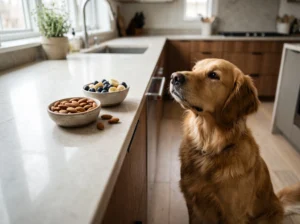
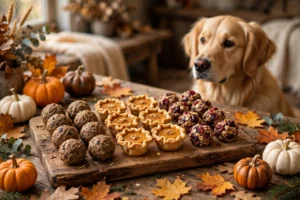
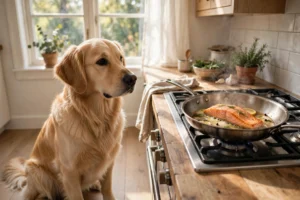
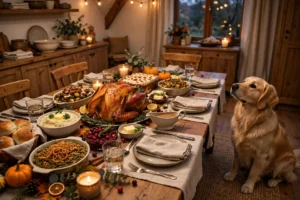
Every Thanksgiving, the same scene plays out in my kitchen: I’m carrying a platter to the table, my dog is performing his most heartbreaking stare, and a relative whispers, “Oh, just give him a little turkey — what’s the harm?” The harm, as it turns out, depends entirely on what’s on the platter.
This is your complete guide to Thanksgiving foods dogs can eat — and the ones they absolutely can’t. Fifteen foods, each with a straight verdict. Bookmark it. You’ll need it when the relatives start negotiating.
15 Thanksgiving Foods: Safe or Not?
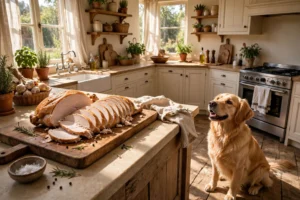
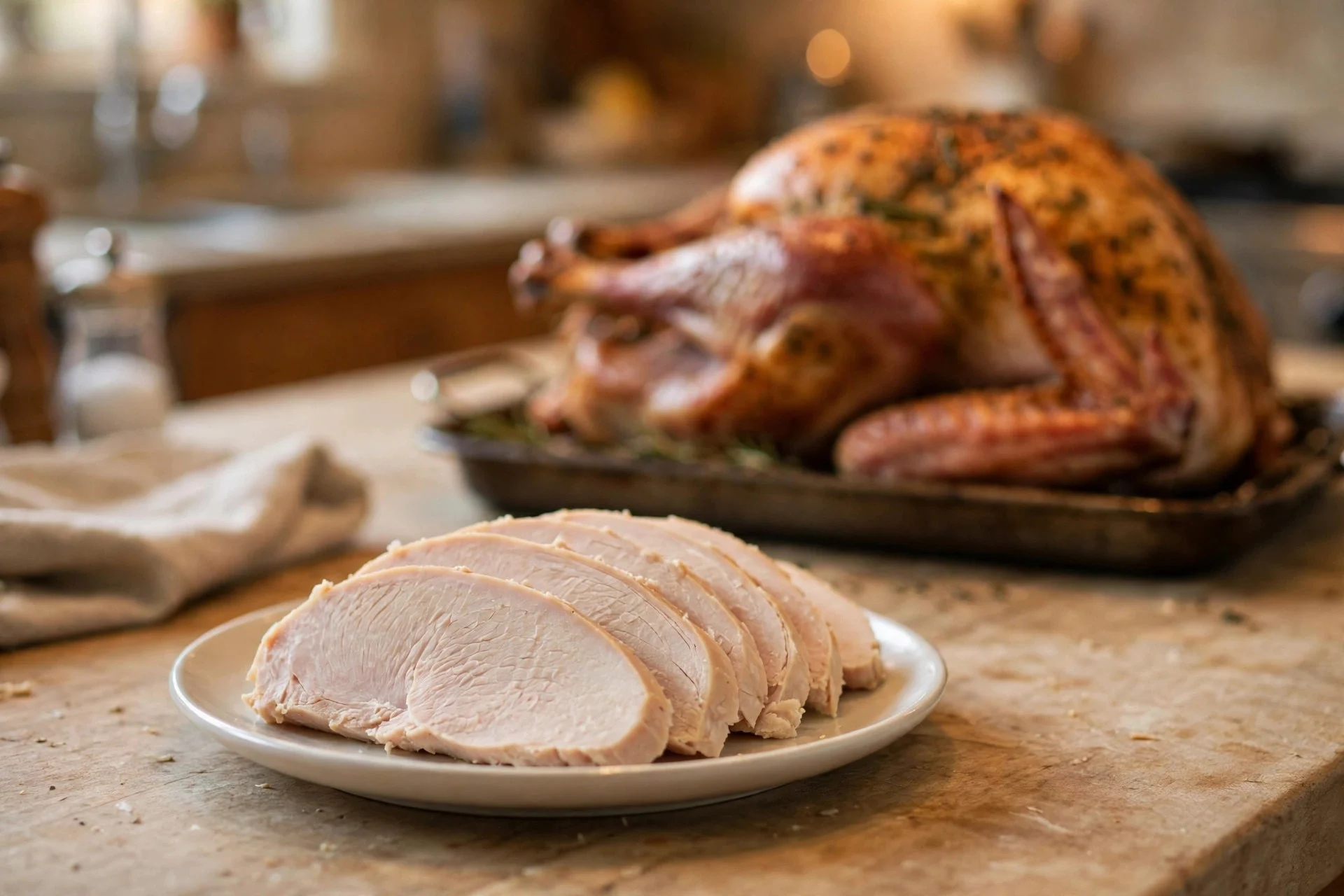
1. Turkey — YES (plain only)
Plain cooked turkey breast is excellent for dogs — lean, high-protein, easy to digest. The problem is everything around it: the skin (pure fat, pancreatitis risk), the garlic-herb rub (toxic), and the cooked bones (splinter hazard). Carve off an unseasoned portion before the butter and seasoning go on. That’s the move. Every year.
2. Ham — NO
Ham is one of the worst Thanksgiving meats for dogs. It’s extremely high in sodium and fat, which can trigger vomiting, diarrhea, and pancreatitis. A small stolen bite probably won’t cause disaster, but don’t deliberately serve it. Turkey is the better bird in every way.
3. Mashed Potatoes — MAYBE (plain only)
Plain boiled mashed potato? Fine in small amounts. But real mashed potatoes have butter, milk, salt, and often roasted garlic mixed in — and that version is a no. If you want to share, scoop out a plain portion before you add anything. Two tablespoons for a medium dog is plenty.
4. Sweet Potatoes — YES (plain)
One of the best Thanksgiving foods you can share. Plain cooked sweet potato is full of fiber, beta-carotene, and vitamins. Just skip the marshmallow topping, the brown sugar, and the pecans — a plain baked sweet potato, cubed, is genuinely great dog food. My dog gets this every year and loses his mind over it.
5. Green Beans — YES
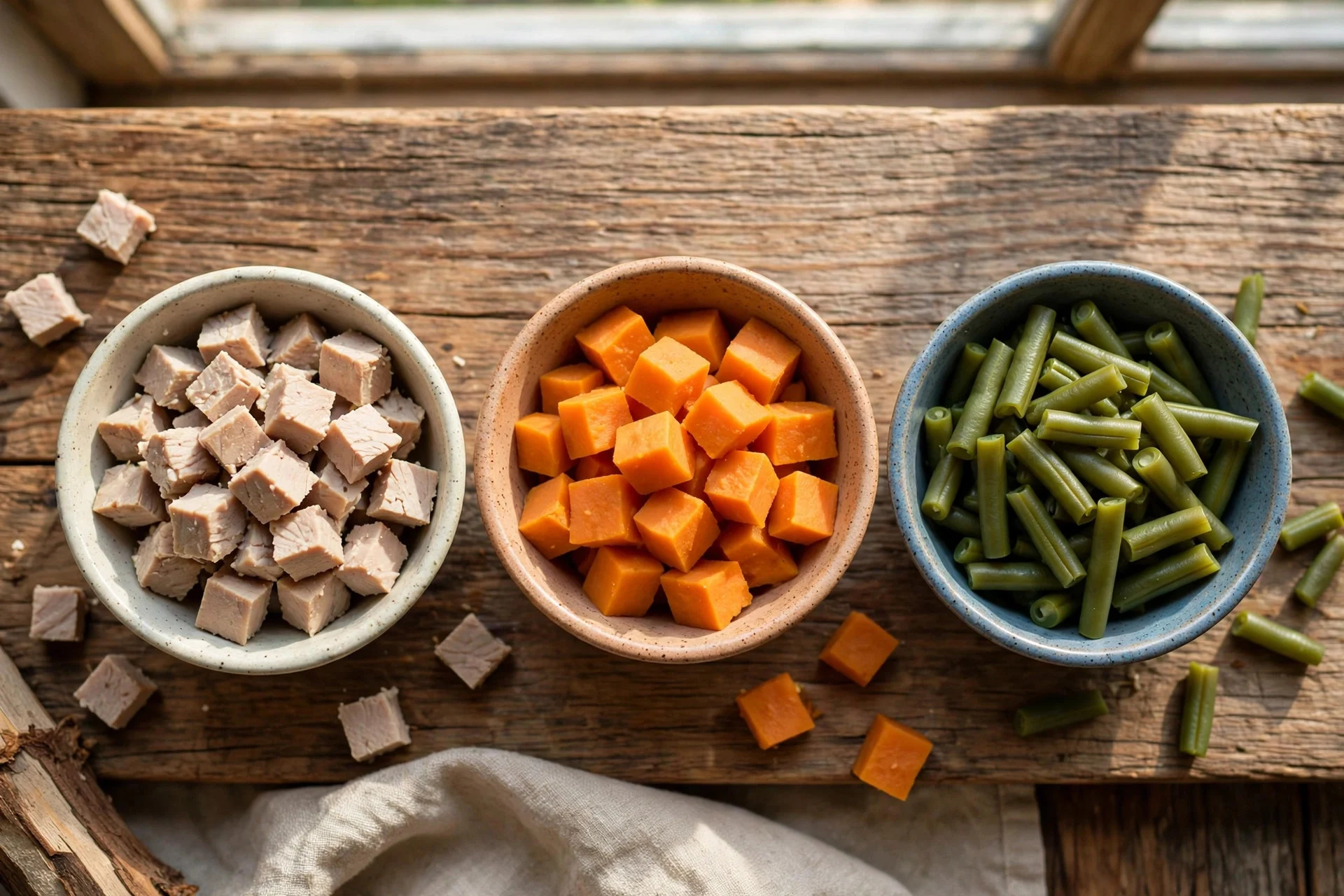
Plain green beans — steamed, boiled, or roasted with nothing on them — are a fantastic low-calorie treat. The classic green bean casserole, though? Absolutely not. The canned soup, fried onions, and cheese make it a salty, fatty, oniony mess. Serve the beans before they go into the casserole dish.
6. Corn — CAREFUL (off the cob only)
Corn kernels themselves are fine — they’re in plenty of dog foods. The cob is the killer. Corn cobs are one of the most common causes of intestinal blockage surgery in dogs, and Thanksgiving produces a lot of them. If you serve corn, cut the kernels off first and bin the cobs immediately, somewhere your dog can’t reach.
7. Cranberry Sauce — SMALL AMOUNTS
Plain cranberries are safe, but cranberry sauce is loaded with sugar. A teaspoon or two won’t hurt, but don’t ladle it on. And check for xylitol in “sugar-free” versions — that’s an emergency, not a treat. Honestly, the unsweetened dried cranberries from the baking aisle are a better option.
8. Stuffing — NO
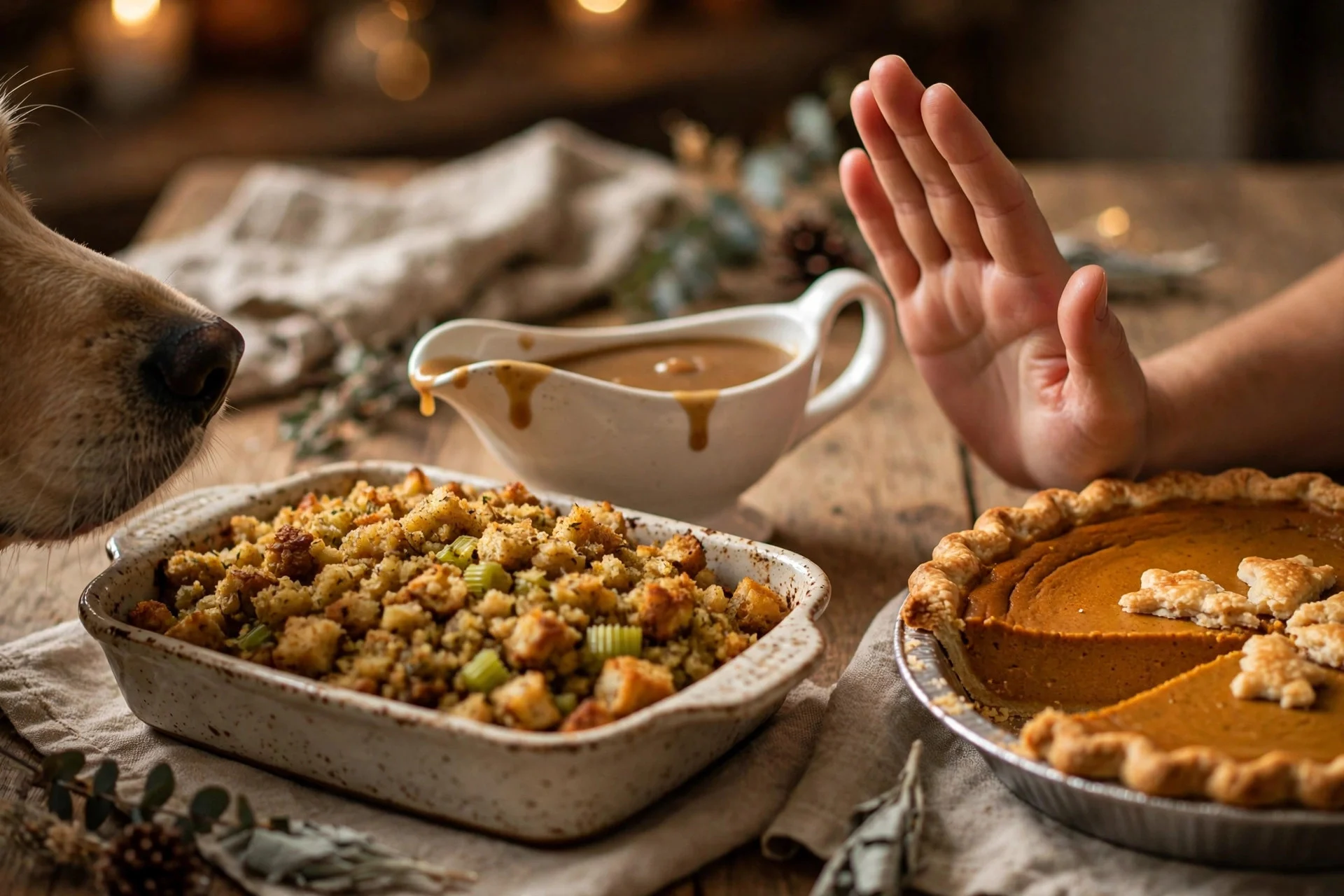
Almost all stuffing contains onion and garlic, both toxic to dogs. It doesn’t matter if it’s homemade or from a box — the alliums are in there. This is one of the most common Thanksgiving poisonings, because it looks harmless and smells incredible. Make a separate dog-safe batch if you want to share the experience (bread, apple, celery, egg — no onion, no garlic).
9. Gravy — NO
Gravy is concentrated fat, salt, and usually onion. A spoonful can give a small dog days of digestive misery, and larger amounts risk pancreatitis. I know the eyes are persuasive. Stay strong. Offer a dog treat instead and everyone survives.
10. Pumpkin Pie — NO (plain pumpkin: YES)
The pie filling has sugar, spices, and nutmeg — which is toxic to dogs. Some versions also contain xylitol. But plain pumpkin purée (100% pumpkin, not pie filling) is wonderful for dogs — great fiber, soothing for digestion. Scoop the plain stuff into their bowl and let the humans keep the pie.
11. Dinner Rolls & Bread — SMALL AMOUNTS
A small piece of plain bread or roll is harmless for most dogs. Just make sure there’s no onion, garlic, or xylitol (some “low-carb” breads use it). And keep dough away from dogs entirely — raw yeast dough expands in the stomach and can cause bloat, which is life-threatening. Baked bread: fine. Raw dough: emergency.
12. Mac and Cheese — NO
Too rich, too salty, too fatty. The cheese sauce alone can trigger vomiting and pancreatitis, and many dogs are lactose-sensitive on top of that. A tiny lick won’t hurt, but a bowlful is asking for a miserable night. This one’s for the humans.
13. Deviled Eggs — PLAIN EGG ONLY
A plain hard-boiled egg is great dog food — good protein, easy to digest. But deviled eggs have mayo, mustard, salt, and often paprika or hot sauce. Share the plain boiled egg before it gets deviled. Two halves for a large dog is a solid treat.
14. Onion Dishes — HARD NO
Onions, shallots, leeks, and chives — in any form, cooked or raw — damage dogs’ red blood cells and can cause anemia. This includes onion powder in seasoning blends, caramelized onions on sides, and onion in stuffing and gravy. There’s no safe amount worth risking. If a dish has onion in it, your dog doesn’t get that dish. Simple rule.
15. Chocolate Desserts — HARD NO
Pecan pie, chocolate cake, brownies — the dessert table is a minefield. Chocolate toxicity depends on type and dose, but Thanksgiving desserts also pack xylitol (in “sugar-free” versions), macadamia nuts, and massive sugar loads. Keep desserts on a high table, and don’t leave the room with a pie unattended. Dogs can clear a coffee table faster than you’d believe.
Quick Tips for a Dog-Safe Thanksgiving
Cook a small plain portion of turkey before seasoning the bird — it takes five extra minutes and solves the biggest problem. Brief your guests: no table scraps, no exceptions, and hand the worst offenders a bag of dog treats to distribute instead. Secure the trash before dinner, not after — the carcass and bones are the most dangerous thing in your kitchen that night. And exercise your dog well before guests arrive; a tired dog is a well-behaved dog.
FAQs
Can dogs eat Thanksgiving leftovers?
Only the plain ones. Leftover plain turkey, sweet potato, green beans, and plain potatoes are fine. But most leftovers are mixed with butter, seasoning, onion, or gravy — and those are off-limits. When in doubt, don’t share it.
What Thanksgiving foods are toxic to dogs?
Onion and garlic (in stuffing, gravy, seasoning), xylitol (in sugar-free desserts and some peanut butters), chocolate, nutmeg (in pumpkin pie and eggnog), macadamia nuts, raw yeast dough, and cooked turkey bones. Alcohol — including in eggnog and rum desserts — is also toxic.
How much turkey can I give my dog?
As an occasional treat, stick to the 10% rule: extras shouldn’t exceed 10% of daily calories. Roughly speaking, that’s 1–2 tablespoons of diced plain turkey for a small dog, up to ½ cup for a large dog. Plain breast meat only — no skin, no seasoning, no bones.
My dog ate stuffing — what should I do?
Call your vet. Stuffing almost always contains onion and garlic, and the risk depends on how much was eaten relative to your dog’s size. Don’t wait for symptoms — onion toxicity can take a day or two to show up, and by then it’s harder to treat. Your vet may recommend monitoring blood work.
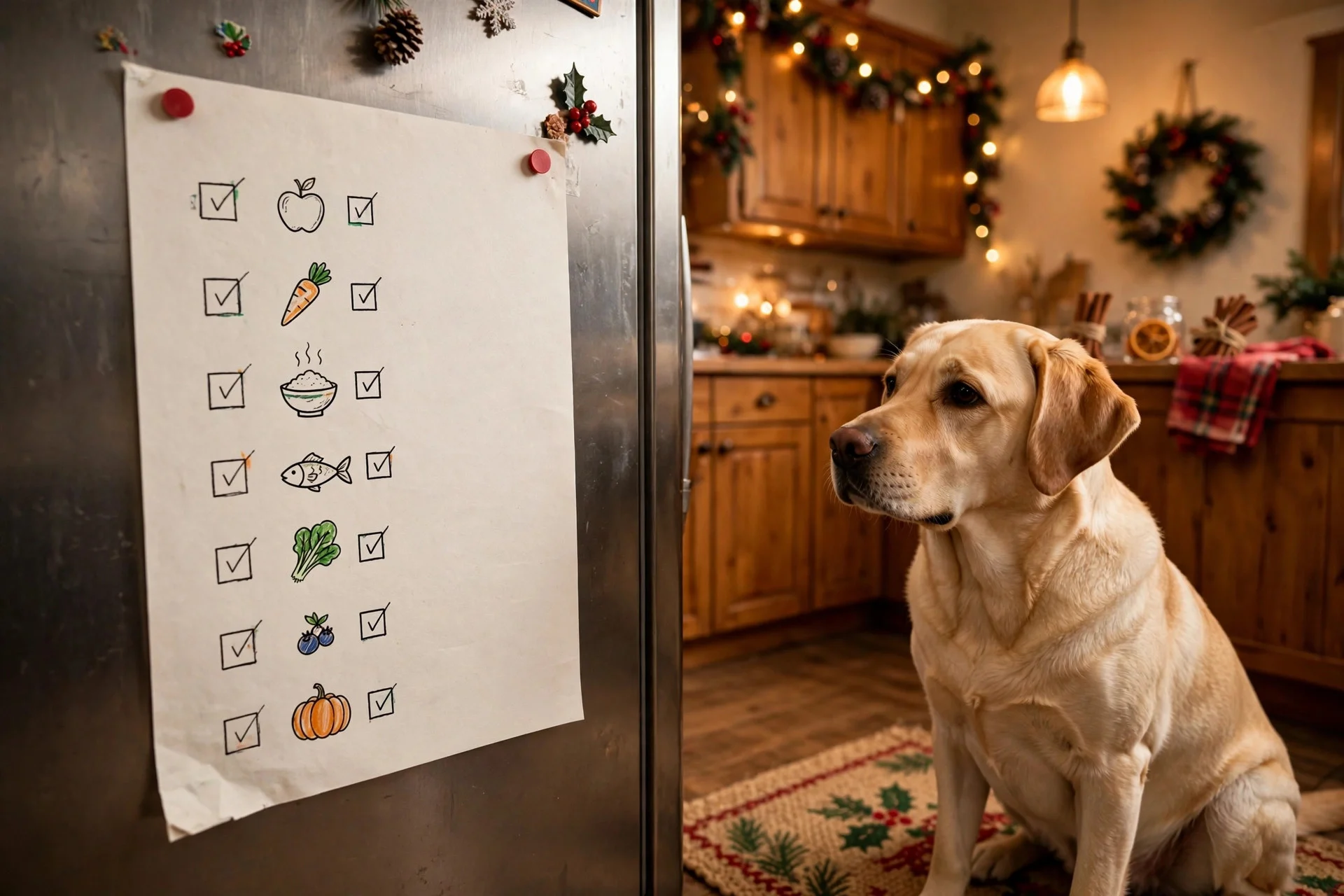
Print this list, stick it on the fridge, and point at it when the relatives start negotiating. Your dog gets the good stuff — plain turkey, sweet potato, green beans — and skips everything that causes problems. Everybody eats well. Nobody visits the emergency vet. That’s a proper Thanksgiving.