Christmas transforms your house into an obstacle course of things that can harm your dog. The tree is full of chewable shiny objects. The kitchen produces chocolate at an industrial scale. The trash fills with ribbon, wrapping, and bones. And the front door never stops opening for visitors.
I’ve spent enough Decembers dog-proofing to have opinions about all of it. Here are twelve Christmas dog safety hazards — and exactly what to do about each one.
12 Christmas Hazards for Dogs
1. Chocolate (Everywhere in December)
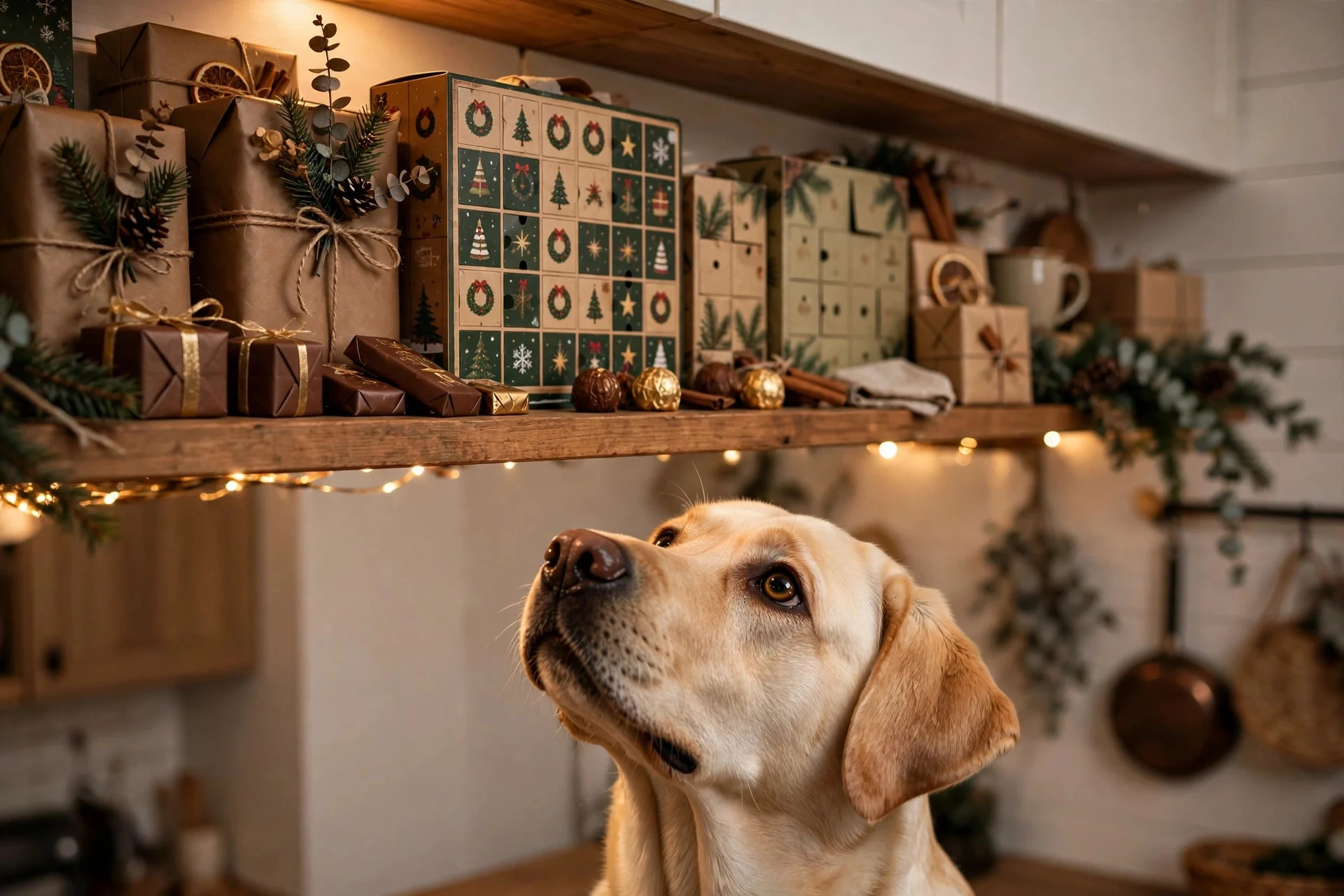
Advent calendars, chocolate Santas, baking supplies, gift boxes — December is peak chocolate exposure. Dark and baking chocolate are the most dangerous; a 20-pound dog can get seriously ill from 2 ounces of baking chocolate. Keep all chocolate above counter height in closed containers, and warn gift-givers not to leave chocolate gifts under the tree where a nose can find them. I move every chocolate gift to a high shelf the moment it enters the house.
2. Xylitol in “Sugar-Free” Everything
Sugar-free candy, gum, mints, some peanut butters, and even some “sugar-free” baked goods contain xylitol (also called birch sugar) — and it can kill a dog. It triggers a massive insulin release and potential liver failure, sometimes within 30 minutes. Check labels on everything sugar-free that enters your house in December. This one doesn’t give you time to “wait and see.”
3. The Christmas Tree Itself
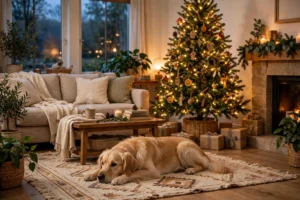
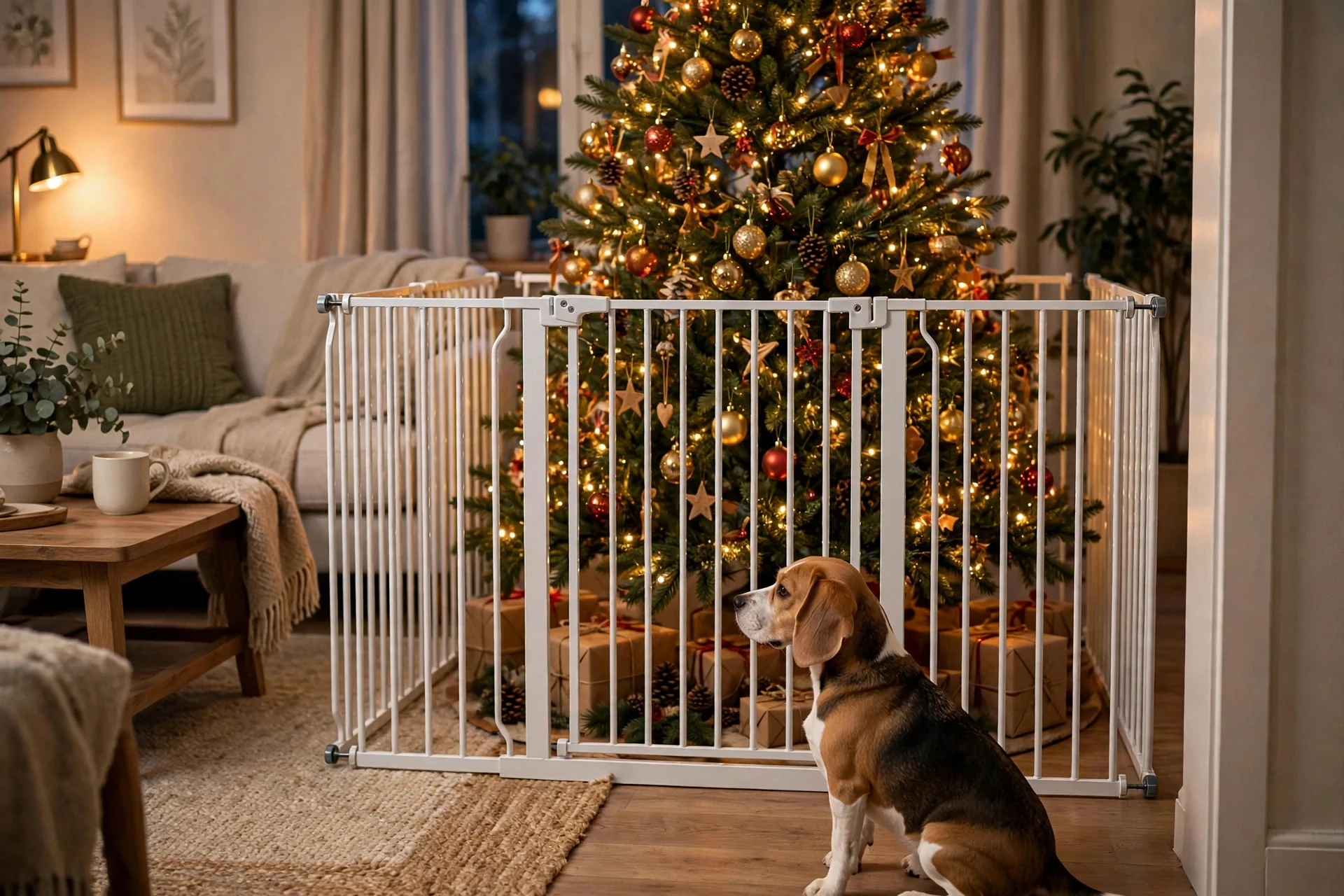
Three problems in one: the water (often contains preservatives and fertilizers that are toxic), the needles (they irritate the mouth and stomach, and can cause blockages in quantity), and the tree tipping over (a climbing or jumping dog plus a top-heavy tree equals disaster). Use plain water with no additives, sweep fallen needles daily, and anchor the tree — a wall tether or a heavy stand makes a real difference. Or put a baby gate around it. No shame in that.
4. Ornaments, Hooks & Shatter
Glass ornaments shatter into paw-slicing shards. Metal hooks are mouth injuries waiting to happen. Put fragile and small ornaments on the top two-thirds of the tree, use ribbon instead of wire hooks, and keep the bottom branches simple — or empty. Shatterproof ornaments exist for exactly this reason, and honestly they look just as good.
5. Tinsel, Ribbon & String
This is the one vets warn about most urgently. Tinsel, ribbon, yarn, and string cause “linear foreign bodies” — they anchor in the stomach while the intestines try to pass them, essentially sawing through the gut. It’s one of the most dangerous and expensive emergencies in veterinary medicine. Skip tinsel entirely if you have a dog (it looks dated anyway), and clean up every scrap of wrapping ribbon immediately. Every. Scrap.
6. Toxic Holiday Plants
Poinsettias get all the press, but they’re actually only mildly toxic — the real dangers are mistletoe and holly, which can cause serious vomiting, heart issues, and worse. Lilies (in Christmas bouquets) are extremely toxic to cats, so keep arrangements away from all pets. My rule: no real mistletoe or holly in a house with pets, period. The fake stuff looks identical from across the room.
7. Candles & Open Flames
A wagging tail plus a lit candle on a low table is a house fire waiting to happen. Dogs also burn their noses investigating flames, and scented candles can irritate sensitive airways. Switch to battery-operated candles — the flickering LED ones look genuinely convincing now. I made the switch three years ago and haven’t missed real candles once.
8. Electrical Cords & Lights
Puppies and chewers go after light strings. A chewed-through cord means electric shock or mouth burns, and broken bulbs mean cut mouths and paws. Run cords where dogs can’t reach them, use cord covers on anything at floor level, and unplug decorative lights when you’re not home. Indoor tree lights should be unplugged at night — it’s safer for the dog and the house.
9. Rich Holiday Table Scraps
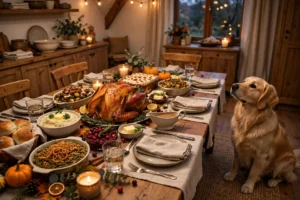
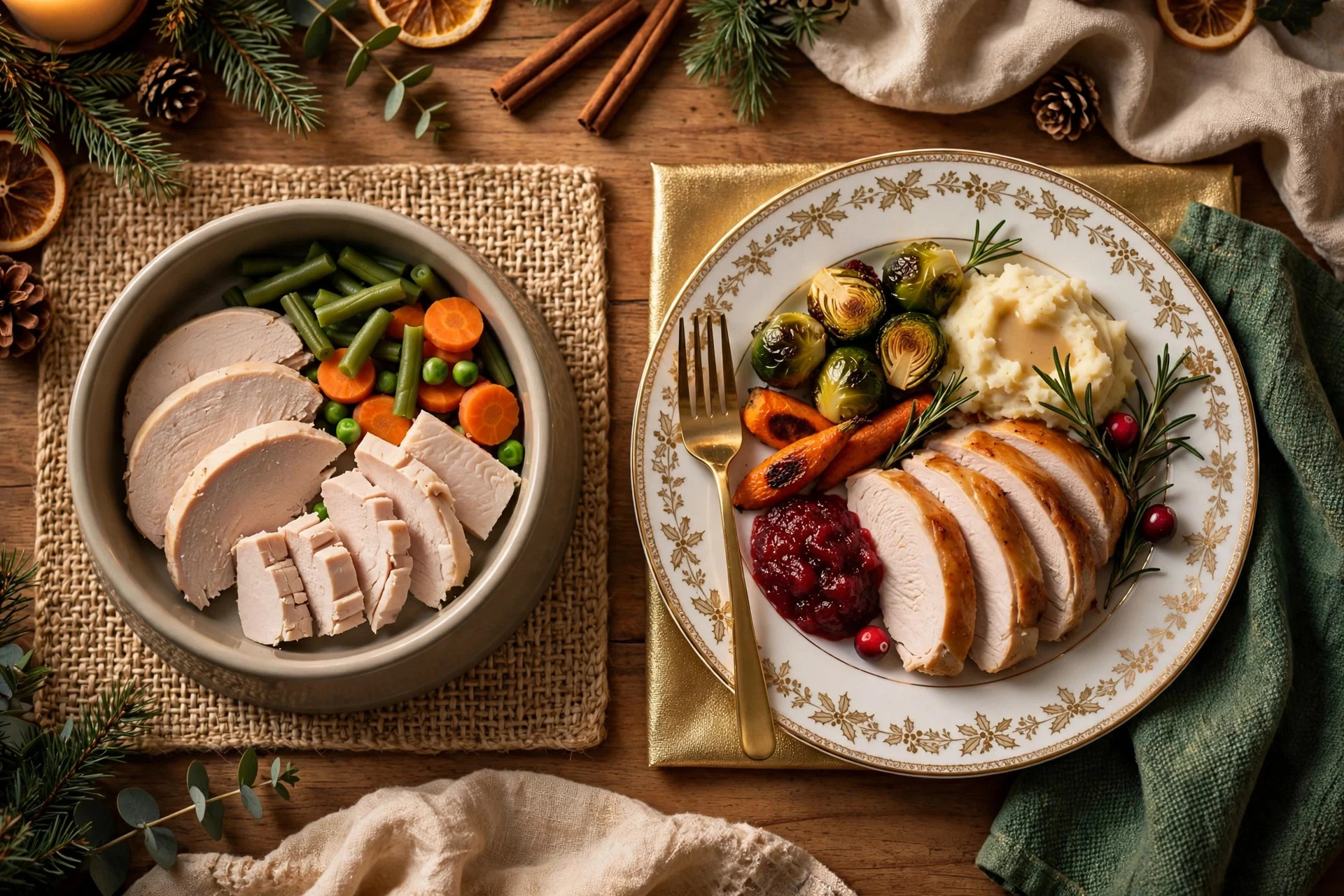
Christmas dinner is a greatest-hits album of things dogs shouldn’t eat: fatty ham, buttery everything, onion-laden sides, chocolate dessert. The day-after-Christmas pancreatitis spike is as real as the Thanksgiving one. Same playbook: brief the guests, cook a plain portion for the dog, secure the trash, and don’t let anyone “just give him a little.” A little adds up when twelve people each give a little.
10. Alcohol (Eggnog Counts)
Dogs are far more sensitive to alcohol than humans — even small amounts can cause dangerous drops in blood sugar, blood pressure, and body temperature. Eggnog, rum balls, mulled wine left on low tables, and unattended party drinks are all risks. Clean up glasses promptly at parties. A drunk dog isn’t funny; it’s a medical emergency.
11. Wrapping Paper, Bows & Packaging
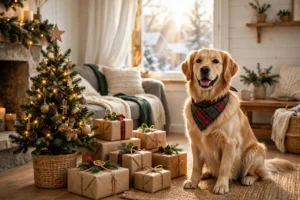
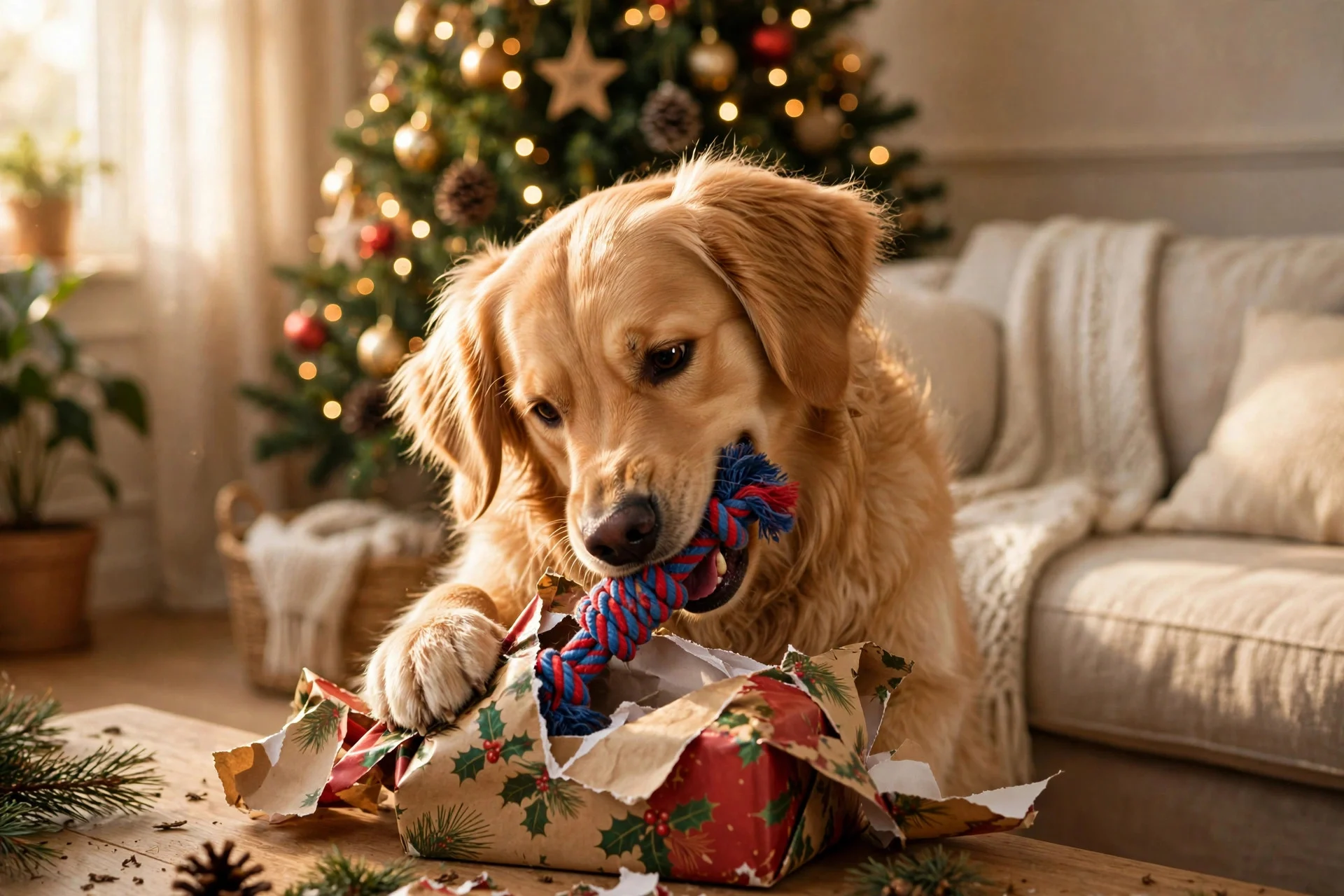
Dogs love unwrapping things, which is adorable until they swallow a bow, eat silica gel packets from packaging, or ingest styrofoam. Let them “help” open presents under supervision — most dogs love ripping paper — but remove ribbons, bows, tape, and packaging inserts first. And keep the good scissors away from enthusiastic helpers.
12. Visitors, Noise & Routine Chaos
Not a physical hazard, but a real one: stressed dogs bite, bolt, and get sick. House guests disrupt routines, kids get excitable, doors open constantly, and some dogs just can’t cope. Give your dog a quiet room to retreat to, stick to their feeding and walk schedule as closely as possible, and don’t force them to socialize. A calm dog in the back room is better than a stressed dog in the living room. Every time.
The Christmas Morning Routine
Here’s what works at our house: dog gets walked and fed before presents. Then he gets his own wrapped present (a new chew toy — the unwrapping is the real gift) while we open ours. His stocking has dog treats, not chocolate coins. The tree is gated. The trash goes out between dinner and dessert. It’s not complicated — it’s just deliberate. And deliberate is what keeps everyone safe.
FAQs
Are poinsettias poisonous to dogs?
Mildly — they can cause drooling, vomiting, and stomach upset, but they’re rarely dangerous. The plants to truly worry about are mistletoe and holly, which are significantly more toxic. Still, keep poinsettias out of reach; there’s no reason to test it.
Can dogs eat Christmas dinner?
Parts of it. Plain turkey, plain vegetables, and plain potatoes are fine. But Christmas dinner as served — with butter, seasoning, onion, gravy, and rich sauces — is not safe. Make a separate plain plate for your dog before the seasoning starts.
How do I keep my dog away from the Christmas tree?
A baby gate or exercise pen around the tree is the most reliable option. Alternatively, put the tree in a room the dog doesn’t access unsupervised. Training a “leave it” for the tree helps, but management (physical barriers) beats training when you’re not watching — which, during the holidays, is often.
What should I do if my dog eats tinsel?
Call your vet immediately — do not wait, and do not pull on any tinsel hanging from your dog’s mouth (it may be anchored internally, and pulling can cause severe damage). Tinsel ingestion is a surgical emergency. This is one where minutes matter.
Christmas with a dog is wonderful — it just takes a little forethought. Gate the tree, lock up the chocolate, skip the tinsel, brief the guests, and keep the routine steady. Do that, and the only surprise under your tree will be the good kind.